Constructing Biederman
Charles Biederman and the Pursuit of an American Abstraction
October 22 - December 10, 2021
|
|
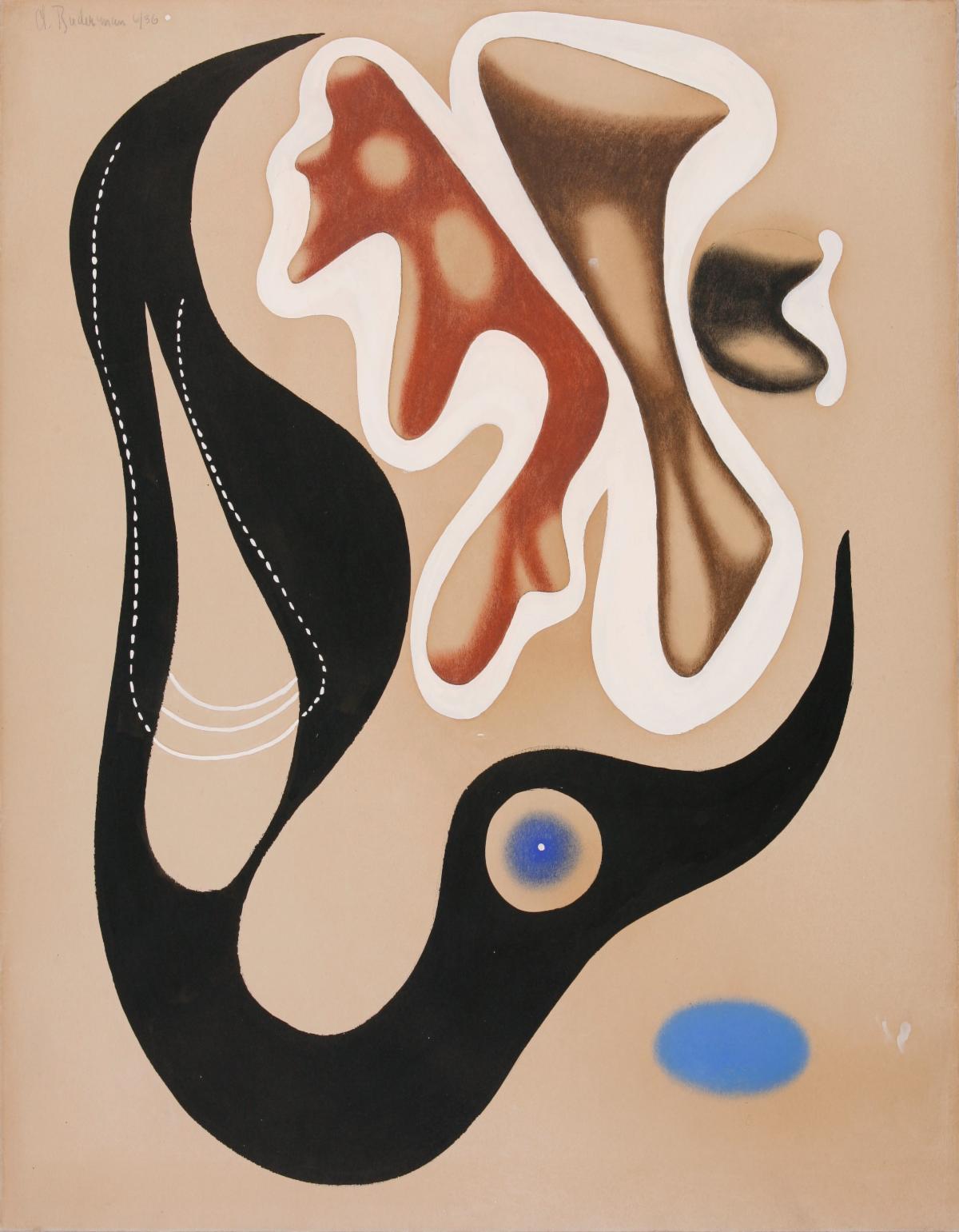
Charles Biederman (1906-2004), 6/36, 1936, pastel and gouache on paper,
29 1/2 x 23 inches.
|
|
“I hear Giacometti has gone to the sur-realist fold so cross out another chalk mark . . . ,” Biederman lamented in a letter from Paris in December 1936. While in Paris, Biederman quickly realized that much of the Parisian avant-garde had abandoned non-objective abstraction for figurative surrealism. Works like Picasso’s Guernica (1937) were thought to more directly confront the fraught political situation in Europe at the time. Ever the contrarian, Biederman soon wrote off surrealism as a refuge for the washed-up Parisian avant-garde, and pivoted from undulating biomorphism to more rigidly geometric forms.
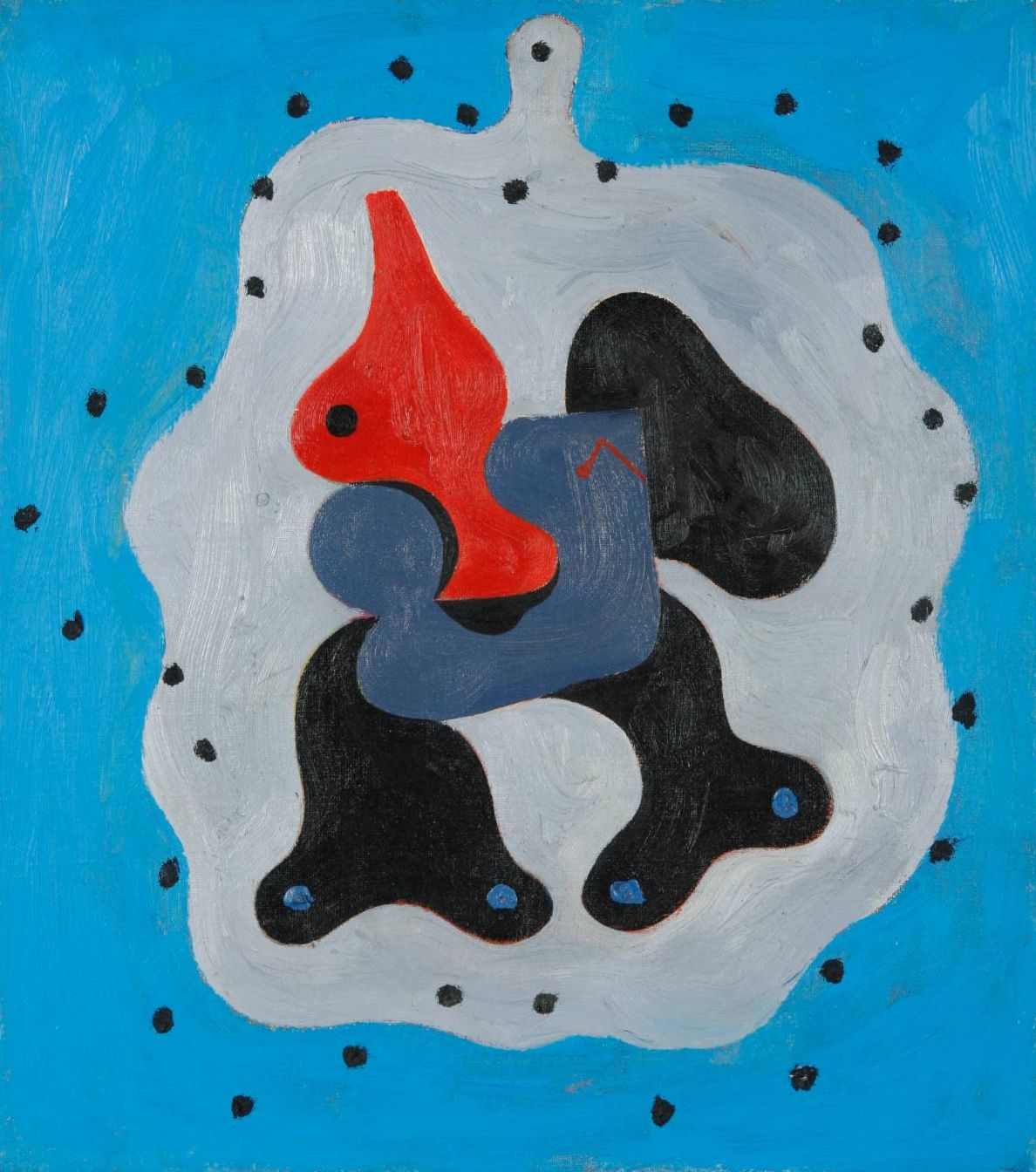
Biederman had spent much of the last two years working in the surrealist fold himself. After moving to New York in September 1934, he utilized a neighborhood resource, Albert E. Gallatin’s Museum of Living Art, where he soaked in cubist works by Picasso and Gris along with surrealist works by Miró and Arp. Biederman’s early admiration for the biomorphism of Miró and Arp is evident in his monumental work on paper, 6/36 (1936) and his canvas November 34 (1934). Of the 1934 painting, art historian Susan Larsen notes [Charles Biederman (2011), pp. 45-47]:
|
|
Charles Biederman (1906-2004), November 34,
1934, oil on canvas, 16 x 14 in.
|
|
Three layers of intertwined biomorphic forms in gray and black enclose a bright red shape struggling to break free. The red shape suggests a bird or an emerging cellular organism. Color lends its emotional voice to this tale of capture and impending release . . . It is more than a pretty, formal exercise. It is an essay in nature’s dynamics, neither good nor evil, and filled with drama. |
|
For Biederman, biomorphism was an entry point to depicting the underlying structures of nature. His passage through surrealism allowed him to expand his non-objective abstract language, and he swiftly moved from surrealist figuration to dynamic biomorphic shapes in space. This provided the foundation for the geometric studies for sculpture he began in Paris, which ultimately led to his three-dimensional constructions.
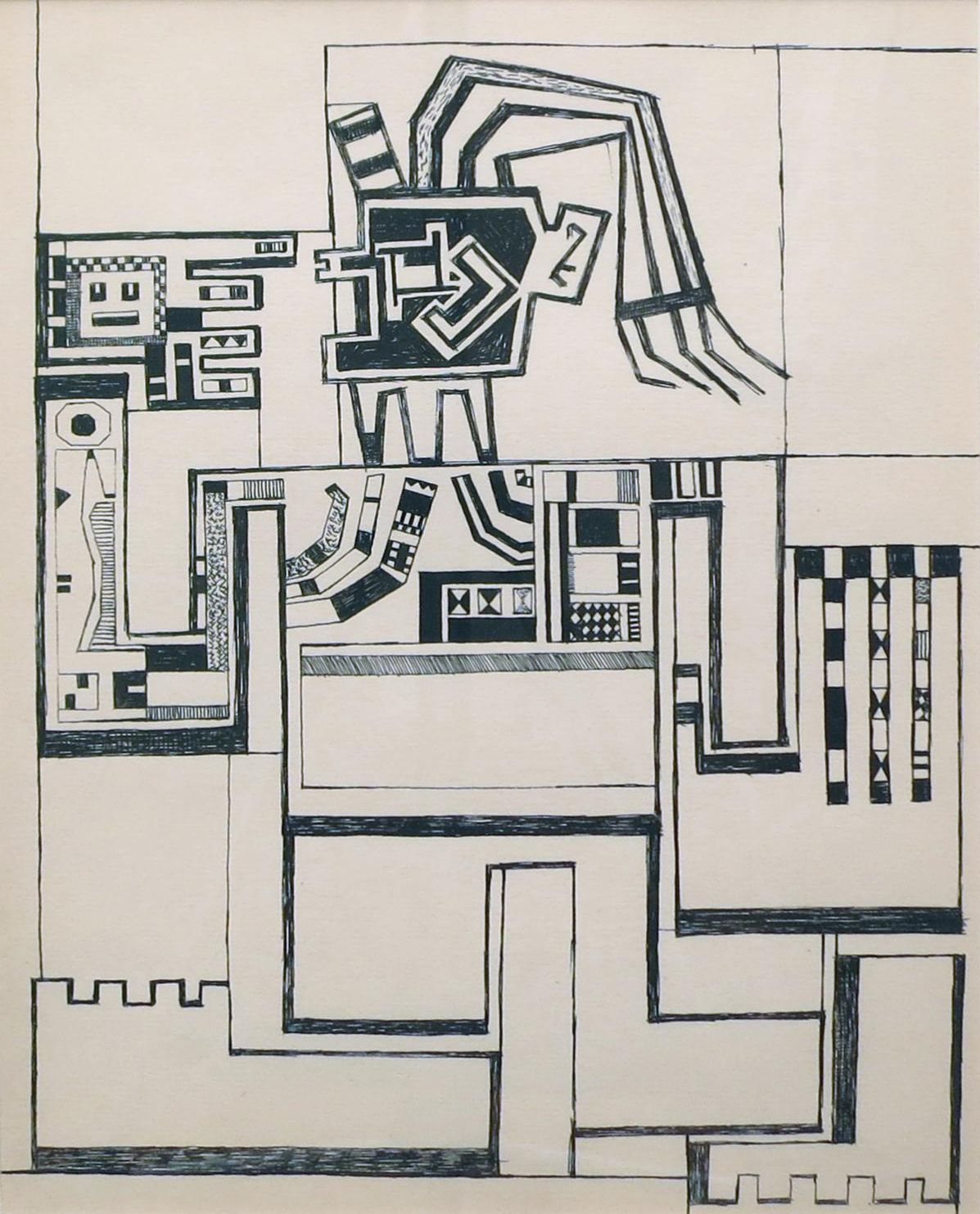
Although Biederman eventually rejected surrealism as a path forward for abstraction, in the late 1930s and 1940s, a group of New York artists picked up its thread. Hoping to create a distinctively American form of abstraction, the Indian Space Painters like Steve Wheeler and Gertrude Barrer synthesized cubism and surrealism with the visual imagery of American Indians. While these artists consciously sought out an “American” source, Biederman believed that a novel American abstraction could only be found by pushing beyond any artistic roots.
|
|
Steve Wheeler (1912-1992), Untitled, c. 1938-39, ink on paper, 11 1/2 x 8 3/4 in.
|
|
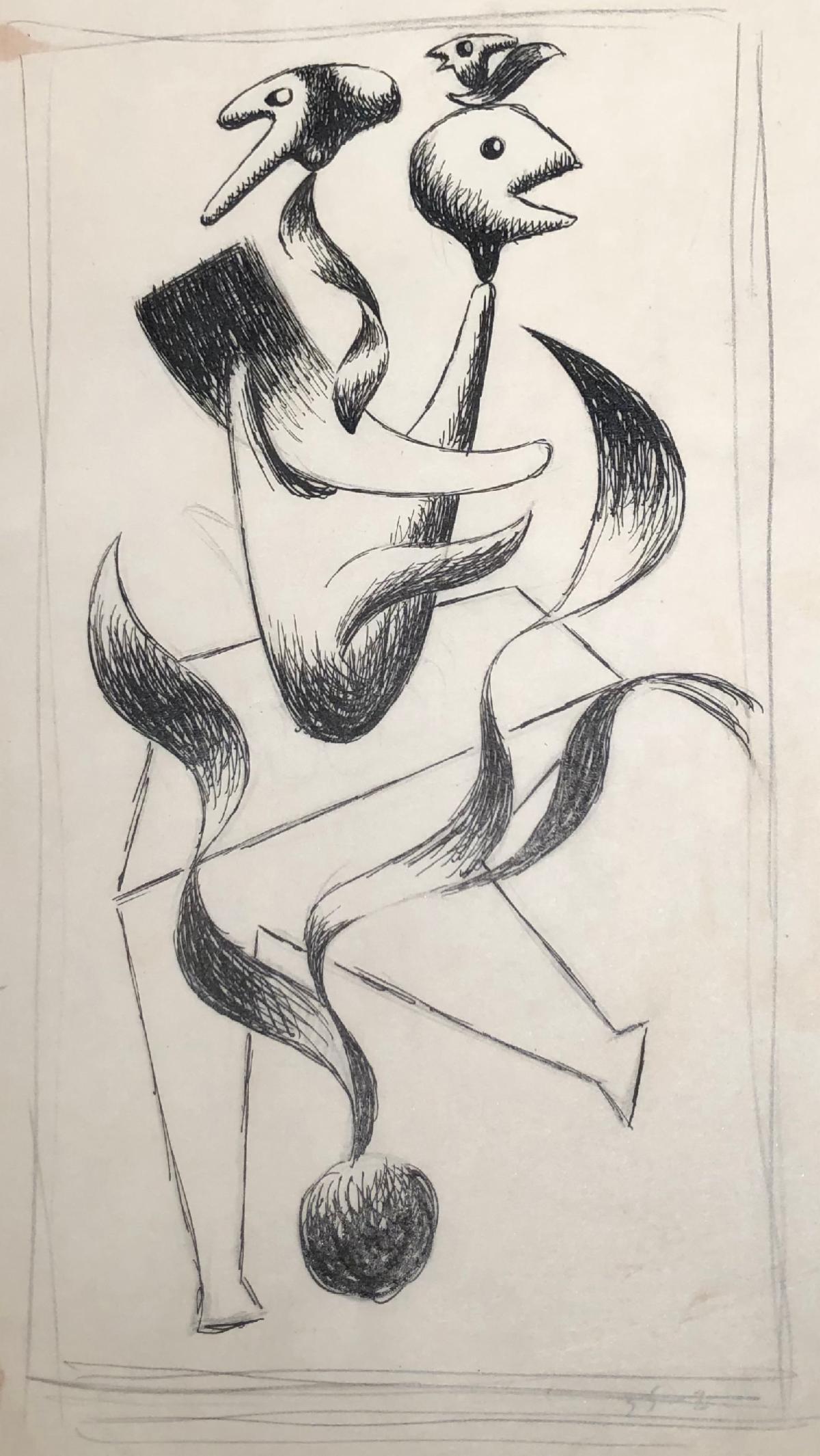
Charles Biederman (1906-2004), #348 New York 2/1935, 1935, ink on paper, 11 x 8 1/2 in.
|
|
To learn more about the exhibition, please visit our website.
The gallery is open Monday through Friday, 10am to 5pm, appointment preferred. Please contact us at info@meredithwardfineart.com or 212-744-7306 with any inquiries.
Proof of vaccination is required for gallery entry.
|
|
|
|
|
|
|