Constructing Biederman
Charles Biederman and the Pursuit of an American Abstraction
October 22 - December 10, 2021
|
|
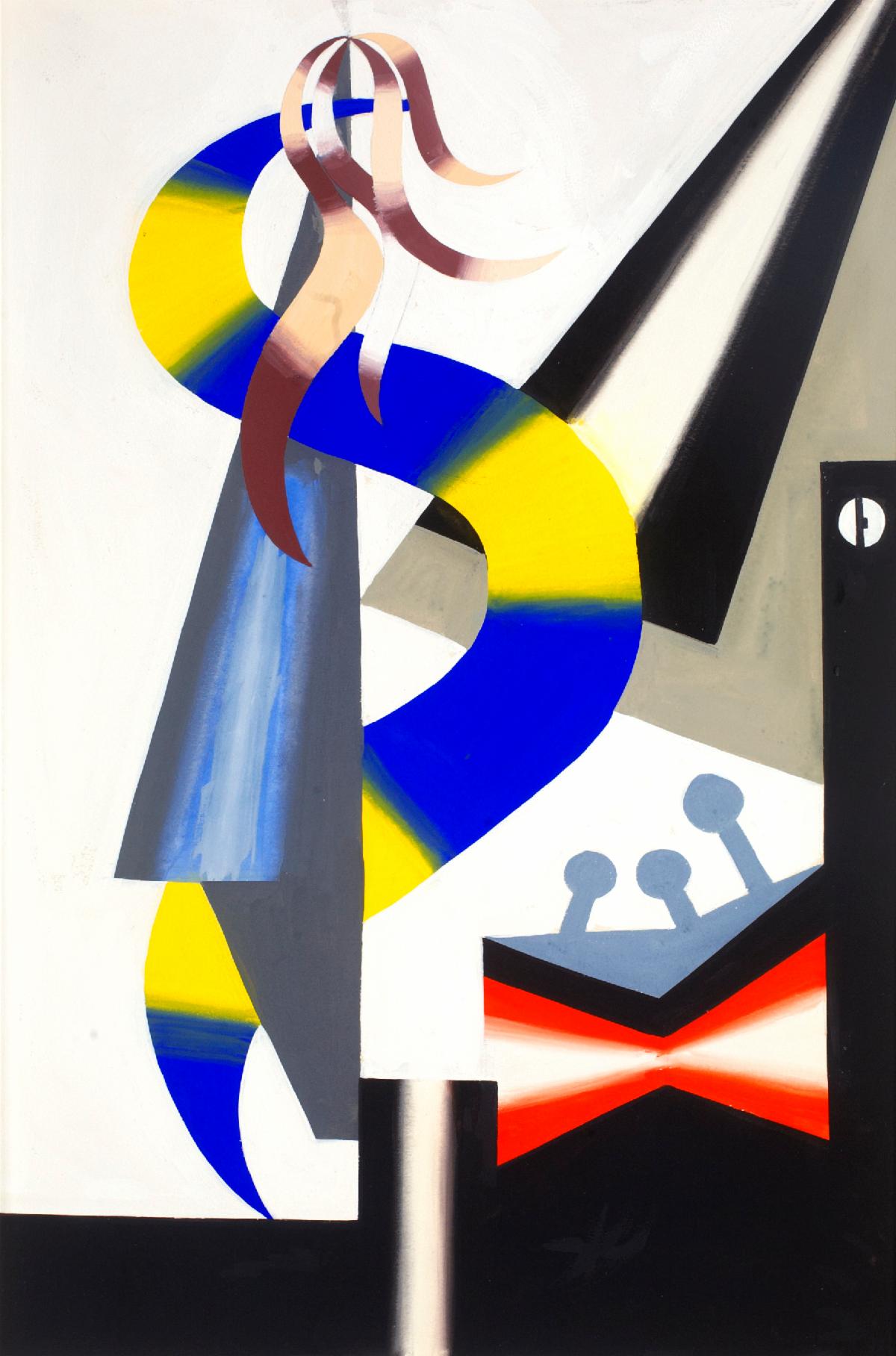
Charles Biederman (1906-2004), New York 2/36, 1936, gouache on paper,
23 3/4 x 17 3/4 inches.
|
|
“ . . . a Frenchman said he had heard I didn’t like Paris and asked why. I began by saying that I thought its appearance was so damn antiquated with its cake architecture and that they needed to move up into the 20th century. Just then about 4 Frenchmen looked as though they’d like to slit my throat. But they asked for it . . . to me it was unbelievable to find how the romantic element flourishing here so strongly in this day and age of Léger and Modern architecture and painting of today.” (Charles Biederman, Paris, November 1936)
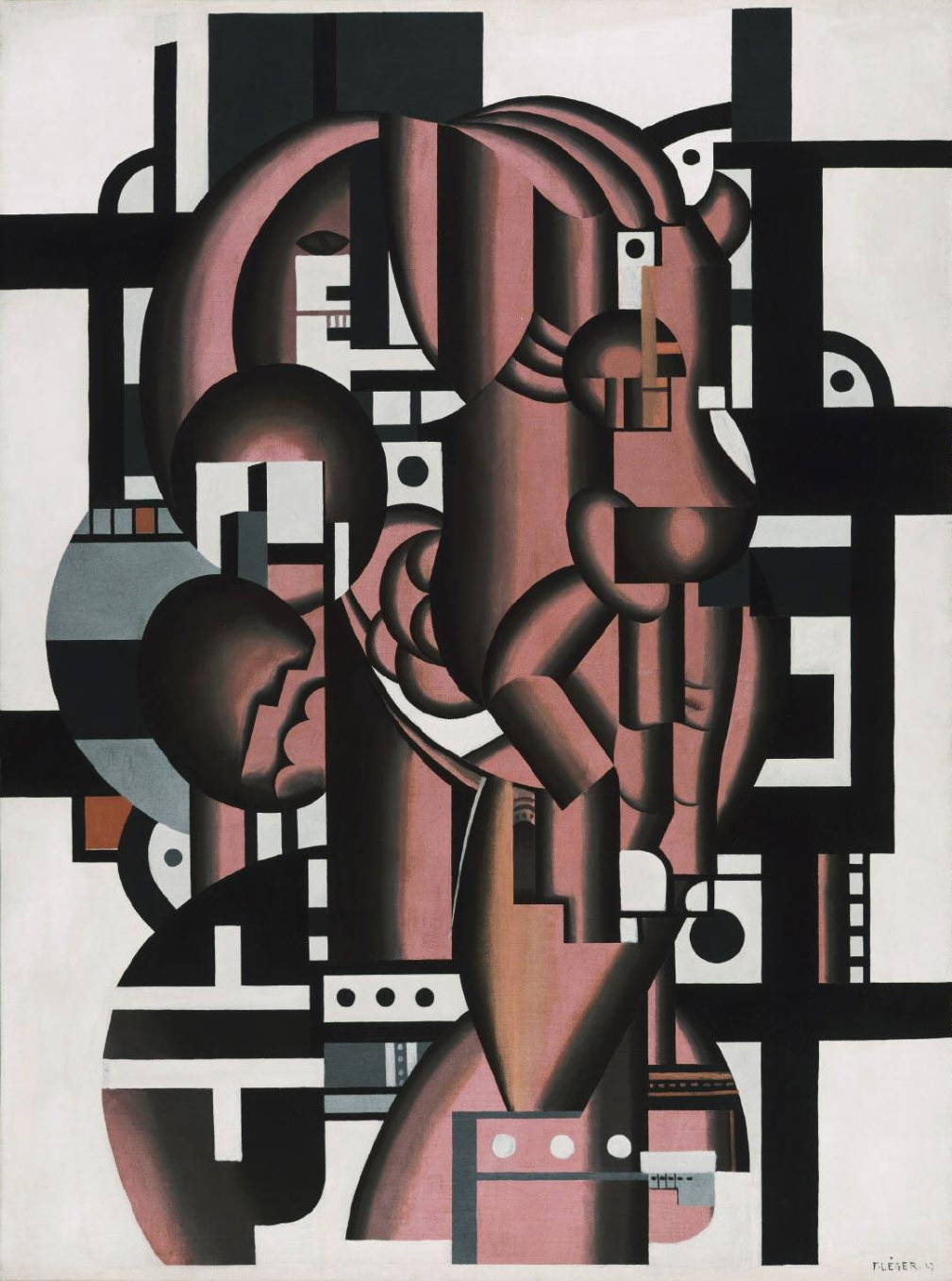
For Charles Biederman, the art of Fernand Léger was synonymous with modernity. While Biederman disdained Paris and most of the avant-garde, the esteem he garnered for Léger before traveling abroad only grew. His admiration for the French artist is highly evident in works such as New York 2/36 (1936). In this gouache, biomorphic remnants are made over with flattened geometric planes in contrasting colors that echo the tubular forms of Léger’s “mechanical” period. No doubt Biederman would have seen examples of the Léger’s work, such as Composition (1923-27), in Albert Gallatin’s personal collection and his Museum of Living Art. Biederman acknowledged the influence of Léger on his work after the artist visited his Washington Square studio in January of 1936:
|
|
Fernand Léger (1881-1955), Composition,
1923-27, Philadelphia Museum of Art, A. E. Gallatin Collection
|
|
“ . . . while here [Léger] talked a blue streak of French around the place half of it right at me & then with difficultly [James Johnson] Sweeney translated some of his remarks . . . it all summed down to his liking things with sharp defined areas & forms, in other words those things that were somewhat related to the appearance of his own work & that is to be expected . . . I liked the man very much & he practically oozes with energy.” |
|
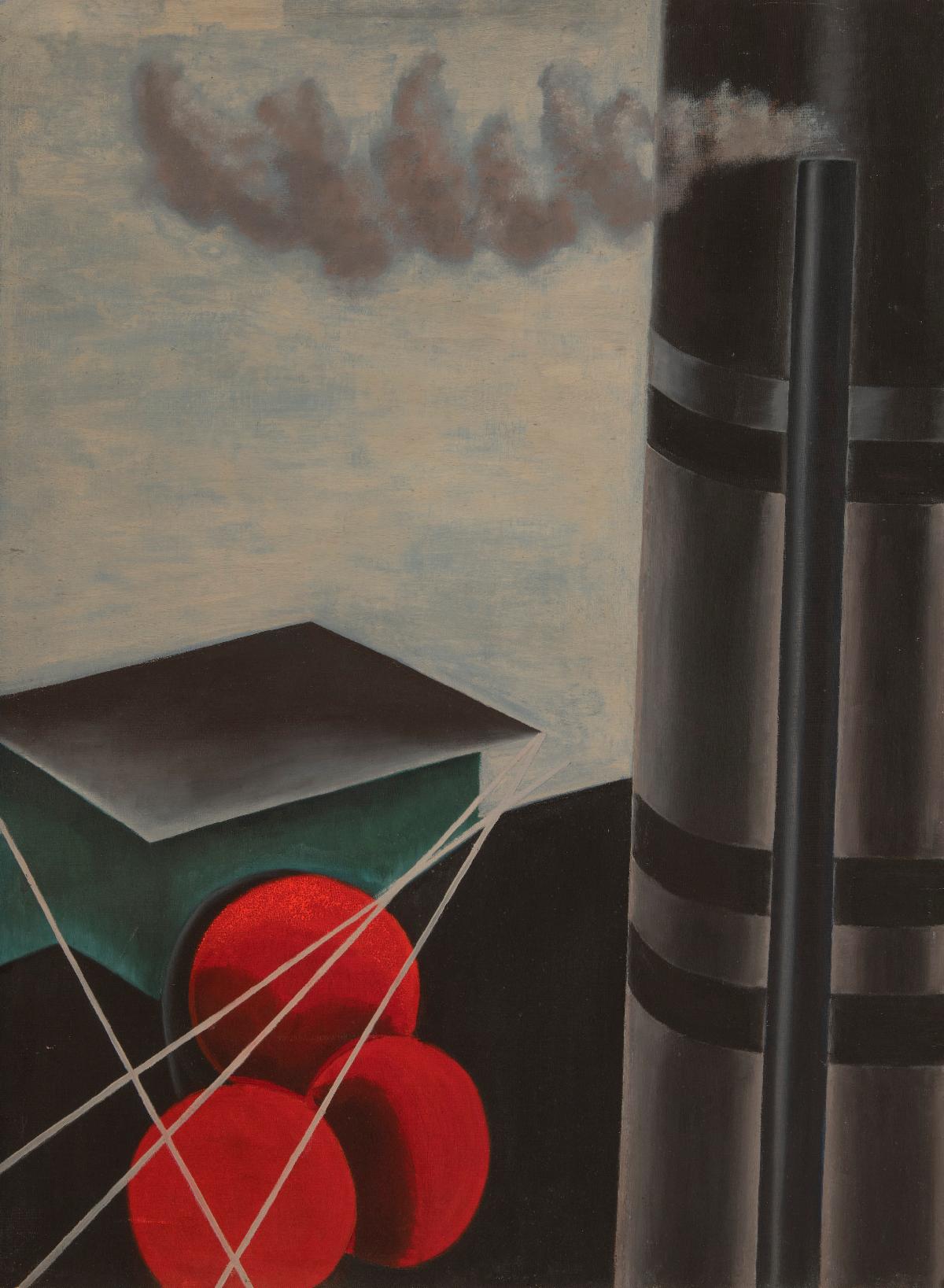
Biederman was not the only American artist to find Léger’s energy compelling. In pursuit of a modern art education, Flora Crockett joined his Académie Moderne in 1926 where she eventually served as director for five years. With Léger, she found an academy that, “gave to us the consistent training and the constructive modern viewpoint such as inspired us in the advanced art gallery exhibits . . . we wished for a really live criticism that could give us insight, individual development and not make us copyists and imitators.” Like Biederman, Crockett’s work began to stretch further into a streamlined geometric abstraction under the teachings of Léger. |
|
Flora Crockett (1892-1979), Untitled, 1941, oil on canvas board, 30 x 22 in.
|
|
Biederman and Crockett returned to foundations learned from Léger as they searched for new avenues of abstraction throughout their careers. From 1940 to 1945, Léger lived in the United States where he joined the American Abstract Artists group in New York, taught across the country, and continued to influence a new generation of American artists. Towards the end of Biederman’s time in Paris, he presciently (and arrogantly) remarked, “there is no question that that man is the greatest painter of his time & who has the most to offer & teach the younger painters but I have met not even one who has been effected by him (except myself).” |
|
To learn more about the exhibition, please visit our website.
The gallery is open Monday through Friday, 10am to 5pm, appointment preferred. Please contact us at info@meredithwardfineart.com or 212-744-7306 with any inquiries.
Proof of vaccination is required for gallery entry.
|
|
|
|
|
|
|