Greetings!


Twenty-one years ago we started working together as ElephantVoices. Now, we are excited to share that ElephantVoices has officially been a registered charity in California for 15 years! We are incredibly proud of this milestone and remain dedicated to our mission of improving the lives of elephants. 


Contact Call is our brand new Newsletter. Elephants use very powerful, low frequency calls, referred to as Contact Rumbles, to stay in touch with each other over long distances. Since elephant communication forms the core of our work, we thought it a fitting name. We aim to send out a Contact Call every quarter.


2023 has been a busy year for ElephantVoices. With the advent of AI and its potential for deciphering the "languages" of other species, our primary focus has been curating our audio collection and populating our Elephant Calls Database with the voices and metadata of known callers in known contexts. 


As always our work extends beyond our core studies of behaviour and communication to include conservation, advocacy, research and education.


In this edition we touch on just a few of these activities, as well as some important updates, a snippet from The Elephant Ethogram and a little slice of history. 


Warm wishes,

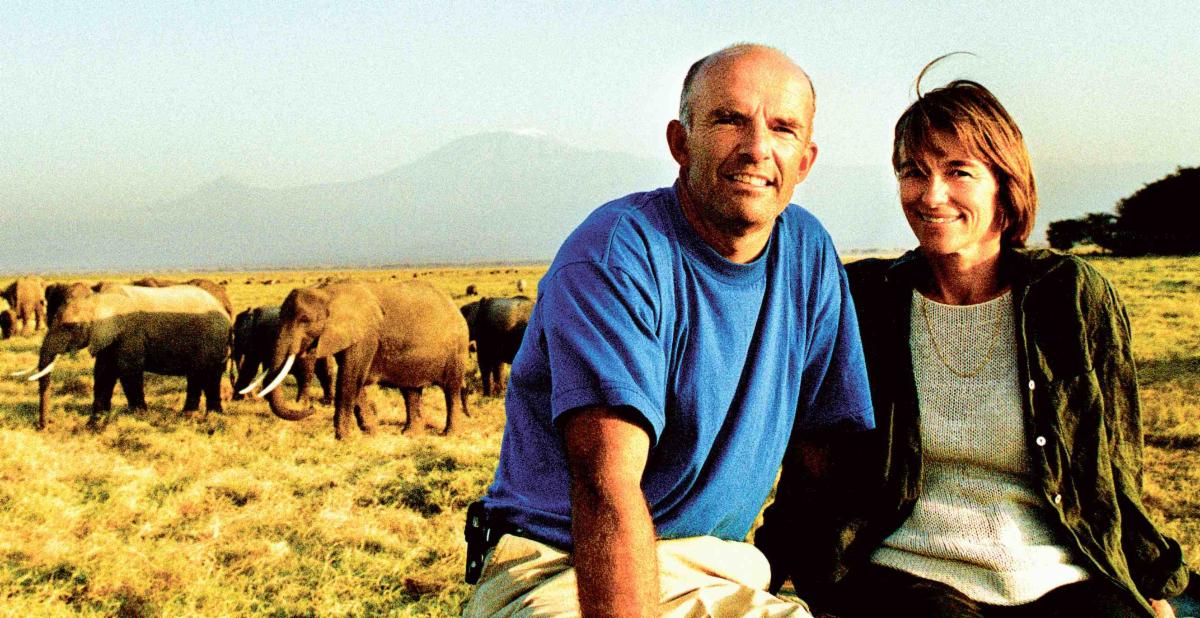
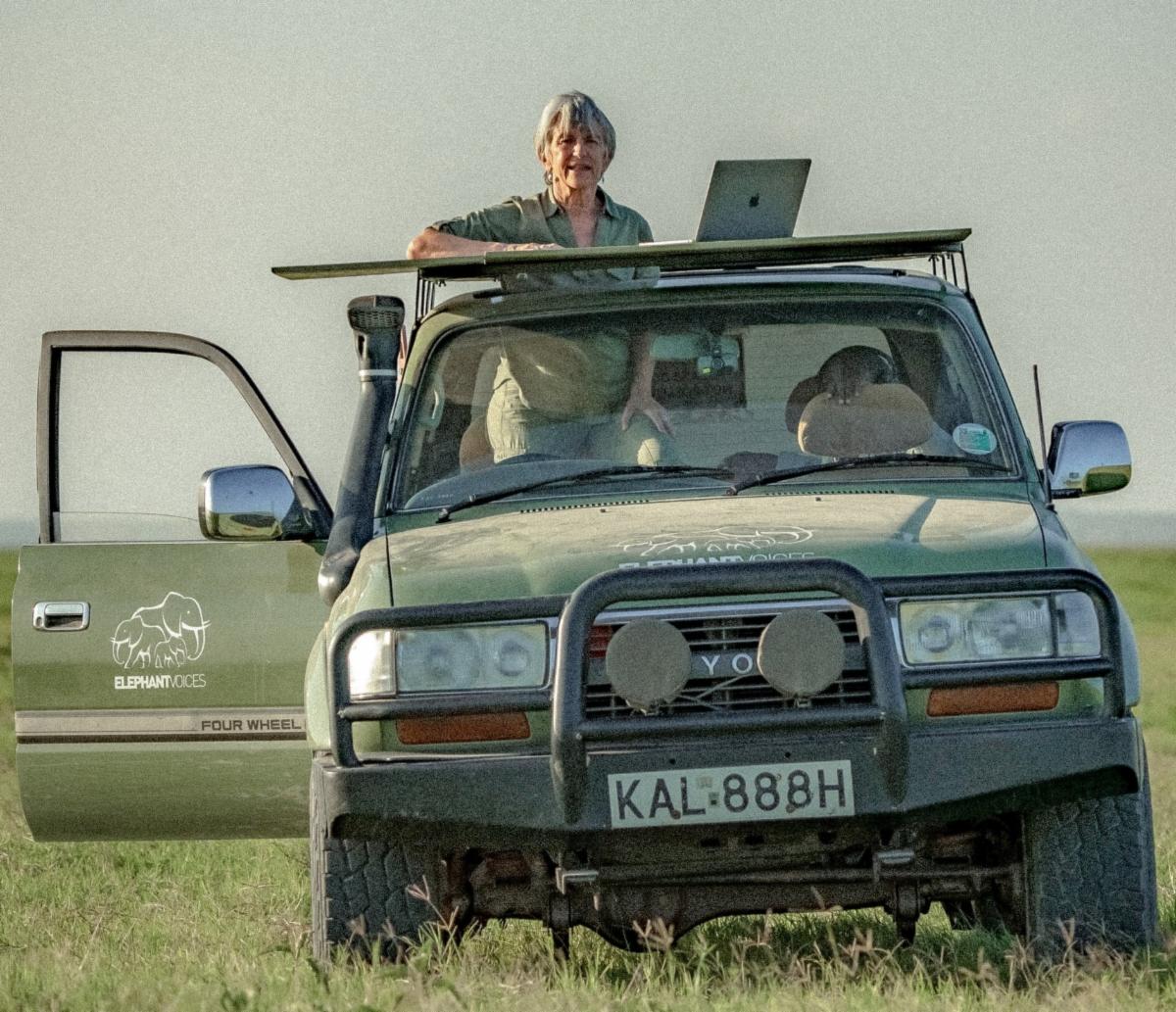
Petter & Joyce in Amboseli in the early days

Important notice: ElephantVoices has a new address

Dr. Cynthia Jensen has served as Secretary of our Board since 2013 and has recently agreed to take on an additional volunteer role as our point of contact in the U.S. for queries, snail mail, and mail-in donations. She can be reached at +1-571-212-4699. Our new Washington, DC mailing address is 2909 Garfield Terrace, NW, Washington, DC 20008. We respectfully request that you send all snail mail and mail-in donations to the DC address.


ElephantVoices continues as a registered charity in California (CT 0150042) with 501(c)(3) non-profit status from September 2008. Our registered California address has recently changed to 3376 Villa Robleda Drive, Mountain View, CA 94040, attention Sara Jenez.  


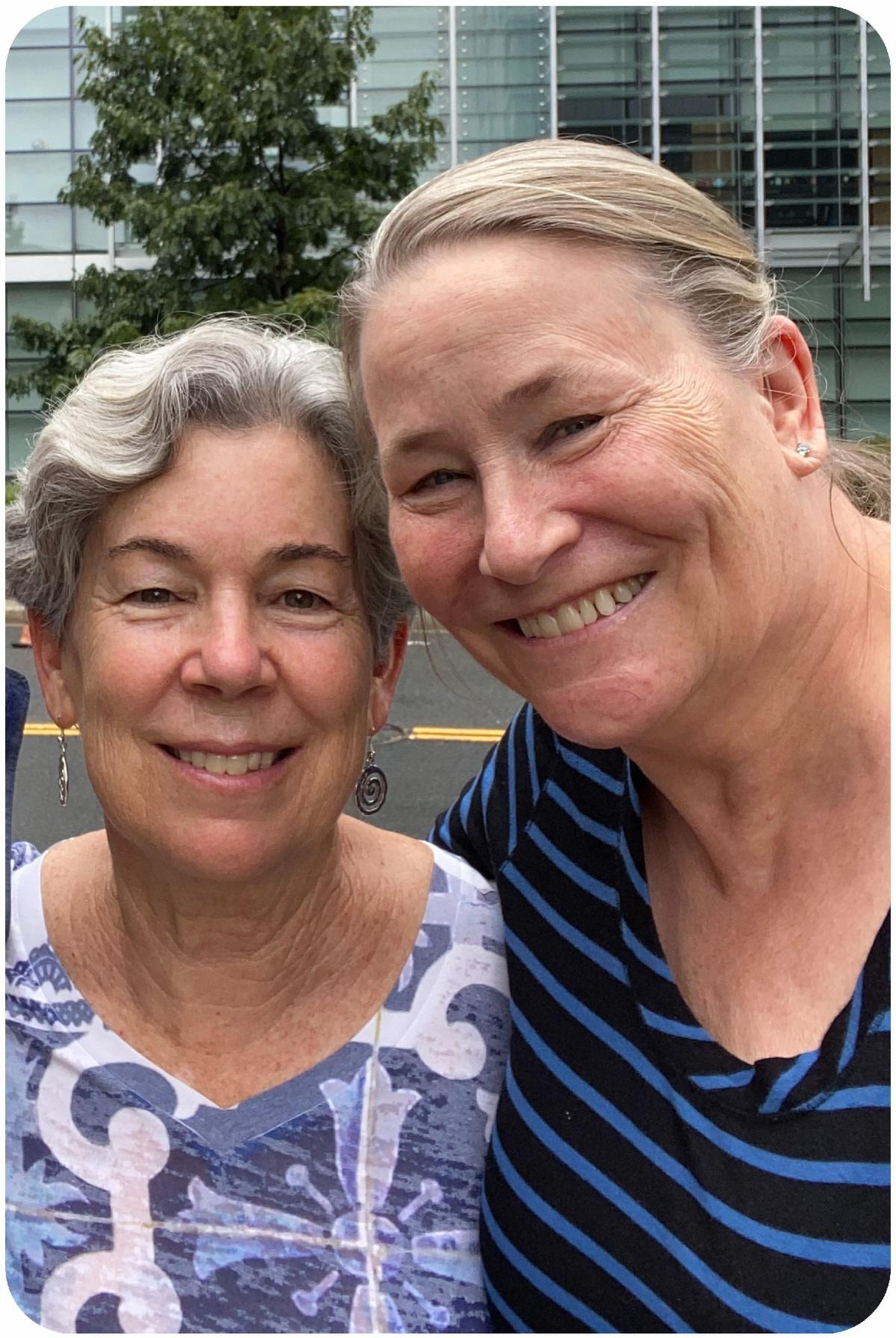
Fun fact: Joyce, Cynthia and Sara were all classmates at Smith College back in the day! 

Sara & Cynthia

The Secret World of

Elephants

In July we were approached by the Director of Media and Interactives for the American Museum of Natural History regarding the creation of a five-year world-wide travelling exhibit on elephants entitled, “The Secret World of Elephants.” We have partnered with them providing scientific advice and media files (video, images and audio) on elephant behaviour and communication. 


The exhibition, which opens on 13 November, is sure to be spectacular. You can find out more here.

Selengei rejoins the ElephantVoices team

We are pleased to announce that Selengei Poole-Granli has rejoined the ElephantVoices team as our new Communications Manager.


Selengei previously worked with us in 2018 before pursuing other opportunities in the conservation field. She gained valuable experience at Sarara Camp in northern Kenya, where she worked alongside Samburu colleagues and gained a deeper understanding of conservation in action.


After the pandemic, she worked as a researcher for Ecoflix, a streaming startup that showcases the work of conservation heroes. Most recently, Selengei was the Marketing & Communications Officer for the Jane Goodall Institute UK.

“For hundreds of years, language marked the true difference between man & beast.”

- René Descartes, Philosopher, 1649.

This piece in The New York Times Magazine examines a number of recent studies whose findings reveal that language may not be as unique to Homo sapiens as once thought. Our own discovery that elephants are capable of vocal learning and can imitate the sounds of other species and even machines is one of the studies mentioned.


Artificial Intelligence is now being harnessed in the study of elephant communication. We are hopeful that it will enable us to better understand what exactly elephants are able to say to one another. This in-depth article is a fascinating read for those who would like to learn more about this topic.

An Elephant Ethogram behavior highlight: Sashay

Qaskasi has just been seen off by matriarch Qoral and wants to move to the other side of the group next to her mother. The group is very close to our vehicle, so to keep us in view she Sashay's across in front of us and then tries to squeeze in behind her mother, perhaps trying to access Qoral's infant from the other side. Her mother Kicks-Back at her.


The behavior illustrated in this video is Sashay: An elephant taking exaggerated sideways steps, to manoeuvre rapidly into a new position that is immediately to the elephant’s left or right. This movement is classically seen by adult males (usually in musth) during Duelling or Escalated-Contests where a male tries to manoeuvre himself into a better position. It may similarly be observed among males during Sparring.


Further, Sashaying may be observed among adult, adolescent and juvenile females as members of a family jockey for a better position during Affiliative behavior such as a Bonding-Ceremony, or by an adult female - or male - during Attacking or Mobbing behavior.


Elephant ID: Amboseli Trust For Elephants


Visit The Elephant Ethogram to learn more about African elephants behavior.

'The woman who knows what elephants are saying'

WIM VORSTER, NATIONAL GEOGRAPHIC FOR DISNEY

Listen to ElephantVoices’ Joyce Poole talk about her life studying elephants and the many different sounds they use to communicate with one another in the Overheard at National Geographic podcast. You can listen to the podcast episode here.

Joyce features in and was Scientific Advisor for the National Geographic documentary series ’Secret of the Elephants,’ which has been nominated for two Emmys. The series is available to stream on Disney+.

Field note - The distinctive clank of ivory on ivory 

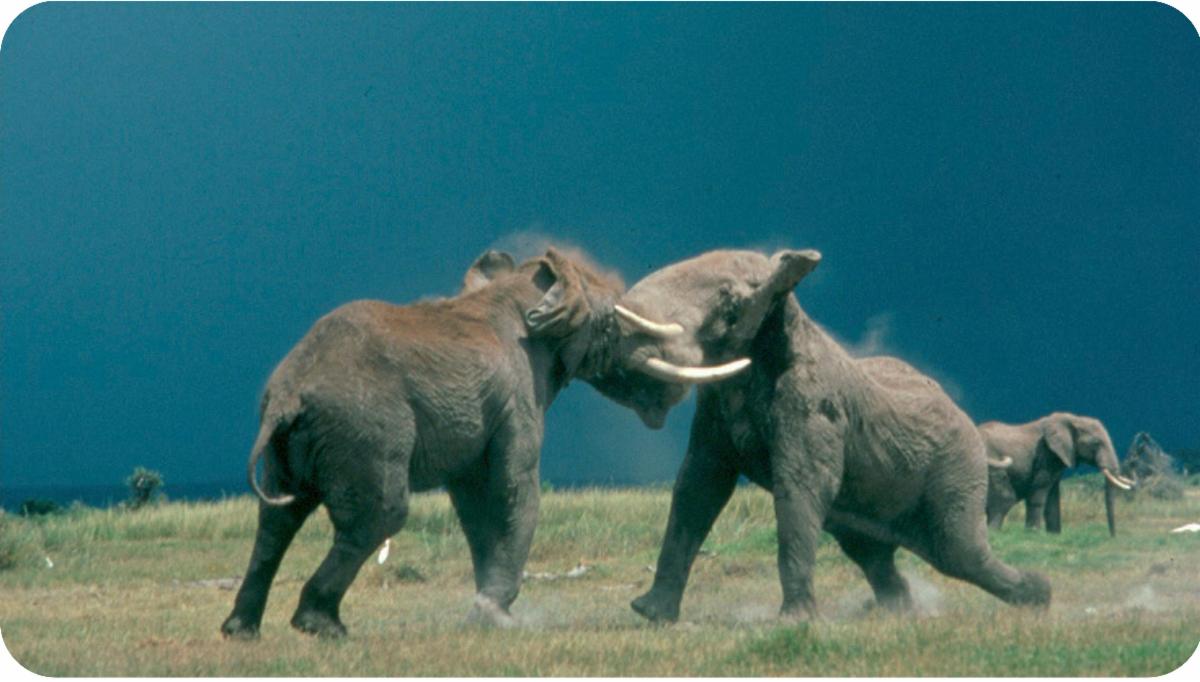
This iconic photograph taken by Joyce in 1981, is of a rare fight between Iain and Dionysus, who were in musth. Joyce named Iain after elephant biologist, Iain Douglas-Hamilton, founder of Save the Elephants, and Dionysus after the Greek god of fertility. Dionysus became famous in the BBC film, 'Echo of the Elephants,' with the words, “Enter Dionysus" uttered by David Attenborough.


Musth is a form of honest advertising of a male's sexual availability, prowess and body condition. Testosterone-charged musth males have been known to fight to the death. The males jockey for position, moving around each other in a display that may last hours. When they clash they attempt to gore one another with their tusks, or one of the males may use his pair as a lever to tip the other male over and render him powerless. The photograph was once used by National Geographic in an advertisement for their magazine.

Follow us on Social Media to keep up to date on all things ElephantVoices.

Facebook        Instagram        X

ElephantVoices is a registered 501(c)(3) charity in California and the District of Columbia.