|
In 1994 there was international outcry when four individually known elephants, subjects of the Amboseli Elephant Research Project, were shot by trophy hunters on the Tanzanian side of the border. In 1995 a moratorium on trophy hunting of this cross-border elephant population was agreed between nations. In late 2023, however, two adult males with tusks reportedly weighing over 100 lbs. were shot south of the border in Tanzania, ending a 30-year trophy hunting moratorium. A third elephant was shot in the same area in late February 2024 and, as of 10 March, a further three licenses are said to have been granted raising alarm and putting the integrity of the Amboseli elephant population in jeopardy.
The Amboseli elephant population is a cross-border population inhabiting both Kenya and Tanzania. The ecosystem includes Amboseli National Park and the surrounding conservancies and lands in Kenya (~8,000 km2) and the Enduimet Wildlife Management Area and beyond in Tanzania. There are currently ~2,000 elephants using this ecosystem. For 51 years these elephants have been closely studied by the Amboseli Elephant Research Project (AERP). It is the longest, continuously running study of elephants in the world and one of the longest studies of any animal in the world.
Each elephant is known individually and has a code number or name and is documented photographically. Birth dates for all but a few of the older individuals are known as well as the mother and the family and, in some cases, the father. A detailed database contains every elephant identified over five decades, including births and deaths and numbers over 4,000 individuals. A linked database houses every recorded sighting. The Amboseli data is an extraordinarily rich and important body of knowledge. Each individual, each record is a building block that underpins this immense scientific achievement gained over the past half a century. Indeed, much of what we now know about elephant behavior, communication, social structure, demography, reproduction and genetics, has resulted from this study.
There are 63 elephant families in the Amboseli population of which 17 families, consisting of 365 members, regularly spend time in Tanzania. In addition, approximately 30 adult male elephants, over the age of 25 years, use the Enduimet area and beyond in Tanzania as part of their home range. For half a century Enduimet has been a favourite area for a particular set of adult males who make use of it as part of their “bull area”, which is an area they use when they are bulking up for their next reproductively active period. When they are active they return to central Amboseli in search of mates.
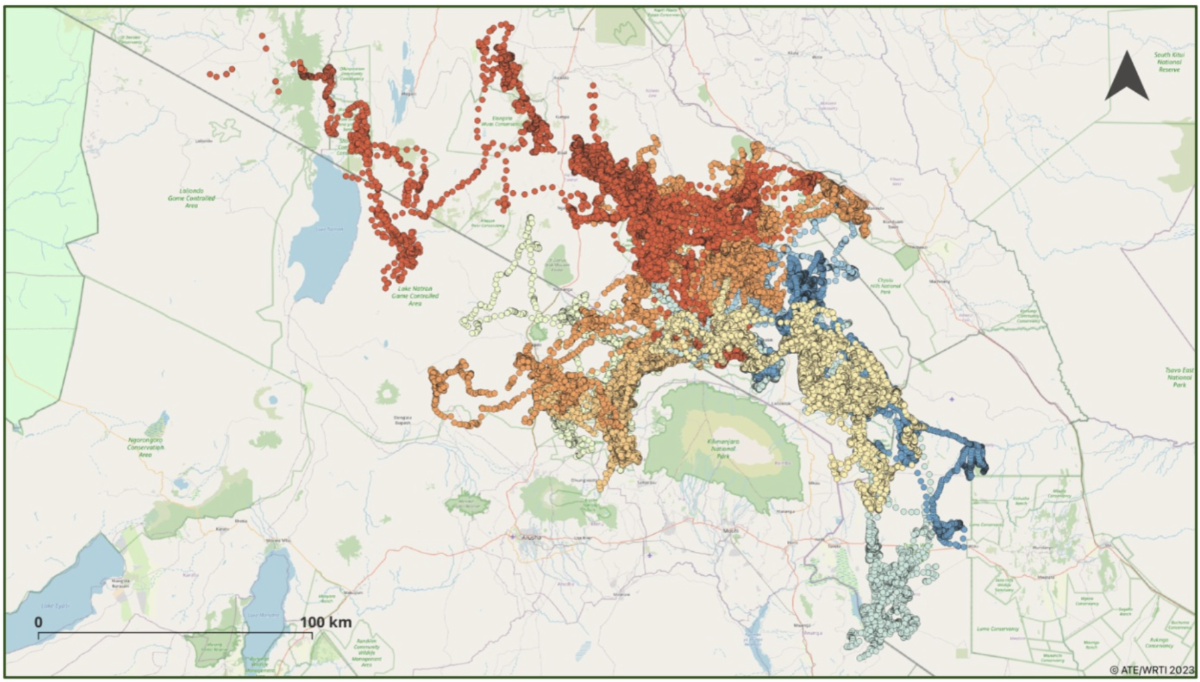
Satellite tracking by Iain Douglas Hamilton in 1995-98, as well as extensive tracking of more than 30 individuals by Alfred Kikoti based in Tanzania, and more recent tracking by AERP reveals that elephants regularly move back and forth across the border and south into Tanzania, including in some cases across to Lake Natron. A map, Figure 1, illustrates AERP’s recent (2019 to present) tracking results of eight young males from known Amboseli families. It is reasonable to assume that any elephant found in this area of Tanzania is part of the cross-border population and has been captured by AERP's long-term study.
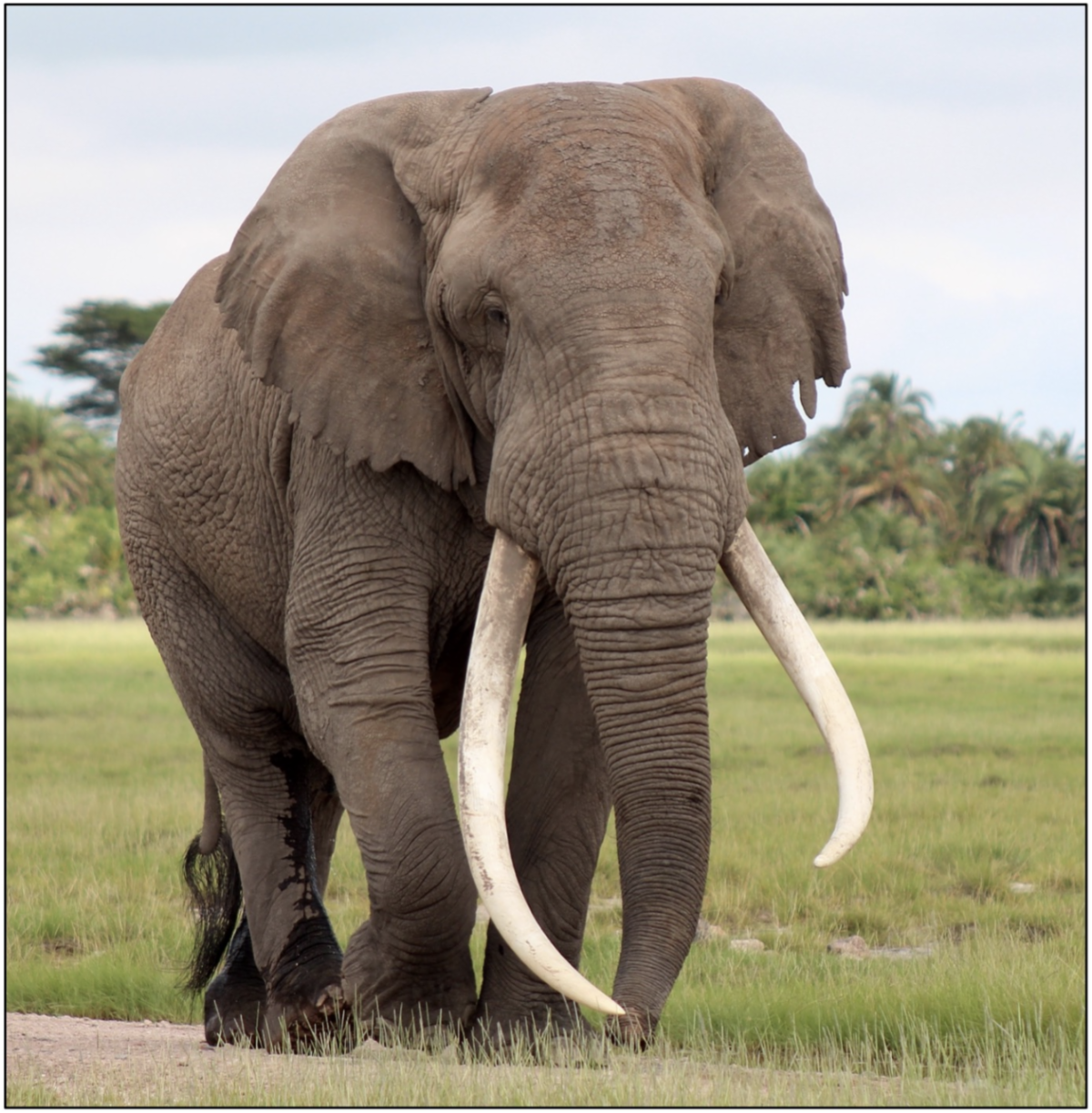
The Amboseli population includes adult males with some of the largest tusks on the continent due to the particular genetic makeup of these elephants (the largest tusks ever collected and displayed in the British Museum come from this population) and to the years of protection from trophy hunting and poaching they have been afforded.
|