Q3 | July 2026 | The Conduit: Connected Solutions for a Better Built Environment 

The AHU Meets the Schedule.

So Where Is the Air Going?

Six weeks after turnover, the engineer gets the call: the building won’t maintain positive pressure.


Exterior doors are pulling inward, dust is collecting near entrances, and the problem gets worse as the system ramps up.


The mechanical contractor checks the fan.

TAB reviews the airflow.

The controls team confirms that the dampers and sequence are responding as commanded.

Everyone has evidence that their part is working.


The engineer is still the one expected to explain why the building isn’t.


The problem may be occurring between those individual scopes. Air could be entering or leaving through cabinet seams, access doors, duct connections, or dampers that are commanded closed but never fully seal.


That is when leakage becomes more than an energy issue. It becomes an airflow, pressurization, controls, and coordination problem and the source is not always where the symptoms appear.

So where would your team start looking?

Featured Article

AHU Air Leakage: Understanding its Impact on Airside Performance


Leakage is easy to reduce to a percentage on a submittal. Its effect on the operating system is harder to see.

Our latest blog article examines:

  • Where leakage commonly occurs
  • How system pressure changes its impact
  • Why leakage can complicate airflow and building-pressure control
  • What engineers can address during design and specification
  • Relationship between static pressure and air leakage
  • What contractors and commissioning teams should verify in the field

Design Insight

Leakage Isn’t Only an Energy Issue

Where leakage occurs can be just as important as how much air is leaking.


Air entering on the negative-pressure side of the unit can increase the amount of air that must be conditioned. Air escaping on the positive-pressure side may reduce what reaches the occupied space. Leakage through outdoor-air, return, or relief dampers can also interfere with ventilation and building-pressure control.


Understanding the leakage path helps connect the equipment-level detail to the actual operating consequence.

This Quarter: Designing for Airside Performance

Equipment selection is only one part of airside performance. Throughout this quarter, we’re examining five areas where design decisions continue to influence the system long after installation.

Air

Leakage


Unintended air entering or leaving the system can affect energy use, airflow delivery, ventilation, and control.

Fan

Selection


Fan type, operating point, redundancy, and control strategy all influence efficiency, acoustics, and long-term operating cost.

Coil

Selection


Face velocity, pressure drop, fin spacing, and coil arrangement affect capacity, humidity control, maintenance, and performance.

Controls

Integration


Sequences work best when the equipment, sensors, actuators, and available control points are coordinated early.

Owner

Serviceability


Access for inspection, testing, cleaning, and replacement determines whether performance can be maintained over time.


What's

 Next?

Fan & Coil Optimization

Fans and coils are often selected individually, but their interaction affects energy use, humidity control, operating stability, and long-term cost.


Next month, we’ll examine the selection details that help these components perform as a coordinated system.


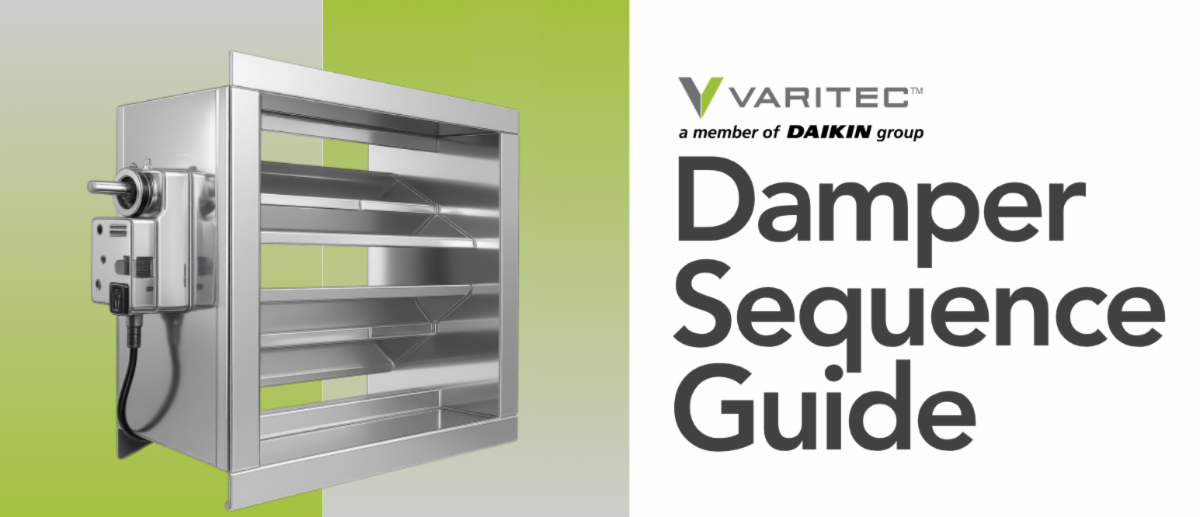
Damper Sequence Guide

Dampers play a central role in outdoor-air control, economizer operation, building pressure, and stable airflow.


This guide connects damper selection with actuators, linkages, control sequences, commissioning, and long-term maintenance along with practical issues that often appear in the field.


LinkedIn  Instagram  Facebook