The Adult Probation/Parole section consists of 3 units, General Supervision, Pre-Trial, and Collections. Staff presently use the PAT for pretrial cases at the time of the bail report and the CSST at the time of Pre-Sentence Investigation interviews. It should be noted that unlike in many counties, PSI’s are completed in almost all cases, except those which are resolved at the Magisterial District Court level. ORAS screenings are also conducted at the time of intake for intercounty transfers. Defendants who score other than “low,” who are expected to be supervised directly by the Pike County Probation Office are then assessed using the CST. Since 2019 supervision standards have been tailored to a defendant’s risk level.
Due to its geographic location, bordering both New York and New Jersey as well as having a commercial district with numerous major box stores, a large percentage of defendants reside out of state. In 2024, 30.3 percent of active cases resided in another state and many of those cases do not meet the requirements for transfer via Interstate Compact. Of the 205 inactive cases, 60 are ICOTS transfers, 65 are Inter-County Transfers, and 80 are violation of probation/parole warrants. The risk assessment tool, along with advances in electronic reporting means, have made supervising non-residents easier while ensuring integrity in the supervision process.
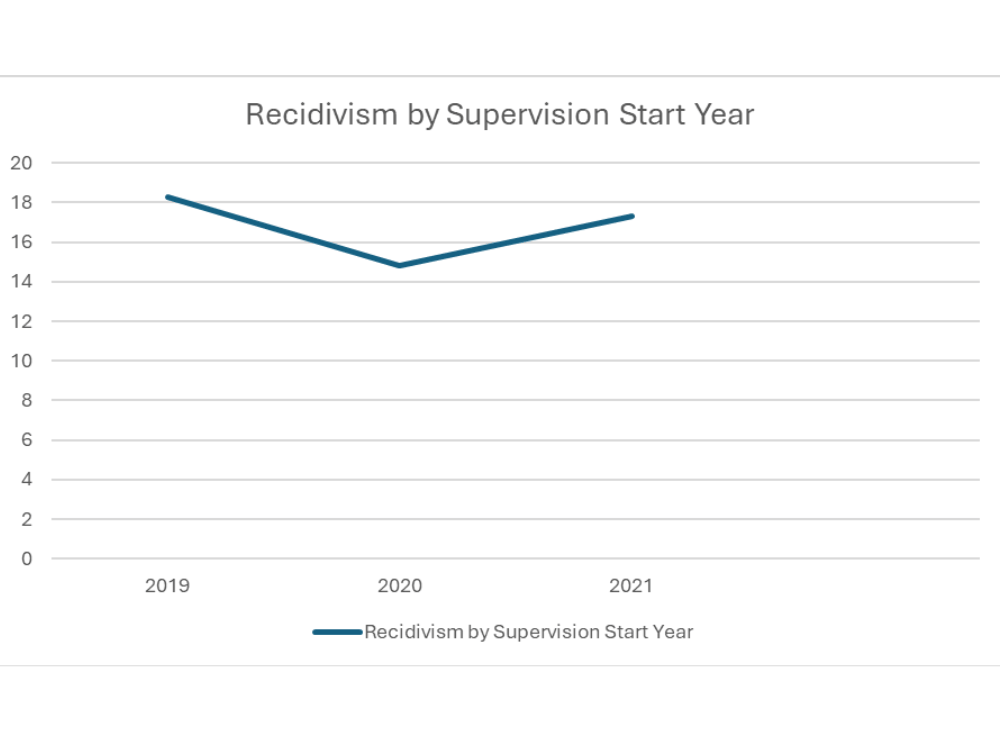
In 2022 Pike County began a Central Court. In 2024, 725 bail reports were completed. The information contained in these reports is designed primarily to aid the Magisterial District Judge in making an informed decision when setting monetary bail or tailoring non-monetary conditions to each defendant’s unique circumstances. Beyond that, this information is useful in helping the District Attorney’s Office and Defense Counsel negotiate plea agreements in the hopes of expediting the process so defendants can be supervised, thereby helping to protect the community, while affording quicker referrals for needed services. Studies in other Pennsylvania counties have shown that pre-trial populations recidivate at a higher rate than people in other stages of the system.
All Probation Officers are trained in ORAS, Motivational Interviewing, and Introduction to EBP. Two Probation Officers are trained as ORAS Lead Instructors, another Probation Officer is a trainer in Intro to EBP along with being a MI Instructor, and another is a Case Planning Instructor. Past challenges have included staff turnover along with staff buy-in from the more experienced/senior officers.
However, further implementation, particularly Case Planning face signification bumps in the road. Presently Case Planning is not routinely being done except in certain Probation w/Restrictive Conditions case. The main challenge is a lack of resources to refer defendants to. There is a single outpatient, DDAP licensed outpatient provider. That provider, although less than 2 miles from the Probation Office, is more than a 45-minute drive for some county residents. Pike County Mental Health services are also limited and present issues when programming and services are needed. Only recently have credentialed programs addressing Anger Management, Shoplifting, and Domestic Violence become available in the region, and none are located within the county. The Probation Office actively works with the Criminal Justice Advisory Board and the Re-Entry Coalition in an attempt to increase affordable and effective services.