|
Courage and Conflict — The Battle of Little Bighorn, 1876
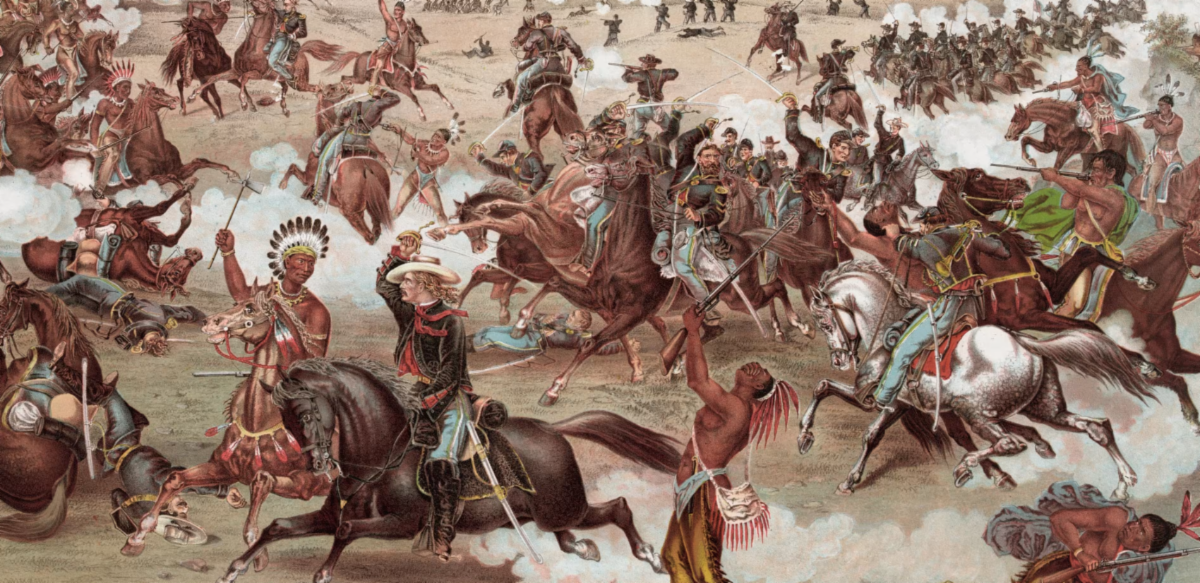
On the plains of Montana in the summer of 1876, a key clash between the U.S. Army and Native nations took place — the Battle of Little Bighorn. Often called “Custer’s Last Stand,” this battle was about more than just a military fight; it was a struggle for land, sovereignty, and survival.
Led by Lt. Col. George Armstrong Custer, U.S. forces aimed to force the Lakota Sioux, Northern Cheyenne, and Arapaho tribes back onto reservations after gold was found in the Black Hills — land sacred to the Sioux and guaranteed to them by treaty. Refusing to leave their homeland, leaders like Sitting Bull and Crazy Horse united their people to defend their way of life.
On June 25, 1876, Custer’s 7th Cavalry attacked a large encampment near the Little Bighorn River. Outnumbered, his troops were overwhelmed. Custer and over 200 soldiers were killed. For Native warriors, the victory was a strong statement of strength and sovereignty. But it also led to swift retaliation from the U.S. government, which ultimately resulted in tribes being confined and losing control of the Black Hills.
Today, the Battle of Little Bighorn remains a symbol of both resistance and tragedy — a reminder of the high price paid in the fight for Native rights and independence. The land where it happened, now a national monument, still holds sacred significance — honoring not just those who fell, but the resilient spirit of those who fought to defend their homeland.
|