News and information to help journalists serve the public and stay safe.
|
|
Why has COVID-19 hit communities of color hardest across the U.S.? And how should journalists explain that fact?
The National Press Club Journalism Institute hosted a virtual conversation on Monday with Dr.
Ibram X. Kendi
, a New York Times-bestselling author and the founding director of The Antiracist Research & Policy Center at American University and
Robert Samuels
, Washington Post national reporter, moderated by
Shannon Young
,
POLITICO reporter. They
discussed key lessons from Dr. Kendi’s book,
“How to be an antiracist,”
and how to apply them to coverage of the coronavirus pandemic.
Among their insights:
An antiracist journalist looks at racial inequities and understands that those disparities are the result of policies or environment, not biology.
Kendi
: You're covering COVID-19 right now and you're trying to understand why is it that in Georgia black people are about 32% of the state population, but about 52% of the people who have died. What a racist
–
or somebody who has racist ideas
–
would ask is: What is wrong with the people? What is wrong with black people? What are they not doing? Let me try to figure out what behavioral or cultural problems they have and report that out. Versus somebody who has more of an antiracist perspective, will say: Okay, what's wrong with the environment? What's wrong with the policies? What's wrong with the structures? Let me report that out to explain those disparities.
Samuels
: We're sort of still preoccupied with the idea that blacks live fundamentally differently from whites. When we started looking at why black people were dying at disproportionate rates, the first thing people would talk about is comorbidities. Underlying conditions, respiratory infections, things that are true and exist at higher rates, as if those things by themselves could explain gross differences in people dying from a disease that's foreign to us. And typically, it's very simple for a reporter to stop there. But I think this calls for a larger challenge.
Objectivity is actually “collective subjectivity.”
Kendi
: I remember very early on I was a master's student in African American studies and I had just finished my undergraduate studies in, actually, journalism. And I can never forget, one of my professors, said that there's no such thing as objectivity. And I was like, What do you mean? I'm a journalist, you know, objectivity is key. And so she actually argued and went on to demonstrate that objectivity is nothing but a collective subjectivity...
If a journalist believes that there's something wrong with a particular racial group, and then there's racial disparities that they're more likely to be affected and die, then that journalist is going to be more likely to ask questions about what's wrong with that racial group, leading to those inequities. If that journalist believes there's nothing wrong or right, superior or inferior, about any racial group, and there are disparities, then that journalist is not going to try to figure out what's wrong with the group. They're going to try to figure out what policies may be causing these disparities.
Samuels
: Do we have prejudice? Absolutely. Probably everyone does. Is there a bias? Yes, there is. Can you be a journalist, can you do fair reporting, even if you have a bias? Yes, you can. But the way you do it is by doing more reporting.
Read on
for more highlights from the conversation. Watch the video here:
|
|
|
At the Lexington Herald-Leader, the Kentucky Derby is an all-hands-on-deck affair. This year was different, says Editor
Peter Baniak
by email:
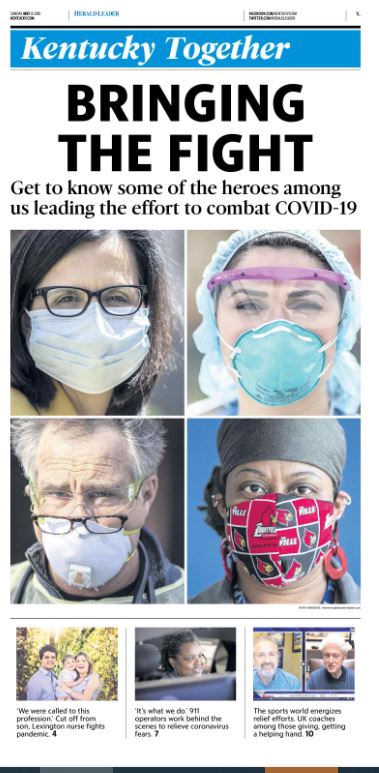
“The first Saturday in May would normally be the weekend when we would have mobilized most of our staff to focus on the Kentucky Derby in Louisville. It is always one of our biggest undertakings of the year. This year, the Derby has been postponed until September.
“Inspired by plans for a similar section at the Miami Herald (a fellow McClatchy newsroom), we decided that it would be a great idea to use this time to celebrate Kentucky heroes engaged in the fight against COVID-19, and the special section was born.
“The section has contributions from our lead Opinions columnist Linda Blackford and news reporters like Jeremy Chisenhall. It also has a huge contribution from our award-winning sports staff, led by Sports Editor Mat Graf, with stories by sports columnist John Clay and sports writers Jerry Tipton (our UK basketball beat writer), Josh Moore (our UK football writer), Jared Peck (our high school sports writer) and Josh Sullivan. It was a true team effort.
“Here are links to a few of the stories in it (we'll be posting more throughout the week):
“One other note: Our local/regional advertisers stepped up and showed great support for this section as well, and we certainly appreciated their support for this effort.”
|
|
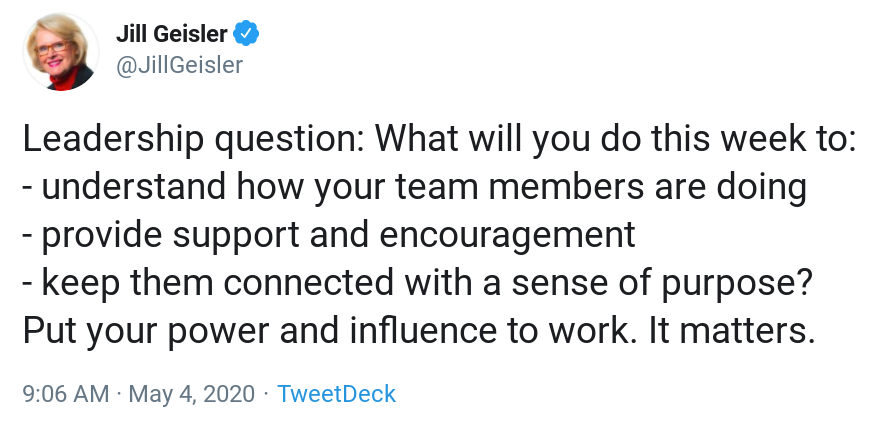
You may feel less powerful now, and more powerless, than you did a few months ago when you were in your office or newsroom in an impromptu story meeting or a long-planned strategy session. But your power matters more than ever.
Your power to appreciate
,
encourage
and take the long view will help your team move forward together,
with trust in you and each other
.
Advice from
Jill Geisler
, Bill Plante Chair in Leadership & Media Integrity, Loyola University Chicago, Freedom Forum Fellow in Women’s Leadership
|
|
|
If you’re hitting a creative wall, try getting behind a lens.
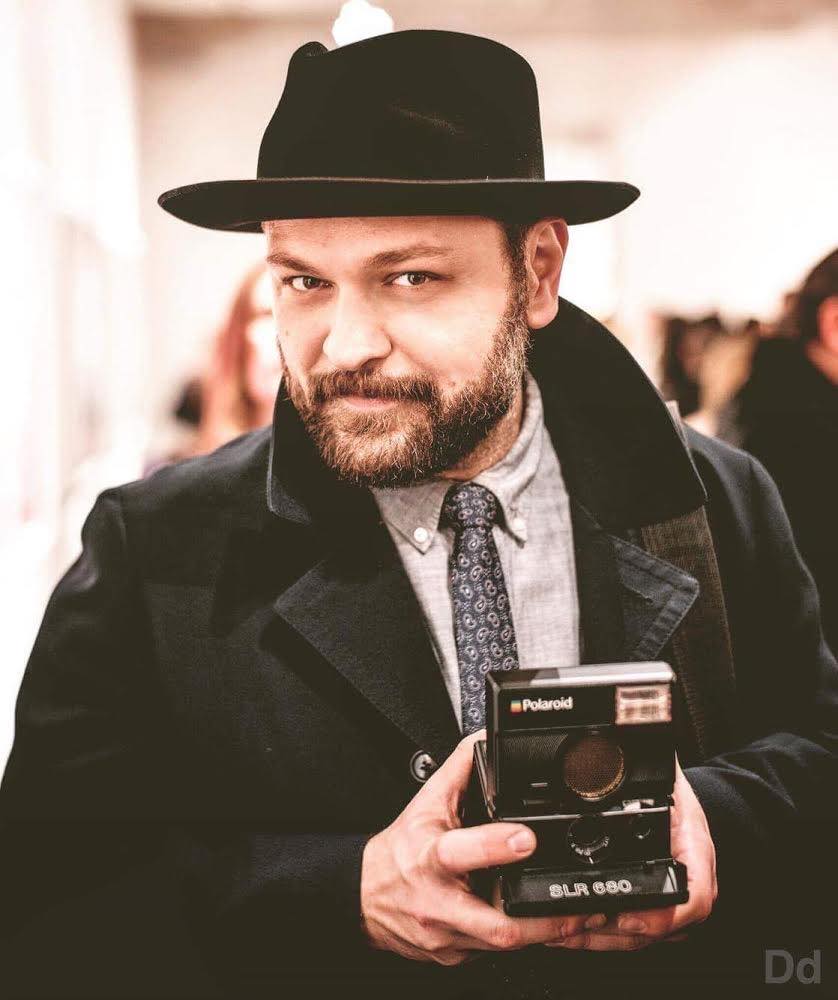
Dallas-area journalism educator Daniel Rodrigue, like many instructors around the country, has reinvented end-of-semester instruction and assignments in the wake of COVID-19 campus closures. Rodrigue, who also supervises student media at Brookhaven College in North Texas, shared his “Choose-Your-Own-Adventure Photography Challenge” with the Journalism Institute.
Whether you’re a photographer — or simply want to change your perspective — try one of the challenges Rodrigue issues to unlock creativity. Hint: You do not need a professional camera to try this — your phone camera will do just fine!
Waffle Challenge
: Use your imagination and ingredients on hand to style a plate of fresh or frozen waffles. Shoot in good light. Pro-tip: If possible, have an out-of-frame assistant pour syrup while you shoot.
Forced Perspective Challenge
: Insert yourself into a scene using miniatures, ranging from toys to cars to dolls to action figures.
Monochromatic Challenge
: In good light, photographers must use five to 15 objects of the same color to shoot either self-portraits, portraits (if possible safely) or still life arrangements.
|
|
Correction
: This newsletter misgendered student
Tony Thai
in Friday's edition. We regret the error.
|
|
This newsletter is written & edited by the National Press Club Journalism Institute staff: Beth Francesco, Holly Butcher Grant, Jim Kuhnhenn, and Julie Moos.
Send us your questions and suggestions
for topics to cover.
|
|
The National Press Club Journalism Institute promotes an engaged global citizenry through an independent and free press, and equips journalists with skills and standards to inform the public in ways that inspire civic engagement. Support our important work with a tax-deductible contribution today.
|
|
|
|
|
|
|