News and information to help journalists serve the public and stay safe.
|
|
Join
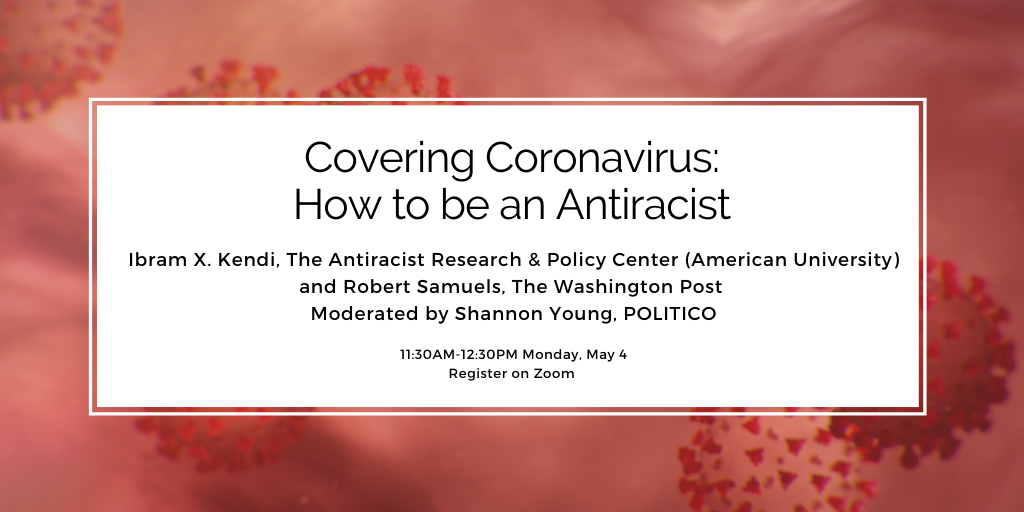
Ibram X. Kendi
, a New York Times-bestselling author and the founding director of The Antiracist Research & Policy Center at American University, and
Robert Samuels
, Washington Post national reporter, for a discussion of coronavirus inequities and how journalists can cover them. The conversation and Q&A will be moderated by POLITICO reporter
Shannon Young
,
from 11:30 a.m. to 12:30 p.m. Monday, May 4, on Zoom.
Registration is open
.
|
|
What will open? What won’t? Who will visit restaurants, businesses and other establishments allowed to operate at 25% capacity as of May 1?
Those are some of the questions
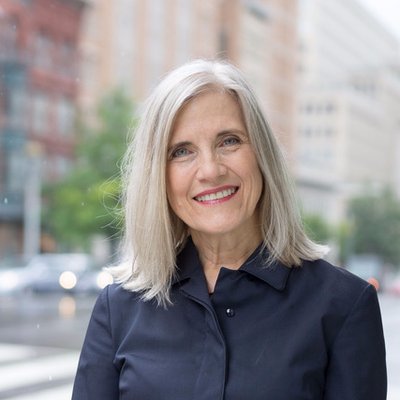
Beth Frerking
(pictured) and journalists at The Dallas Morning News are preparing to report on in coming days.
“This is actually really one those times where I don't have any preconception of what I'm going to see,” said Frerking, the DMN’s News Vertical editor. “We just have to be out there and look for it.”
With health an ongoing concern for news teams during the COVID-19 pandemic, journalists must consider their safety while finding stories that reflect their communities. Until now, that reporting has been done largely from their homes. More interaction outdoors and in businesses poses different challenges.
“We want to make sure that we're representing people from all over Dallas,” Frerking said. “And that does mean, often, reporters getting in their cars and going places.”
Here are some tips for reporters going back into the field:
- Encourage tipsters in whichever way works best for your community. The DMN gets a lot of engagement from readers in its Facebook groups and through callouts in stories, Frerking said.
- Have a plan, but be ready to pivot. “I think we're going to hear from a lot of people that, ‘Hey, this is happening here.’ So we need to be ready to go to those places,” Frerking said.
- Editors should continue to stress safety to staff in the field. The DMN is “erring on the side of caution and, really, conservatism in terms of what we're asking our reporters to do, or reporters or photographers. We're extremely aware of this and we're socializing messages about safety.”
Read on
for more safety measures, in addition to what is resonating with DMN readers.
|
|
Join
Jim Kuhnhenn
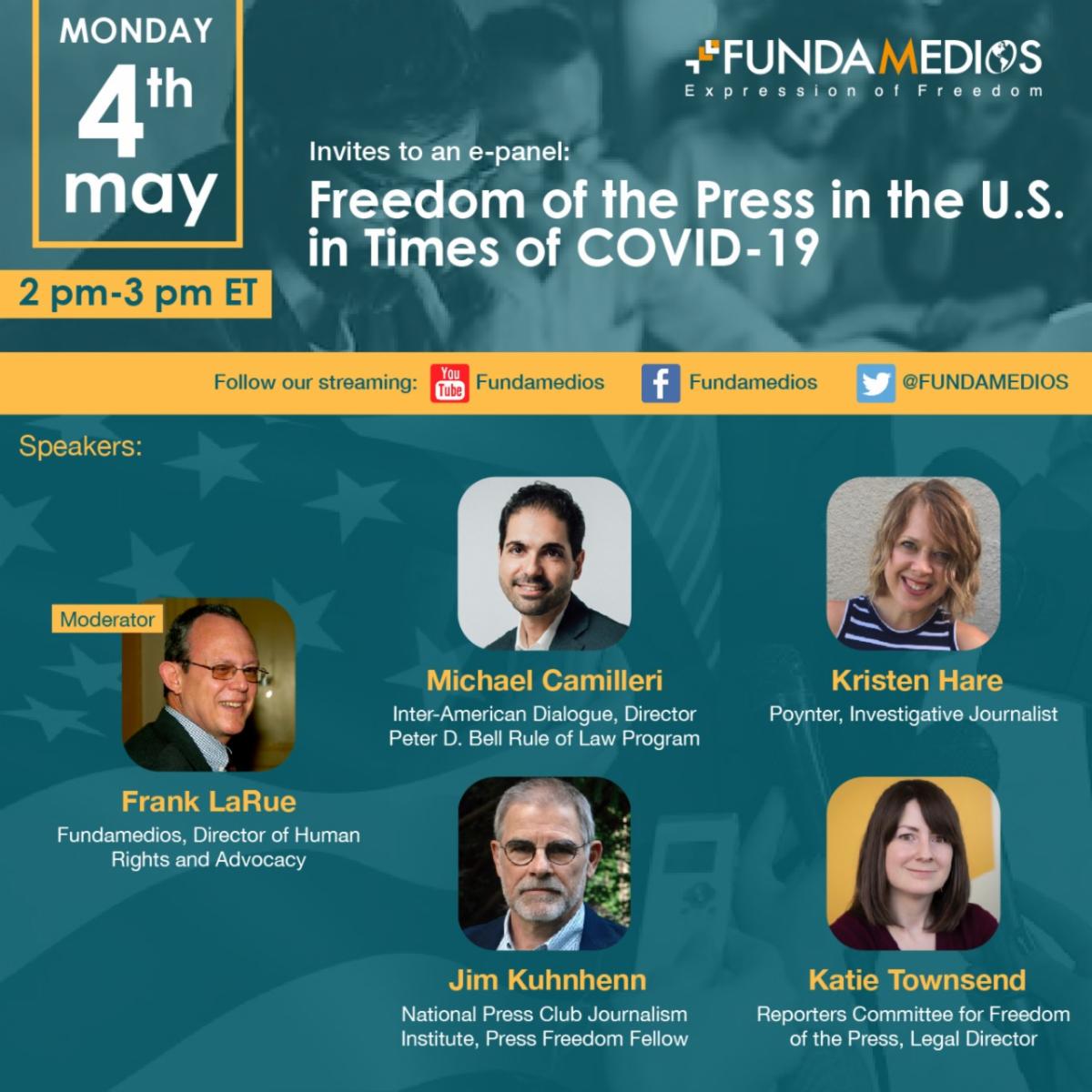
, press freedom fellow at the National Press Club Journalism Institute, and other free press advocates for a panel discussion at 2 p.m. Monday, May 4, sponsored by Fundamedios, a nonprofit dedicated to promoting and protecting press freedoms in Latin America and for Hispanic journalists in the U.S. The discussion will be moderated by
Frank LaRue
,
former UN Special Rapporteur on the Promotion and Protection for the Right to Freedom of Opinion and Expression.
|
|
Bill Plante Chair in Leadership & Media Integrity, Loyola University Chicago
Freedom Forum Fellow in Women’s Leadership
I looked at my email inbox. The top message bore the subject line “Touching Base.” The sender was a friend - someone who attended one of my leadership seminars years ago and keeps in touch. Sometimes he sends an article I might find interesting. Other times he’s looking for info I might provide. Our exchanges are fairly brief but supportive. I always enjoy them.
Sociologists would define our relationship as a “
weak tie
.
” While the term sounds negative on its face, the stuff of “I’m sorry I’m not a better friend…,” stop right there. Weak ties are a
very good thing
.
You see, “strong ties” are our close family and friends - the ones whose lives are deeply intertwined with ours. We invest lots of time and attention to each others’ needs.
The weak ties are people who know us well enough to find us memorable and credible. They are our connectors to other good people, experiences and opportunities. They are a special kind of “super glue” for networks, if they choose to be.
Today, in the midst of disruption and distance, separation and sequestration - we need more connectors.
Please make a conscious choice to be one. Connectors have tremendous power:
- They can make the isolated feel less alone.
- They can spread the word on job openings.
- They can make introductions for job hunters.
- They can help less powerful people build networks and find opportunities.
- They can provide a bigger showcase for the good work of others.
- They can link like-minded people who might never have met but could work together on a project or program.
- They can invite people into associations and cohorts of mutual interest.
Most of all, they can make people feel valued. The recently laid-off, the graduating senior, the freelancer with a pitch, the person unsure about a career change, the reporter in search of a source, the marginalized voice who needs an ally, the successful professional who wants to give back to others... any one of them can be lifted up, simply by the intentional actions of good connectors and the power of their “weak ties.” The connector’s default impulse is, “I think I know someone who can help. Let me check with them to see if I can make an introduction.”
Think about the best connectors in your career and why they are so effective. If you can, reach out and thank them. I guarantee it will make their day, however distant they may be right now. And then do one more thing that’s even more important: Pay it forward.
|
|
|
As some states begin to ease up on stay-at-home orders and allow businesses to reopen, journalists and communicators should take stock of their personal protection. That includes how they maintain cloth masks, which the
CDC has recommended be worn in public at all times
.
Here are some things to keep in mind:
- Don’t share a mask, even with a family member.
- Wash your hands or use hand sanitizer before putting on and after taking off a mask. Avoid touching the mask once it’s on.
- Once used, consider masks contaminated. A recent lab study showed COVID-19 can survive on a face mask up to seven days.
- Experts say masks should be washed immediately after being around someone who is symptomatic, or after one or two uses.
- The CDC says it’s OK to toss masks in your regular laundry, using the warmest water setting and completely drying items. (Tumble-drying a mask without washing likely doesn’t kill the virus.)
- Be mindful of how detergent could affect sensitive skin on the face, which already could be suffering.
- Consider making or buying multiple masks, which will show signs of wear over time. Having multiple for use throughout the week.
|
|
This newsletter is written & edited by the National Press Club Journalism Institute staff: Beth Francesco, Holly Butcher Grant, Jim Kuhnhenn, and Julie Moos.
Send us your questions and suggestions
for topics to cover.
|
|
The National Press Club Journalism Institute promotes an engaged global citizenry through an independent and free press, and equips journalists with skills and standards to inform the public in ways that inspire civic engagement. Support our important work with a tax-deductible contribution today.
|
|
|
|
|
|
|