News and information to help journalists serve the public and stay safe.
|
|
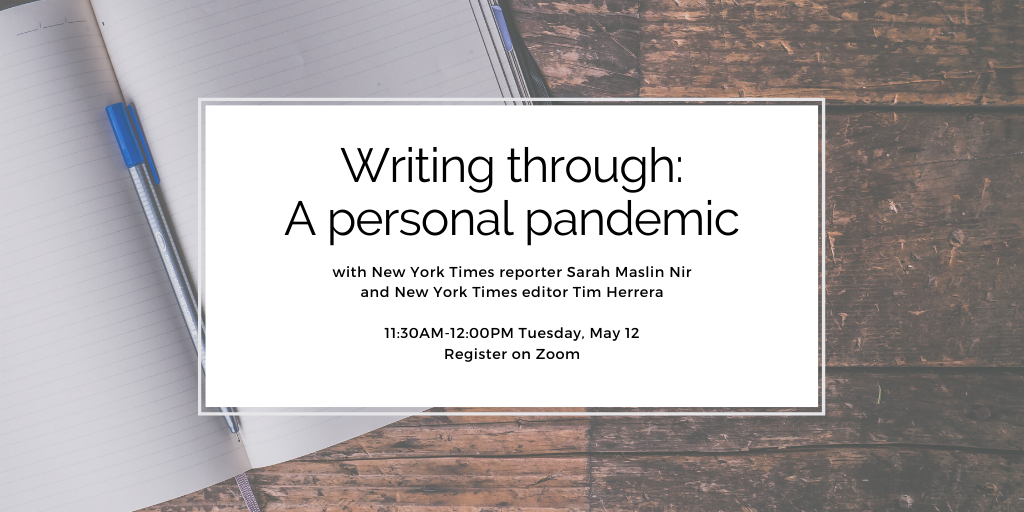
The first part of this Zoom webinar on May 12 will be a 15-minute conversation with Sarah and Tim about writing through a personal pandemic. The second part of the program will be a 15-minute Q&A with participants.
Registration is open
.
|
|
News organizations have been cutting costs for a long time, and
visual journalists have been harder hit than almost any other members of the journalism community
, said
Akili Ramsess
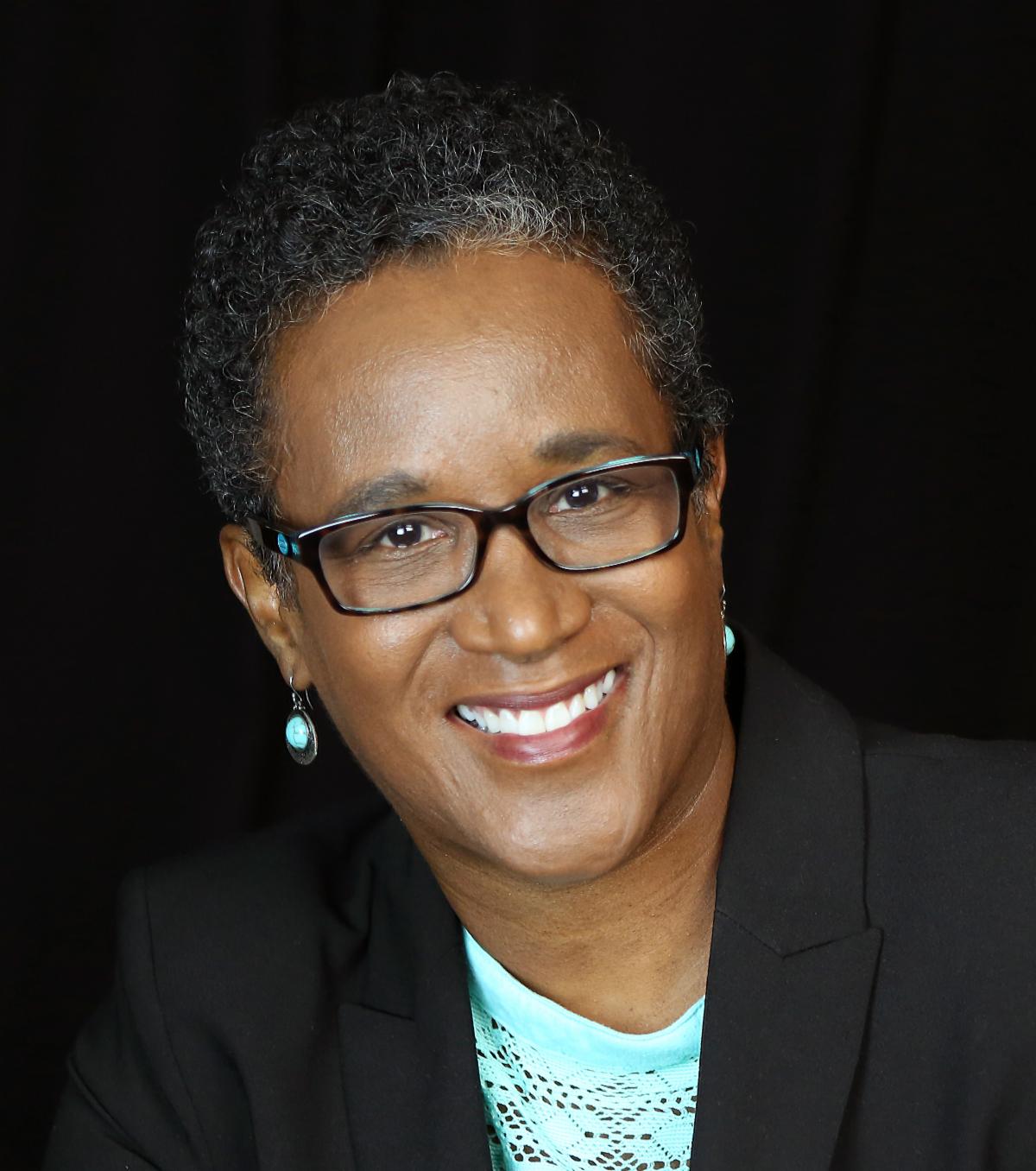
(pictured)
, executive director of the
National Press Photographers Association
, in an interview Tuesday afternoon. Ramsess, who celebrated her fourth anniversary with the organization on April 4, was underscoring
the ‘urgent’ need to help NPPA financially
so that it can continue to serve photographers, photo editors and all the visual journalists who depend on them for training and community.
“People honestly feel that we’re here for them and we’re trying to keep our profession and our industry alive and appreciated,” she said. “It is urgent because we don’t want to exist just to exist. The money we need is to execute the programming people value ... and also just to have a community to connect with is very important ... particularly as the field is more isolating as we’ve worked more remotely.”
Over 80 percent of NPPA’s membership used to work as staff in a media organization. But even before the pandemic, over half had become freelance. Much of the programming NPPA does is to help them with career development, business development, and skills development, Ramsess said.
This is an edited version of the conversation.
Did you apply for a stimulus loan?
Ramsess
: No, we didn’t. The
PPP
, in and of itself, excluded us because we’re a 501(c)(6). While we were trying to figure out, going back and forth, on what the
EIDL
represented to us ... by the time we finally came to a decision — let's go ahead and apply for it — they ran out of money and closed applications. It’s supposed to be opening up again, but I visit the SBA page every day, and that application process is still closed. As soon as it’s open again, we will apply for that portion of it. We still have hopes, but I’m not counting on it, that the second stimulus package or relief package part two will have options for (c)(6)s in it.
Prior to this, was something else going on that was affecting NPPA’s finances that the pandemic exacerbated?
Ramsess
: It was exacerbated by the pandemic. We were already experiencing the downward turn of membership, which was a major impact simply because the shrinking of the industry impacted visual journalists harder than almost any other group within the journalism community.
Read on
for NPPA's fundraising goals and ways in which you can support visual journalists.
|
|
|
By William Driscoll
When Tom Hanks recovered from COVID-19,
he donated blood plasma to help save the lives
of up to three other COVID-19 patients—calling the donation “as easy as taking a nap,” as the Los Angeles Times reported. Hundreds of health care providers can now offer this “convalescent plasma” to COVID-19 patients who choose to request or accept it, as shown on
this map
. Yet most people who get COVID-19 don’t know that this may be an option to help them recover, and wouldn’t know of the opportunity to donate plasma—for example, to the Red Cross—after they recover. Local journalists can report on this little-known aspect of COVID response, drawing on resources such as the website
uscovidplasma.org
. Here’s an example of local coverage that did not rely on Tom Hanks:
Convalescent plasma one of the best hopes for COVID-19 treatment
.
|
|
Bill Plante Chair in Leadership & Media Integrity, Loyola University Chicago
Freedom Forum Fellow in Women’s Leadership
A colleague tells you he’s feeling more stressed as the weeks go by.
Do you:
- Tell him it’s normal these days and not to worry.
- Explain what you do when you feel anxious.
- Ask him to tell you more.
Trust me, #3 is your best option. It allows you to be an informed coach, rather than an advice-giver who’s commenting on an incomplete picture.
Good coaching is built on questions. Open-ended, non-judgmental questions help both people identify core issues and options.
- These are open-ended questions:
- How does the stress manifest itself?
- Have you spotted any patterns to the stress?
- What have you tried so far to deal with it?
- What approaches seem to work better than others?
While asking these questions, listen carefully. Repeat back to the other person what you’ve heard, to make sure you are on the same page. Often, people may say, “That’s not what I really meant,” or “You understand perfectly.”
You can also reflect: “I think I’m hearing you say you’ve taken on a lot of additional responsibilities and aren’t sure you can talk with your boss about it. What would it take for you to do that?”
You can also reframe: “You’ve said your boss should know how difficult things are for you right now, and you’re sure she doesn’t care. Are there other reasons she might not be aware of your situation?”
I think you see where I’m going here. The more questions you ask, the more options you reveal. You learn things that weren’t evident at the start of a conversation - information you now know would make you regret having said, “It’s normal” or “Here’s what I do” right out of the blocks.
Those responses may actually be valuable at some point in the conversation, but only after you’ve used the power of questions to know precisely when and why to share them.
Here’s what I teach aspiring coaches: The first story you hear is never the full story. The power of questions helps you find it - and helps everyone find better answers.
|
|
|
Today is
#GivingTuesdayNow
, an emergency response by the organizers of December’s traditional #GivingTuesday to the unprecedented need caused by the COVID-19 pandemic.
- Subscribe to a local newspaper or magazine.
- The next time you hit a paywall, pay for the content or daylong access to a site.
- Join a journalism organization that supports your interest, or renew your membership dues.
- Share your times and skills with a journalism student. Contact us to find out how.
- If you enjoy this newsletter, support our work with a donation today.
|
|
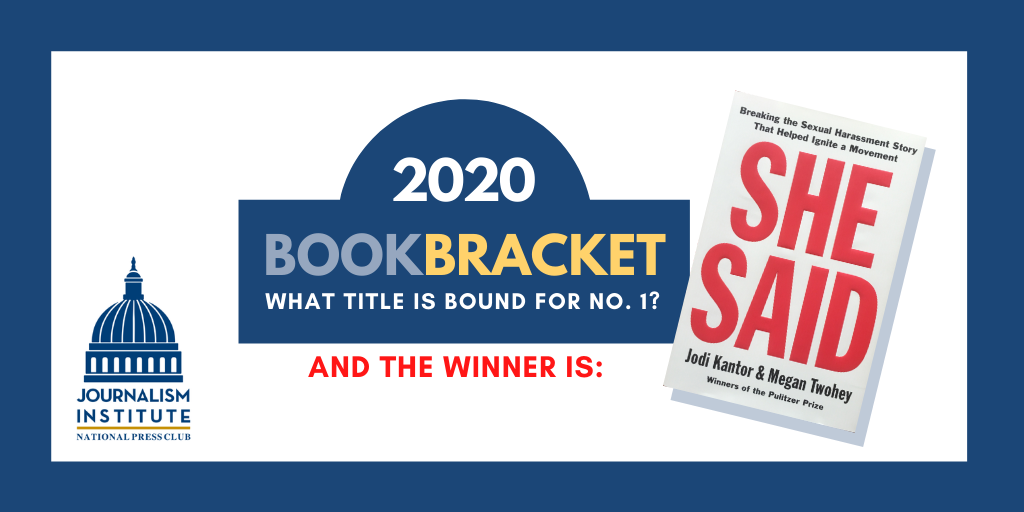
“She Said,” by New York Times reporters Jodi Kantor and Megan Twohey, is the 2020 Book Bracket champion.
The title narrowly bested journalism classic “All The President’s Men,” by Bob Woodward and Carl Bernstein, in the final round of the
National Press Club Journalism Institute
’s inaugural Book Bracket. Throughout April, voters narrowed the original pool of 64 titles submitted as readers’ favorite journalism books.
All of the top titles submitted are winners: They’ll be featured in the Eric Friedheim National Journalism Library later this year.
Both finalists illustrate how tenacious journalism can instigate justice and ignite change.
In their book, Kantor and Twohey chronicle the investigative reporting behind their New York Times coverage, breaking the Harvey Weinstein story that ended his career and catalyzed the #MeToo sexual abuse and sexual harassment movement. The reporters received a Pulitzer Prize for their coverage.
Journalism school favorite “All The President’s Men” details Woodward and Bernstein’s investigation into the 1972 break-in at the Watergate Office Building and discovery of deep-
seated
scandal in the Nixon administration. Their work led to numerous government investigations and Nixon’s eventual resignation. The Washington Post’s coverage earned a Pulitzer Prize.
|
|
This newsletter is written & edited by the National Press Club Journalism Institute staff: Beth Francesco, Holly Butcher Grant, Jim Kuhnhenn, and Julie Moos.
Send us your questions and suggestions
for topics to cover.
|
|
The National Press Club Journalism Institute promotes an engaged global citizenry through an independent and free press, and equips journalists with skills and standards to inform the public in ways that inspire civic engagement. Support our important work with a tax-deductible contribution today.
|
|
|
|
|
|
|