News and information to help journalists serve the public and stay safe.
|
|
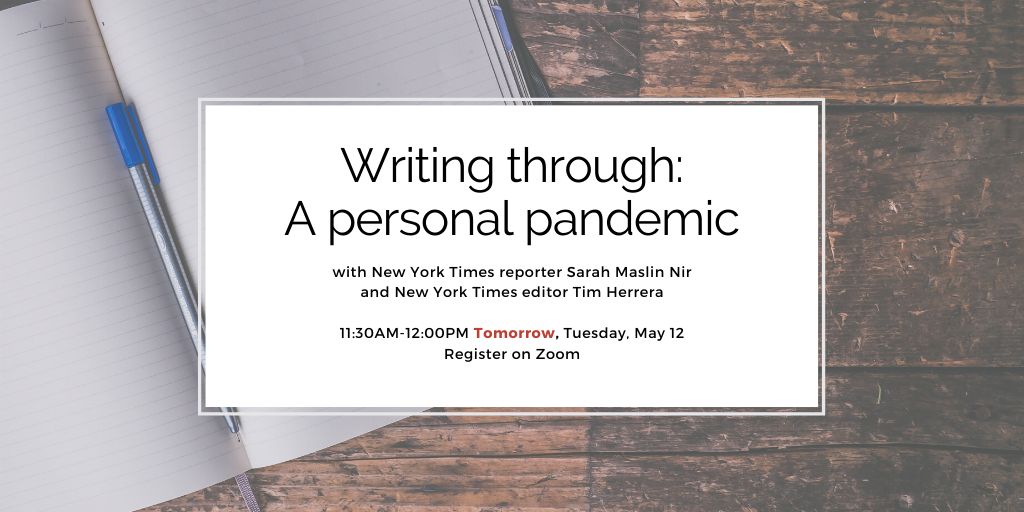
The first part of this Zoom webinar on May 12 will be a 15-minute conversation with Sarah and Tim about writing through a personal pandemic. The second part of the program will be a 15-minute Q&A with participants.
Registration is open
.
|
|
As the academic year comes to a close in communities across the country, the work for education reporters is only ramping up.
The work ahead will include finding students and their families willing to share how remote learning has affected them — and who has been left behind, says
Shelly Conlon
, who covers education in Sioux Falls, South Dakota. Conlon’s
investigative reporting
for
The Argus Leader
last year
prompted legislation
that aims to change how the state educates deaf and hard of hearing children.
“I have to just keep reminding them (parents) that we can’t tell these important, relatable stories without them and that even if they feel alone now — and maybe more alone than ever before because of the pandemic — they’re not,” Colon said in an email interview. “And we’re here to listen and share with others.”
Education reporters have big questions ahead, she said:
- Who is paying attention to minority populations and how they’re treated during this time?
- Who is making sure they’re not getting left behind and how? This includes racial and socioeconomic disparities, as well as students with special needs.
- Education reporters will need to “look for those who may even have less a voice now than they did before the pandemic, and ask how they’re doing,” Conlon said.
That includes a close eye on how schools and districts will measure student success. Remote learning and waived standardized testing in states across the U.S. could create gaps that impact both state and federal funding in years to come.
“SD schools don’t have the same risk factor as say, Texas, where schools could be closed down if they don’t meet a certain measure of success for state testing for a few years,” Conlon said. “But those records still dictate how and where the state spends money for additional support to help students meet those goals the next year.
“It’s too soon to tell how not doing those state exams could affect things long-term.”
Read on
for more education story angles, how to reach parents and administrators, and Conlon’s reminder to always seek humanity in stories.
|
|
|
The National Press Club Journalism Institute is spotlighting
the next generation of journalists
, students graduating from college or Master’s programs this spring into
a challenging job market
, in hopes they’ll meet future bosses and colleagues here, who will reach out and support them in building journalism’s future together.
School
: University of Oregon
Location
: Eugene, Oregon
Editor-in-Chief
: The Daily Emerald
Internship
: The Wall Street Journal
What's been your best moment in journalism?
Tobin
: As an intern at the Wall Street Journal, I got a byline on an investigative story about student loan relief programs that were scams. One of the companies we were investigating had been contacted by regulators who were concerned about the company's business practices. The company filed for bankruptcy, which, as we reported in our story, was because of "investigations from different state attorney generals" and because "the possibility of getting into a big lawsuit with, you know, federal regulators made it basically not worth it to continue at that point.”
A few months later, attorneys general from several states took action against the company. I kept up with the court filings and found out the company tried to correct their actions after we published our story.
This is what the court filing said: "The business changes implemented after the Wall Street Journal article could fairly be interpreted as a mad scramble to correct illegal practices to stave off potential regulatory, civil, and possible criminal liability. Or, the changes might be a sincere effort to embrace compliance. But as Receiver, I need not reach a definitive conclusion on such internal motivations, which do not impact my determination, as detailed below, that the Receivership Defendants operated unlawfully even after the August pivot and the business cannot operate profitably and lawfully using the assets of the Receivership Estate going forward."
At this moment, I knew our story had an impact.
|
|
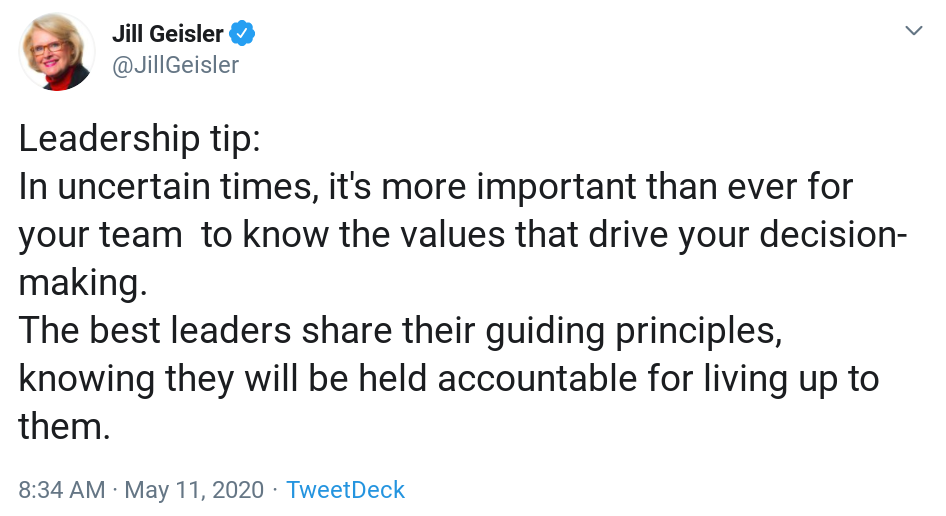
Does every journalist in your organization know the principles that guide decision-making? Do they see you and the leadership team model transparency,
allyship
, and
integrity
? Now more than ever,
discuss your ethics
,
show your standards
, and encourage everyone in your operation to raise a red flag when you fall short.
Advice from
Jill Geisler
, Bill Plante Chair in Leadership & Media Integrity, Loyola University Chicago, Freedom Forum Fellow in Women’s Leadership
|
|
|
Journalism matters. Chances are, as a journalist, you’ve helped to change someone’s life. That can be difficult to remember amid covering the COVID-19 pandemic, when good news and bad news vie for attention by the hour.
Today’s tip: Take 10 or 15 minutes to gather up the nice emails you’ve received from readers, kudos from the boss, or cards from co-workers and file them into a “love me” folder. Whether electronic or physical, visit that folder when you doubt your skills or your impact. Mindfully reading and reflecting on what you’ve done well can build motivation to get through what’s in front of you.
|
|
This newsletter is written & edited by the National Press Club Journalism Institute staff: Beth Francesco, Holly Butcher Grant, Jim Kuhnhenn, and Julie Moos.
Send us your questions and suggestions
for topics to cover.
|
|
The National Press Club Journalism Institute promotes an engaged global citizenry through an independent and free press, and equips journalists with skills and standards to inform the public in ways that inspire civic engagement. Support our important work with a tax-deductible contribution today.
|
|
|
|
|
|
|