News and information to help journalists serve the public and stay safe.
|
|
Join
Ibram X. Kendi
, a New York Times-bestselling author and the founding director of The Antiracist Research & Policy Center at American University, and
Robert Samuels
, Washington Post national reporter, for a discussion of coronavirus inequities and how journalists can cover them. The conversation and Q&A will be moderated by POLITICO reporter
Shannon Young
,
from 11:30 a.m. to 12:30 p.m. Monday, May 4, on Zoom.
Registration is open
.
|
|
By Samantha Fariss, University of Oregon School of Journalism and Communication
The National Press Club Journalism Institute hosted a virtual Q&A Wednesday with writers Connie Schultz and Jon Mooallem to discuss how storytelling builds community during difficult times.
Throughout the 30-minute conversation, Schultz and Mooallem answered questions ranging from what inspires them to how to avoid writer’s block and the role writing can play during the COVID-19 pandemic.
“Writing is my normal,” Schultz said. “If I can get myself in the chair, it seems to help me feel like I’m still doing what I’m meant to do.”
The event is part of a series of
community conversations
about covering the pandemic called "Writing Through." It was moderated by Jim Kuhnhenn, the press freedom fellow at the National Press Club Journalism Institute.
Schultz and Mooallem said journalists are the links that connect people with information during times of uncertainty. Mooallem’s most recent book explores the devastating effects of the 1964 Alaska earthquake and the journalist, Genie Chance, who helped put the community back together.
"Having reliable information and having honest information... became the glue that held people together," he said.
Both writers were adamant that journalists can never have too much information heading into the writing process. They emphasized that believing in yourself is the most important step.
“The first person who needs to acknowledge that you are a writer is you,” Schultz said. “The biggest challenge for any writer is to believe you are a writer.”
Read on
for more highlights from the conversation. Watch the video here:
|
|
|
The National Press Club Journalism Institute is spotlighting
the next generation of journalists
, students graduating from college or Master’s programs this spring into
a challenging job market
, in hopes they’ll meet future bosses and colleagues here, who will reach out and support them in building journalism’s future together.
School
: American University
Location
: Washington, D.C.
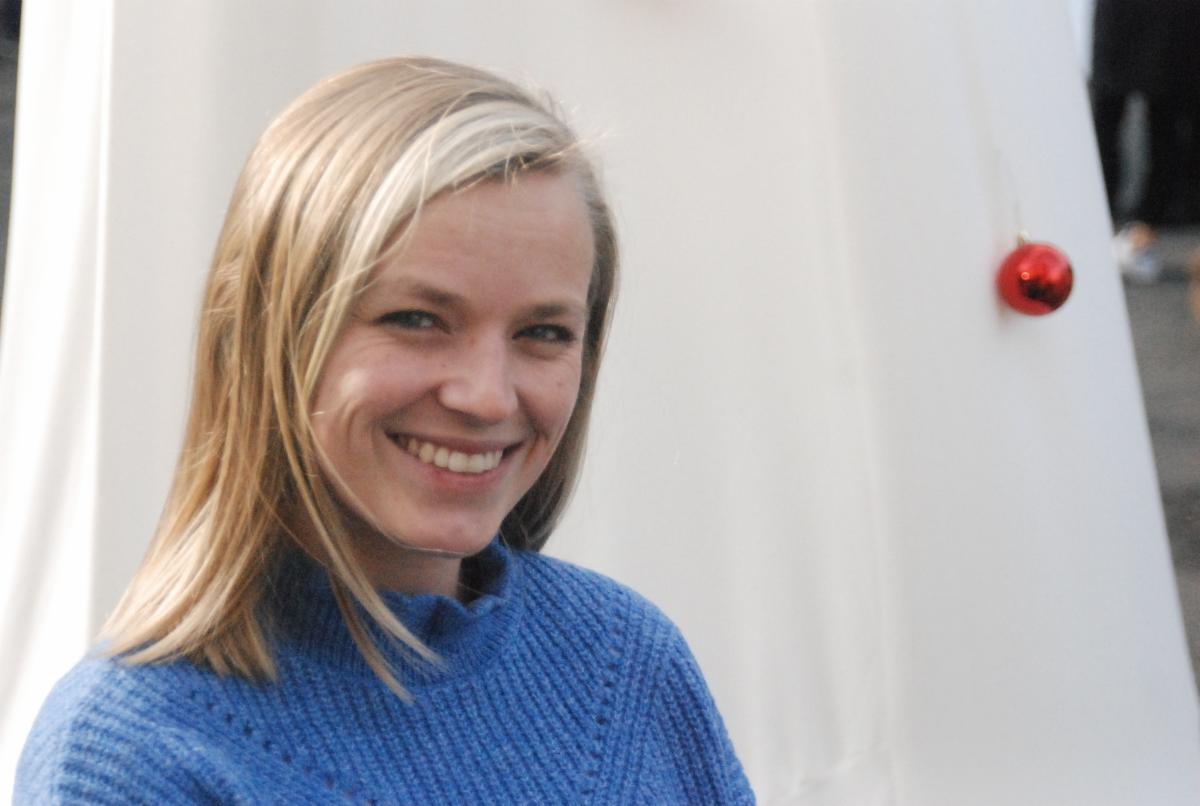
What's the wackiest story you've worked on?
Dean:
Not necessarily wacky... But I was on Christmas break in my hometown (Beaufort, SC) which is a historically conservative county. I drove by a crowd of mostly senior citizens with signs outside of Representative Joe Cunningham's office. When I parked, I initially thought the crowd was protesting Cunningham's decision to support the impeachment of President Trump, but it turns out it was the complete opposite. They were supporting the impeachment inquiry! In full transparency, I was completely surprised because this was not typical political behavior for the area. But it just goes to show the importance of recognizing your own bias and getting the full story. It was pouring rain and I was running around with a coat over my head to interview people. Unfortunately, my phone actually had water damage from being outside for so long… [but] I created
a TV news package for the story
.
If you could meet any journalist and ask for her/his advice, who would it be and why?
Dean:
This is a hard one because there are so many... But it would have to go to Sean Rameswaram of
Today, Explained
or Reema Khrais of This is Uncomfortable (podcasts). I've been listening to both since their inception and I would love to learn their process of making on-air hosting sound so effortless. It always seems like I'm sitting right next to them or jumping in on a really lively conversation. Listening to an episode always feels comforting, which can be really hard to do in audio when you can't associate a face with the voice. Their voices are great. I also would love to know where they get their episode ideas... Everything they do screams creativity.
Sean Rameswaram
responds
: Thanks so much for listening, Elise. When we set out to make ‘Today, Explained,’ one goal outranked all the others: make a news show that felt human. What you hear is our dream fully realized. you laugh, you cry, you lean in, you skip back, you're outraged. I hope listening to our show reminds you of your agency to do something about the most important issues in the world.
With regard to how we decide what to cover, the team is deeply collaborative. We all pitch ideas and improve each other's work throughout the production process. And as far as the voice of the show is concerned, I've been trying to find and perfect it for about a decade, so if you haven't started yet you better get cracking!
|
|
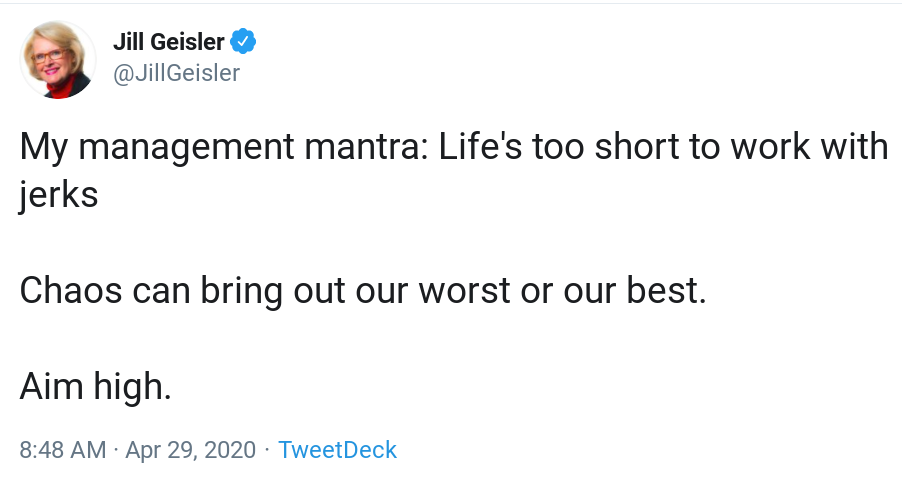
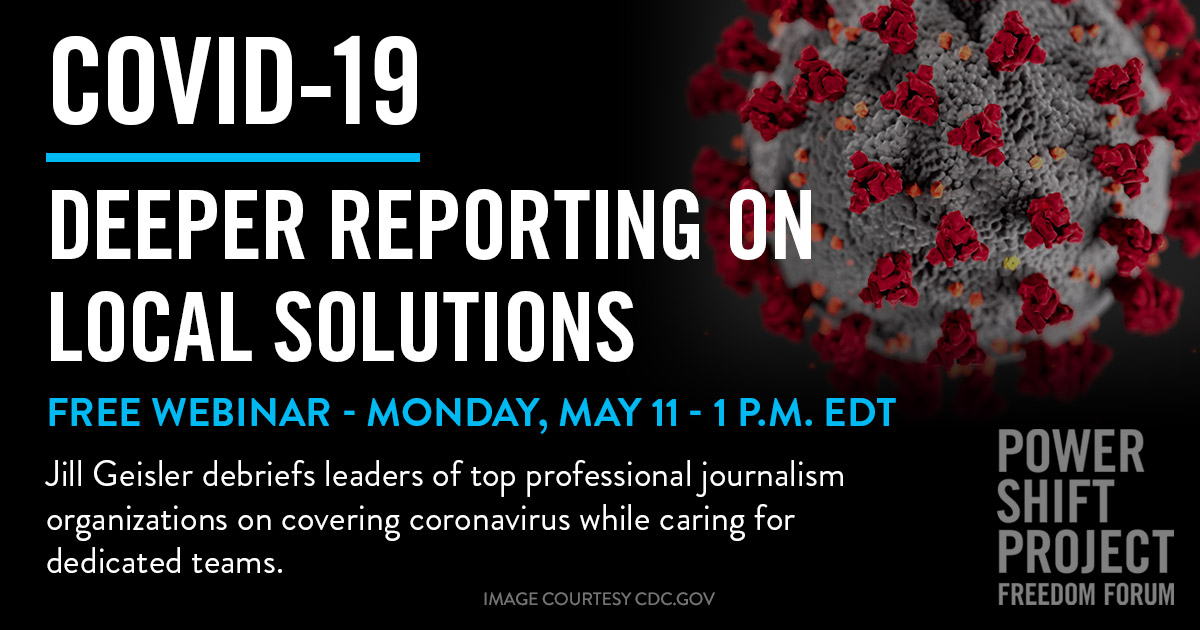
Are you worried that your team might think you’re a jerk even though you think you’re a great boss?
Here’s how to find out
.
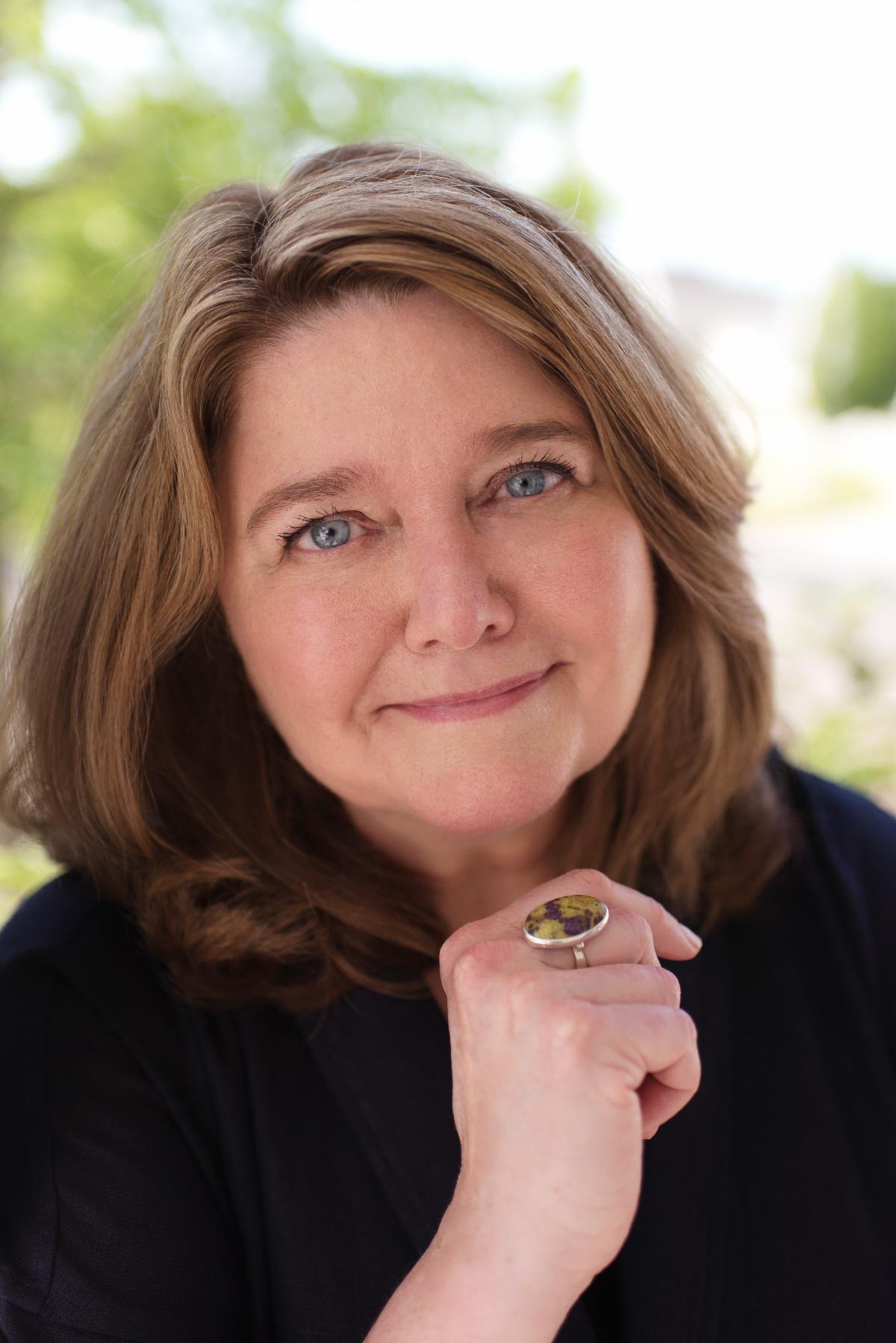
Advice from
Jill Geisler
, Bill Plante Chair in Leadership & Media Integrity, Loyola University Chicago, Freedom Forum Fellow in Women’s Leadership
|
|
|
“I found on social media that, one of things I’m doing now is, I’m using different photos to try to bring a light touch to topics and to remind people to breathe. Because breathing is actually … we know that it can be helpful. We know it can help with stress. And it’s struck me how many people have been responding to me and telling me that they didn’t even realize how often they were holding their breath, or breathing in a shallow way, until they see the reminder to breathe. I’m doing that as much for me as for anyone else, because it helps me stay upbeat.”
Find breathing exercises and other self-care tips
here
.
|
|
If you’ve been supporting local restaurants by bringing carryout home for dinner, please choose this night to
find your favorite restaurant on this list
and get a meal from a place that has been helping raise awareness of the only American journalist being held overseas: award-winning writer, photographer, Georgetown Law student and veteran Marine Corps Captain Austin Tice.
Austin has been detained in Syria since August 2012. That’s 2,816 days since he’s seen his parents, siblings, nieces, nephews, friends, and journalism colleagues. The U.S. government believes Austin is alive and being held by an affiliate of the Syrian government. To learn more about how you can help bring him home safely and soon, visit
AustinTiceFamily.com
.
|
|
This newsletter is written & edited by the National Press Club Journalism Institute staff: Beth Francesco, Holly Butcher Grant, Jim Kuhnhenn, and Julie Moos.
Send us your questions and suggestions
for topics to cover.
|
|
The National Press Club Journalism Institute promotes an engaged global citizenry through an independent and free press, and equips journalists with skills and standards to inform the public in ways that inspire civic engagement. Support our important work with a tax-deductible contribution today.
|
|
|
|
|
|
|