View this email in your browser.

Gaples Institute logo
Animated succession of many whole grains of different colors and textures, overlaid by the text "The Whole Truth About Whole Grains"

Whole grains do a lot more than fill you up! They're a rich source of fiber and nutrients linked to heart health and longevity.

What Are Whole Grains?

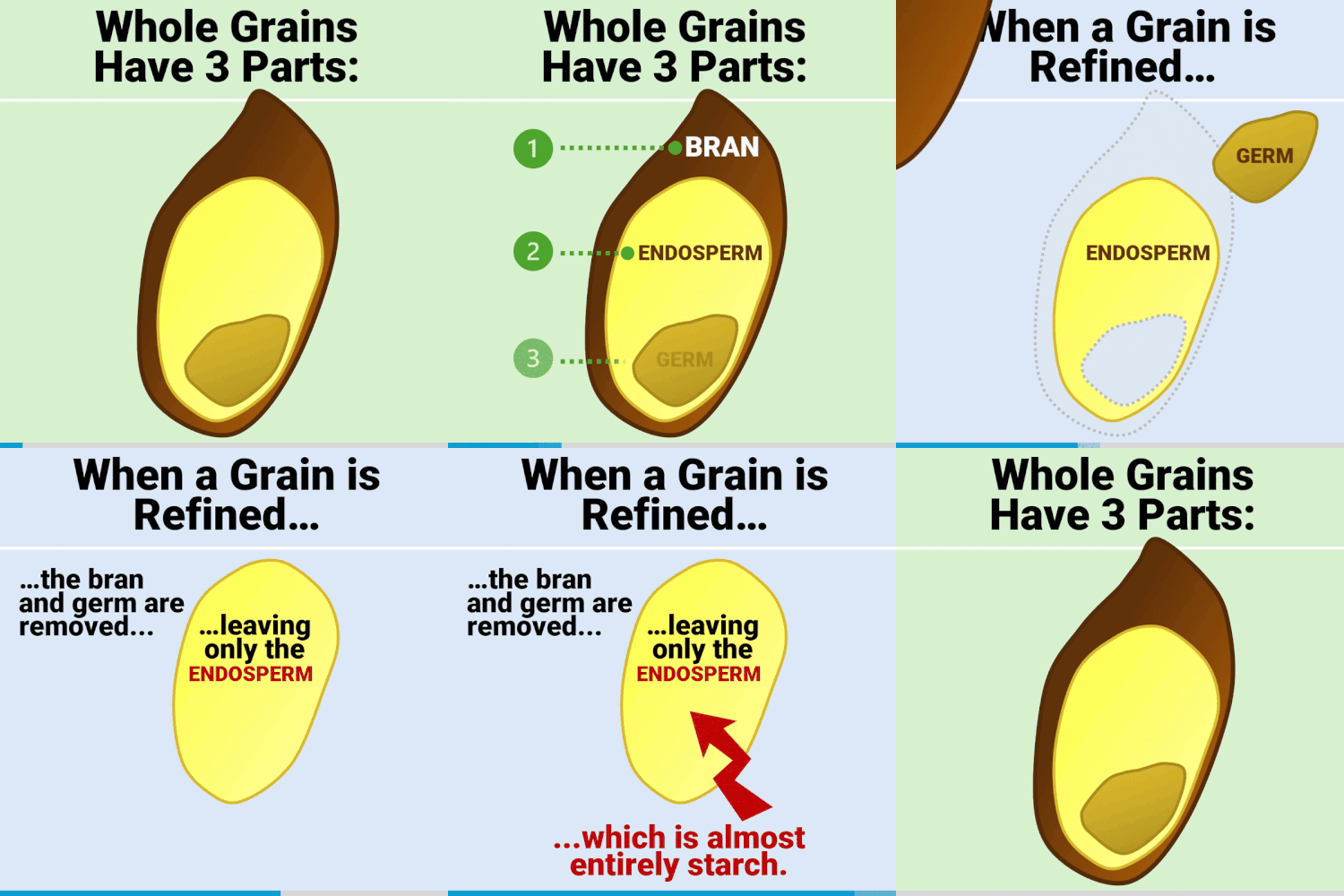
A whole grain consists of 3 parts:

  1. Bran – The fiber-rich outer layer, which contains B vitamins and antioxidants.
  2. Endosperm – The inner layer, made mostly of starch.
  3. Germ – The tiny nutrient-packed origin of the grain. It has the potential to sprout a new plant, so it contains important nutrients to support growth.

When grains are refined, the bran and the germ are stripped away, leaving only the starchy endosperm behind.


The endosperm has the least nutritional value and can even contribute to blood-sugar spikes, lower levels of satiety, and weight gain.


Animation of the 3 parts of a whole grain. The brand and germ are removed, leaving the endosperm, which is almost entirely starch.

Against the Grain:

Misleading Package Labels

🚫 “Made with whole grains” – Often means the product contains some whole grains, but mostly refined.

🚫 “Multi-grain” – This just means the product was made with multiple grains, but not necessarily whole ones.

🚫 "All natural" – This phrase doesn't have any nutritional meaning at all, and it definitely doesn't mean the product is made of whole grains.

For the Best Choices,

Look for These Phrases on Packaging:

"100% whole grain"

"Sprouted grain" (since only whole grains can sprout)

Beyond Wheat:

A Wide Variety of Whole-Grain All Stars

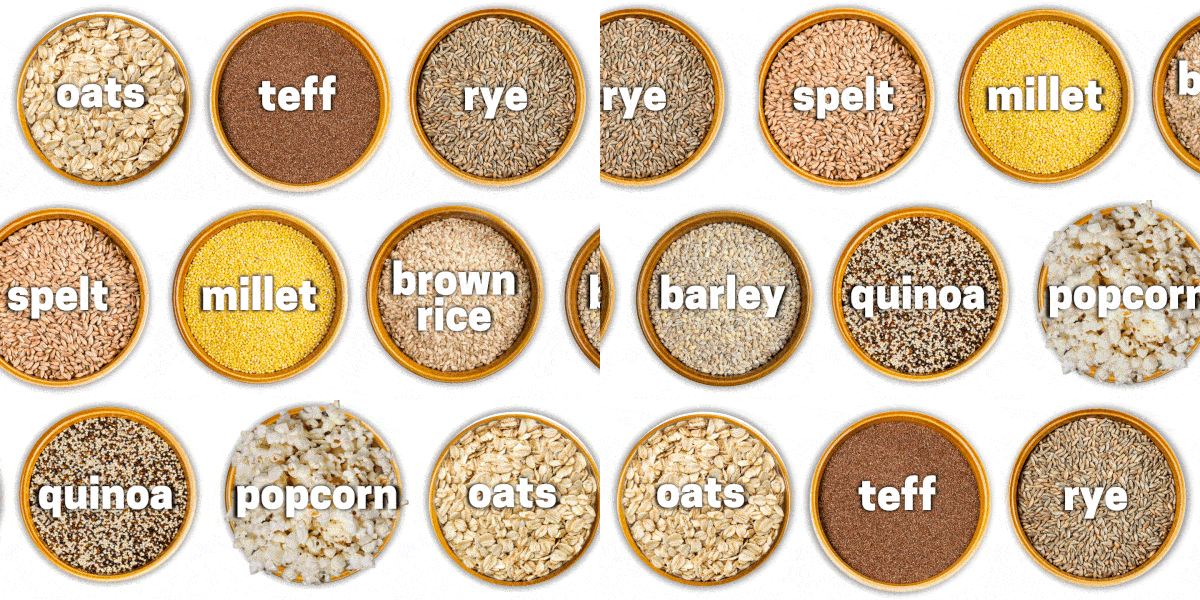
When you hear “whole-grain” you might think of wheat or whole-wheat bread—but there’s a whole world of grains beyond wheat! From barley and farro to quinoa and millet, whole grains come in a wide variety of flavors and textures. And here’s a fun surprise: popcorn is part of the whole-grain family!

A an animated scrolling lineup of whole grains, consisting of oats, teff, rye, spelt, millet, brown rice, barley, quinoa, and popcorn.

Should Some People Avoid Grains?


For a minority of people, some grains can present problems.


Approximately 1% of US adults have celiac disease, an inherited condition that renders gluten in grains to be toxic. They need to completely avoid all grains that contain gluten, including wheat, barley and rye.


Another group, perhaps as many as 10% of adults, have a sensitivity to gluten that can lead to GI upset, fatigue, or even cloudy thinking. They also need to limit or, in some cases, exclude grains that contain gluten from their diet.


If you have any concerns along these lines, check with your health care professional.

Click to view the Carbohydrates module

Want even more information about whole grains?


Check out the Carbohydrates module in the Gaples Institute's interactive nutrition learning program! It's open to anyone (no login required, and no strings attached).


In just 15 minutes, you'll learn:

  • the 3 types of carbs,
  • tips about sugar and artificial sweeteners,
  • how to assess a carb's impact,
  • the one carb you probably aren't getting enough of,
  • ...and much more!
START LEARNING NOW

Follow us on social media for daily news and tips for healthy nutrition and lifestyle!

Facebook  LinkedIn
The Gaples Institute logo, alongside the words: "A physician-led educational nonprofit devoted to advancing the role of nutrition and lifestyle in healthcare."

Home | Donate | Contact Us