7 Environmental Safety Measures Every Workplace Should Consider
1 – Worksite Audit and Analysis
A worksite audit identifies potential risks and vulnerabilities within the physical work environment. This assessment includes evaluating facility layouts, existing security measures, communication protocols, employee training, and organizational policies to identify opportunities for improvement.
2 – Emergency Response Planning
Emergency response planning establishes clear protocols for communication, evacuation, emergency contacts, and coordination with security personnel and law enforcement during a workplace violence incident.
3 – Emergency Drills
We do what we practice. Regular drills, simulations, and scenario-based exercises help prepare personnel to respond quickly, effectively, and confidently during an emergency.
4 – Access Controls
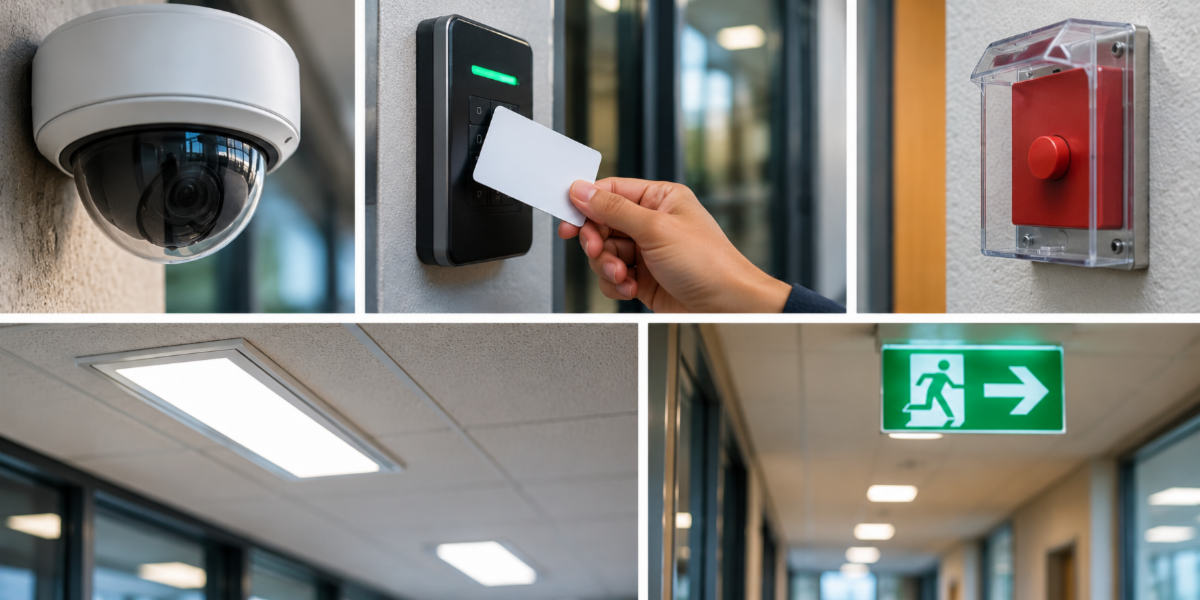
Access controls are security measures designed to monitor, manage, and restrict entry into a facility or designated areas within the workplace. Effective access controls help prevent unauthorized entry and enhance overall workplace security.
5 – Panic Alarms
Panic alarms are devices or applications that allow individuals to quickly and discreetly request assistance from security personnel, designated emergency response teams, or law enforcement during a threatening or violent incident.
6 – Physical Lighting
Strategically placed lighting throughout the workplace and surrounding areas enhances safety and security. Well-lit environments can discourage potential perpetrators, improve visibility, increase situational awareness, and reduce opportunities for workplace violence.
7 – Crime Prevention Through Environmental Design (CPTED)
Crime Prevention Through Environmental Design (CPTED) is a strategic approach to workplace safety that uses physical design principles—including facility layout, lighting, natural surveillance, and access control—to discourage unauthorized access, reduce opportunities for violence, and create a safer work environment.
|