July 16, 2026

View as Webpage

Facebook  Instagram  LinkedIn  TikTok

CRISIS RESILIENCE ALERT

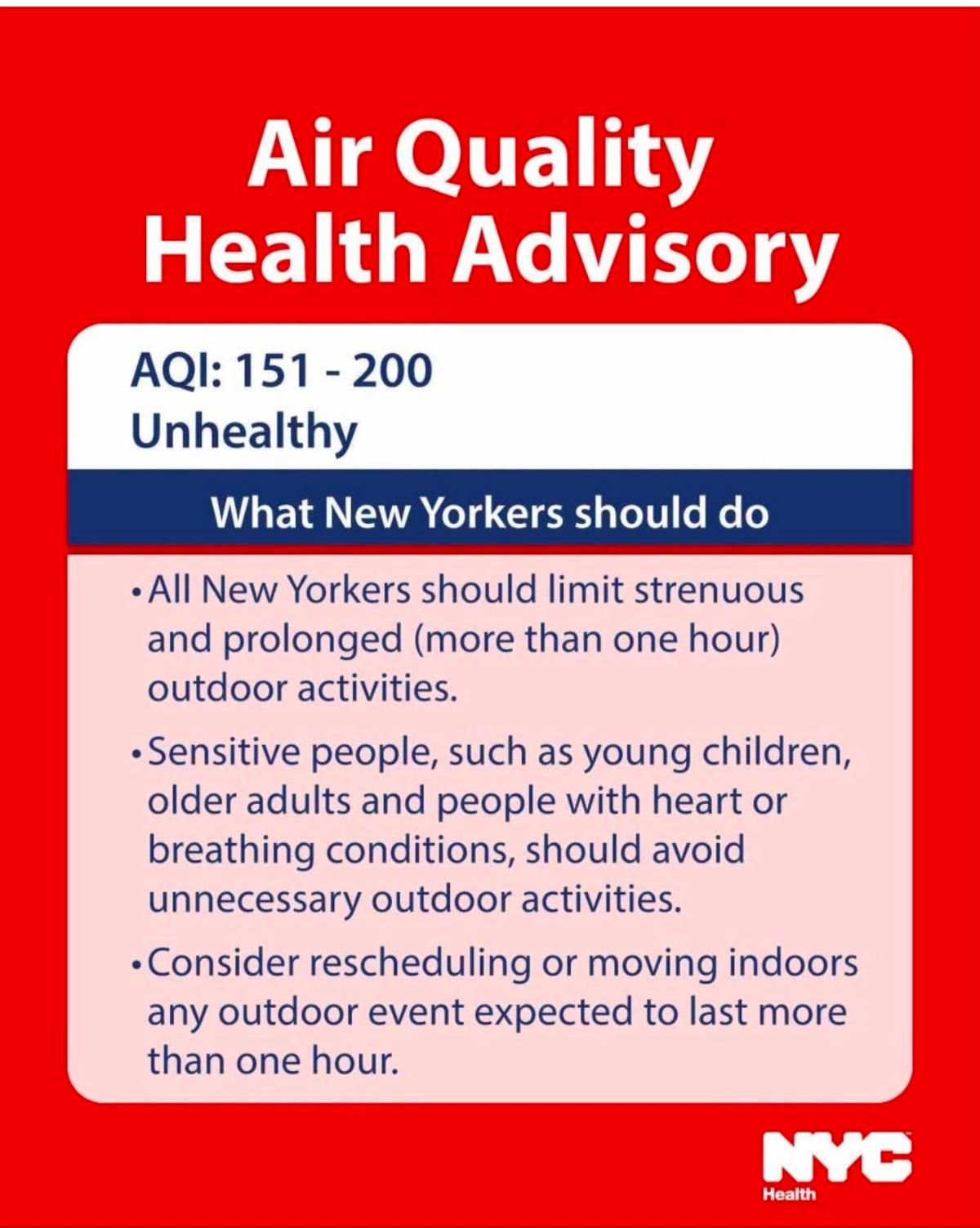
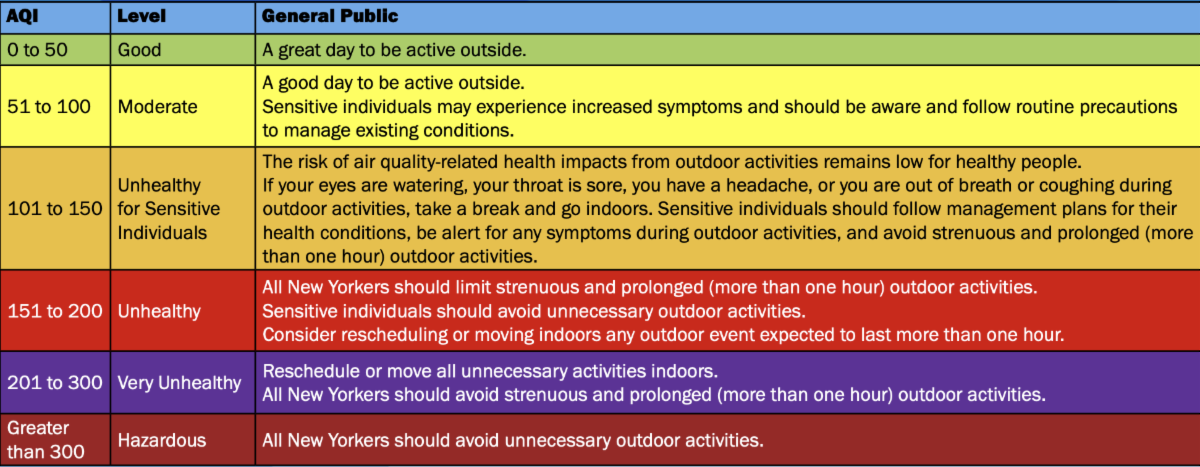
New York has seen deteriorating air quality due to Canadian wildfire smoke. The Air Quality Index (AQI - see below chart) has reached levels of Unhealthy (AQI 151–200) and Very Unhealthy (AQI 201-300) across the region over the last 24 hours. Air pollution at this level can affect everyone's health, with individuals in sensitive groups at greater risk. This is concurrent with extreme heat warnings today.


Conditions could fluctuate in the coming hours and days. Regions to the north and east of New York have seen AQI at the highest level (”Hazardous” - AQI greater than 300) over the last 24 hours. This could be a multi-day event, so please continue to monitor air quality at AirNow.gov and sign up for Notify NYC.

 City Response Updates:


  • Free KN95 masks are available at public library branches and other select locations. The City is working to expand availability at additional distribution sites.
  • NYC’s extreme heat plan was extended with added guidance for: air quality, advising to stay indoors with AC as much as possible, and go to an indoor cooling center if without AC. Indoor air, even with varying filtration, is better than outdoor air during a combined smoke and heat event.

Providers Are Asked To:


Tailor outreach to community members at greater risk of poor air quality and high heat:


  • Check in on New Yorkers who: are 65 or older; pregnant; have respiratory or cardiovascular conditions (such as asthma, COPD, heart disease); spend extended periods outdoors; and have difficulty sharing health symptoms.
  • Consider using a check-in script, such as this one adapted from AWS: The air is unhealthy due to wildfire smoke, in addition to dangerous heat, so reduce outdoor activities if you can. If you have asthma or another lung condition, keep quick-relief medication nearby and follow your care plan. If you notice symptoms like coughing or shortness of breath, contact your healthcare provider. Consider wearing a mask if you must travel outdoors.
  • Help identify "clean air" and cool spaces, such as: rooms with AC, air purifiers, or nearby public buildings with filtered air (find a cooling site at NYC Cool Options).

Prepare staff and caregivers, and adjust services as needed:


  • When possible, move work indoors and reduce strenuous outdoor activities; if necessary to be outdoors, take frequent breaks and wear well-fitting KN95/N95 masks (especially for 150+ AQI).
  • Keep windows and doors closed and set AC or HVAC systems to recirculate indoor air. During extreme heat, do not turn off AC.
  • Monitor for signs of respiratory distress, such as coughing, wheezing, shortness of breath, or chest discomfort.
  • Inform staff of the Air Quality Health Advisory before conducting outreach.

Learn More By:


Stay Informed By:


Join our mailing list