|
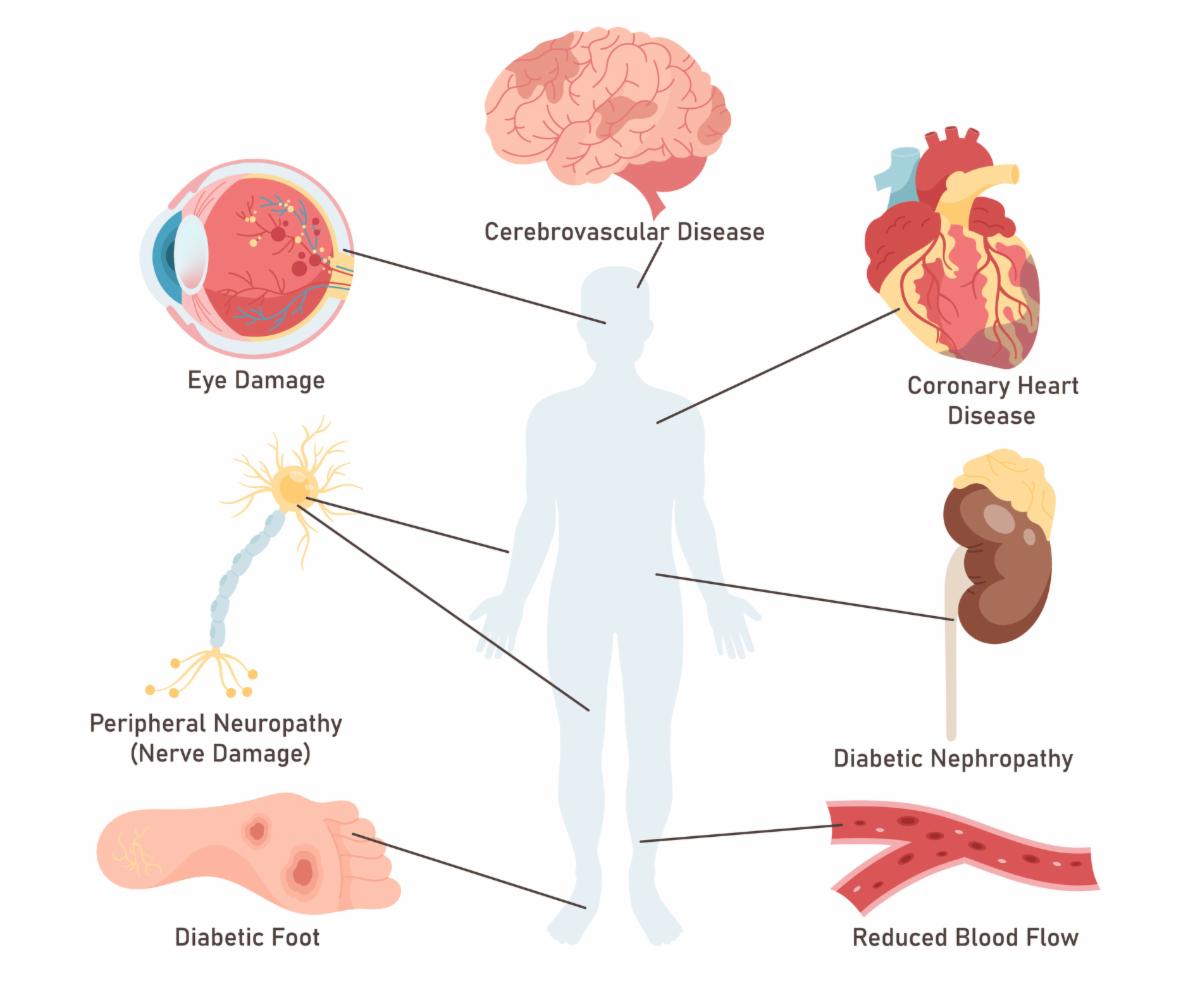
If you have diabetes, it’s important to keep your blood sugar level controlled, maybe for more reasons than you know. Having an uncontrolled blood sugar level for a prolonged period of time can gradually cause a multitude of other health complications throughout your body which can potentially be disabling or even life-threatening. This is why having a treatment plan with a maintenance checklist that includes more than just checking your blood sugar throughout the day and your A1C on occasion is so important. By making sure that you keep up your commitment to managing your diabetes, you can help keep yourself healthier for years to come and lower and monitor your risk of diabetes related complications like the below.
Cardiovascular and Cerebrovascular Disease: Prolonged high blood sugar can damage blood vessels and accelerate plaque build-up called atherosclerosis. This can lead to increased blood pressure (hypertension) and inflammation, putting you at risk for heart problems, a heart attack, or a stroke. To understand your heart health and understand your risk, you and your doctor should check your cholesterol levels, blood pressure, and possibly also an ankle-brachial index (a blood pressure measurement taken at the ankle to check for reduced blood flow to your lower limbs). Your goal measurements and frequency of testing should be determined by your doctor. It may be recommended that you also see a cardiologist for management of cardiovascular issues, high blood pressure, or high cholesterol.
Diabetic Neuropathy: Over time, uncontrolled high blood sugar can also damage nerves through damage done to the walls of the capillaries that feed them. This especially occurs in the legs of those with diabetes and can cause neuropathy. With neuropathy, you may experience tingling, numbness, burning, or pain due to the nerve damage, or other symptoms depending on the location of the damaged nerves. If you begin to feel any of these sensations in your toes or fingers, make sure to let your doctor know.
Diabetic Nephropathy: High blood sugar levels can also gradually damage the tiny blood vessel clusters called glomeruli in your kidneys that filter toxins and waste from your blood. This damage hinders the kidneys’ ability to perform its filtering function leading to fluid retention in the body, high blood pressure, and more. To check your kidney health, you should have eGFR (glomular filtration rate) and ACR (albumin-to-creatinine ratio) lab testing performed yearly or as often as your doctor recommends. If your doctor and you do notice signs of decreased kidney health, it may be recommended that you see a nephrologist for further care.
Diabetic Retinopathy: Continued high blood sugar levels can even damage the blood vessels of your eyes, especially the retina which is the light-sensitive tissue of the eye. Damage to these blood vessels can cause vision problems such as dark spots, blurred vision, or even vision loss or blindness. Having at least a yearly eye exam with your optometrist or ophthalmologist can help to detect and treat vision changes caused by uncontrolled diabetes.
Foot Damage: According to the CDC, about half of all diabetics have nerve damage and nerve damage or poor blood flow to your feet can potentially lead to serious issues. You may not notice cuts or sores on your feet if you have nerve damage and any cuts, sores, or ulcers you do develop may not heal quickly or properly without enough blood flow. Foot wounds that are left untreated, especially if they become infected, can become dangerous to your overall health and may even require the amputation of a toe, foot, or leg. You should make sure to clean and check your feet daily for signs of a problem and possibly see a podiatrist to learn best how to prevent/treat foot problems and help with preventative maintenance like nail trimming or removal of a corn or callus.
Skin and Mouth Conditions: Damaged blood vessels and nerves can also leave you more susceptible to bacterial and fungal infections that can affect your skin and gums. Make sure to have dental exams and cleanings twice a year to maintain good oral health and watch for any signs of skin issues that you should let your doctor know about.
Hearing Impairment: Even your hearing can be affected by damage to nerves. Damaged nerves can affect how noise signals travel from your inner ear to your brain, potentially causing hearing impairment or loss. If you or your doctor are concerned about hearing issues, you could have a hearing test performed.
Diabetes, if not well managed, can take a toll across your body but through consistent follow-up with your doctor and completing recommended checks, you can lower your risk for complications related to your diabetes and live a long and healthier life. Make sure to talk with your doctor today to ensure you’re aware of what should be a part of your treatment plan and maintenance checklist besides checking your blood sugar and A1C levels.
|