Curing Cancer Network Newsletter

May 2025

Cancer precursor lesions project

Breast cancers with precursor lesions (part 6h)


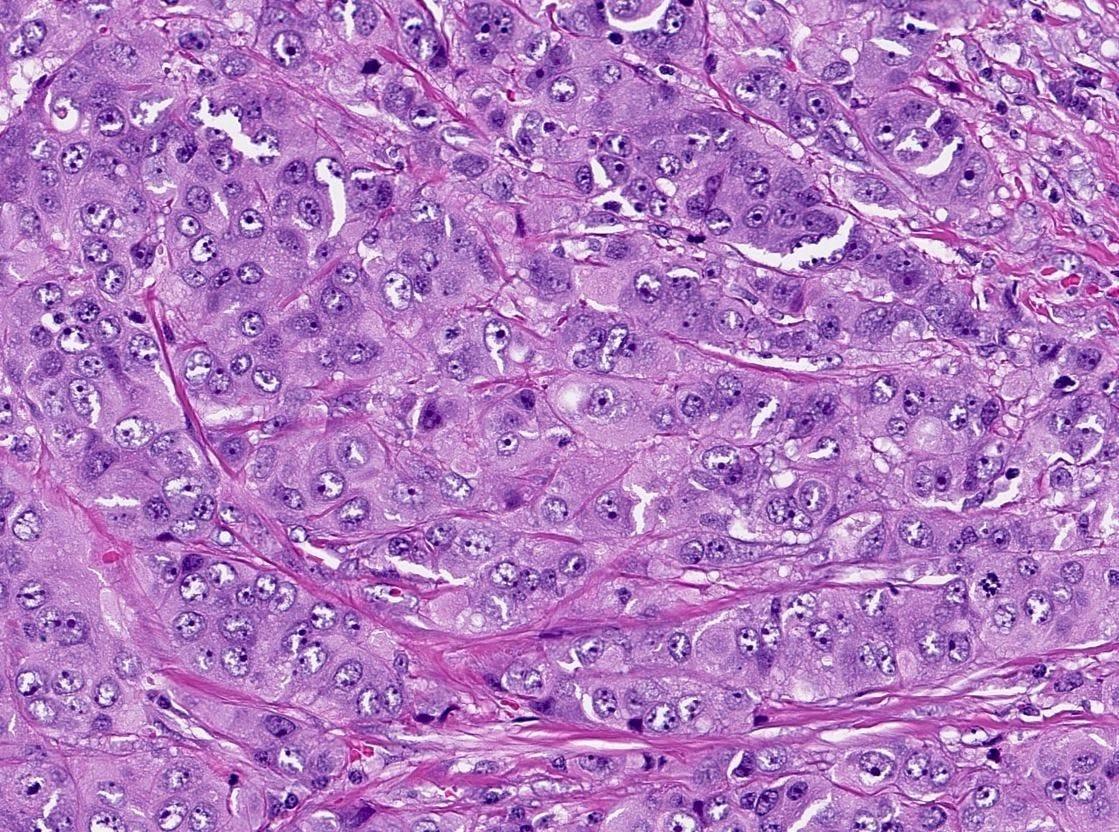
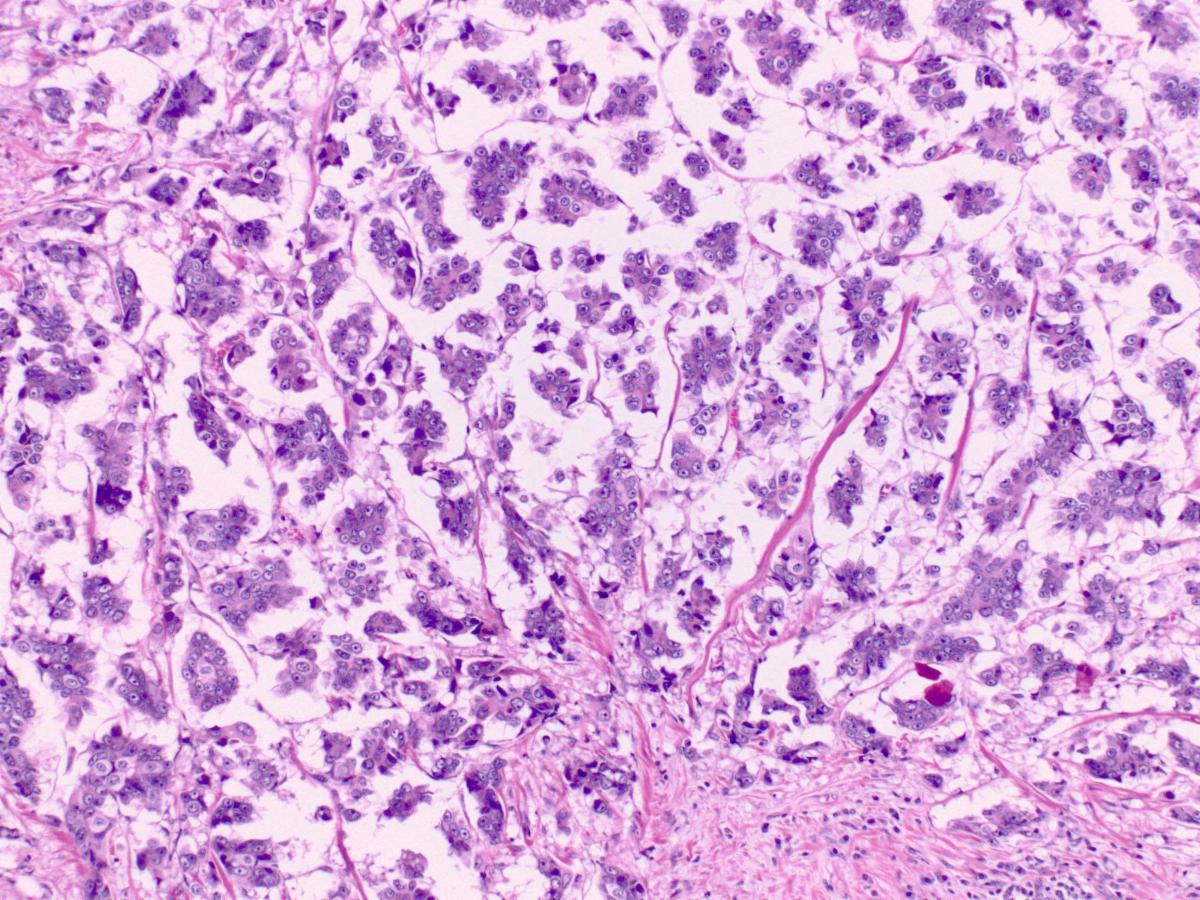
This essay discusses two invasive breast carcinomas without premalignant or preinvasive precursors (although there are DCIS subtypes with similar patterns): Apocrine carcinoma and Invasive micropapillary carcinoma.


See the link to the full essay with images on our blog here.

Apocrine carcinoma shows large atypical epithelial cells with abundant eosinophilic and granular cytoplasm, enlarged nuclei and prominent nucleoli (contributed by Jonathan Marotti, M.D.)

Invasive micropapillary carcinoma shows pseudopapillae with knobby outer surface floating in clear space separated by thin fibrocollagenous stroma (contributed by Kamaljeet Singh, M.D.)

Breast cancers with precursor lesions (part 6i)


In this essay, we discuss mucin containing carcinomas of the breast without premalignant or preinvasive precursors and how they arise:

We also briefly discuss other mucinous lesions, either benign (mucocele-like lesion), preinvasive (mucinous ductal carcinoma in situ) or variants of invasive carcinoma discussed previously (cribriform carcinoma, infiltrating ductal carcinoma of no special type, invasive lobular carcinoma with extracellular mucin, invasive micropapillary carcinoma and solid papillary carcinoma).


See the link to the full essay with images on our blog here.

Cancer Precursor Project – List of All Breast Cancer Types

Dr. Pernick’s Cancer Precursor Project discusses how different types of cancer arise. Part 6 discusses breast cancer and its 45 separate types.

This essay contains lists (alphabetical and by essay) of all 45 breast cancer types and where to find a more complete discussion.


See the link to the full essay our blog here.

Adopt a federal agency or researcher


Are you a federal employee whose program has been defunded or destabilized? If so, what are your thoughts on this proposal?


The federal government is no longer a reliable funding source for many agencies, projects or researchers because this funding can be withdrawn abruptly and without warning, creating a precarious environment for important work that often relies on long term stability.


One solution is to transition these programs to state governments, universities, nonprofits or private companies. These institutions offer greater stability and are less likely to terminate support without warning. While the federal government could still provide some funding, it would not be the sole source.


Read the full article here: https://natpernick.substack.com/p/adopt-a-federal-agency-or-researcher

Social media


Follow us on LinkedIn.

Twice a week we post interesting cancer related images of malignancies

with diagnoses.

Newsletters


Click here to sign up for

this newsletter.

We list our prior newsletters on the Newsletters page as well as below.

Latest versions of our documents


Strategic plan 

(updated 16 February 2025)


American Code Against Cancer 

(updated 23 July 2024)

Archives

March 2025

January 2025

October 2024

July 2024

April 2024

February 2024

December 2023

October 2023


August 2023

May 2023

March 2023

January 2023

December 2022

October 2022

July 2022

STAY CONNECTED WITH THE CURING CANCER NETWORK

LinkedIn

Nat Pernick, M.D. | nat@pathologyoutlines.com