|
As I sit down to write this month's update, I am struck by the contrast between the beautiful Fall weather and autumn foliage out my window and the disastrous state of our world and our nation. Reading for me has become a crucial refuge from the daily headlines of war, dysfunctional government, and growing authoritarian rule in America. Sharing my reading experiences with you provides additional solace, so thank you for being there.
Here are the books that I read in September:
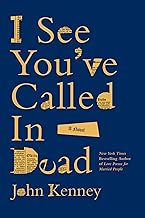
- I See You've Called in Dead, John Kenney
- The English Assassin, Daniel Silva
- Measuring the World, Daniel Kehlmann
- Creation Lake, Rachel Kushner
- La Place de la Concord Suisse, John McPhee
- Reading the Room: A Bookseller's Tale, Paul Yamazaki
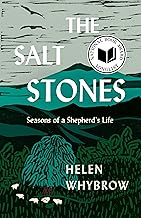
- The Salt Stones, Helen Whybrow
- The Gossip Columnist's Daughter, Peter Orner
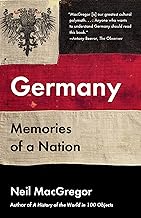
- Germany: Memories of a Nation, Neil MacGregor
- On Retirement: 75 poems, ed. Robin Chapman and Judith Strasser
- Jitney, August Wilson
Each month, I face the existential question that every reader experiences, "What should I read next?" On occasion, I have determined a theme for the month's reading before opening that first volume. More often, however, I will choose a random book from my "To Be Read" notebook or off my shelf of "books I intend to read" or off the "to be shelved" carts at the Cambridge Public Library and follow that book with another random choice. Often, by the time I've read five or six books, a theme has emerged and directs my reading for the remainder of the month. In other months, the random walk continues.
Such was the case in September, when my reading wandered through all of the eleven books that I chose without a clear theme in mind, driven by what Paul Yamazaki in his slim volume "Reading the Room: A Bookseller's Tale" called curiosity. Yamazaki writes about his 40+ years at the storied City Lights bookstore in San Francisco where he started in the shipping room and rose to be the principal book buyer. His objectives as a bookseller resonated with my objectives in writing to you each month. He writes that his goal was to "bring the reader to a new door to a new room to an environment where there's a framework for navigating the enormous world of books....The real goal is to guide our readers to a more expansive horizon where there is a possibility of joy." He goes on to identify curiosity as the primary characteristic of both a good book buyer and reader.
The proverbial light bulb went off above my head when I read those words. Curiosity is what drives my book selection and motivates me to share those experiences with you. You won't find many bestsellers in my updates; there's the NYT Sunday Book Review for that. What you will find are books that my curiosity led me to and which I love sharing with you. So here are this month's 'possibilities for joy'.
I read five novels in September and loved two of them---John Kenney's "I See You've Called in Dead" and Daniel Kehlmann's "Measuring the World." Kenney who has contributed to "The New Yorker" since 1999 has written a sparklingly funny book with a strong narrative element about the importance of relationships. The narrator, Bud Staley is a 44 year old guy who writes obituaries for a nationally circulated newspaper and whose life is going nowhere---his wife has left him; his apartment has been emptied of furniture by her; and a recent blind date showed up with her boyfriend. Depressed and alone, Staley writes his own obituary as a lark during a Scotch-soaked evening. When he hits the 'send' button by mistake, the world learns that he has died: "the first man to perform open heart surgery on himself, died today in a hot air balloon accident. His wife, Miss France, has confirmed his death". What follows is an often laugh-out-loud funny account of the complications that followed that unfortunate accident (the send button, not the hot air balloon accident). The book is enriched by the additional element of a beautiful friendship between Staley and his landlord, Tim a wheel-chair bound lover of life. Don't miss this one. Thanks to Bill for his recommendation.
Kehlmann's "Measuring the World" could not be more different but shares Kenney's ability to grab the reader by the lapels (does anyone still have lapels?) and demand that it be read straight through. I loved Kehlmann's latest book "The Director" (see last month's update), and this earlier book was also brilliantly plotted and executed. In "Measuring the World" we meet two geniuses who lived in 18th C. Germany. Sound boring?---not a bit. Alexander Humboldt is credited by many with being the father of ecology and the environmental movement while Carl Friedrich Gauss was the greatest mathematician, astronomer, and physicist of his day. Kehlmann interweaves their stories from childhood to old age following Humboldt to the Amazon and Gauss to the stars in a fascinating and engaging fiction touched by elements of the supernatural and surreal. I was not surprised to learn that this book was the best-selling novel in German in the last 40 years, and I'm eager to read his other works that have been translated into English.
The third novel, Peter Orner's "The Gossip Columnist's Daughter" is more difficult to briefly describe. The story is based on a real event in which the daughter of the long-time Chicago personality Irv Kupcinet was found dead in her Hollywood apartment in 1963. Was she murdered or did she commit suicide? The book appealed to me in part because my home town, Chicago, is one of the leading characters. Lists of Chicago street names, sports figures, neighborhoods, etc. took me back to my youth where my aunt and uncle were, in fact, the Kupcinets' best friends. The book is narrated by Jedidiah Rosenthal, whose fictional grandparents were Irv and Essie Kupcinets' fictional best friends. This interweaving of the real and the fictional was effective and kept me engaged, but I'm not sure a non-Chicagoan would be similarly rapt. Orner, the Chair of the English and Creative Writing Department at Dartmouth has written some wonderful short stories, novels, and essay collections, and if you're interested in his work, I'd start with the short story collection Maggie Brown and Others or his two books of essays, Am I Alone Here? and Still No Word From You. He's terrific.
"The English Assassin", written in 2002, was the second book in Daniel Silva's Gabriel Allon series that now numbers 27. It made for a good companion on a long trans-Atlantic flight, but is not likely to bring joy or expand your horizon. By 2002, Silva had already developed the template for his series---Allon, a world class art restorer is convinced by Ari Shamron, head of the Israeli Intelligence Service, to leave his paintbrushes and turpentine and stop whoever is killing Jews somewhere on the planet. In this book, Allon solves a murder while exposing Swiss compliance in the stealing of art and bankrolling the Third Reich during WWII. It's not great literature, but makes for a good companion on planes or beaches.
Rachel Kushner's "Creation Lake", however, left me cold. I didn't like the main character, the plot, or the conclusion. I had found an earlier essay collection of hers, "The Hard Crowd" to be similarly frustrating and difficult to read. Not sure why I then chose this one, and not recommending it.
The three non-fiction books in addition to Yamazaki's "Reading the Room: A Bookseller's Tale" could not be more different, and each was wonderful in its own way. I continue to make my way through John McPhee's extraordinary body of work with "La Place de la Concorde Suisse", the 21st in the series. In it, McPhee, now 94 but only half that age when he wrote this book, does his usual deep dive into a somewhat offbeat topic, in this case, Switzerland's armed forces. A persistently neutral nation since the founding of the confederation in the 13th C, the Swiss, nonetheless, are fully committed to defending their territory and have developed a remarkable system for doing so. I'm not sure this book has worn well over the 42 years since it was published, but it made for interesting reading. If you haven't read McPhee yet, I'd suggest you start with his first two books, either "A Sense of Where You Are" or "The Headmaster". The former tells the story of Bill Bradley a remarkable All-American basketball player at Princeton and later candidate for POTUS while the latter is about Frank Boyden who served as the headmaster at Deerfield Academy for 66 years. Both are excellent examples of McPhee's non-fiction and totally enjoyable reading experiences, perhaps even joyful.
"The Salt Stones" by Helen Whybrow is a beautiful book. The author is a shepherd and tends her flock of sheep and farms her 100 hillside acres in northern Vermont, not terribly far from us. For some reason, shepherds like James Rebanks, Don Mitchell, and Brad Kessler in addition to Whybrow feel the urge to share their experiences via writing books, and I'm grateful. The close relationships with animals, the proximity to the land and its natural elements, the dependence on the vagaries of the weather, and the hard scrabble method of earning a living must give the shepherd special insights into man's relationship to the world. Whybrow writes with warmth, style, and a quiet passion, and I loved her book. Thanks to Blyth and Liz for recommending it.
Neil MacGregor was the Director of the British Museum from 2003 to 2015, and his close association with its hundreds of thousands of objects has clearly influenced his style in this vast history entitled "Germany: Memories of a Nation". Recommended by Bryan, our guide on our recent trip to Berlin and Weimar, it's not a book to be taken lightly. Weighing in at nearly 600 pages, it spans German history from Hermann's triumph over Rome in 9AD to post-WWII remembrance and reconstruction and post-Cold War reunification. It does so effectively and quite differently from the dry, linear traditional history books with their lists of kings, wars, etc. by combining the great man theory of history (Charles I, Martin Luther, Gutenberg, Goethe, Schiller, Bismarck, et. al.) with the lens of art history (Durer, Holbein, Kollewitz et. al.). MacGregor has created a readable and informative summary of this vast, influential, and ever-changing entity that since 1871 has been the nation of Germany at the center of Europe. I would recommend it for anyone who is still trying to sort out the Third Reich, the Holocaust, the Berlin Wall, and the current rise of their right wing. A readable and fascinating volume.
Finally, I finished the month with a palate cleansing book of poetry and a remarkable though somber play. "Retirement: 75 Poems" contains the works of some famous poets (Stafford, Booth, Clifton, Stern, Paley) and some relative unknowns writing about retirement, aging, and death. One of my very favorite poems, William Stafford's "You Reading This Be Ready" ("What can anyone give you greater than now,/starting here, right in this room, when you turn around?) was one highlight for me and another was George Bilgere's wonderfully funny and touching, "Unwise Purchases" ("She and I will stand in the steamy kitchen,/Fixing up a little risotto,/Enjoying a modest cabernet/While talking over a day so ordinary/As to seem miraculous."). Both poems in their entirety are hyperlinked in The Poetry Tree on the Charles below.
August Wilson's "Jitney" is the seventh of his ten play cycle depicting the lives of Blacks living in Pittsburgh's Hill District in the 1970's. Written in 1979, it was 21 years before it appeared on Broadway winning the New York Drama Critics Circle Award for Best Play. A revival in 2017 won numerous awards. It's the story of a group of Black men who drive jitneys, the unlicensed community vehicles needed because taxis wouldn't enter the Hill District neighborhood. The drivers are beset with the problems of poverty, alcoholism, PTSD after serving in Korea and Vietnam, and racism. When the city announces they will be boarding up the building in which the jitney office has operated for years, the tension builds to a violent end. Small hope emerges from the return of the jitney service's owner's son released from prison after serving 20 years for murdering his white girlfriend. Not easy reading, but an important work.
The Poetry Tree on the Charles this month features four poems from the book, "On Retirement". Having entered this interesting and challenging final period of life 18 years ago, I considered myself somewhat of an expert on retirement, but the wonderful poems in this book showed me how much I have yet to learn and how a talented writer can express feelings and observations that deepen life's experiences. William Stafford, winner of a National Book Award and a former U.S. Poet Laureate has written a poem about remembering that is among my very favorites. Ironically, I have totally failed in my many attempts to memorize it but love it nonetheless. George Bilgere's six volumes of poems have won numerous awards and include this very funny poem. Lucille Clifton, the first poet to have two books chosen as finalists for the Pulitzer, creates a remarkable metaphor for aging in the twelve brief lines of "climbing", and one of my favorite Vermont writers, Grace Paley, a Pulitzer and National Book Award finalist, writes a love poem to her aged husband in "Here".
- You Reading This, Be Ready, William Stafford
- Unwise Purchases, George Bilgere
- climbing, Lucille Clifton
- Here, Grace Paley
Here are some lovely lyrics by Patty Griffin cited in Helen Whybrow's book:
No one on my shoulder bringing me fears
Got no clouds above me bringing me tears
I've got nothing much to say
Only I'm glad to be with you on this heavenly, heavenly, heavenly, heavenly day.
And then there's this thought from Albert Einstein:
The only thing that you absolutely have to know is the location of the library.
|