In this issue:
Arboretum All-Stars | BotLat | Curious Words for the Curious Gardener | Demonstration Garden News | Event Calendar | Garden Bed Spotlights | Garden Design | Gardening for a Lifetime |
Gardening Q & A’s | Insect Bytes | Keystone Species |
Nature Journaling | Unusual Edibles
| | | |
Curious Words for the Curious Gardener
By Karen Mead, UC Master Gardener of Nevada County
| |
Do YOU know what a drupe or pome is?
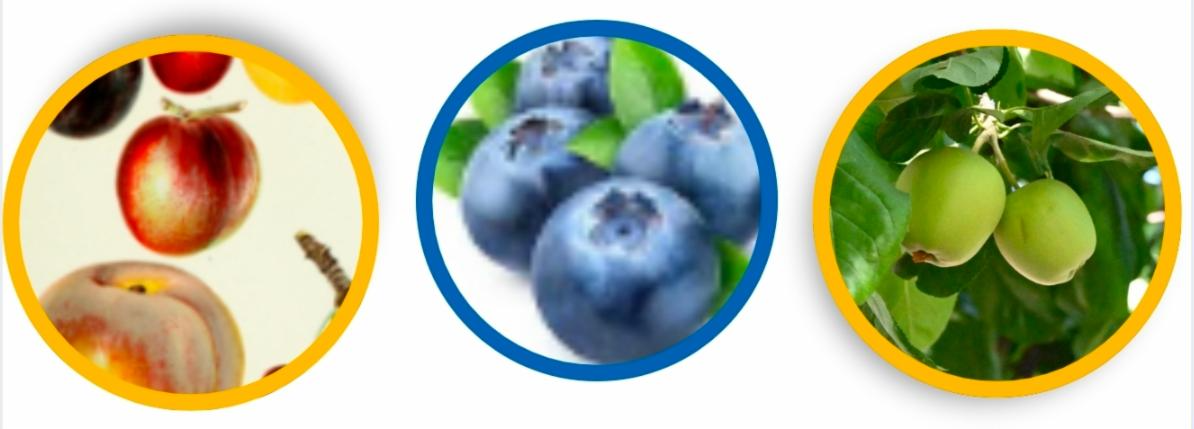
Drupe is a botanical classification term of a fruit that is culinarily known as a “stone fruit.” Drupe fruits are characterized by one hard “stone” or “pit” that encases a seed, and is surrounded by a fleshy outer layer. It is the product of ovary pollination of a single flower. Examples of drupes are peaches, cherries, plums and apricots, although coconuts, olives, almonds, cashews and coffee beans are also drupes. All “stone fruits” are drupes, but not all drupes are considered in the culinary sense as “stone fruits.”
Pome is a botanical classification term of a fruit that features a fibrous core (the actual fruit or inferior ovary) that contains small seeds (usually five) and is separated from the fleshy outer layer. Examples of pome fruits are apples, pears, and quince.
| |
How about a berry? (Derived from “berie” meaning grape!) The botanical classification term of this fruit features three distinct, fleshy layers, the product of a single ovary from a single flower and at least two seeds. Raspberries, strawberries and blackberries develop from multiple ovaries of a flower, so they are not botanically berries. Berry sub-type “hesperidium” features citrus fruit, sub-type “pepo” includes pumpkins, zucchini and watermelons, and some “true” berries are bananas, tomatoes and blueberries. Chokeberries and serviceberries are pomes!
Botanical terms are based on scientific characteristics. Delve deeper into drupes, pomes and berries to learn more.
Photo block credits:
Drupes! Cherries, nectarines, peaches. Julius Bien & Co., NY. Lithographer: Dodd, Mead & Co.
Blueberries, a true berry! UC ANR
An Apple is a pome! UC ANR
|
BotLat
By Peggy Beltramo, UC Master Gardener of Placer County
| | |
The two BotLat names researched for this issue deal with parts of the human body. Why? I guess the common names just caught my attention!
Many different plants share common names, so it is impossible to track what their individual needs are. However, with a unique, binomial Latin name (genus and species), plants have a singular species identity, and their genus name (capitalized) identifies the general group of species that share similar genetic features.
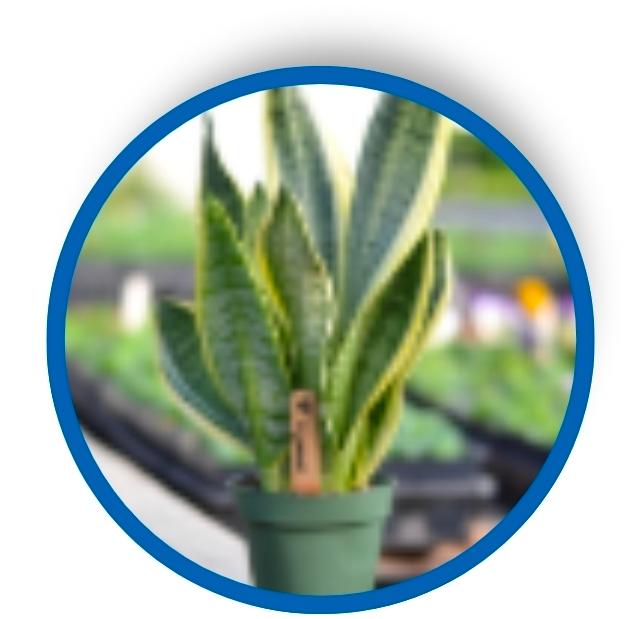
So, back to body parts—tongues and noses! The first plant, Dracaena trifasciata, (previously known as Sansevieria trifasciata) is commonly called “mother-in-law’s tongue.” It is a popular houseplant of African origin. The photo will illustrate the common name (sharp-pointed, tongue-like leaves).
| | | | |
The BotLat genus name, Dracaena, is Latin and comes from the Greek word, drakaina, meaning
“female dragon,” referencing the reddish, blood-like resin within its leaves. The species word,
trifasciata, indicates the wavy, dark-green striping on the leaves (although it is often more than three
stripes).
| | | |
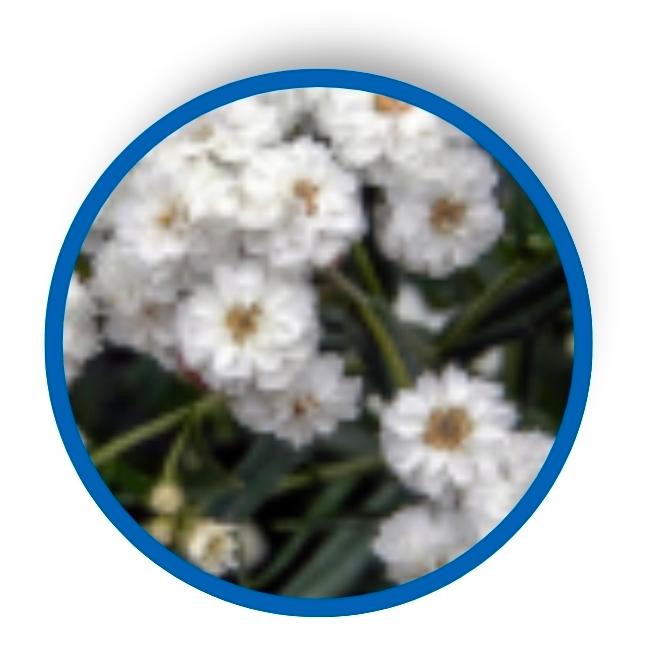
The second plant, Achillea ptarmica, is commonly called “sneezewort” or “sneezeweed," a reference to its species name. The genus name of this plant, Achillea, comes from the Greek mythological warrior, Achilles, who reportedly used the flowers to treat his soldiers’ wounds and to stop bleeding. The species, ptarmica, comes from the Greek word, ptairo, meaning to induce sneezing. This plant was used in sneezing powder to allow people to clear their sinuses.
Simple and straight-forward this issue. Two plants to add to your collection.—indoors and out!
Photo: Mother-in-law's tongue. Dracaena trifasciata.
Photo credit: Veronica Bosley: Pixabay Creative Commons Zero
Photo: Sneezewort. Achillea ptarmica.
Photo credit: Peggy Beltramo, UC Master Gardener
| | |
Surprising Qualities of Cattails
Photo and article by Julie Lowrie, UC Master Gardener of Placer County
| |
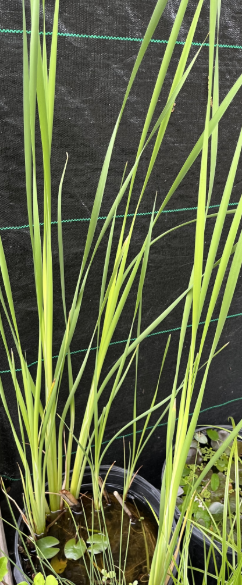
Typha latifolia, commonly known as the broadleaf cattail, is a resilient California native aquatic plant found in local wetlands and ponds. While revered by indigenous populations for its extensive edible and medicinal applications, cattails are equally despised by natural pond owners for their innate ability to be highly efficient biofilters contributing to their swift and invasive growth throughout a pond if not managed effectively.
Virtually every part of Typha latifolia offers nutritional value, varying by season. In early spring, the tender, nascent shoots can be harvested and eaten raw or sautéed, offering a crisp texture and rich phytonutrients, including proteins, vitamins, and polyphenols. As summer approaches, the immature green flower spikes can be boiled and consumed much like corn on the cob. By midsummer, the plant produces golden pollen, which can be collected as a protein supplement, or made into flour. During the autumn and winter months, the starchy, dense rhizomes can be processed into flour, historically yielding highly concentrated carbohydrates for foraging communities.
While Typha latifolia is remarkably beneficial, foragers must always exercise caution because cattails act as highly effective biofilters, readily absorbing environmental toxins and heavy metals like cadmium and lead from polluted waterways. Because of this, utilizing pristine water sources is strictly essential for safe harvesting.
Photo: Cattails (Typha latifolia).
| |
Garden Q & A's
By Linda Wold and Lynn Merrick, UC Master Gardeners of Placer County
| |
What are some tips for managing rats in my garden?
UC ANR (University of California Agriculture and Natural Resources) recommends integrated pest management strategies for rats in the garden that include:
- Keeping your garden clean by removing debris, fallen fruits, and other potential food sources.
- Choosing plants and crops that are less attractive to rats.
- Installation of barriers such as fences made from hardware cloth, burying the bottom to prevent burrowing.
- Checking and sealing openings in structures, such as sheds, where rats may shelter.
- Trimming tall grass, weeds, and shrubs that provide hiding spots for rats.
- Clearing away piles of wood, compost, or other materials that may harbor nests.
- Using snap traps or live traps to capture rats. Place them in areas where you notice signs of rat activity, being sure to follow state regulations regarding trapping.
- Encouraging natural predators like owls by installing owl boxes, which can help control the rat population.
- Only using rodenticides as a last resort, following all safety guidelines and regulations.
If rats are a nuisance throughout your neighborhood, a community management effort would be needed. Discover more about rat habits, types, infestations and rat pest management tips.
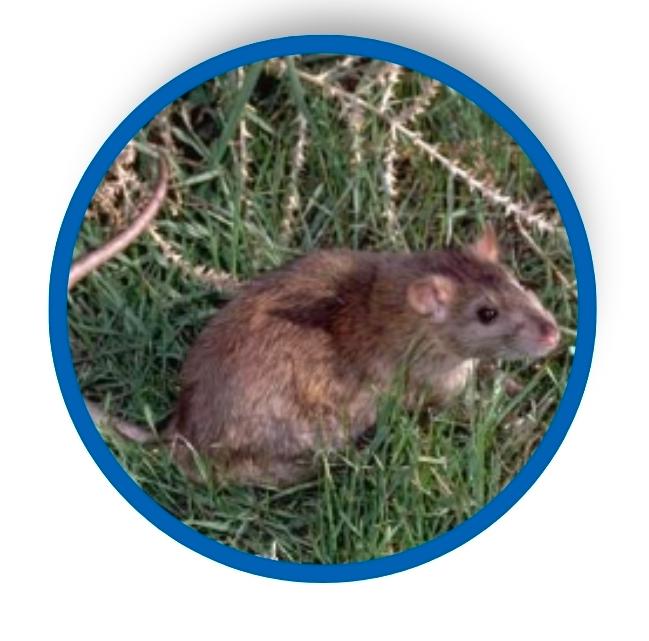
Photo: Norway rat.
Photo Credit: Jack Kelly Clark: UC IPM
| |
Nature Journaling: Through the Eyes of Children
Article and photos by Tree Justensen, UC Master Gardener of Placer County
| | |
What is nature journaling?
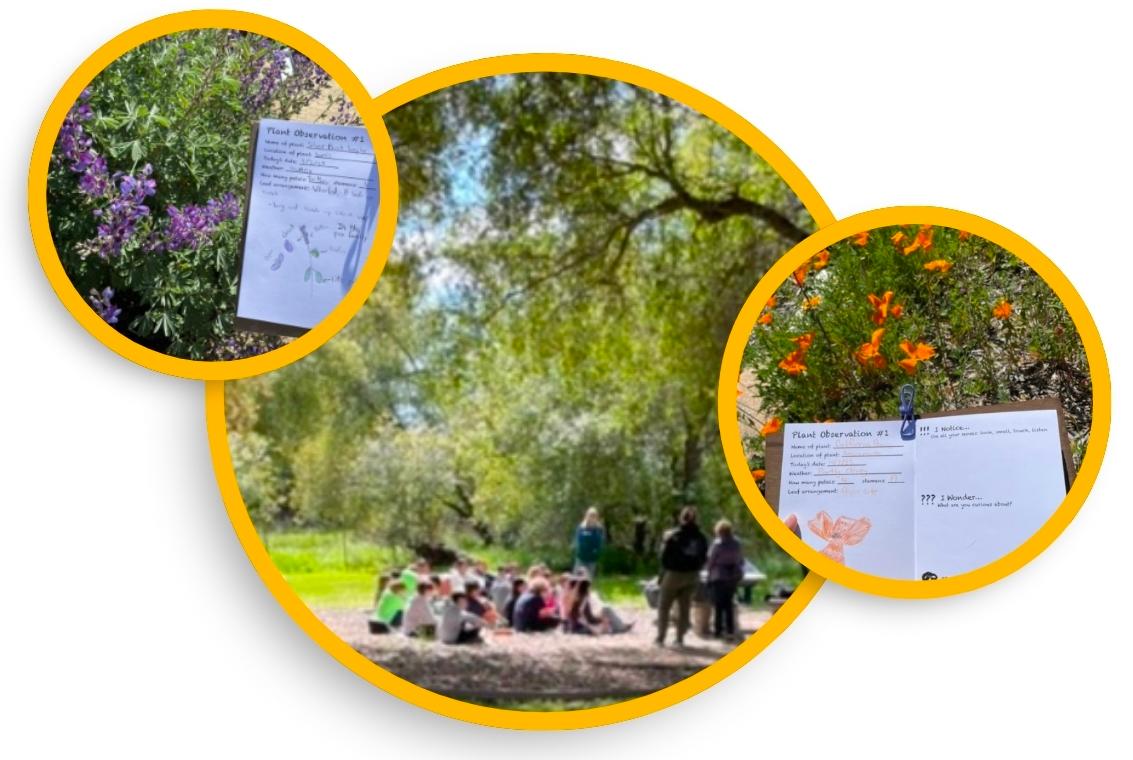
Nature journaling has been described as a “mindful practice that invites us to record what we see, feel, and wonder about the natural world.” John Muir Laws, popular nature-journaling guru, defines nature journaling as “collecting and organizing your observations, questions, connections, and explanations on the pages of a notebook using words, pictures, and numbers. Find out how Nature journaling will enrich your experiences and develop observation, curiosity, gratitude, reverence, memory, and the skills of a naturalist..
| |
Garden Design: Include Native Plants in a Mediterranean Garden
By Jan Birdsall, UC Master Gardener of Placer County
| | |
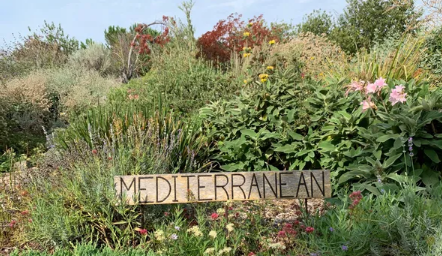
Relying on native California plants can give your Mediterranean garden dependable, productive and drought-tolerant features that appeal to local pollinators. The native plants of each Mediterranean climate may thrive in your Mediterranean garden, but may not offer the same support and sustainability for pollinators and wildlife. Non-native plants might also be invasive and a threat to the local native plants. A researched mix of California native and Mediterranean non-native plants could be the answer! In addition, the Calscape website offers a comprehensive listing of California native plants that are compatible in your area.
Go enjoy your sun-drenched Mediterranean garden!
Mediterranean garden.
Photo Credit: UC ANR
|
Gardening for a Lifetime
By Michele Rugo, UC Master Gardener of Nevada County
| |
Gardening can become increasingly difficult as we age. Our bodies grow less limber and more prone to injury. Our minds, too, can find it challenging to recall the routine tasks that once came easily. Yet for many of us the idea of giving up the passion and pleasure of working in the garden is unimaginable. Fortunately, we can make smart choices in garden design, plant selection, tools, and exercise now, to maintain good physical and mental health well into our senior years.
First, the Science…
| |
A Humble, Hard-Working, Future Favorite Shrub
By Elaine Kelly Applebaum, UC Master Gardener of Placer County
| | |
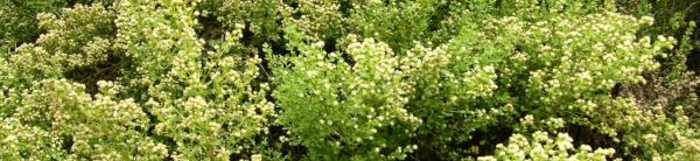
Pigeon Point coyote brush (Baccharis pilularis ‘Pigeon Point’) isn’t eye-catching, but this plain Jane will work overtime in the toughest of garden conditions. An evergreen California native, it is tolerant of many soil types and drainage conditions and can handle temperatures down to 23°. Happy in full sun or part shade, it can be clipped into a short hedge or left to ramble as a tall groundcover. Its spreading habit and deep roots make it an excellent choice for erosion control and hill stabilization.
Growing quickly to at least 6 feet wide and 1 to 3 feet tall, it will provide sheltered habitat for ground-dwelling birds. Subtle yellow-green flowers appear in spring and entice many native bees and butterflies with their honey scent. Pigeon Point coyote brush needs very little maintenance.
Water it once a month during the dry season and prune it to about 3” off the ground every
third spring to keep it compact.
Learn about other UC Arboretum Future Favorites for your garden at Future Favorites - Climate-Ready Plants | UC Davis Arboretum and Public Garden).
A young Pigeon Point coyote brush.
Photo by Elaine Kelly Applebaum, UC Master Gardener
| |
Keystone Species: The Key to Survival
By Peggy Beltramo, UC Master Gardener of Placer County
| | |
Have you heard of the term “keystone” species? They are the species of plants and animals within an environment that hold all the other elements together, much like the keystone block in an ancient arch. Without the keystone support, the whole arch topples! Notice the wedge-shaped block at the top of the arch? Gravity pressure pushes the block down, locking all the other stones in place. Without that “key” stone, the arch collapses...
Keystone Arch
Photo Credit: Thomas. Pixabay/Creative Commons Zero
| | |
UC Master Gardeners of Nevada County’s Demonstration Garden Spotlight: A Peek Behind the Scenes In the Raised Bed Garden…
Photos and article by Karen Mead, UC Master Gardener of Nevada County
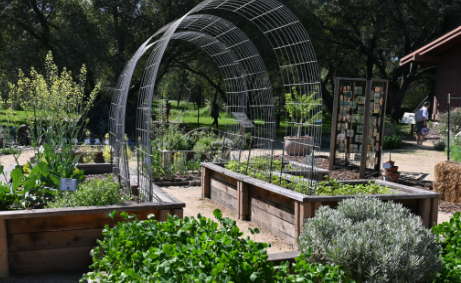
| | The UC Master Gardeners of Nevada County’s Demonstration Garden has 1.5 acres of gardens to experience, explore and enjoy during open hours! Witness pollinators at work, surround yourself with nature’s beauty and inhale hints of lingering sweet and spicy plant fragrances…Plan on enough time to slowly meander through the delightful display of specialty gardens, as follows: | |
- Oak Habitat and Native Plant Meadow
- Foothill Mediterranean Garden
- Cottage Garden
- Rock Garden
- Orchard
- Evergreen Edge
- Pergola Peace Garden
- Raised Bed Garden
| | |
The best way to familiarize yourself with local insects is to catch and study them. Here are instructions for making collecting jars:
Materials List:
- Glass jars with lids, wide enough to accommodate a butterfly.
- Room-temperature water
- Plaster of Paris powder (POP)
- Spoon and mixing container (plastic)
- Funnel
- Newspaper
-
Spread newspaper over your work surface. Estimate how much mix you’ll need based on the number of jars, each with a ¾-inch layer of the POP mixture, and a one-part water to two-parts POP powder ratio. Pour water FIRST into the mixing container.
- While stirring gently, slowly shake POP into the water (taking about 20-30 seconds). If it’s combined too quickly, it will be lumpy. Collapse any lumps and continue to stir gently for another 30-60 seconds until the mixture is smooth and pancake-batter consistency. Note: Stirring aggressively will make bubbles and slow the curing process.
-
Use the funnel to pour the POP mixture into each jar to a ¾” depth, taking care not to splash onto the sides. Jars should not be tilted. The POP mixture will become warm during curing and this is normal. Curing time is 30-60 minutes. Note: Do NOT put the POP mixture down your sink as it may cause a significant clog. Dispose of excess in the trash.
| |
Before using your collection jar:
Pour 2 tsp.* of nail polish remover (with or without acetone) onto the plaster surface of a finished jar. It will soak in and provide fumes in the jar that will cleanly kill the specimen.
*Use more for a larger specimen.
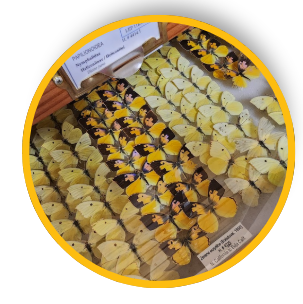
Photo: California Dogface Butterfly, Zerene eurydice .
Bohart Museum of Entomology, UC Davis
Photo Credit: Brooke Johnson, UC Master Gardener
| |
UC Master Gardeners of Nevada County Demonstration Garden News
Photo and article by Ann Wright, UC Master Gardener of Nevada County
| | |
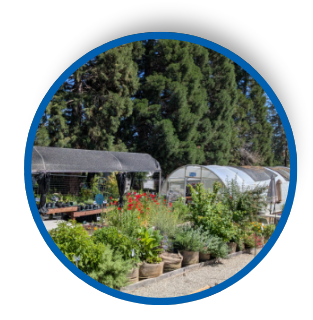
The Demonstration Garden in Grass Valley serves many purposes, one of which happens every year on the Saturday before Mother’s Day. Our Spring Plant Sale, this year on May 9th, is one of our biggest fundraisers - and very popular in the community, offering participants a huge variety of vegetables, herbs and flowers.
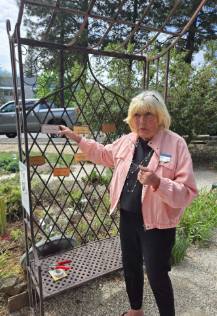
One of the more noteworthy uses of the UC Master Gardeners of Nevada County Garden is to commemorate Master Gardeners who have passed away. Holding small memorials for these volunteers is a very bittersweet way to recognize their contributions and impact on our group and community. This year, we paid tribute to Michael Crandall and Eric Trygg; their memorial plaques were placed alongside others, in the arched trellis of the Foothill Mediterranean area.
We are looking forward to summer months for our evening meetings and Saturday workshops. Part of what makes our work in the garden even more worthwhile is seeing members of the public coming to stroll in the garden – some even come just to sit to enjoy the chance to get outside amidst the plants and their inhabitants. Our garden is open every day – from 8 a.m. to 5 p.m. on weekdays, 8 a.m. to 3 p.m. on weekends. Feel free to roam and enjoy our garden when the Nevada Irrigation District gates are open during those hours.
Photo: UC Master Gardener, Ellen Daisher, offers some information about some of the memorial plaques in the arched trellis. (Carolyn Singer was a Master Gardener in the early days of the organization and long-time
resident of Nevada County and popular author).
|
UC Master Gardeners of Placer County Demonstration Garden News
Photo and article by Karen Lopez, UC Master Gardener of Placer County
| |
The UC Master Gardeners of Placer County Demonstration Garden in Loomis comes alive in the summer!
Warm season vegetables are some of the most popular crops we grow and they thrive when the days get long and the temperature rises. We have added 3 new cattle panels in the raised bed area to grow vining vegetables on. Maybe they will even provide a shady spot to take a break!
| | |
The pollinator beds began blooming in spring but thanks to careful planning by the pollinator team, there is something available for our hungry native pollinator friends to feast on most of the year.
The California native plants have something to offer all year too! When they are done blooming, you will find all kinds of birds eating the seeds, taking cover in the foliage and making themselves at home.
| | |
The garden is open every hour that the Loomis library is open. We hope to see you soon!
Photo: Newly installed hog panels for vining veggies in the raised bed area.
| | |
Demonstration Garden: Spotlight on the Beds
Article and photo by Laurie Meyerpeter, UC Master Gardener of Placer County
| |
Don't Miss These Upcoming Workshops and Events!
UC Master Gardeners of Nevada County Workshops:
June 6th: Fruit Tree Integrated Pest Management
June 13th: Gardening for Wildlife with Native Plants (Native Plant Series #3)
June 20th: Cut Flower Gardening
June 27th: Drip Irrigation Basics
July 11th: Gophers, Moles and More
July 25th: The Power of Keystone Plants and Plant Communities (Native Plant Series #4)
All workshops are held at the UC Master Gardeners of Nevada County Demonstration Garden, located at the N.I.D. grounds; 1036 W. Main Street, Grass Valley.
Workshops are FREE and are from 10:00 a.m. to 12:00 p.m.
For a complete listing and updates, go to ncmg.ucanr.edu.
Grass Valley Farmers Market:
Visit the UC Master Gardener booth at the Pinecreek Center, Grass Valley, on Saturdays from 8:00 a.m. to 12:30 p.m.
UC Master Gardeners of Placer County Workshops:
June 20th: Irrigation Tips to Improve Water Efficiency
2:00 p.m. to 3:00 p.m. at the Lincoln Library, 485 Twelve Bridges, Lincoln.
July 11th: How Good Bugs Can Help Manage Pesky Pests in Your Garden
10:00 a.m. to 11:30 a.m. at the Loomis Library, 6050 Library Drive, Loomis.
For a complete listing and updates, go to pcmg.ucanr.edu.
Visit the UC Master Gardener booth at these Farmers Markets:
Auburn: Across from Courthouse, 1st and 3rd Saturdays, 8:00 a.m. to 12:00 p.m.
Roseville - Fountains: Whole Foods parking lot, 8:00 a.m. to 1:00 p.m.
Every Tuesday.
Lincoln - Fowler Ranch: 1st and 3rd Sundays, 9:00 a.m. to 1:00 p.m.
Lincoln - Sun City: 2nd and 4th Wednesday, 8:00 a.m. to 12:00 p.m.
| | | | | | |