|
DART Customer Satisfaction Reaches Six-Year High
metro-magazine.com
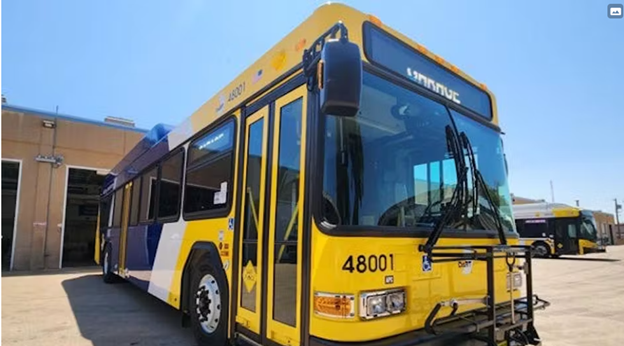
Dallas Area Rapid Transit (DART) achieved record marks for rider loyalty and satisfaction, signaling growing confidence in the agency and its customer experience, according to the agency.
DART’s FY2026 Customer Satisfaction Survey found its Net Promoter Score (NPS) rose 10.8 points to an all-time high of 33.7, surpassing the transit industry median.
NPS measures customers’ willingness to recommend a service on a scale of zero to 10. The score is calculated by subtracting the percentage of detractors, who rate the service from zero to six, from the percentage of promoters, who give it a nine or 10. Scores can range from minus 100 to 100, with a positive score indicating that promoters outnumber detractors.
Overall satisfaction reached 74.9%, its highest level since 2019, while a record 89.6% of riders said they were likely to continue using DART — the highest share since the survey began in 2012, according to the agency.
The survey showed broad improvements across different rider demographics, types, and travel modes, reflecting systemwide progress rather than gains within a specific group.
Read More
| |
What Dallas Drivers Need to Know About Autonomous Vehicles, Where They Operate
masstransitmag.com
Due to the state's legislative and regulatory policies, autonomous vehicle companies have flocked to large Lone Star cities to deploy and test fleets. Dallas has become one of these hubs, with vehicles from Uber, Tesla and Waymo often seen on streets.
However, the purpose and functionality of autonomous vehicles remains a mystery for some North Texans, especially when these vehicles work the same areas daily. A new study from Southern Methodist University said AVs may be the answer to Dallas congestion and traffic issues, but what about their boundaries?
From their effect on public transportation to the degree of autonomy, here's the three biggest misconceptions about autonomous vehicles.
Autonomous vehicles require no human input. The Society of Automotive Engineers defines six levels of automation, from fully manual, level 0, to fully autonomous, level 5.
Advanced Driver Assistance Systems, such as emergency braking, parking assistance and adaptive cruise control, are features found on cars as the degree of automation gets more complex.
According to the society, cars ranked level 0 through 2 require constant supervision from a person. This includes driving the vehicle, lane centering and reactive response to traffic conditions. A car ranked level 3 or 4 includes cars with self-driving features such as Tesla. However, a person must be present to activate features. Level 5 vehicles are completely autonomous and do not require human assistance.
"The reality we're dealing with is that AVs are going to be incorporated along human drivers for the foreseeable future," said Richard Willder, Uber's global head of autonomous policy.
Read More
| | |
$154 Million Approved for Public Transit Across Texas
masstransitmag.com
More than $154 million in transit funding will help provide access to safe, reliable transportation options for Texans across the state.
The Texas Transportation Commission approved the funding in its June and July meetings. These awards will support transit programs that connect people in rural and urban communities to jobs, schools, medical care, groceries, and other essential services, a news release said.
“Public transit is an essential part of connecting many Texans to the people, places and opportunities that matter most,” Texas Transportation Commission Acting Chair Alvin New said. “Whether it’s a ride to work, school, a medical appointment or the grocery store, these services help provide safe, reliable options that give more Texans the freedom to get where they need to go.”
This state and federal funding will help expand services for seniors and people with disabilities, improve mobility options, deliver modern infrastructure, and enhance existing transit services.
Read More
Funding List
| |
How DART's GoPass is Redefining Regional Mobility
metro-magazine.com
For many transit riders, getting from point A to point B has long meant navigating a maze of separate transit agencies, fare systems, schedules, and mobile apps. As metropolitan regions expand and travel becomes increasingly multimodal, those fragmented experiences have become a significant obstacle to making public transportation more seamless and convenient.
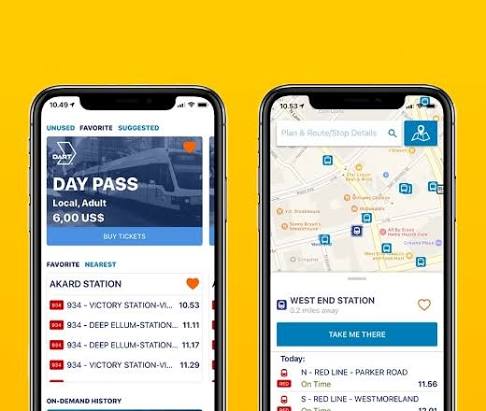
Recognizing the need for a better approach, Dallas Area Rapid Transit (DART) developed GoPass, a unified mobility platform that brings trip planning, fare payment, real-time information, microtransit, paratransit, and regional transit services together in a single application. By integrating multiple transportation options into one digital experience, GoPass is helping redefine how riders plan, pay for, and complete their journeys across North Texas.
The platform's innovative approach recently earned DART and its supplier partner Kuba Pay a METRO Magazine Innovative Solutions Award.
"It is an honor to see GoPass receive the METRO Innovative Solutions Award, and it is a testament to the work our team and partners continue to put into the platform," said Sejal Christian, DART's director of mobile fare systems. "Public transportation has become increasingly technology-forward, and we are seeing that evolution across transit systems of all sizes around the world."
Rather than functioning solely as a mobile ticketing app, GoPass was designed as a complete mobility ecosystem. Riders can plan, book, pay for, and manage their entire journey on a single platform, eliminating the need to switch between multiple applications or to figure out which transit agency operates each segment of a trip.
Today, the platform serves 14 transit agencies, demonstrating how technology can connect multiple providers while delivering a seamless customer experience.
Read More
| |