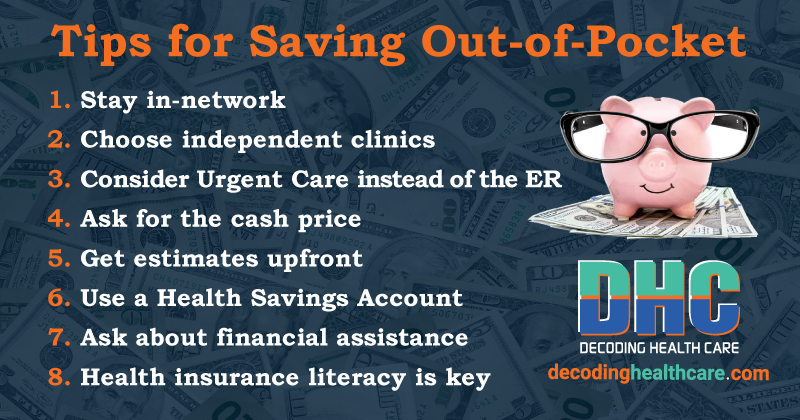
Top 8 Tips for Spending Less Out-of-Pocket for Health Care

Even with “good” insurance, navigating deductibles, co-pays, and unexpected charges makes budgeting for out-of-pocket expenses seem nearly impossible. However, by making a few small shifts in where you get care and how you pay for it, you can keep more of your hard-earned money.


Read the article for more details


Garnishing Your Wages for Medical Debt  


A growing number of states are moving to ban or strictly limit the practice of wage garnishment for medical debt. Across the country, many patients are facing a "second crisis" after a health emergency: having some of their wages involuntarily taken to pay medical bills. Wage garnishment is a legal process where a portion of a worker’s paycheck is sent directly to a creditor, and it’s a common tool for debt collectors. In some states, debt collectors can even put a lien on someone’s home.


Advocates argue that health care should not lead to financial ruin, especially since medical expenses are rarely a voluntary choice. On the other hand, some industry groups warn that these restrictions on paying back medical debt could affect the financial stability of rural hospitals and clinics. A few states already ban this practice or have strict limits, like New York, California, and Florida. 


Read the article for more details

Medicaid May Cover Your Pregnancy 


Medicaid covers over 40% of births in the U.S. Pregnant people who are uninsured can qualify for Medicaid easier than non-pregnant people, because every state wants to encourage prenatal care. People’s incomes have to be below a certain amount to be eligible for Medicaid, but that cut-off is much higher for pregnancy, so more people qualify.


So if you are pregnant and don’t have insurance, check out your state’s Medicaid program to see if you qualify for health care during and after your pregnancy. You can ask a health provider or clinic how to apply, or go to your state’s Medicaid website by selecting your state here. 


Read the article for more details

“Public Option” Health Insurance Plans


Nevada recently became the third state in the country to launch a "public option" individual health insurance program, called Battle Born State Plans. Nevada joins Washington and Colorado in an effort to provide more affordable coverage choices on the ACA marketplace. These health plans are private-public partnerships designed to compete with traditional private insurance by meeting certain rate-reduction targets.


While early enrollment has been lower than initially projected, state officials view the program as a vital tool for expanding access as federal enhanced subsidies expire and health care costs continue to rise. Next time you are enrolling in individual insurance, you can check out these health plans on your state marketplace if you live in one of these states. A few other states are considering developing a public option plan as well.


Read the article for more details


Monthly Money-Saving Tip

If You're Eligible for COBRA after Leaving a Job with Employer-Sponsored Insurance…


You can be a bit tricky if you aren’t sure if you will need COBRA continuation coverage after leaving your job, but you don’t want to be uninsured or to buy another plan if you’ll be starting another job or will have access to other coverage soon. You have 60 days to choose COBRA, and after that, you have 45 days to start paying for it.


So if you are wavering and don’t have any immediate healthcare needs, you can consider choosing COBRA near the end of the 60 days, and then waiting until the end of the 45-day deadline to start paying for it, to make sure you want it.


If something major happens to your health during this time and you want insurance to help cover it, the beauty of this is that COBRA coverage is actually continuous and retroactive to when you were first eligible, if you follow all the procedures and elect coverage within 60 days and then pay by the deadline. If you don’t need it during or after this grace period, then you don’t send in the first payment and save a lot of money.


The only downside to this is that you can’t skip months with COBRA. So if you decide you need COBRA coverage near the end of the grace period, you will have to pay for all of the months of health insurance premiums since you stopped working and became eligible, whether you used it or not.


(Source: COBRA section of Chapter 4 in our book Decoding Health Insurance and the

Alternatives: Options, Issues, and Tips for Saving Money)


Relevant Resource Share


Outsmart Medical Billing


This month’s resource, written by Katy Talento, is titled “Outsmart the Medical Billing Trap: A step-by-step patient playbook for paying what's fair — and not a dollar more.” Many patients feel like they’ve lost the battle the moment a medical bill arrives in the mail, but she and other advocates and researchers say that the first bill can often be viewed as the beginning of a negotiation rather than a final demand.


This article provides a practical roadmap for navigating the complex and often error-prone world of healthcare billing, offering strategies to spot common mistakes and push back against overcharges. By understanding your rights — including how to request itemized statements and leverage price transparency laws — you can take a more active role in managing your healthcare costs. This is a valuable resource for people facing large medical bills and could potentially save you a lot of money, though you will have to spend some time researching bills and asking questions.


Did you find this newsletter helpful? Share it!

X Share This Email
LinkedIn Share This Email

Did someone send this newsletter to you and you want to subscribe?


Feedback & Sponsorship

If you have feedback or ideas for future newsletters or blog topics you want us to research and decode for you, please let us know!

If you have a product or service that promotes medical financial literacy or health and wellness, and you want to get in front of our audience, contact us.

Contact us at info@decodinghealthcare.com


Get an Overview of the U.S. Healthcare System


Newly Updated for 2026!


Decoding Health Insurance and the Alternatives: Options, Issues, and Tips for Saving Money is a useful, factual, non-partisan look at the current U.S. system for health insurance and getting health care, including practical tips to help you save money, whether you have insurance or not. 


Need to make your voice heard regarding healthcare legislation?

Call your Senator 866-426-2631


About Decoding Health Care

We are consumers just like you! As small business owners and entrepreneurs, we understand the difficulty of navigating the medical system while protecting your finances from the impact of high medical bills. We are here to help by teaching you to reduce out-of-pocket costs, shop for estimates and lower prices, negotiate lower medical bills, and save money on healthcare expenses with or without insurance.