| | Last week, nearly 75,000 of our neighbors in Lane County were at risk of being without help buying food. The Trump Administration’s actions for just the SNAP benefits affected 757,000 Oregonians including about 210,000 children. The program was halted by an uncaring federal government. Oregon's Attorney General Dan Rayfield and other Democratic AGs sued the Trump administration, and on Friday we learned that the court has ruled the benefits must not be halted. Funds are flowing as of today (see more below), but the administration has already filed an appeal. Beyond that, other federal programs have been cut, like the Low Income Home Energy Assistance Program (LIHEAP) used to help people pay for fall and winter energy bills. Many thanks to everyone, individuals, businesses, and community organizations that leapt into action organizing donations and delivery plans. Meanwhile, please do what you can to help. I made a donation to Food for Lane County. You can visit United Way of Lane County for ways to donate and volunteer. My legislative website includes links to community resources.
Federal actions keep rolling in, and Oregon keeps pushing back. The Attorney General continues to make legal arguments, and the courts have made a few rulings in favor of arguments from Oregon schools, district attorneys, and the state’s AG. (For example, School District 4J prevailed in its legal challenge of a federal action that threatened more than $18 million in federal funding. Oregon has initiated or joined more than 35 lawsuits and letters, for example challenging federalization of the Oregon National Guard, tariffs, slashing SNAP benefits, public service loan forgiveness, access to federal emergency grants, and cuts to a solar program that lowered energy costs.) Meanwhile legislators are working behind the scenes preparing for more work in the short session next February to close legal loopholes, shore up policies, and protect Oregonians from federal overreach. What we will not be able to do is make up approximately $2 billion of losses to Oregon’s programs and revenue, including grants that come to the state to distribute to local communities.
The changing weather, wind, and rainstorms are interrupted by periods of sun and glorious color. That's how I hope to weather this unsettled period of national affairs, focusing on practical solutions and then taking notice of rays of sunshine, hope, and neighborly spirit.
| | If you missed my latest e-news, here's the link to September. | | |
In the sections below you'll find
- Federal cutbacks, federal shutdown, and SNAP food assistance program
- Economy. Federal, state, and household budgets
- Federal actions and ICE raids
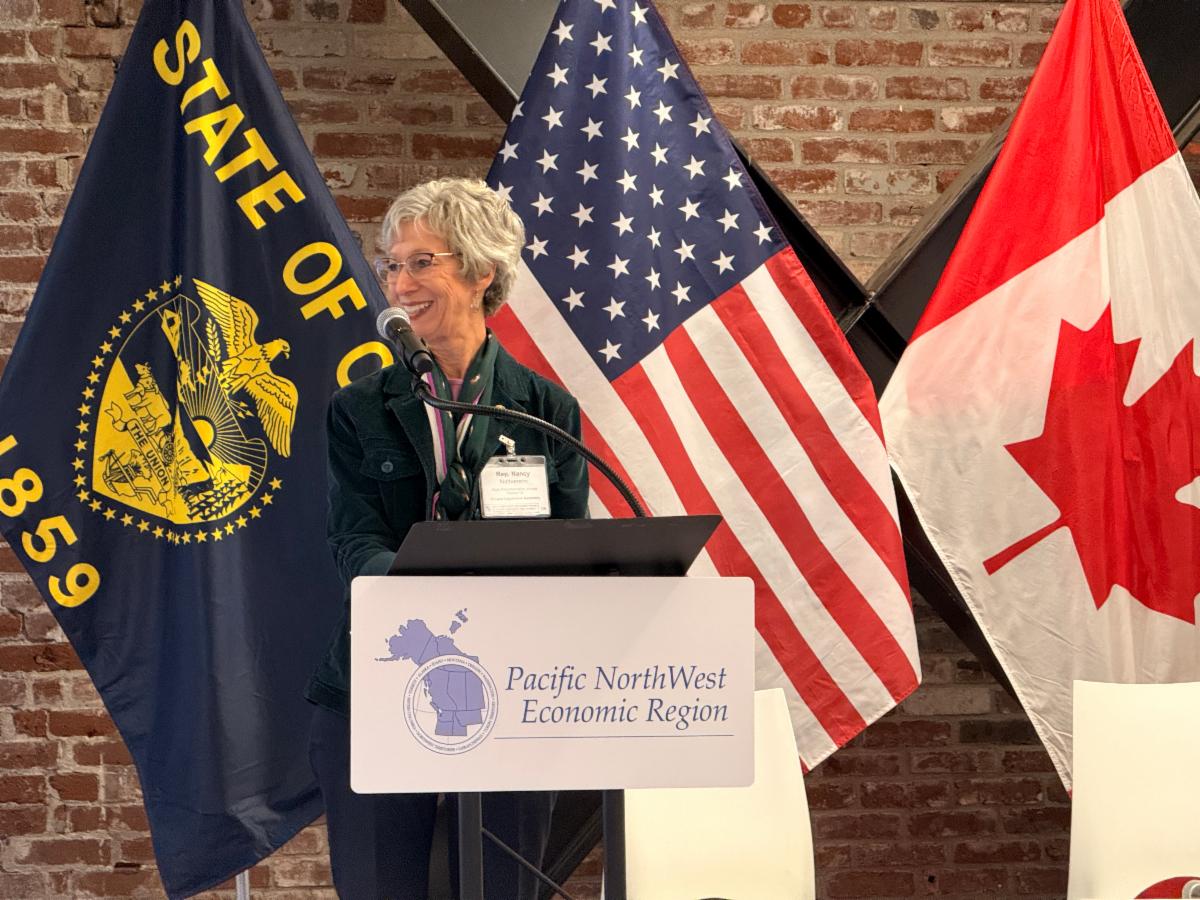
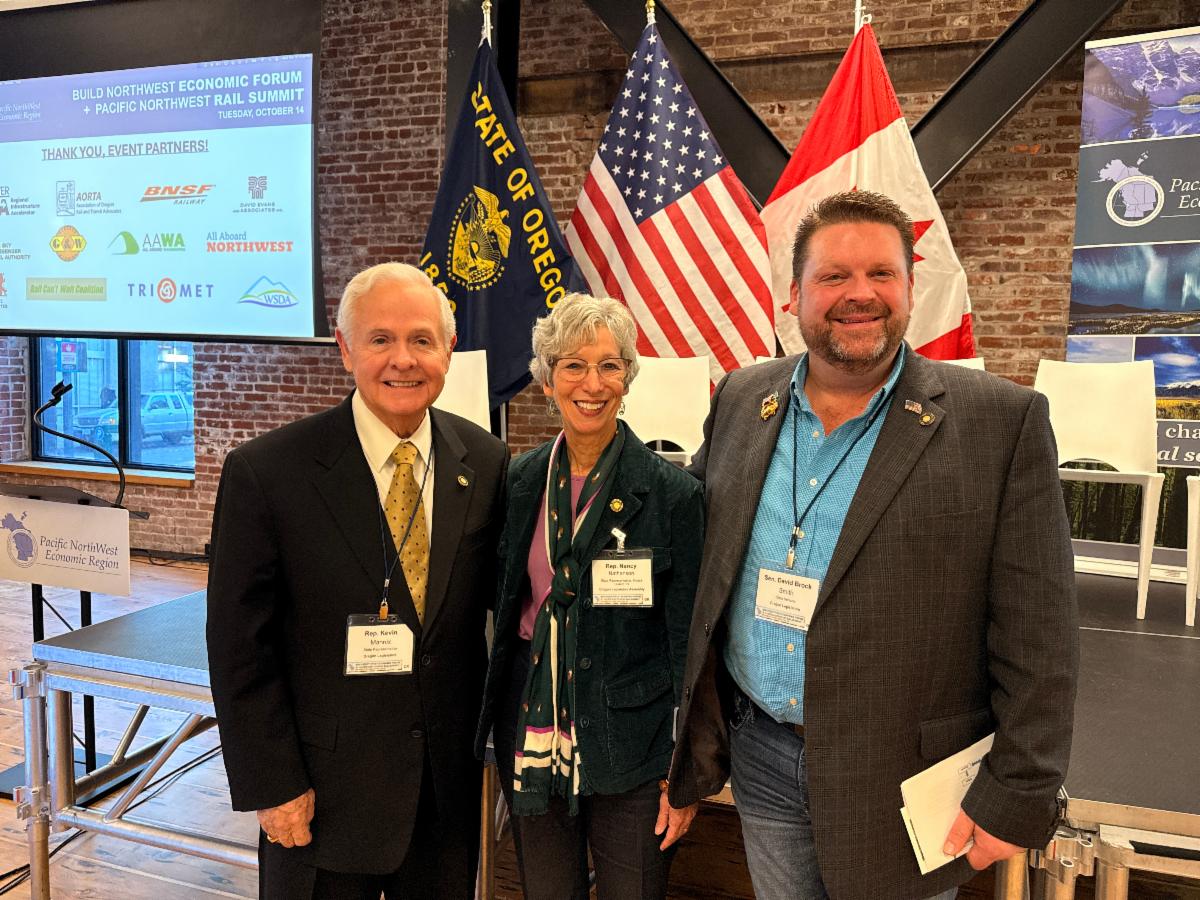
- Snapshots: Lions Vision Screening at Howard Elementary School, an economic summit about the role of rail for shipping and public transportation
| | More change in health care for Lane County | | |
Oregon's program for ensuring health care for people receiving public assistance (Medicaid) is largely managed by a system of Coordinated Care Organizations, or CCOs. There are 12 CCOs in Oregon. Two CCOs have been managing care for patients in Lane County: Trillium and PacificSource. (Each of them manages care in other counties as well.) PacificSource announced recently that it would not be signing a contract with Oregon Health Authority to continue providing services in Lane County. Oregon Health Authority (OHA) is working with Trillium to move about 90,000 patients from PacificSource to Trillium. This is no small thing. I am working with Lane County Commissioner Trieger, county officials, and local legislators to review the state's efforts to help manage this big change and oversee the transition to avoid deterioration in health care as the transition unfolds Jan.1-Feb.1 2026.
We recently wrote a letter to OHA and to Trillium requesting certain specific information and actions. It included the following: "We Lane County legislators are deeply concerned about the state of our local health care delivery system and the impact of recent and upcoming decisions regarding the transition of Medicaid patients to a single Coordinated Care Organization, as PacificSource winds down operations and 90,000 patients are added to Trillium’s business. Our community’s providers and safety net systems are operating under extraordinary strain, and we urge OHA to take decisive, collaborative action to protect access to care and stabilize our local network."
Meanwhile, some local health care providers are preparing for the change (imagine changing your doctor, dentist, and health insurance company, and then imagine the doctors and dentists changing their business records and procedures to work with a different insurer).
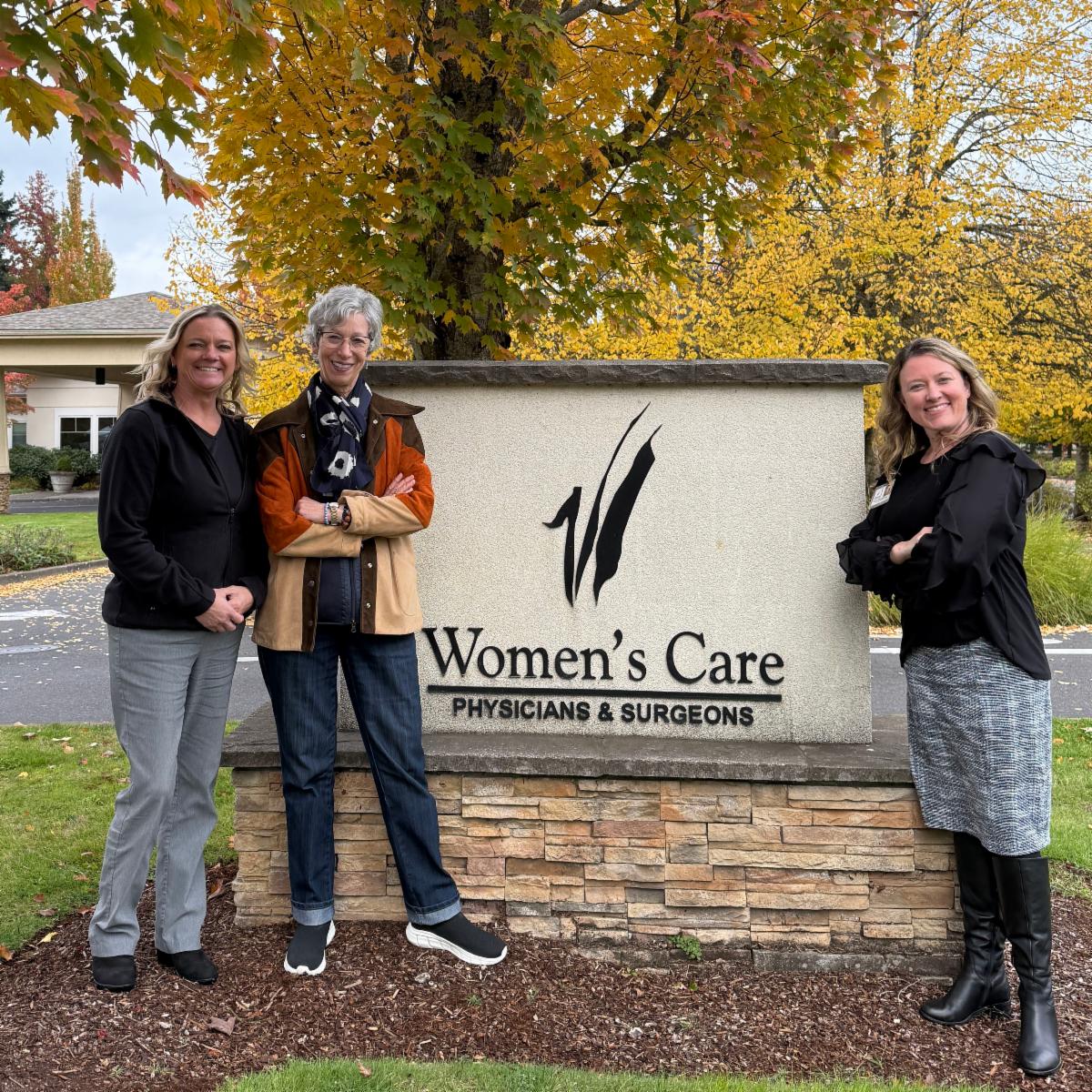
Photo: visiting a Women's Care clinic to discuss challenges of balancing a budget as a health care business while continuing to provide excellent care.
| |
Update on November SNAP benefits
The Oregon Department of Human Services website announced Friday morning November 7:
SNAP benefits will be available on EBT cards on Friday, November 7, 2025.
Oregon is one of the earliest states to process benefits following the court ruling. Emergency preparations put in place by Governor Kotek enabled ODHS to work quickly with its EBT software vendor to ensure the funds were available as soon as the federal order was issued.
The Oregon Department of Human Services (ODHS) worked through the night to issue full November benefits by Friday morning so families across the state can access the food they need.
Thursday's court order rejected the administration’s decision to only partially fund (50%) the food benefits program. On Friday morning the administration appealed to the US Court of Appeals for the First Circuit. New York Times story explaining the court action.
| | |
In the weeks leading up to the court decision requiring release of funds to continue the program, people across the nation continued to cry out, push back, and plan. In Oregon, the Governor released $5 million to help Oregon food banks buy and distribute more food and directed the Office of Resilience and Emergency Management to launch an incident management team (IMT). The IMT will be working with partners across the state; some of their tasks include finding individuals and families who don’t have food or are at high risk of running out, helping move food to areas that need it most, and coordinating actions between state agencies to make delivery faster and easier. The Governor also directed the Oregon Department of Human Services (ODHS) to distribute $1 million in emergency assistance to the nine federally recognized Tribes of Oregon to help address the food security emergency.
| |
More cutbacks
Numerous other federal, state, and local programs have been reduced or come to a halt. Here are some of those. Maybe you know of someone who uses or works with or at one of these programs.
- Farmers can’t access loans, disaster relief, and other help already promised by the USDA. Payments for conservation programs and critical information about livestock and commodity prices have ceased.
- Women, Infants, and Children (WIC) programs across the country are at risk of turning away millions of children and expecting parents from nutrition and breastfeeding support.
- Small Business Administration (SBA) loans are suspended, halting approximately $100 million each day in access to capital for businesses that rely on these funds for growth and operations.
- Federal contracts are frozen, jeopardizing contractors and leading to potential layoffs across various industries.
- Public lands remain open, but visitor centers and services are closed. Prolonged closure will harm tourism and local economies that depend on visitor spending.
- Wildfire prevention work is suspended, increasing fire risk in vulnerable areas.
- Shutdowns have a severe impact on Tribal communities due to the federal government’s trust obligations for providing essential services, including healthcare, education, and public safety to Tribes.
|
Oregon feels it: testimony at the Capitol
(Also see the section below on Federal Actions Here at Home: Shutdown and Layoffs)
Committees held meetings at the Capitol this fall and heard about impacts in Oregon of Trump's budget bill passed by Congress and become law on July 4 as H.R.1. Here's a summary of some of those meetings.
Education
H.R.1 undermines education, from preschool to college. It blocks student loans for lower-paying jobs like Head Start teachers, social workers and behavioral health therapists, making loans eligible only for higher-paying jobs. It slashes financial aid, and threatens the free school meals and early-learning services that help children start school healthy, fed, and ready to learn. More families will be forced into private loans and fewer adults will be able to finish degrees.
Labor and Workforce Development
The U.S. Department of Labor has weakened or proposed repealing key safeguards for thousands of Oregon workers in high-risk jobs, like farmworkers, construction crews, and shipyard or mill workers. Rollbacks include proposed repeal of construction-site lighting standards and respirator rules for asbestos, benzene, lead, and other hazardous exposures.
Another rule would repeal non-discrimination protections, affirmative action plans, and anti-harassment training in registered apprenticeship programs, stripping away safeguards that have helped Oregon’s construction and manufacturing apprenticeships open doors for women, veterans, and people of color.
| |
Climate, Energy, and Environment
President Trump’s budget and policy decisions are driving up energy costs for Oregon families, slowing our transition to clean power, and taking away programs that help people save on their bills. These changes will raise monthly costs for Oregonians, eliminate jobs, and make it more difficult to meet our state’s climate goals.
H.R.1 ends or shortens federal solar and battery tax credits. The residential credit ends at the end of 2025, and the commercial credit at the end of 2027. That change alone will raise the cost of a typical 8-kilwatt home solar system from about $13,700 to more than $23,500. One result is a projected loss of 4,800-5,300 energy sector jobs, including about 1,500 solar industry jobs that are expected to disappear in 2026 due to the credit rollback.
In August 2025, the EPA canceled Oregon's $86.6 million Solar-for-All grant, which would have funded 1,800 solar installations for low-income single-family homes.
Emergency Management
Counties will lose one of their few dedicated funding streams for hazard mitigation work that helps us be more prepared for when wildfires or earthquakes strike. The federal Building Resilient Infrastructure and Communities (BRIC) program, a key funding source for disaster mitigation initiatives like seismic upgrades, has been eliminated under the Trump budget.
The Emergency Management Performance Grant (EMPG), which normally covers about 50% of emergency managers’ salaries in most Oregon counties, has been held up in federal court since early 2025. (Two-thirds of Oregon counties run one- or two-person emergency management divisions.)
FEMA has proposed changes that would cap the federal share of disaster recovery costs at 75% – instead of guaranteeing a 75% floor – and quadruple the minimum dollar amount of documented damage that must be reached before the federal government would declare a “major disaster” and release funds.
| |
Consumer Protection
The Trump administration has gutted the Consumer Financial Protection Bureau (CFPB), the federal watchdog that protected people from scams, hidden fees, and abusive lenders. Oversight and enforcement have been reduced; 67 consumer protection guidance documents have been rescinded, meaning mortgage servicers, payday lenders, debt collectors, and private student loan companies face far less scrutiny. Federal enforcement actions have dropped 37% and penalties dropped 32% in early 2025 compared to late 2024. One example of the impact: aging Oregonians who are over charged or scammed will be less likely to see refunds or compensation. While the proposed 88% staff cut in enforcement has been (so far) blocked by a judge, a hiring freeze has left the CFPB short-staffed, slowing responses to fraud and complaint investigations.
Food Assistance
H.R.1 will strip $3 billion in food assistance from Oregonians over the next six years. Expanded work-reporting rules for adults 18-64 and tighter county waivers mean 310,000 Oregonians – nearly half of the total number of current SNAP enrollees – must be rescreened; many will lose benefits despite remaining eligible. 29,000 households will see their SNAP benefit cut by an average of $58 a month. About 3,000 legally present immigrants will lose SNAP eligibility altogether.
For the first time in history, Oregon will be required to pay a share of SNAP benefits, creating another hole in our state budget. Beginning Oct. 2026, Oregon’s share of SNAP administrative costs will rise from 50% to 75%, and starting Oct. 2027 the state will have to pay up to 15% of SNAP benefit costs.
| |
Health Care
Senator Deb Patterson who chairs the Senate Interim Committee on Health Care held a meeting to get specifics on what the Trump administration’s severe budget cuts will do to health care and food access in Oregon. She said that testimony explained that the federal government will demand more red tape to qualify for benefits and cause rural Oregon to face some of the most severe losses. "Oregon has been a leader nationally in simplifying benefit applications so it’s efficient to connect people to health care and food assistance. But the federal government now is requiring Oregon spend its own resources to put people through repetitive, costly, and counterproductive bureaucratic processes that don’t help Oregonians. They’re making Oregon carry out their harmful policies at our own expense."
H.R.1 and Medicaid changes will devastate Oregon’s healthcare system. New federal rules will push up to 200,000 Oregonians off the Oregon Health Plan (OHP), significantly drive up monthly premiums for families with private insurance, and force safety net clinics and rural hospitals to cut services or close their doors. Cancer and chronic-illness patients are at particular risk of losing treatment mid-course if they can’t keep up with reporting requirements.
Health insurance: Higher monthly premiums for families with private insurance
Why should federal cuts to subsidized health insurance affect my (private) insurance costs?
When federal premium tax credits expire under Trump’s budget, most Marketplace customers will see their premiums jump by $90-$165 a month. How this affects everyone: Revoking these credits will send shockwaves through the health care system. Insurance companies determine rates based on risk, or how much they will be paying out in claims. As healthier people are priced out of Marketplace coverage, it shrinks the risk pool leaving more people with higher likelihood of needing care, forcing insurers to raise rates across the board. This means higher premiums and medical costs even for Oregonians who get coverage through their employer.
Rural hospitals and safety net clinics at risk of closure or service cuts
Because Oregon’s Federally Qualified Health Centers (FQHCs) rely on Medicaid for as much as 60% of their revenue, every disenrolled patient means less money to keep their doors open to the community (see Northwest Human Services/OPCA memo). Clinics warn they could be forced to lay off staff or scale back dental, mental health, and other crucial services as uncompensated care grows. Rural communities face the greatest risk: if patients delay care until they’re in crisis, local emergency rooms and small hospitals could be overwhelmed.
| | Economy: tariffs, trade, and household budget | | |
The federal government’s actions including on-and-off tariffs, poking holes in long-standing international relations, and reducing staff and programs focused on economic development, have led to fractured relations with foreign governments and threatened the viability of numerous American – and Oregon – businesses. Tariffs imposed by the U.S. have been matched by retaliatory actions, either tariffs or other strategies, by some countries and those impacts are starting to be reported anecdotally, but firm analysis won’t be available for several more months.
For example, Oregon is not quietly waiting for continued consequences to our own economy. Attorney General Dan Rayfield is leading a coalition of 12 states and business leaders suing the Trump administration over tariffs.
Governor Tina Kotek has signed a Memorandum of Understanding with the United Kingdom to strengthen economic development cooperation and trade relations. The UK is one of Oregon’s top target markets for attracting foreign investment, especially in bioscience and high tech, as well as a growing export market. The top exports are business-to-business including computer products, machinery, and transportation equipment. Oregon and the UK will focus on key areas including semiconductors, cybersecurity, digital technology, and clean energy (both Oregon and UK have adopted policies to phase out coal energy by 2030.
The national budget and our household budget
The One Big Beautiful Bill claims to be a big boost for Americans. Analysis from the Congressional Budget Office reports that it will increase America’s budget deficit by $3.4 trillion over the next decade. And what about us, what’s the impact on individuals and families? Looking beyond the temporary tax breaks for individuals and permanent tax breaks for business, a fuller analysis by the Center for American Progress showed that taking the Trump economic policies including tariffs into account, "middle-income households will experience a net income decrease of 1.2 percent, or $1,300, in 2027. Meanwhile, the top 1 percent will receive a net income increase of nearly $5,000.”
| | Federal actions here at home | |
Federal troops, National Guard
Peaceful protest has continued; the situation in Portland is not “out of control” and is not threatening the ICE downtown building. Oregon continues to speak out for the rule of law and for justice. Resistance to unlawful federal action is led by Attorney General Day Rayfield. As of today, the deployment of National Guard troops is still delayed pending a judicial decision.
Portland’s Mayor Keith Wilson issued a statement on October 20. I am copying an excerpt from his statement below. You can read the entire statement here. For those of you not familiar with Mayor Wilson, here’s a picture of us a few years ago, before he was elected Mayor, at his place of business (TITAN Freight Systems), when I visited with him to talk about renewable diesel fuel for trucks, and high speed trains.
"Portland stands for democracy, dignity, and the right to peacefully protest. Our focus is simple and unchanging: we demand transparency, accountability, and community-led solutions, not troops on our streets. Our National Guard members are our neighbors, coworkers, and loved ones, and they deserve better than this unnecessary, unwanted deployment…. I call on federal decision-makers to stop these deployments, honor local governance, and partner with us on real public-safety solutions that respect civil rights and protect our community."
|
Shutdown and layoffs
Over 80% of federal workers live outside Washington, D.C. Furloughs cause immediate financial strain due to missed paychecks and can lead to long-term economic hardship. Last winter, as the new administration started a series of sweeping layoffs, restructuring and reducing federal agencies, I reported in my March-April e-enewsletter that Oregon was home to about 30,000 federal employees. First quarter 2024 information showed about 1,900 were at field offices in Lane County, including Veterans Administration, USPS, District Court, and others. The current shutdown now affects (most) federal employees that had retained their job. Those employees are going without paychecks, their household budget is strained, and the local economy is reduced.
|
ICE arrests and raids
ICE arrests have been observed in Oregon including here in District 13. Some of those detained and arrested have proven legal status; they are working in our local businesses and contributing to the local economy and community. Meanwhile the ICE actions in our neighborhoods are frightening children and families. Regardless of status all deserve due process. Here is a statement I just co-signed with fellow legislators and local officials in Lane County:
“We are alarmed by the reported actions carried out by ICE yesterday in Lane County, which included the violent detention of several Oregonians, and the ongoing reports of individuals not receiving their constitutionally protected rights to due process and legal representation. This is only the most recent in a series of aggressive raids carried out across the state in recent months. We are working together with community leaders and local law enforcement to learn more and ensure that all of our constituents are accounted for.
“Every Oregonian and every person in the United States, regardless of immigration status, is entitled to the full protections guaranteed by the Constitution. We will use all tools at our disposal as representatives of this community to ensure that those protections are upheld for the individuals detained today and for any Oregonian subjected to unjust or unlawful enforcement actions by ICE.”
| | Volunteers use a Welch Allyn Spot™ device to detect eight different vision issues in second for vision checks; it's quick and easy. The results are forwarded for review and anything that might need follow up is reviewed by a health care professional. Every year the Oregon Lions Sight & Hearing Foundation (OLSHF) screens, treats, and saves the sight and hearing of over 200,000 children and adults. They aim to conduct more than 600 annual on-site health screenings and provide follow-up referrals for low-cost services to those with health problems. Local Lions Clubs work with school nurses and school districts, and collaborates with local health professionals and community organizations. The day I visited Howard Elementary School, they screened 425 students. | | | | |