|
Welcome to our third Cuyahoga County Overdose Response Bulletin!
This bulletin was created to keep the community up to date on local and national news, alerts, trends, and educational resources related to the overdose crisis.
In this edition:
-
Initiative Update: A brief recap from our initiative's stakeholder meetings in April & June
-
Cuyahoga County Snapshot: Cocaine-related Overdose Fatalities are Projected to Reach an All-time High in 2025
-
Local Drug Trends: Drug Checking Pilot Results Show Continued Unexpected Substances in The Supply
-
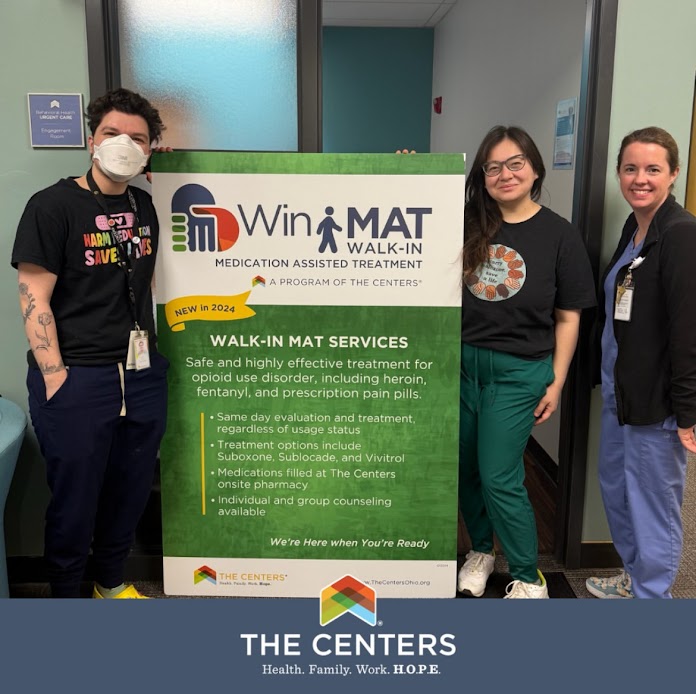
Program Spotlight: The Centers Opens Second Walk-in Medication Assisted Treatment or "WinMAT" location
-
Staying Informed: Sign Up to Receive Local Alerts Including this Bulletin, Bad Batch Alerts from The SOAR Initiative, and more.
-
Learning Opportunities: Understanding Brain Injury: Strategies for Ontario Harm Reduction Programs
| | |
Stakeholder Meeting Highlights: April & June
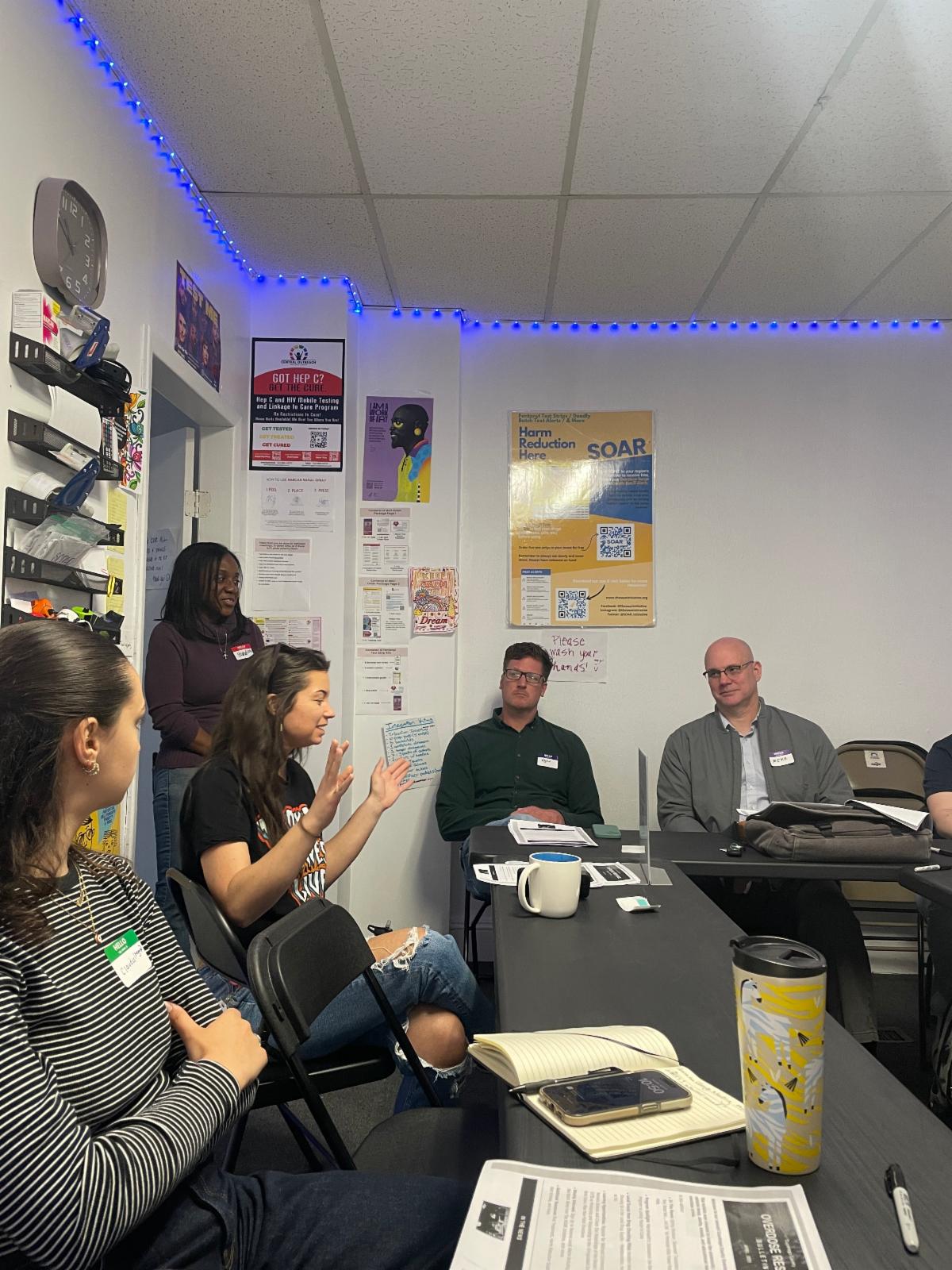
Coordinated by Thrive for Change, the Overdose Response Bulletin is created with input from local organizations, agencies, community members, and individuals with lived experience.
At our most recent meetings for this initiative attendees offered valuable feedback on past editions of the Overdose Response Bulletin and discussed ideas for future content.
A key theme that emerged was the need for greater transparency, especially around federal funding challenges and their impact on programs, partnerships, and our community. Participants emphasized the importance of highlighting growing service gaps with data.
We’re grateful to everyone who contributed and remain committed to keeping this bulletin rooted in community priorities.
If you're interested in attending the next meeting, please reach out to Elisha Starkey for more details.
| | This section highlights current local and national stories or trends that could have an impact on the overdose crisis locally. It offers a snapshot of the challenges and conversations shaping public perception and policy around substance use. | | Cocaine-Related Overdose Deaths Are Projected to Reach an All-time High by The End of 2025 | | |
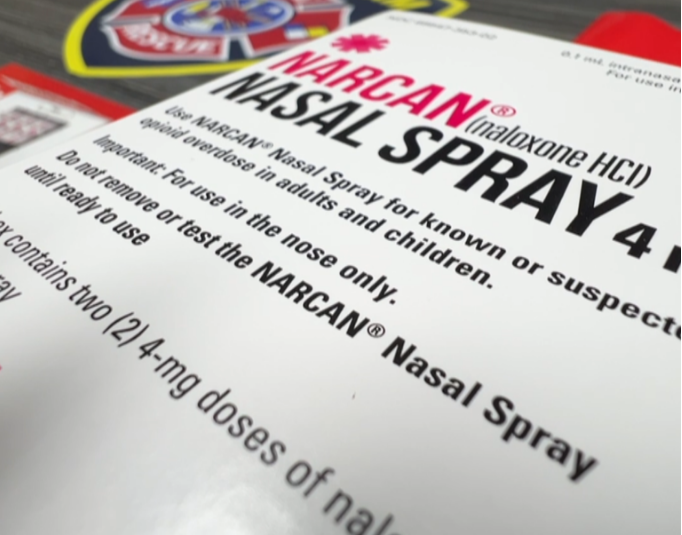
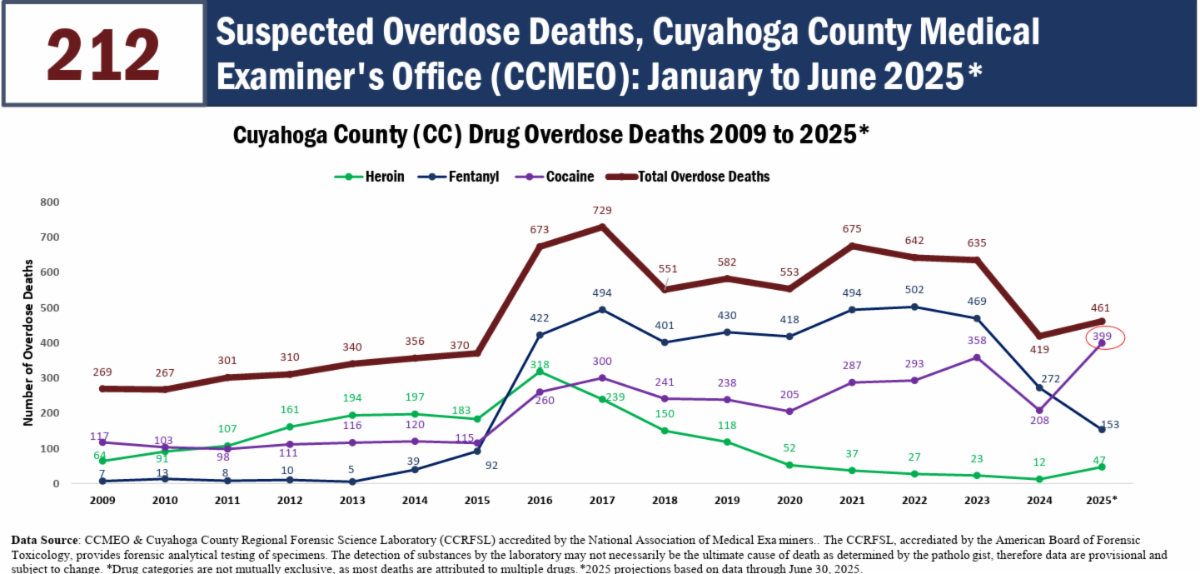
According to the Cuyahoga County Medical Examiner's latest report on overdose fatalities, overdose deaths related to cocaine are on the rise this year with projections at nearly double that of 2024. A major driver to cocaine related overdoses continues to be cocaine combined with fentanyl, making resources like naloxone and ways to test drugs for fentanyl critically important.
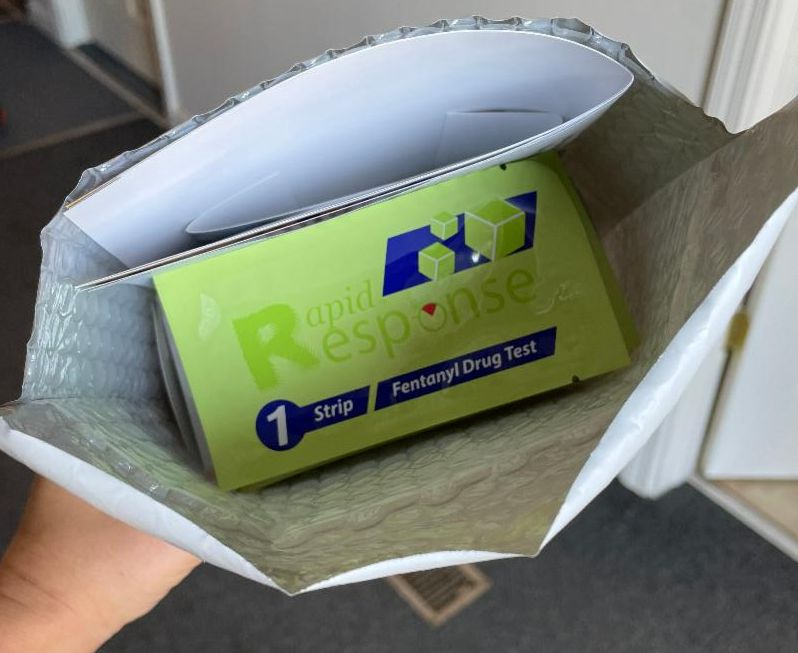
Visit thrive4change.org/odalertresources and click on "Syringe Services & More" for information on local places to access free naloxone and fentanyl testing strips.
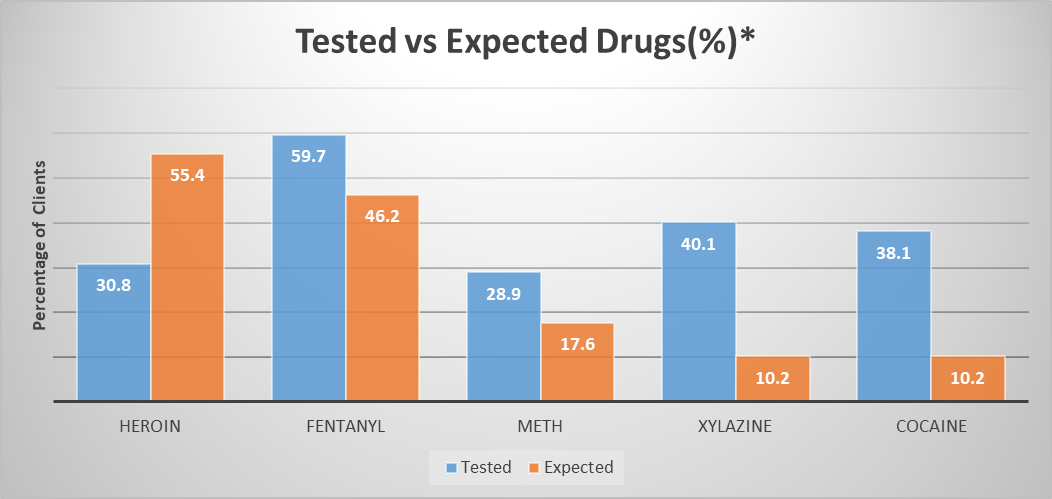
| | As a follow up to our February bulletin, we wanted to highlight that we continue to see a difference in the drugs people are expecting and what is actually in the supply. This graph shows data from August 2024 to July 2025, during which heroin remains the most commonly expected drug, while fentanyl was the most frequently detected in testing. | Most samples tested positive for a combination of substances like fentanyl, xylazine, or methamphetamine. These can cause unpredictable effects, from skin problems and infections, to a higher risk of overdose. | | | |
About the Data: Local drug checking data comes from a pilot project that collects and tests 20 used syringes each week to identify the substances present. These are preliminary findings of the pilot project and the sample isn't representative of the overall drug supply.
The results are shared with both the individual who used the syringe and the community, offering critical insights into the local drug supply and helping individuals take steps to better protect themselves and reduce potential risks. Click below to see more details and data from this initiative.
| | The Centers Opens 2nd WinMat location | | |
Launched in March 2024 WinMAT, short for Walk-in Medication-Assisted Treatment is a new clinic from The Centers to provide low-barrier, same-day care for people seeking treatment for opioid use.
Now operating at two locations:
Services include:
- Same-day evaluations
- Personalized treatment plans
-
Access to medications like Suboxone, Sublocade, Vivitrol and recently added BRIXADI
- On-site pharmacy for added convenience
-
No pre-treatment requirements: start or continue recovery immediately.
-
All insurance accepted, with a sliding fee scale for those unable to pay. No one is turned away, regardless of ability to pay.
-
In just one week, the Uptown site received 40 visits for medication-assisted treatment.
-
Now offering Hepatitis C treatment as part of a more comprehensive care model.
| | |
Sign up to receive these community alerts:
Cuyahoga County Board of Health - Join the list for email alerts to stay informed about Overdose Spikes.
The SOAR Initiative (Safety. Outreach. Autonomy. Respect.) Subscribe to the alert network to receive notifications about overdose surges and bad batch alerts in your region.
The Overdose Response Bulletin - Not on the list to receive this email directly? Sign up today and stay informed on local overdose news, alerts, trends, and resources.
| | | Understanding Brain Injury: Strategies for Ontario Harm Reduction Programs | | | |
People who use drugs or are unhoused face higher risks of brain injury from overdose-related oxygen loss, toxic drug exposure, falls, or violence. These injuries can affect memory, focus, emotions, and physical function, making it harder to engage in services.
This webinar from CATIE offers practical strategies for harm reduction and community providers supporting people who use drugs.
| |  | | | | |
About This Initiative:
Coordinated by Thrive for Change through OD2A, the Overdose Response Bulletin is created with input from local organizations, agencies, community members, and individuals with lived experience. By working together, we’re building a resource that informs, connects, and supports those on the frontlines and those most impacted. Reply to this email to share content in the next bulletin, give feedback, or get involved!
Click here to learn about OD2A
| | |
This publication was supported by the Centers for Disease Control and Prevention (CDC) of the U.S. Department of Health and Human Services (HHS) as part of the Overdose Data to Action: LOCAL (CDC-RFA-CE-23-0003) award .
The contents are those of the author(s) and do not necessarily represent the official views of, nor an endorsement by, CDC/HHS or the U.S. Government.
| | | | |