|
Phishing is still one of the most common ways cybercriminals steal passwords, money, and personal information. A phishing message may arrive by email, text message, social media, QR code, phone call, or even a collaboration tool. It may look like it came from a bank, delivery company, technology provider, government office, supervisor, vendor, or friend. The goal is almost always the same: get you to click, scan, download, sign in, pay, or share information before you have time to think.
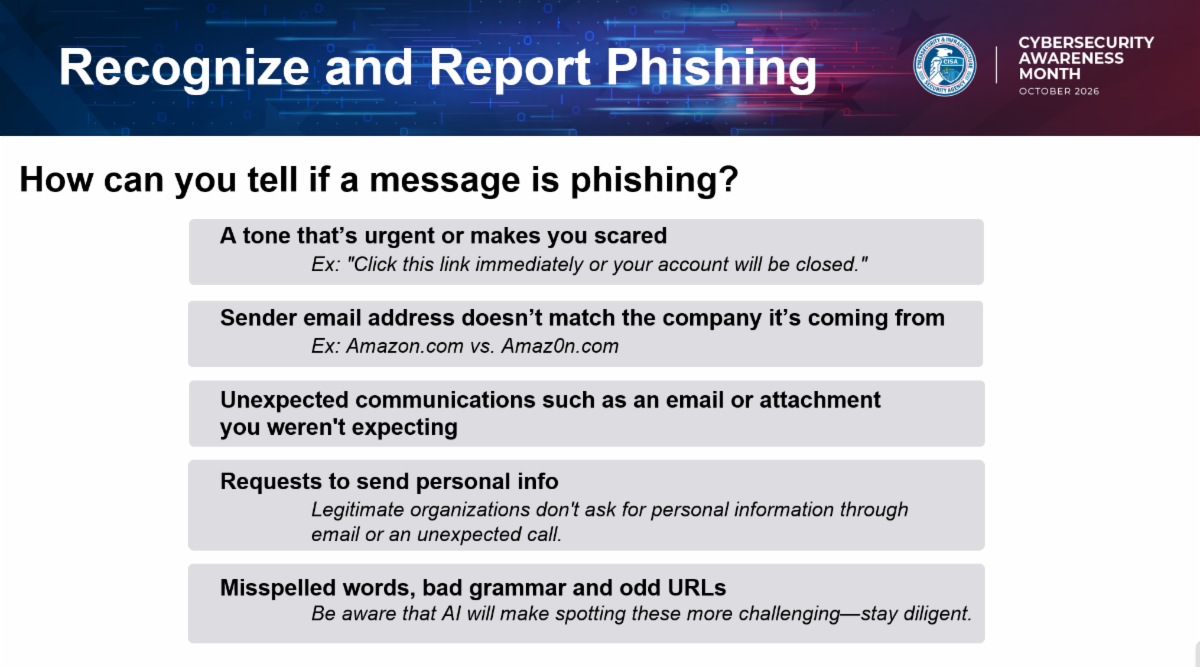
Modern phishing messages often look polished and believable. Scammers can copy logos, create realistic websites, and use information from data breaches or social media to make a message feel personal. That is why the old advice to look only for misspellings or bad grammar is no longer enough. A message can look professional and still be dangerous.
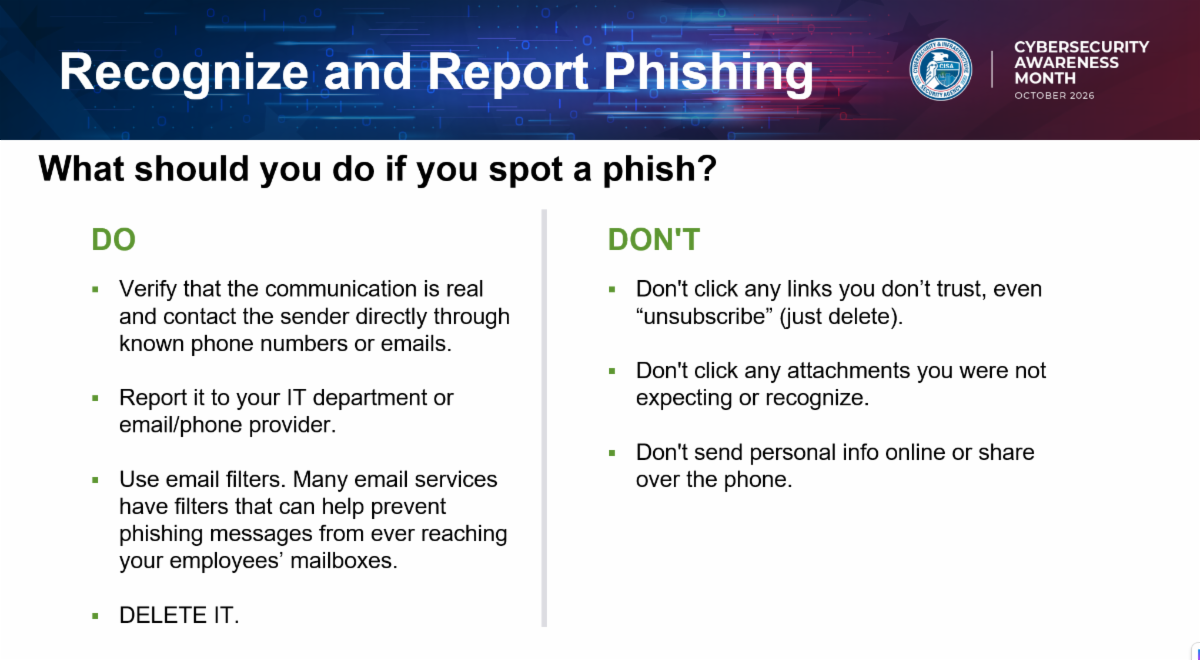
The best defense is to slow down and verify. If a message asks you to act urgently, use a link or QR code, approve a sign-in, send money, change payment information, or provide a security code, pause. Go directly to the official website or app, call a known phone number, or start a separate message to confirm the request. Do not use the contact information provided in the suspicious message.
|