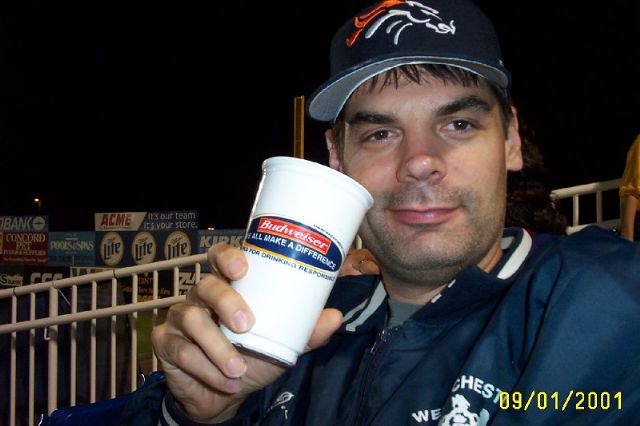
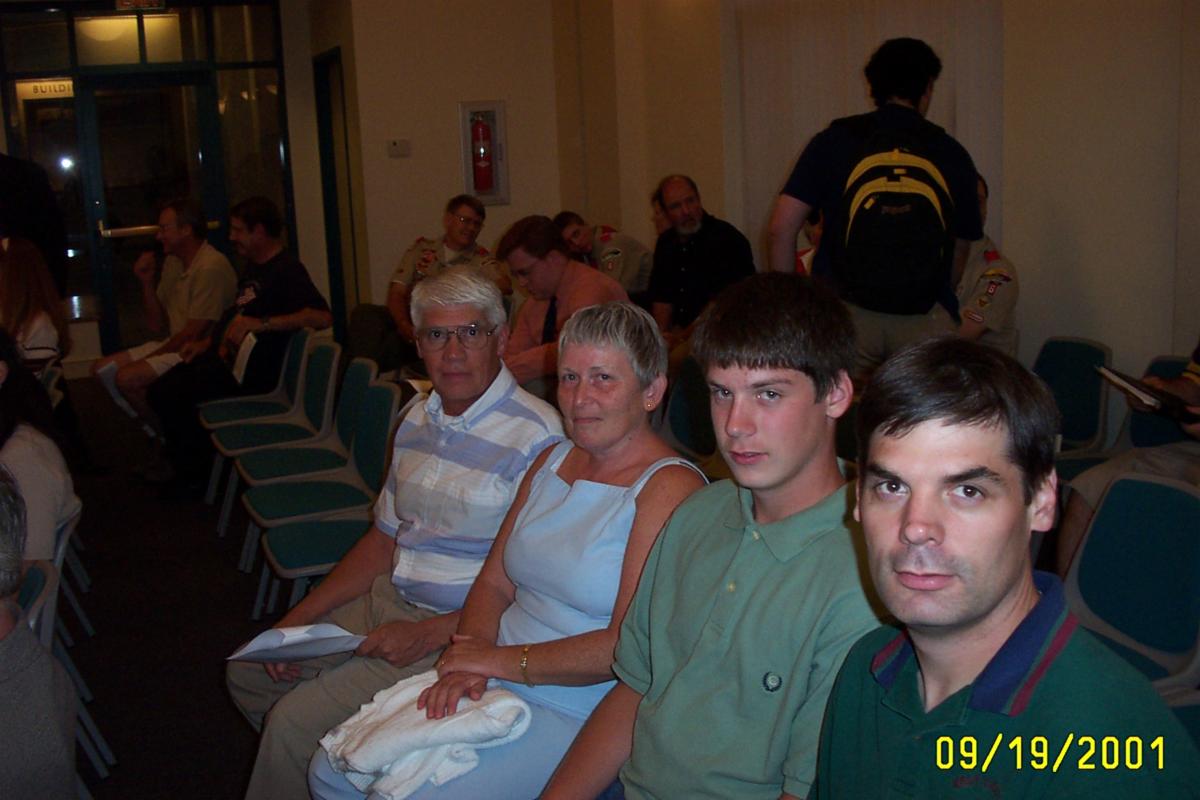
September 11, 2026 - Issue 201 | | September 11 is a date that still causes many of us to pause. For those who remember that morning in 2001, it was a day of shock, sorrow, confusion, and loss. I can still remember watching the attack unfold standing in our police department’s dispatch center, not quite believing what I was seeing. Nearly 3,000 people were killed in coordinated attacks in New York, Pennsylvania, and Virginia. The impact reached far beyond the places where the attacks occurred. It changed how we thought about safety, travel, public spaces, emergency preparedness, national security, and trust. | Pictured below, 10 days before the world changed. One day you are enjoying a baseball game with your family, 10 days later everything changes. | Twenty-five years later, many of the changes that followed 9/11 have become part of everyday life. Airport screening, identification checks, emergency alerts, secure buildings, public awareness campaigns, and the phrase “if you see something, say something” are familiar to people who may not remember a time before them. A new homeland security structure grew out of that tragedy, including the creation of the Transportation Security Administration and, later, the Department of Homeland Security, both intended to help protect the country from evolving threats. | Pictured below, 8 days after the world changed, my parents and oldest son, Bill attended a Borough Council meeting with me as I received some silly award, which I forget what it was. If I remember correctly, Mrs. Mann & Kevin were at a little league game. Life continued after the attack, but our world was forever changed. | | This Week's Cybersecurity All-Stars | | |
This week's issue brings the return of recognizing our weekly "Cybersecurity All-Stars". I had stopped doing this for some reason. So, beginning this week that error will be corrected.
Weeks of August 29 - September 6
- Chris Hines
- Michele Wholey
- Chris "CJ" Jones
- Joe Miles
Well done. Stop by the IT Department to claim your All-Star merch and show off your cybersecurity skills to your work mates.
| | Latest Vulnerabilities Report | |
As a Chief Information Security Officer, I receive regular reports from the Center for Internet Security (CIS). I am not sure why I haven't thought of this sooner, but "Cybersecurity Friday" is a great place to share these important security alerts. Beginning with this issue, I will share the alerts I have received.
Take the time to review them and if they apply to you, take action and as always, feel free to reach out to me with any questions.
| | September 11 Changed Cybersecucity | | |
Before September 11, many people thought of security as something handled mostly by police officers, soldiers, airport staff, or government agencies. Personal security was often limited to locking doors, being careful with wallets, and using common sense in public. After 9/11, security became more personal. Ordinary people were asked to be more aware of their surroundings, more careful about unattended bags, more patient with screening procedures, and more willing to report something that seemed wrong.
That shift matters because cybersecurity followed a similar path. In 2001, the internet was already important, but it was not part of our daily lives the way it is today. Many people still used dial-up connections, early email accounts, desktop computers, and basic cell phones. Social media, smartphones, cloud storage, online banking apps, smart homes, streaming services, and constant mobile access were either new, limited, or years away from becoming normal.
| | Physical Awareness to Digital Awareness | | |
After 9/11, people learned to think differently about physical spaces. We became more aware of who had access to buildings, what could be carried onto an airplane, how emergency information was shared, and why identification and verification mattered. Over time, those same ideas became important online. Access control, identity checks, trusted communication, suspicious behavior, and rapid reporting are not just airport or building-security concepts. They are cybersecurity concepts too.
Today, each of us carries a digital version of our life in our pocket. A smartphone may hold our email, banking information, photos, medical apps, text messages, work accounts, travel plans, contacts, passwords, location history, and payment cards. A home computer may connect to cloud services, school portals, tax records, retirement accounts, smart thermostats, cameras, and family documents. Personal security now includes protecting both the physical world around us and the digital world that follows us everywhere.
| | |
One of the lasting lessons of September 11 is that trust and safety cannot be assumed. That does not mean we should live in fear or suspicion. It means we learned the importance of verification. Today at airports, we verify identification. In buildings, we verify access and exits. We have learned to verify everything before acting. Online, the same habit is essential. We verify a link before clicking, a sender before replying, a login request before approving, and a payment request before sending money.
Cybercriminals succeed when they take advantage of trust. They pretend to be banks, delivery companies, government agencies, technology providers, charities, supervisors, friends, or family members. They create urgency and ask us to act quickly.
| | |
Since 2001, technology has transformed almost everything we do. I have been on the front line of these changes, because of my age, my job and my curiosity.
Today we shop online, bank online, work remotely, attend meetings virtually, store files in the cloud, use GPS directions, scan QR codes, unlock accounts with phones, and communicate instantly with people regardless of their physical location. These conveniences are essential, but they also changed what criminals target. A stolen password, a compromised email account, or a fake text message can lead to financial fraud, identity theft, ransomware, or access to sensitive personal and work information.
In 2001, many families worried about shredding paper documents or protecting a checkbook. Those concerns still matter, but today we also worry about phishing emails, text-message scams, password reuse, fake websites, malicious attachments, data breaches, public Wi-Fi, ransomware, social media oversharing, stolen phones, and account takeover.
Personal cybersecurity has become part of daily lives.
| | Our Role in Cybersecucity | | |
The most important connection between the years after 9/11 and today’s cybersecurity challenges is the role of people (us). Technology matters, but our individual awareness matters as well. Security improves when people notice something unusual, pause before reacting, ask questions, and report concerns quickly. Those habits help at an airport, in a public building, at work, at home, and online.
This does not mean every person must become a security expert. It means each of us has a part to play. We can slow down before clicking a suspicious link. We can use strong passwords and multi-factor authentication. We can update devices, back up important information, protect our phones, avoid oversharing online, and verify unexpected requests. We can also help family members, friends, co-workers, and neighbors understand that cybersecurity is not just a technical problem. It is a shared responsibility.
| | With the NFL season here (Go Broncos!) we will take a look at avoiding scammers throughout the season, especially if you indulge in any sort of sports betting, which I do not recommend. | | |
William Mann, CGCIO | Borough of West Chester | | | | | |