|
“Workplace safety is achieved through education that drives deterrence, compliance derived through testing, and measurable adherence to the highest standards for drug and alcohol safety. The outcome of a well-designed workplace drug and alcohol screening program is public safety, which is not limited to the federal workplace, but it certainly starts there. The federal program in place today is the procedural gold standard for all US workforce drug and alcohol testing.
From the MRO perspective, marijuana carries its own set of unique challenges related to workplace safety, which cannot be overlooked. Dr. Todd Simo, Chairman of the American Association of Medical Review Officers recently shared key points of consideration on this topic.
Marijuana causes Impairment – and that impairment lasts longer than alcohol impairment - due to the fact that marijuana remains active in the brain long after the blood levels of marijuana dissipate. This latent impairment directly impacts executive functions which require higher brain activity, and that impact happens profoundly for 24 hours, and up to days after use.
Other key impacts include:
- Impaired Decision-Making & Planning
- Reduced Coordination
- Memory and Attention Deficits
- Impaired Spatial Perception
- Divided Attention Deficits
All of these functions are particularly pronounced when operating in a safety sensitive capacity, like driving an 18-wheeler or a bus or a train, using heavy equipment, or operating in any capacity that requires reacting quickly, taking decisive action, or moving with agility and spatial awareness to avert an accident.”
Employees must have access to scientifically accurate education on the risks of using marijuana and operating in a safety sensitive job function.
“The available technologies for testing can only detect marijuana usage, not impairment, which is very different than alcohol. Our federally approved options for testing are: Oral fluid, with a detection window for both chronic and sporadic users that is less than 24 hours after cessation of use; and Urine where we can detect Sporadic users for 2 to 3 days and Chronic users for 7 to 14 days"
We must rely on these testing methods to enforce workplace safety compliance.
“Marijuana as a Schedule III therapeutic fails to have any of the measurable safety guardrails that a true prescription has. We have no known usage pattern or method of use, no known dose, and the ability in some states to purchase marijuana for recreational use, or even individuals growing marijuana for themselves, renders us unable to differentiate a legitimate source from an illicit source.”
State licensed dispensaries are not a safe equivalent to prescribing an FDA cleared medication through a pharmacy.
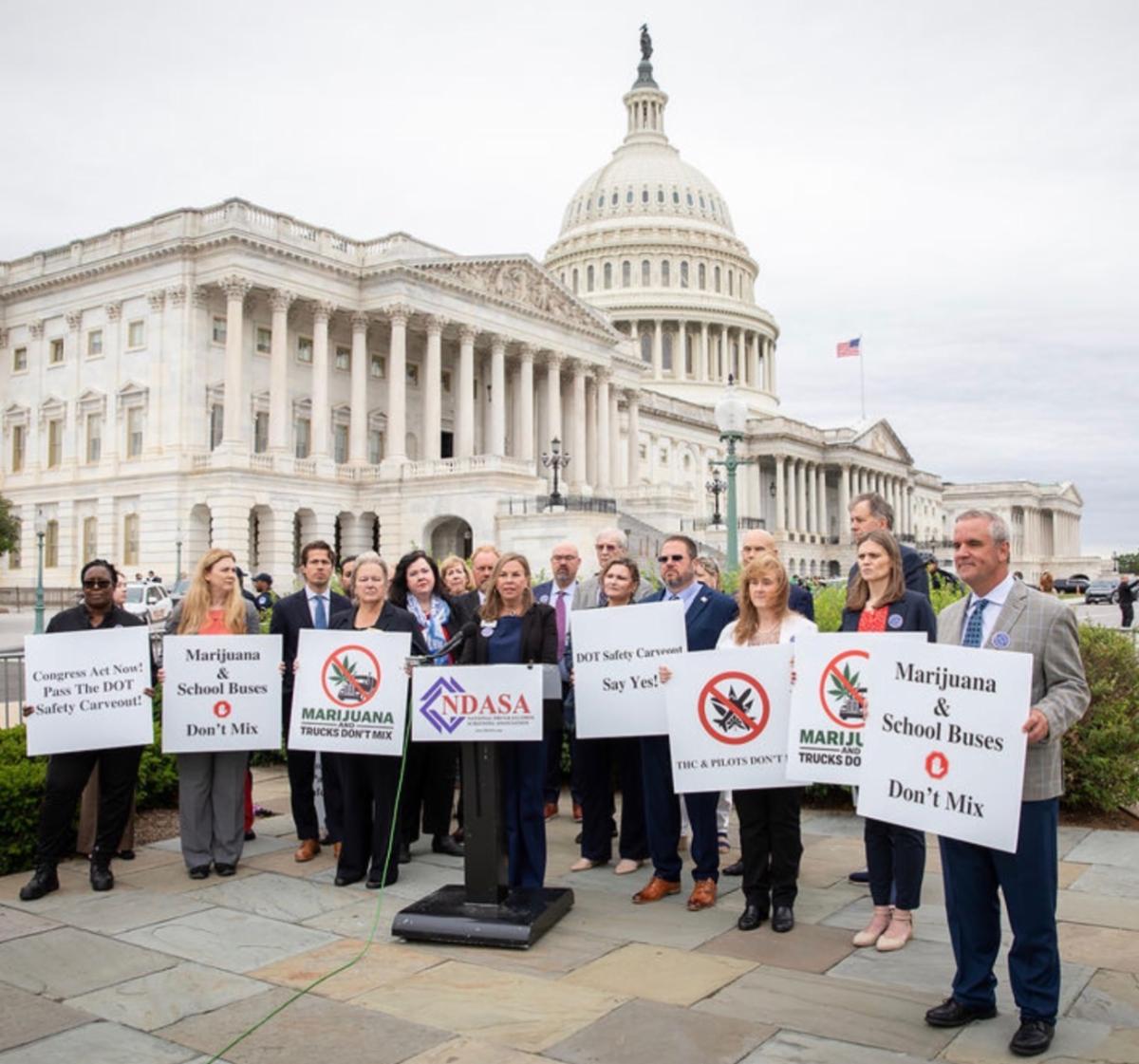
“In summary, marijuana is impairing, our tools can only detect use, and we cannot surmise what is safe use in a safety sensitive workplace setting. The MRO community implores that Congress move to enact a federal safety carve out for marijuana. Our Workplace safety and public safety are at stake. The time to act is now.”
Contact your representatives in Congress today and request their support for a federal safety carve out for marijuana!
|