|
Daily Transportation News
May 6, 2026
| | | This Public Service Recognition Week, we recognize the hard work and professionalism of government employees across the country. Thank you for your continued public service. | | DC's New AV Bill Could Unlock Autonomous Urbanism – or Block It Entirely | |
|
Every week, Americans take over half a million rides in autonomous vehicles across a dozen major cities. DC isn't one of them – but a new bill from Councilmember Charles Allen could change that.
Allen, along with Councilmembers Brooke Pinto and Matt Frumin, introduced the Autonomous Vehicle Deployment Authorization Amendment Act of 2026 on May 1. I've spent a decade in AV policy and, for better or worse, this is the most comprehensive and complex AV deployment bill I've seen from any U.S. city or state. It creates a real pathway to commercial AV rides in the District, while seeking to tackle a range of concerns surrounding AVs including congestion, equity, transit, labor, and liability.
The introduced text is an encouraging start – but it will all come down to how the bill is shaped by the Council.
Done right, this bill could mark the beginning of the autonomous urbanism era.
Autonomous urbanism is a broader vision for a future where AVs unlock tremendous improvements in city life by complementing public transit and reducing car dependence, making neighborhood streets safer for everyone (especially pedestrians, cyclists, and children), enhancing mobility for under-served communities, and supporting the local economy.
As we discussed at The Innovation Majority’s April 8th event, “Why not DC? Unlocking AVs in the District,” AVs present a significant opportunity for the District to deliver on safer streets, address inequitable access, and diversify and revitalize the local economy.
Three policy elements give me hope that the bill could set the foundation for DC to become a national leader in autonomous urbanism:
- Safety assurance and oversight through a tiered permitting system for AV testing and deployment, with expanded oversight authority for the District Department of Transportation (DDOT) and other agencies to address issues.
-
Enhancing and complementing public transit with more funding generated by AV program fees, while also encouraging AV companies to offer discounted fares for AV rides connecting to public transit (Waymo previously piloted this in San Francisco and Los Angeles).
- Unlocking broad public benefits by requiring companies to fairly rebalance their vehicle fleets to avoid disparate availability or wait times, and sharing information that can help the city improve infrastructure for everyone.
Done poorly, this bill could block DC residents from seeing the benefits of AVs for many more years.
Source: The Innovation Majority
Click Here to Read More
| | Empowering Innovation: ITS America Conference and Expo June 9th to 12th in Detroit, Michigan | |
|
The ITS America Conference and Expo, which will be held June 9-12 at Huntington Place in Detroit, will bring together transportation agency leaders, investors and venture capitalists, educational institutions, technology companies, transportation operators and vehicle manufacturers to discuss the deployment of innovative technologies and solutions aimed at creating a safer, smarter, and more connected transportation system. The event is expected to draw more than 3,000 professionals and feature 170 exhibitors, over 100 educational sessions, and representatives from more than 23 countries, regions, and territories.
Highlighted events will include the Future Leaders Program, a hands-on cybersecurity and data workshop, Emergency Response Technology and Demonstration Day, and the Transportation Hub inside the exhibit hall, which will showcase the latest innovations in mobility and transportation technology.
Just some of the speakers at the conference and expo will include:
-
Seval Oz, Senior Advisor, Office of Assistant Secretary for Research and Technology, USDOT
-
Laura Chace, President and CEO, ITS America
-
Alex Poirot, Vice President, External Affairs, Beep, Inc
-
Alexis Jackson, Public Policy Manager, Sustainability, Uber Technologies
-
Carlos Braceras, Executive Director, Utah Department of Transportation
-
Derrick Herman, Chief of Transformational Technology, Pennsylvania DOT
-
Karina Ricks, Partner, Cityfi Advisors, LLC
-
Kristin White, Head of Transportation Strategy & Partnerships, Google
-
Tilly Chang, Executive Director, San Francisco County Transportation Authority
-
Tracy Larkin-Thomason, Director, Nevada Department of Transportation
Find more about speakers, exhibitors, agenda, and registration here.
| | |
Never Mind the New Technology, Does the Bus Run on Time?
With so many new, transformative forms of transportation tech, mobility experts caution, don’t forget about the basics like a fast, frequent and comprehensive bus system, or finished sidewalks.
Click Here to Read More
As Automated Tech Rises, Idaho Eliminates Registration Tags
Sick of peeling that pesky tag off of your license plate every year? A new Idaho law that goes into effect this summer ends the legal requirements for vehicle registration tags on motor vehicles. However, you still need to update your tags — or risk getting a ticket. House Bill 533 eliminates the color-coded vehicle registration stickers Idaho drivers attach to their license plates, saving the Idaho Transportation Department an estimated $300,000 in production costs.
Click Here to Read More
California High Speed Rail Pitches New Path Forward with 2026 Business Plan
The California High Speed Rail Authority’s 2026 Draft Business Plan proposes a significant shift in strategy, building on a series of reforms the Authority began advocating for last summer. The Authority is now restricted by state law to building a 171-mile, double-track segment in the Central Valley, from Bakersfield to Fresno to Merced.
Click Here to Read More
| |
Regina Deploys Nova Bus Electric Buses
The City of Regina has added an additional 13 battery-electric buses to its public transport fleet, completing a 20-vehicle order placed in 2024. The new arrivals replace diesel buses that have reached the end of their operational life. They follow the introduction of the city’s first seven electric buses in April 2025. Regina’s initial batch of electric buses has operated daily over the past year, including through winter conditions. This provided a basis for assessing their performance across all seasons.
Click Here to Read More
The Drifters and Dreamers of Canada’s Lost Greyhound Lines
Public transit fares across the Greater Montreal Area will increase by an average of three per cent beginning July 1, under a new fare schedule announced by the Autorité régionale de transport métropolitain. The agency says the increase meets the minimum threshold set out in its funding agreement, while aiming to balance affordability for riders with the long-term sustainability of the network.
Click Here to Read More
Ride-Hailing Use in Metro Vancouver Soars to Over 3.5 Million Trips per Month
TransLink reports that ride-hailing usage in the region has experienced steady growth — rising gradually from just under one million trips per month in January 2021 to over 3.5 million per month in November 2025, based on the latest data collected by the provincial regulator, which is provided by ride-hailing companies.
Click Here to Read More
| |
Five Intelligent Transport Solutions Reshaping Mobility
Last week, Istanbul became the global meeting point for intelligent transport as thousands of experts convened for the 17th ITS European Congress. Over three-days at the Istanbul Congress Centre, one message dominated the agenda: mobility’s evolution is being defined by digitalisation, automation and connected capabilities.
Click Here to Read More
Tesla ‘FSD’ Faces EU Regulator Skepticism over Speeding, Safety Concerns
Emails obtained by Reuters from European regulators reveal significant skepticism toward Tesla’s “Full Self-Driving” system, with officials raising concerns about speeding, icy road safety, and driver distraction — just as the company pushes for EU-wide approval.
Click Here to Read More
Incoming Transport Minister Vitézy in Brussels to Retrieve Almost Lost EUR Billions
Dávid Vitézy, Hungary’s incoming transport and investment minister, on Monday said he is in Brussels to negotiate the rapid return and use of European Union funds earmarked for transport and infrastructure development.
Click Here to Read More
| |
Global Drive: Chinese Tech Firm Behind Singapore Autonomous Public Bus Trial Eyes Further Fields
Autonomous driving firm MOGOX marked its international debut in 2025 when it was part of a consortium that clinched the contract to deploy the first driverless vehicles on public bus routes in Singapore. But the Beijing-based firm has larger ambitions – to be the world’s No. 1 brand for autonomous buses, building on the foundation of the Singapore project. The contract marked the first time a Chinese autonomous bus has entered the public transport network of a developed country, noted MOGOX vice-president Lu Bin, who is in charge of the Singapore trial.
Click Here to Read More
Lagos’ Bold 2050 Transport Vision: A Master Plan Steering Africa’s Mega City Toward Sustainable Mobility
For decades, Lagos has stood as both Nigeria’s commercial heartbeat and one of Africa’s fastest-growing urban centres. Its energy is unmistakable, its opportunities immense, and its pace relentless. Yet, alongside this economic vibrancy has come one of the greatest challenges confronting any modern mega city: transportation.
Click Here to Read More
Cooperative Bharat Taxi Set to Roll Out in City
In India’s fast-growing ride-hailing economy, Lucknow is set to become the next testing ground for an alternative model even as the cooperative department prepares a formal roll-out of Bharat Taxi platform in the state capital later this month. Projected as a pointed challenger to online cab service, the initiative - currently operational in Delhi and Ahmedabad - could reshape urban mobility through cooperative ownership and regulated pricing. Unlike existing platforms that charge drivers a commission on each ride, Bharat Taxi introduces a fixed-fee model. Drivers — referred to as ‘Saarthis' — will have to pay a predetermined amount to the platform, insulating them from fluctuating commission rates and potentially improving income predictability
Click Here to Read More
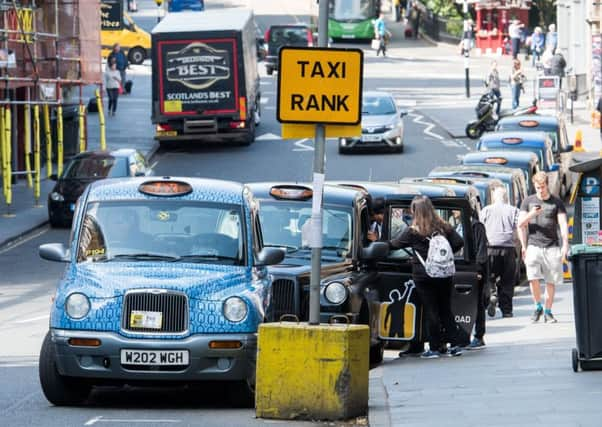
| | A Third of Scottish Uber Drivers ‘Ready to Quit’ As Fuel Costs Squeeze Earnings | |
|
A third of Uber drivers surveyed by GMB Scotland are ready to quit after rising fuel costs and lower fares hit weekly earnings, the union has warned.
GMB Scotland, which represents drivers using the ride-hailing app, said members are facing higher pump prices linked to the Iran war while fare levels have stayed the same or fallen. The union said some drivers are taking home up to £750 a week less than a year ago.
The union surveyed 80 Uber drivers and found one in three said they were struggling to continue working. Almost all respondents said rising fuel costs had damaged their income, with 37 percent saying the impact had been significant.
Fuel spending has also risen sharply, according to the union. A year ago, 48 percent of surveyed drivers spent more than £100 a week on fuel. That figure now stands at 83 percent, while 19 percent said they spend more than £200 a week.
The pressure is forcing longer working hours. GMB Scotland said 65 percent of drivers are working more than they did a year ago to cover extra costs, with one in five working more than 60 hours a week.
One driver told the union they were “down £150 per day” from their normal wage and were struggling to justify staying on the road because of cheaper journeys and higher fuel costs. Another said staying at home could sometimes be cheaper than working.
Source: Taxipoint
Click Here to Read More
| |
|
Message from IATR President Matthew W. Daus
At the International Association of Transportation Regulators (IATR), our regulators are at the forefront of addressing both the challenges and opportunities facing the mobility paradigm. Our IATR members, partner organizations, and regulated industries will continue on our shared quest to fulfill the mission of our non-profit educational organization - to bring about Multi-Modal Mobility Innovation for All! This mission can best be accomplished through information sharing, collaboration, identifying and promoting best practices, and educating our membership. These educational updates and electronic media clips are affectionately known as “IATR snips” and endeavor to cover all aspects of mobility around the globe - especially news and developments involving safety, technology innovation, multi-modal integration, automation, sustainability, electrification, accessibility, regulatory modernization, and equity.
If you would like more information about the IATR, you can visit our website at www.iatr.global. Current members can renew their memberships when you log in to your IATR portal on the top right-hand side of our website, or click here. If you forgot your membership password, please email our Membership Director, Eric Richardson, at erichardson@iatr.global.
| | | | | |
|
RENEW YOUR MEMBERSHIP FOR 2026:
Weekly news snippets
Access to the membership database
Videos and files from recent conferences
Discounted rates for future conferences, and more!
Renew your membership at http://www.iatr.global or email info@iatr.global for any questions!
| | | | |