DCIU EHS, HS, and Pre-K Counts Newsletter 11 | January 15, 2024 |Newsletter 11 | | |
|
Have you Changed your phone number or Email Address? Did you let us know?
Now that the winter is here, there are times when school may need to be canceled, an early dismissal or a delay due to the weather. Please ensure that your FSW is provided your correct and current phone number and email address so that communication can be received in a timely manner to keep everyone safe.
| | |
Head Start T-shirt Opportunity for Students | |
Please complete this form, to indicate your child's t-shirt size. We will use this information to purchase 5 shirts for your child from the program. If you have more than one child, please fill this form out one time per child. Example: three children in program, fill this form out three times for their size to be recorded properly. The shirt will be similar to the one on the right but in Navy.
| |
|
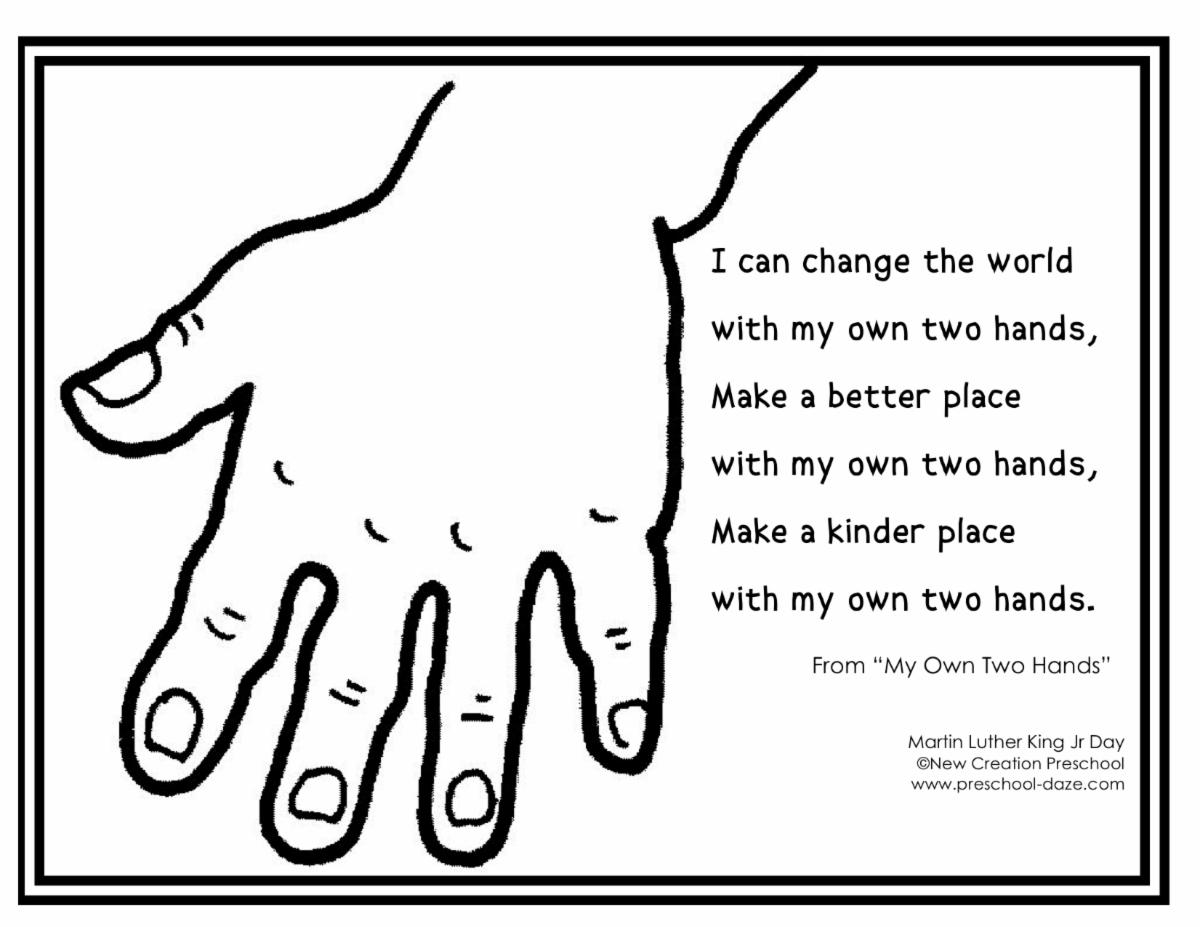
Happy Martin Luther King Jr. Day - January 15, 2024 | |
The Story of Martin Luther King Jr. Told by Kid President | |
Learn more about Martin Luther King Jr and how we can celebrate him and his ideas with the following books and song. | |
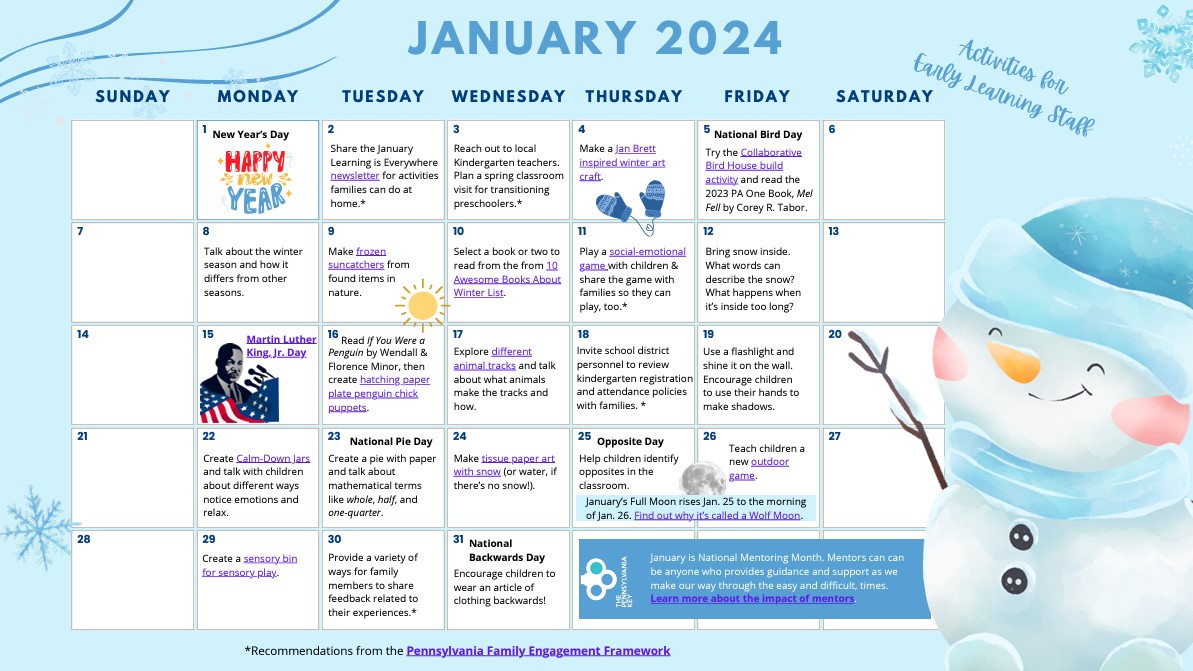
Students who attend our program, participate with the Creative Curriculum Program. DCIU Head Start has created take home extension packets that are provided to all students through our newsletters. If you prefer a hard copy of the packet, we can make sure that you receive a copy of the packet, please reach out to your FSW or classroom teacher for a copy. Completing the activities in the packet is not required, but families will receive volunteer hours for the time they spend working on the packet activities. The last page of the packet is a Learning Adventure form where you can record your hours. Click the image to the right download a copy. | |
| |
The PATHS Curricular Program recommends listening to the story How Leo Learned to be King and Harry and the Terrible Whatzit to support the lessons they will learn in PATHS this week.
| |
Creative Curriculum Mighty Minute 70 The Kids Go Marching In
| |
|
Read Aloud My Name is Celia/Me llamo Celia your child will listen to this story during the week of January 22, 2024
School Readiness Goal 1: : Children will show an eagerness to learn by developing curiosity and independence with others.
| |
|
Salsa Dance Party for Kids | Fun, Educational, Action Video for Preschool and Primary Grade Children
School Readiness Goal Creativity Head Start Goal 2 Children will increase creativity, engagement, and attention to tasks as they interact with activities and materials.
Early Learning Standard AL.3 PK.C Use materials and objects to represent new concepts.
| |
|
Read Aloud - Chrysanthemum - your child will listen to this book during week 1 of the Making Music Study
Kindergarten Readiness: Expresses feelings appropriate to the situation
Early Learning Standard AL.3 PK.A Use music, art, and/or stories to express ideas, thoughts, and feelings.
School Readiness Goal: Emotional Functioning Head Start Goal 3 Children will appropriately identify, express, and demonstrate a range of emotions with increased independence.
| |
|
Shante' Keys and the New Year's Peas
School Readiness Goal Communication and Speaking Head Start Goal 4 Children develop listening, reading, and speaking skills for a variety of communication purposes including social conversations and learning experiences
| |
|
School Readiness Goal Phonological Awareness
School Readiness Goal: Phonological Awareness Head Start Goal 5 Children gain an understanding of correct letter sounds, rhyming, and sorting by sounds. Children recognize upper and lower case letters and sound out alphabet letters.
| |
|
Heggerty Phonemic Awareness Practice at Home
As we are in our 18th week of school your children are working on the following skills in the classroom that you can help reinforce and practice at home:
Rhyme Recognition: Skill focus: When words rhyme, we hear the same middle and final sounds. We are listening for the words that rhyme. I will say, "Which word rhymes with ______?" Then I will say two words; one word rhymes and one word does not rhyme. Can you tell me the word that rhymes? Example: Which word rhymes with hide: side or take; Yes side and hide rhyme we hear -ide in both words.
-
cone need bone
-
make cake nice
-
keep deep zone
-
pace face bead
-
team coach seem
-
feed read book
-
nine fine soak
-
time six chime
-
made wade type
-
rose pink pose
-
green queen white
Alphabet Knowledge: I will say the letter is ____ then you will say the sound is _____. For example the letter is b the sound is /b/
- The letter is P the sound is /p/
- The letter is N the sound is /n/
- The letter is I the sound is /i/
- The letter is C the sound is /c/
| |
Kids vocabulary - Musical Instruments - Orchestra instruments - English educational video for kids | |
Numbers, Sense of Quantity & Counting
School Readiness Goal: Counting and Cardinality: Head Start Goal 7 Children will recognize, compare, and associate small number sets, count in sequence, and begin to understand the relationship between numbers and quantities.
| |
|
Fine Motor and Number Recognition Practice writing your numbers 0-10 by using the rhymes.
School Readiness Goal Fine Motor: Head Start Students Increase fine motor skills by demonstrating strength and control in small muscle movements (fingers), eye- hand coordination, and the manipulation of objects
| |
Learning is Everywhere: theme We're learning in the kitchen! | |
|
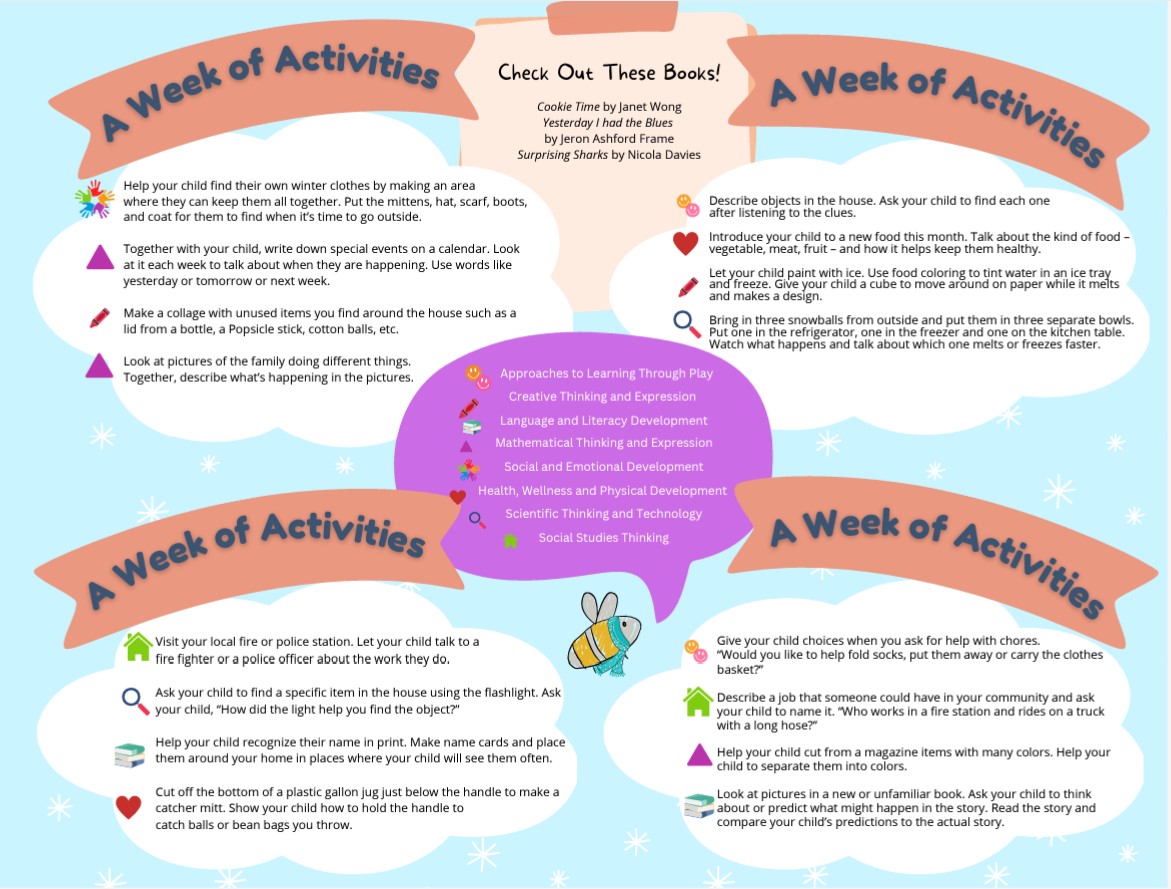
Activities for Infants
Give a clean kitchen towel to your baby to play with as you work in the kitchen. Encourage them to wave the towel, feel it in their hands, explore it with their mouth, or use it to cover a small toy on a highchair tray. If your child has difficulty grasping objects, add an extra attachment to the towel (i.e. stretchy bracelet) to help your child keep the towel in their hands. If they have a visual impairment, focus on having them cover an object and touch what it feels like with and without the towel over it. (Approaches to Learning through Play)
Let your baby share the visions and smells while you’re cooking. Let them smell the herb or spice you’re about to put in the sauce, tell the name of the fruits and vegetables, point out shapes or colors, and explain what you’re doing. (Social & Emotional Development)
Activities for Toddlers
Your toddler can use foods, like crackers and slices of cheese, to build a tower. Can they make it taller by adding a layer? What happens to the tower if they eat a layer? If your toddler has difficulty building a tower vertically, try making shapes or patterns on the table horizontally. Instead of food, use blocks like Lego Duplo and build a tower and try to make color patterns. (Mathematics Thinking and Expression)
Make fun instruments from pots and pans with wooden spoons, or two saucepan lids for cymbals. Together, play a song. Can you play a loud song or a soft song? What types of sounds are made if they bang hard on the pan? Does banging on the top of a pan make a different sound than tapping on the side of the pan? (Creative Thinking & Expression)
Explore a set of kitchen tools – strainer, turkey baster, potholder, garlic press, spatula, slotted spoon, rolling pin, etc. After your child has explored the tool, place the item in a bag, and have them reach in and try to guess which one they feel. Ask them to describe what they feel—is it hard or soft? Is it cold or warm? Is it big or little? Does it move? (Approaches to Learning through Play)
Activities for Preschoolers
While your preschooler helps set the table, help them count the number of plates needed. How many forks will be needed? How many different ways can they fold a napkin? Does one person get a tall glass and another person a small cup? Once your preschooler has finished setting the table, have them assist with the meal. Encourage them to look at the recipe and say the numbers as you point to them and count the steps to make the meal. (Approaches to Learning through Play)
Have your preschooler close their eyes and guess what different smells are. Items to smell might be vanilla (extract), lemons, oranges, apples. Have them open their eyes and smell them again. Do they smell different or the same? What happens if they smell two things at once? Next time you fix a meal, see if they can guess what you’re cooking by its smell. (Scientific Thinking and Technology)
Explore a set of kitchen tools – strainer, turkey baster, potato masher, potholder, garlic press, spatula, slotted spoon, rolling pin, etc. Have your preschooler guess what the items is for, then tell them. After they have looked over the items, place one in a bag, and have them reach in and try to guess which one they feel. Ask them to describe what they feel—is it hard or soft? Is it cold or warm? Is it big or little? Does it move? Is it made of wood or plastic? How do they know? (Approaches to Learning through Play)
Activities for Kindergartners
While following a recipe, have your kindergartner help you prepare food. Help them read the information from the recipe they recognize (like the numbers for the measurements, quantities and temperature), then have them match the number on the measuring cup (like one cup), or count out the number needed (like two eggs), or identify the number on the oven (350 degrees). (Mathematics Thinking and Expression)
While grocery shopping, help your kindergartner select a special food that you both can prepare later. Talk about what is selected and how it will be prepared and eaten. Provide their own shopping bag to carry home the item, and then when home, together you can use the item to make a snack or be included in a meal. (Approaches to Learning through Play)
Explore a set of kitchen tools – strainer, turkey baster, potato masher, potholder, garlic press, spatula, slotted spoon, rolling pin, etc. Have your kindergartner guess what the items is for, then tell them. After they have looked over the items, place one in a bag, and have them reach in and try to guess which one they feel. Ask them to describe what they feel—is it hard or soft? Is it cold or warm? Is it big or little? Does it move? Is it made of wood or plastic? How do they know? (Approaches to Learning through Play)
| |
January is National Mentoring Month
| |
|
Do you know a grandparent, a special teacher, a pastor, a friend or neighbor? Any of these people can be a mentor! A mentor is someone who is willing to take another under their wing. These mentors can give advice and suggestions to help another cope or improve their skills. They can also show how they do something, and provide encouragement and support.
Mentors can can be anyone who provides guidance and support as we make our way through the easy and difficult, times.
For families with children, having a mentor who has been there and done that, can provide an example or a shoulder to lean on when needed.
Can you be a mentor to a family or child? Know what you can offer another. Mentors build committed, trusting relationships. They listen. They offer understanding and respect. They help others overcome challenges and disappointments and celebrate successes.
What can you provide as a mentor? While mentoring can be as informal as sharing a conversation and support with a friend while at an early childhood education program, or as formal as volunteering as a “Big” in a Big Brother Big Sister program, decide how involved you would like to become. It’s not about the answers. To be a mentor, you don’t need all the answers, and you don’t need to be an expert. The purpose of a mentor isn’t to provide answers, but to provide support, understanding and respect. Share your experiences if asked, but your most valued role is that of a friend.
Could you benefit from a mentor? Would you like to have a support system? Do you often wish your extended family lived closer, or were more supportive? Would you like to have friends you could turn to for advice? If so, you may benefit from having a mentor.
- Do you want a different way of doing something? A mentor may provide helpful suggestions, tips, examples and supports for finding and learning new ways of doing things, like coping with demands of a new baby, the terrible two stage, or balancing work and family time.
- What kind of mentoring could you use? Would you want someone as a formal mentor—like through a program, or that one meets with you at a specific date or time —or would you want someone you could turn to every now and then on an informal basis?
How to become a mentor or find one.
It’s important to consider all possibilities. A person you may not have originally considered could be the mentor of your dreams. Keep open to who might benefit from your support and guidance.
- Check out our list of resources below.
- Ask others. Ask your child care provider, friends, church members, or pediatrician if they know of someone who might be a good mentor.
- Look around for examples of someone you’d like to learn from. Is there a fellow parent or caregiver who demonstrates a particular skill you admire? A friend who always seems to know what to do or say? A teacher who seems to have more than enough patience? Ask that person to share with you how they do it!
- Reach out to others. See someone you think could use a helping hand or support? Start small with a way for the other person to identify with you. “I remember when my son was going through that stage. Two-year-olds can be challenging!”
Mentoring resources
| |
|
(Formerly Child Care Information Services)
Delaware County Department of Human Services
20 South 69th St. Fourth Floor
Upper Darby, PA 19082
610-713-2116
610-713-2233 and 610-713-2333 (Fax)
Website: www.compass.state.pa.us
Child Care Works Subsidized Child Care Program
The subsidized child care program helps low-income families pay their child care fees. The state and federal governments fund this program, which is managed by the
Early Learning Resource Center-Region 15 (E.L.R.C.) office located in your county.
If you meet the guidelines:
The ELRC will pay a part of your child care cost. This is called a subsidy payment.
• You will pay a part of the cost. This is called the family co-pay.
• The subsidy payment and the family co-pay go directly to the child care
program.
NOTE: If your child care subsidy does not pay the full amount that your child care program charges, the provider may ask you to pay the difference between the subsidy payment and their private charges.
Guidelines
You must submit an application to the ELRC office to see if you meet the guidelines for the subsidized child care program. The following are the basic guidelines:
• You must live in Pennsylvania
• Have a child or children who need child care while you work or attend an education program
• Meet income guidelines for your family size
• Work 20 or more hours a week - or-
• Work 10 hours and go to school or train for 10 hours a week
• Have a promise of a job that will start within 30 days of your application for subsidized child care
• Teen parents must attend a full time education program (Teen’s parent or caretakers income is not included)
• The child who needs care must be a citizen of the United States or an alien lawfully admitted for permanent residency
• Have proof of identification for each parent or caretaker in the home. Income Guidelines:
The annual income for a family to be eligible to receive subsidy is 200 percent or less of the Federal Poverty Income Guidelines: Family Size Maximum Yearly Family Income (May 2023)
2 $39,440
3 $49,720
4 $60,000
5 $70,280
6 $80,560
7 $90,840
8 $101,120
(Note: The above information provides only general guidelines. Other conditions may apply. Please contact your county Early Learning Resource Center office to apply for assistance.)
Additional Guidelines
• Each Adult family member must work at least 20 hours a week or work at least 10 hours a week and participate in an approved training program at least 10 hours a week.
• The hours that a child may receive subsidized child care must coincide with hours of work, education, or training.
• Children are eligible for care from birth to age 13. Children with disabilities may be eligible through age 18.
• The parent is responsible to help pay for child care. This is called co-payment. The co-payment may be as little as $5.00 per week and varies according to your income and the number of people in your family.
• The parent may choose the provider of his or her choice. The parent may choose a child care center, a small family day care home, a group day care home or even a relative to care for his or her child.
• The parent who is receiving subsidy must choose an eligible child care provider. Relative providers must be able to complete an Agreement with the ELRC, must comply with the participation requirements listed in the Agreement and must complete CareCheck in order to be eligible to participate in the Subsidized Child Care Program. CareCheck is the Department of Human Services program that requires background clearances.
• If funding is not available at the time that a low-income, working parent applies for subsidized child care, the child may be placed on a waiting list. You may contact the Early Learning Resource Center agency for resource and referral services. Your ELRC agency can assist you in finding a facility that meets your needs. You can also apply on line for child care assistance @ www.compass.state.pa.us as well as find a listing of regulated child care providers. For more information, call the Early Learning Resource Center at 1-800-831-3117.
| |
|
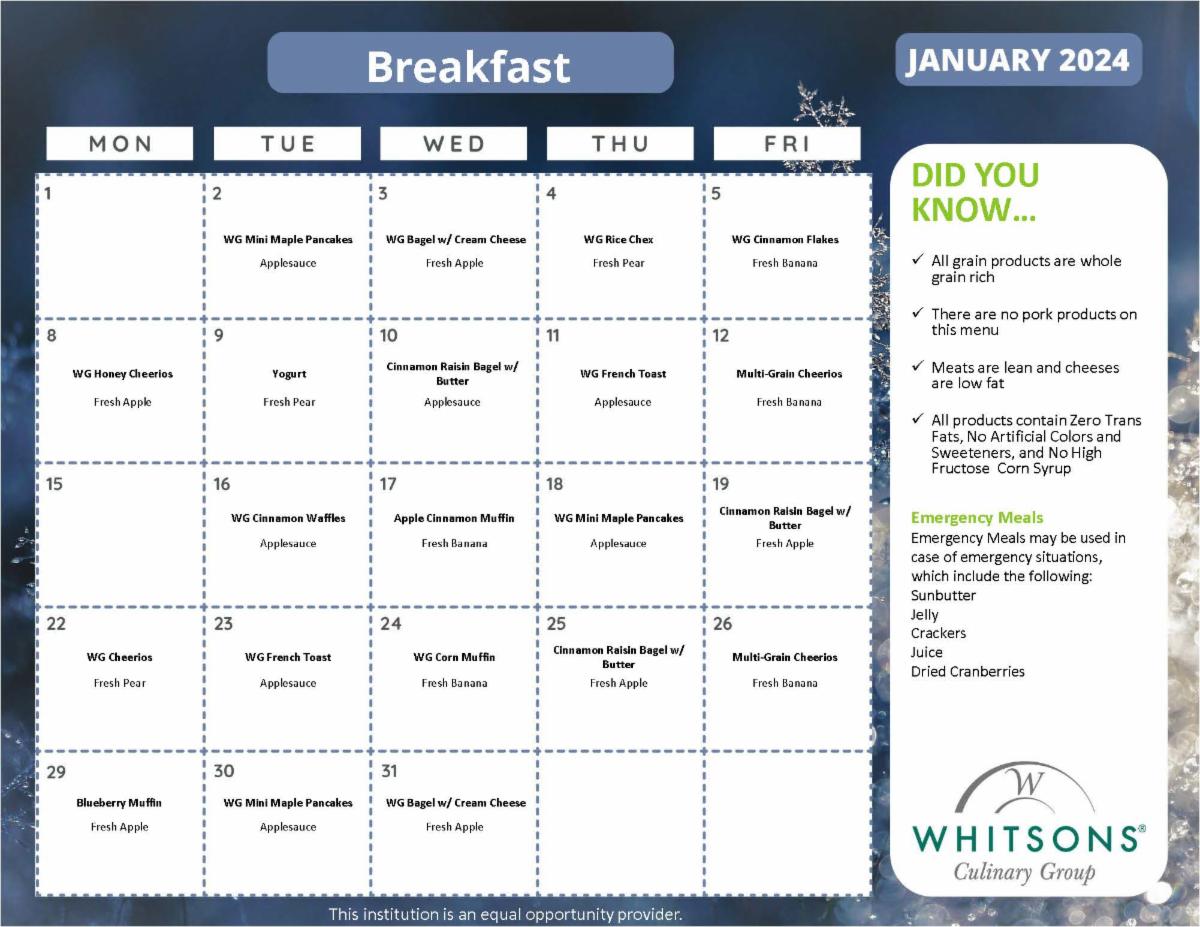
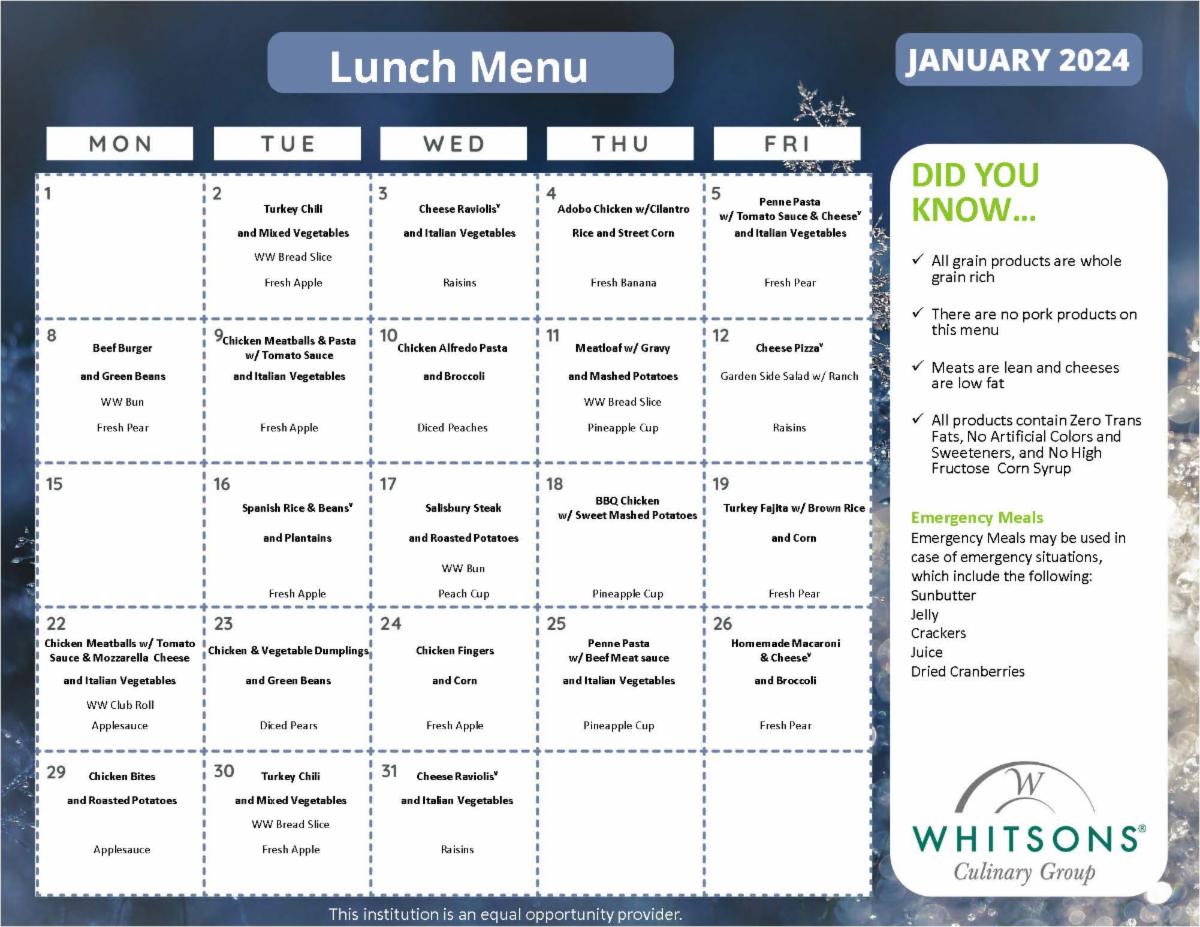
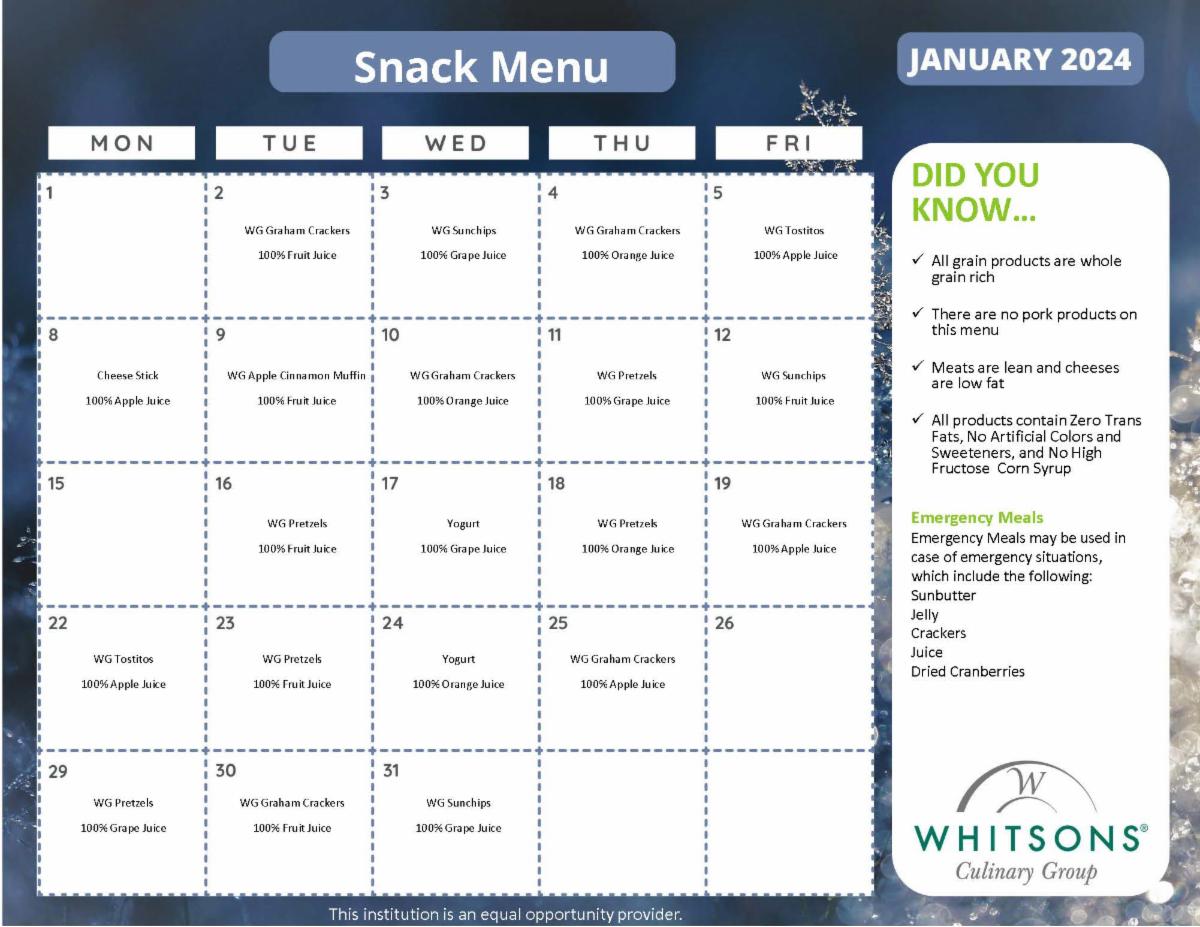
DCIU Early Head Start and Head Start January Menus | |
Breakfast Menu for Aston, CTE, Madison, CTR, and Sharon Hill | |
Lunch Menu for Aston, CTE, Madison, CTR, and Sharon HIll | |
Snack Menu for Aston, CTE, Madison, CTR, and Sharon Hill | |
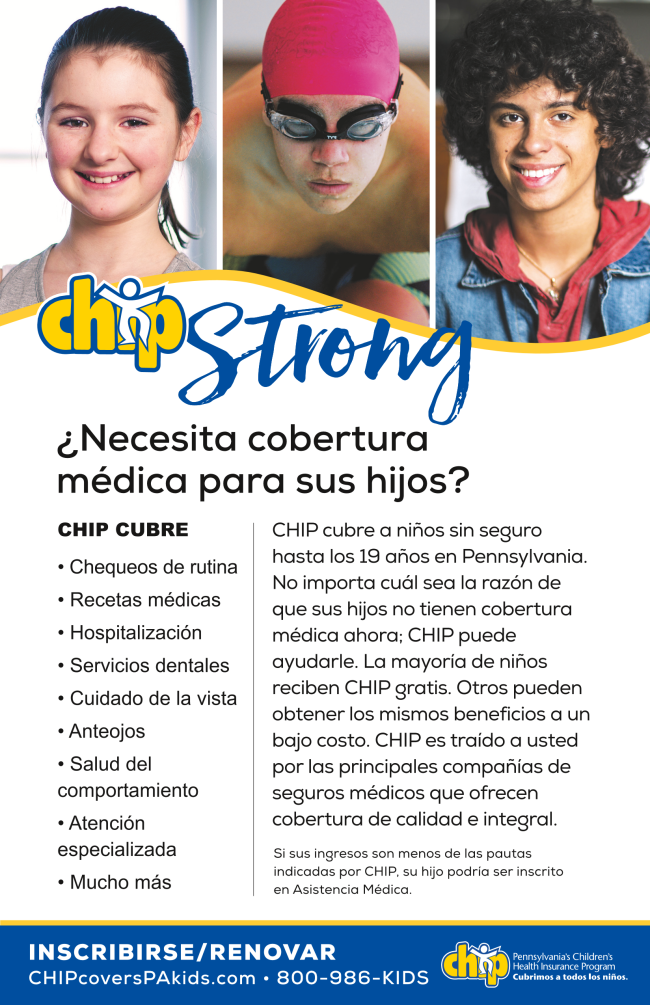
Reminder: Immunization, Well Visits, and Dentist Visits | | |
|
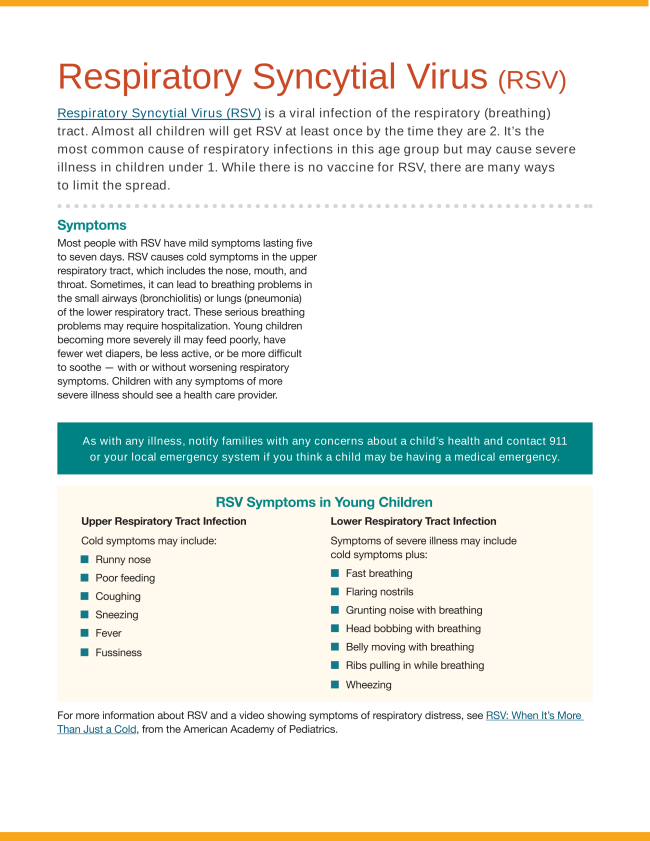
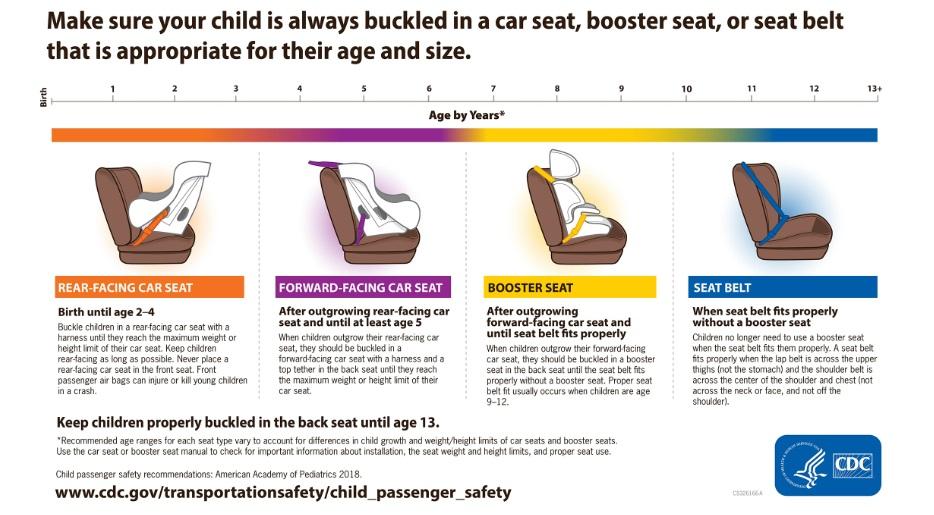
Just a reminder...as school has started, our nurses will be working hard to collect up to date immunizations, children's most current well visits, and updated dental exams. As a federal funded program, we must help parents continue to follow recommended schedules of well-child and oral health care. Please make sure to provide your center nurse or FSW with the most recent information. | | |
|
This is a reminder that we are a Peanut/Nut free program and food containing these items should not be brought into the center. To ensure the health and safety of all children and staff, there will be no food brought into a center for child consumption unless it is provided by DCIU Head Start. This includes all outside food such as snacks and foods for special occasions. Please refer to page 19 in the Staff Manual for guidelines on staff meals.
· No outside food or drink is permitted during school hours in the classroom
· If staff bring an outside drink, it must be in a spill proof cup and out of reach of students
· Staff must eat any outside food outside of the classroom during their break
Jalisa Miles, MPH
Health & Nutrition Manager
| | |
Delaware County Intermediate Unit | Website
| | | | | |