|
DCJS Victims Services News:
Domestic Violence Awareness Month Edition
| |
|
|
Occupational Therapy for IPV Survivors with Traumatic Brain Injuries
Kelly Carpenter, Victims Services Grant Program Specialist
Head trauma through physical violence and strangulation can cause traumatic brain injuries (TBI) in survivors of intimate partner violence (IPV). According to the Brain Injury Fact Sheet from ABI Research Lab, traumatic brain injuries may be quite prevalent, with some survivors experiencing multiple TBIs. The effects can be temporary or long-lasting. Often underdiagnosed and untreated, symptoms of TBI may impact decision making, memory, motor skills, communication, mental health, and more. If a TBI is suspected, medical evaluation and treatment should be sought immediately.
Occupational therapy helps individuals with TBIs develop coping, social, memory, and cognitive skills to enhance overall quality of life. Through strategies and adaptations for home and work – such as meal prep, task organization, mobility support, and sensory regulation – occupational therapy complements the services provided by advocacy organizations. While this is a very simple breakdown of a very complex issue, it is meant as a conversation starter or idea generator for expanding and enhancing services to survivors of IPV. Collaborative efforts between advocacy and occupational therapy could add to the building blocks of survivors' self-awareness, self-advocacy, and independence. Connecting with local occupational therapists or university programs might be a starting point to explore how occupational therapy could be part of the coordinated community response to intimate partner violence in your area.
Additional Resources:
Abused & Brain Injured from ABI Research Lab
Building an Integrated Support Network for Women Victims of Intimate Partner Violence and Traumatic Brain Injury
Presenter: Carolina Bottari, PhD (Université de Montréal; Centre for Interdisciplinary Research in Rehabilitation of Greater Montreal)
From the Intimate Partner Violence Brain Injury Virtual Conference: Breaking Down Barriers and Building Understanding, November 13-14, 2024
| | | | |
Motivational Interviewing
Dione Bassett, Victims Services Grant Program Specialist
Motivational Interviewing is a technique that advocates can use to remain strengths focused. It addresses ambivalence that someone may be experiencing by moving away from “sustain talk” and moving toward “change talk.” Sustain talk tends to highlight the reasons someone might be reluctant or ambivalent, while change talk reveals the inner courage and skills that can lead to a treasure chest of hope. Questions that remain curious and utilize reflective listening can reduce shame and shut down in both clients and advocates. By guiding a conversation away from “problem solving” and allowing clients to bring forth their own seeds of change within, advocates help grow flowers of strength in survivors.
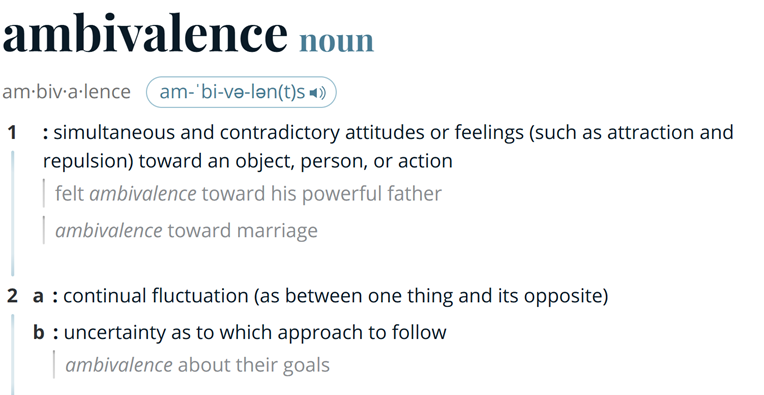
How do people usually feel about change? Ambivalent.
Definition of ambivalence:
| |
Some sample motivational questions are:
- What reasons do you have to make this change?
- What strengths or skills do you have that would help you make this change?
- How will it benefit you to_____?
- What would help you take the first step?
- What makes you want to commit to this change?
5-minute video you might enjoy:
Beautiful quote:
“I will try to work with you, as your helper – and not as your “boss”. I will try to remember that you are the expert on you, and on your life, and I will not attempt to assume that role on your behalf. I will aim to involve you, every step of the way, in the work that we do together. I will remind you from time to time to let me know if you ever feel me getting too far ahead of you, or if it seems like I’m pulling, or pushing, or persuading you to do what I might want you do to.”
*Content from Dr. Kate Watson’s Advocacy Academy on Motivational Interviewing, https://www.advocacyacademy.org/
| | |
|
Congratulations to Family Crisis Support Services
Andi Martin, Sexual & Domestic Violence Initiatives Supervisor
On September 10, 2025, Family Crisis Support Services (FCSS) received an award from the STRONG Accountable Care Community organization called the “2025 Organizational Resilience Award.” This achievement is in recognition for the exceptional crisis management, adaptability and innovation, care for employee well-being, client focus, community engagement, and growth that FCSS demonstrated through the COVID pandemic, the aftermath of a historic flood that literally destroyed their offices, and the aftermath of Hurricane Helene that ravaged their service area. On top of these terrible challenges, FCSS’s service area was experiencing increases in homelessness, domestic violence, and sexual violence, for which it worked tirelessly to meet the needs. Not only did FCSS pivot and meet their community’s needs during these back-to-back crises, they also grew their footprint by building a new, larger shelter and by serving more victims than ever before (from serving 3,003 individuals in 2020 to 8,460 in 2024). Congratulations to Executive Director, Marybeth Adkins, and her staff, volunteers, and board members on this well-deserved award!
| | | | |
Post-Conviction Services
Aria Chipley, Victims Services Grant Program Specialist
Many court cases do not “conclude” at the end of a trial or plea; in some cases, motions are filed and new hearings are held in courts for years after. As enacted through Code of Virginia § 19.2-11.01, the Crime Victim and Witness Rights Acts extends rights beyond the courtroom to include post-trial assistance. To ensure that victims receive notifications and are provided with the option to be involved in any hearings regarding post-trial updates, the Virginia Department of Corrections (VADOC) Notification and Assistance for Victim Inclusion (NAAVI) system supports this section of the statute.
Here's some additional information about post-conviction services:
- Inmates must be sentenced to serve 12 months or more in custody of VADOC for victims to register for notifications through NAAVI.
- Post-conviction updates can differ from pre-conviction updates, in that many survivors may expect updates regarding their case prior to its anticipated “conclusion.” The same is not applicable for updates post-conviction. It is imperative that as advocates, we share this information in advance, to help victims understand the potential for future hearings related to this case.
- Advocates can take meaningful steps to ensure that best practices are provided in reaching out to victims for coordinating information that may be both difficult and unexpected.
-
Through Cooperative Agreement No. 2017-VF-GX-K032, awarded by the Office for Victims of Crime, U.S. Department of Justice, Healing Justice has created Post-Conviction Survivor Resources to include principles, guidelines, policies, and packets as resources for victim service providers and allied professionals. Available resources include:
- Guiding Principles
- Guidelines for Practitioners
- Sample Agency Policy
- Sample Information Packet for Victims
Resources:
| | |
|
Journaling
Sharon Reed, Victims Services Specialist
Journaling is a powerful tool for improving mental health. It offers a safe space to express thoughts and feelings, leading to increased self-awareness, emotional processing, and stress reduction. Benefits of journaling may include reduced stress and anxiety, increase in emotional clarity, and even boosts to your physical health, such as better sleep and memory.
Tips for Getting Started with Journaling:
· Find a Comfortable Space: choose a quiet and comfortable place where you can relax and focus on writing.
· Set aside a dedicated time: Even a few minutes each day can make a difference
· Be Consistent: The more consistently you journal, the more benefits you experience.
· Consider Different Journaling Styles: You can try different types of journaling, such as gratitude journaling, daily reflection, or therapeutic journaling.
· Choose your medium: A traditional notebook, a digital app, or a document on your computer. Choose a format that you find inviting and convenient, one you are likely to use regularly.
As for me, it has offered a way of collecting my wonderful memories in a written format while helping me deal with my trauma and anxiety.
| | | |
|
|
Building Stronger Cases Training
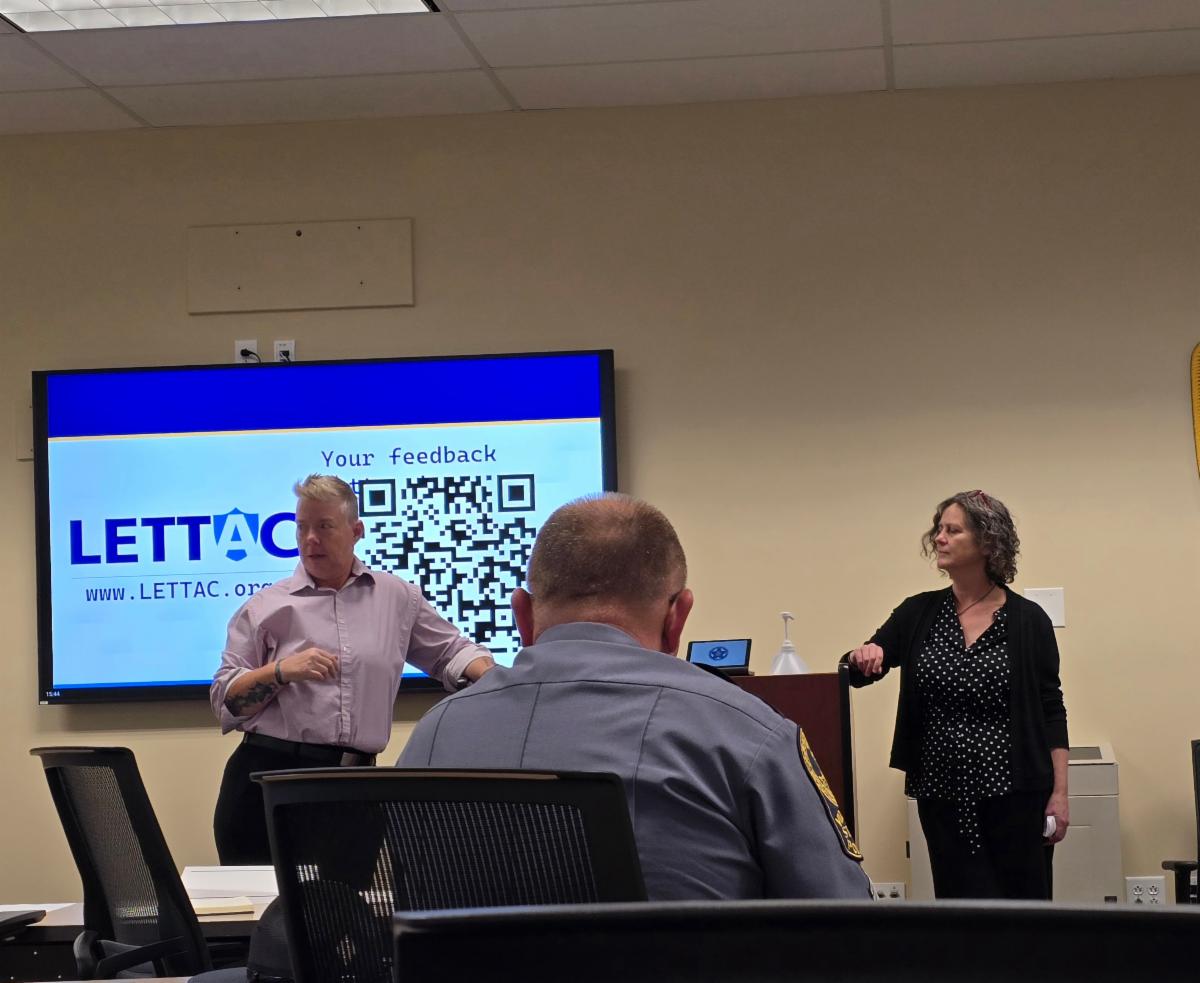
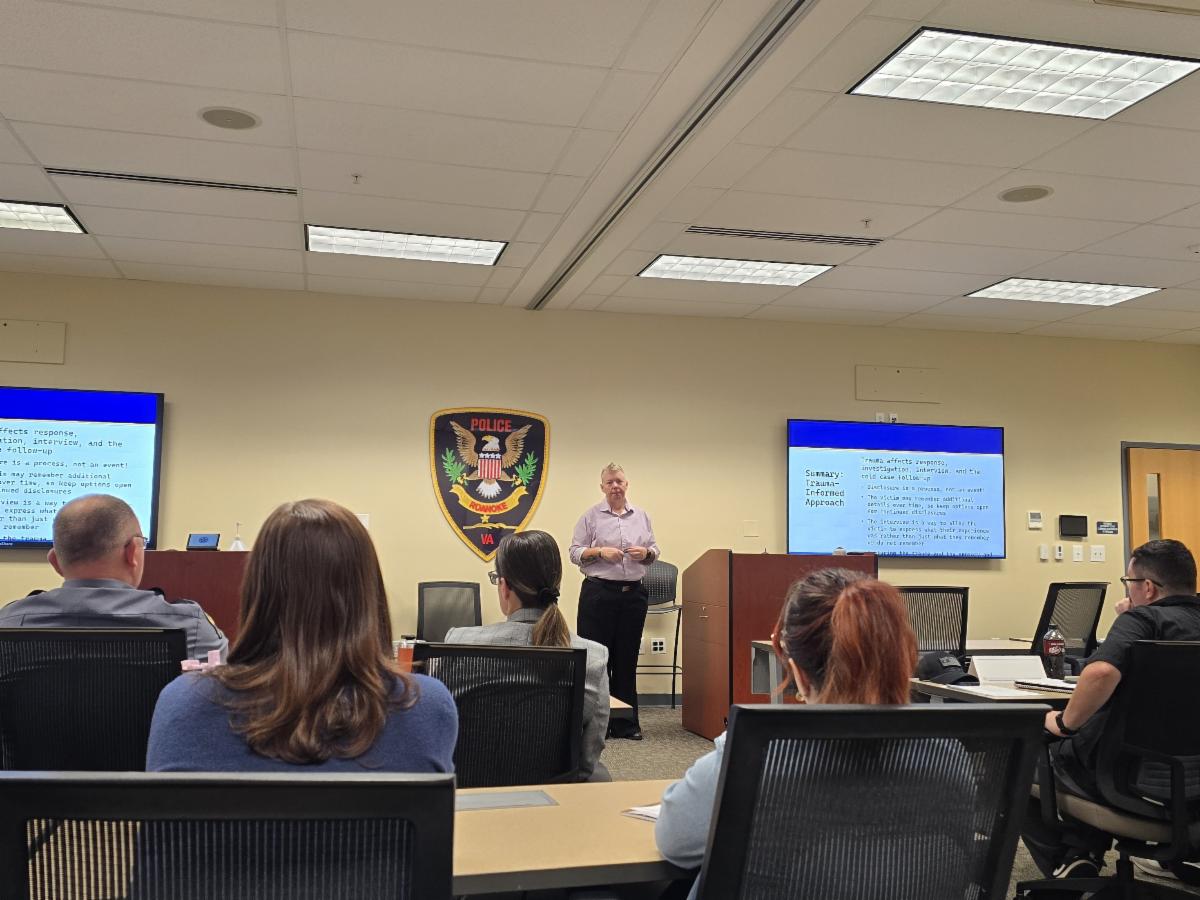
In observance of Domestic Violence Awareness Month, DCJS Victims Services, in partnership with the Law Enforcement Training and Technical Assistance Center (LETTAC), hosted a two-day training titled “Building Stronger Cases: Effective, Sustainable, and Collaborative Investigations.” This event was designed for law enforcement professionals, attorneys, and victim advocates.
The training featured expert presenters Sergeant Denise Jones, Victim Services Sergeant with the Clark County, Ohio Sheriff’s Office, and Meg Garvin, MA, JD, MSt, Executive Director of the National Crime Victim Law Institute. Together, they provided attendees with valuable tools and insights to enhance the review and prosecution of gender-based violence cases through a collaborative and trauma-informed approach.
| | | | | |
Domestic Violence Awareness Month Proclamation
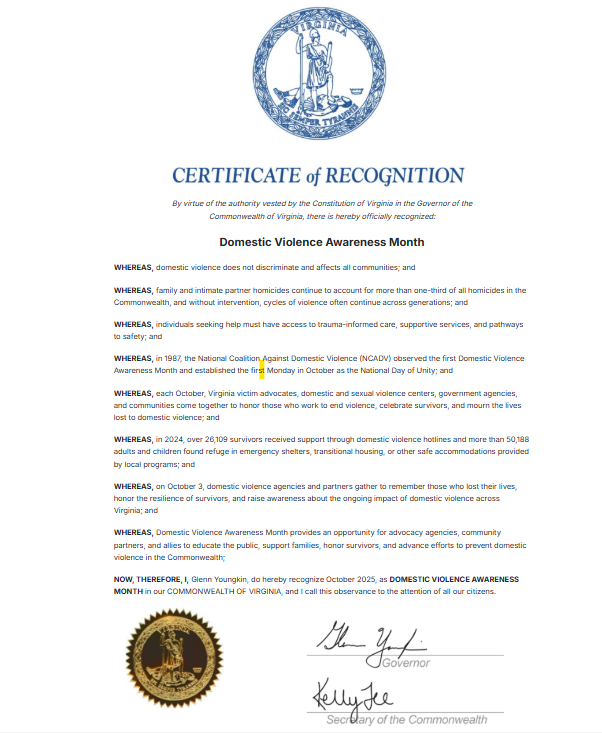
Governor Glenn Youngkin signed a proclamation to officially recognize October as Domestic Violence Awareness Month in Virginia.
Proclamation
| | | |
The Intersections of Domestic Violence and Economic Abuse
Economic security directly affects a survivor’s ability to seek safety and rebuild their lives. Did you know that studies have shown that:
-
94% of intimate partner violence (IPV) survivors in one study reported experiencing economic abuse, including employment sabotage (78%) and economic exploitation (79%).[1]
-
83% of survivors of domestic violence reported that their ability to work was disrupted by their abuser.[2]
-
38% percent of all survivors, at some point in their lifetime, experience difficulties related to homelessness.[3]
-
74% of survivors surveyed stated economic concerns forced them to stay with their abuser longer than they wanted.[4]
What you can do:
- Incorporate economic plans within safety plans
- Always connect financial strategies to the survivor’s safety plans. For many survivors, stronger economic resources mean stronger safety options.
- Help document economic abuse
- Encourage survivors to track coerced debt, stolen income, or blocked access to money. Having records of these acts can support legal remedies and financial repair.
- Connect survivors to financial resources
- Link survivors to confidential financial literacy classes, safe banking options, and programs that support budgeting and credit repair.
- Partner with banks and legal aid
- Work with institutions to help survivors open secure accounts, repair credit, or seek relief from coerced debt.
Where you can learn more:
The Center for Survivor Justice and Agency offers many free recorded training webinars on their webpage including:
Access E-Course Learning Exchange on the Civil Protection Order As a Tool for Economic Justice
Foundations of Survivor-Centered Economic Advocacy (recorded webinar)
Consumer Training Toolkit #1: Coerced Debt, Debt Defense and Safety for Survivors
Domestic Violence in Foreclosure: The Foreclosure Process, Defenses, and Alternatives for Survivors
Credit Reporting and Repair for Survivors
Survivor-Centered Economic Advocacy: Expanding Our Approach to Safety
[1] Judy L. Postmus, Sara-Beth Plummer, Sarah McMahon, N. Shaanta Murshid, and Mi Sung Kim, "Understanding Economic Abuse in the Lives of Survivors," Journal of Interpersonal Violence 27, no. 3 (2012): 411–430.
[2] 7Hess, C., & Del Rosario, A. (2018). Dreams Deferred: A Survey on the Impact of Intimate Partner Violence on Survivors’ Education, Careers, and Economic Security, Institute for Women’s Policy Research. Washington, D.C. 2018. Retrieved from https://iwpr.org/dreams-deferred-a-survey-on-the impact-of-intimate-partner-violence-on-survivors-education-careers-and-economic-security/.
[3] Baker, C., Cook, S, Norris, F. (2003) Domestic Violence and Housing Problems: A Contextual Analysis of Women's Help-seeking, Received Informal Support, and Formal System Responses. Violence Against Women. 9(7): 754-783
[4] Mary Kay, Inc. (2012). “Truth About Abuse Survey Report.” The Nation.
| | | | | |