DCPAP Issue April 2026

DCPAP Consultation Line 302-513-0929

Monday - Friday 8 AM - 5 PM


Check Out Our Web Page on DE Thrives!

DCPAP on DE Thrives

In this Issue:

DCPAP Welcomes Dr. Saurabh Gupta!

Office Hours Now M – TH!

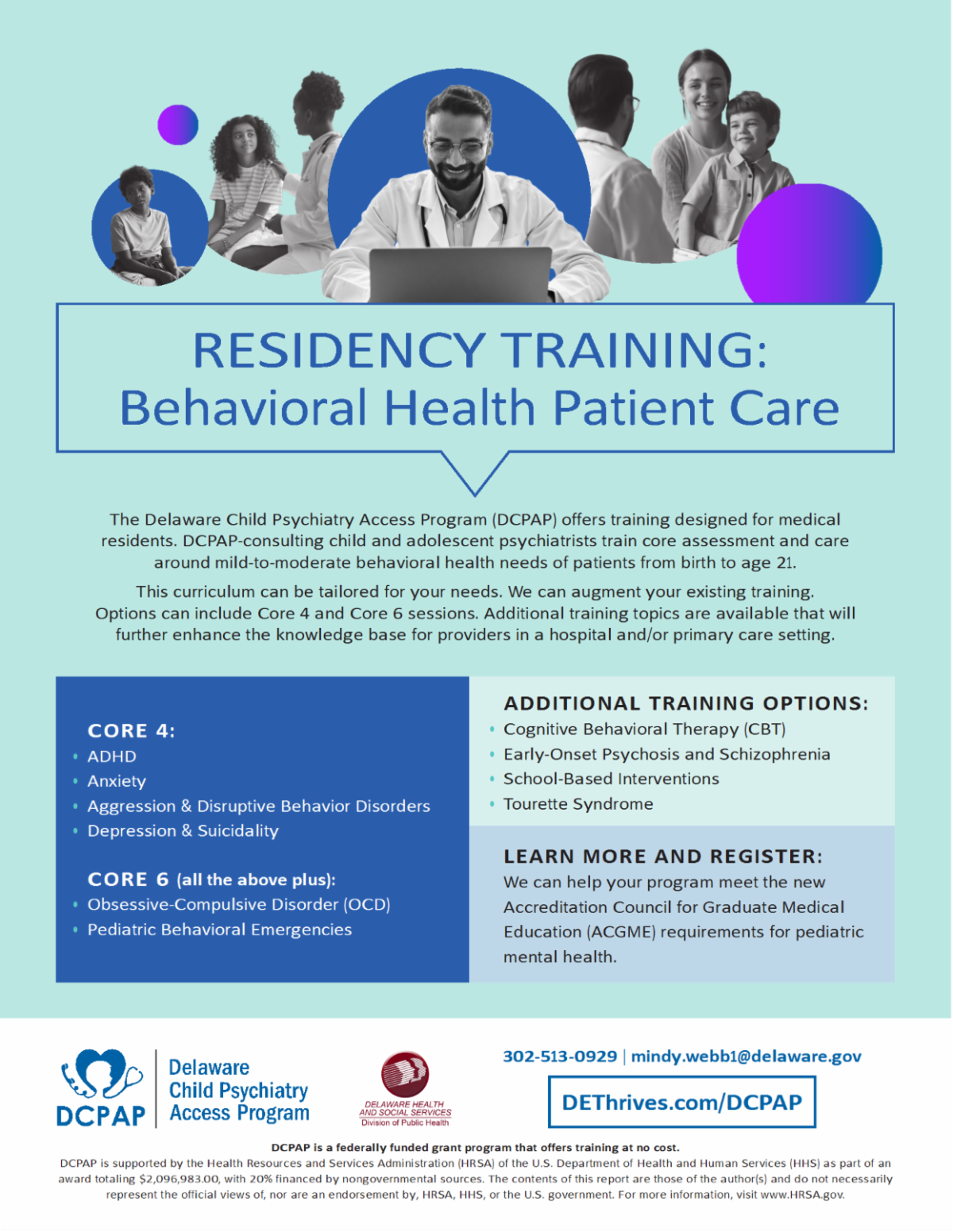
DCPAP Medical Residency Training

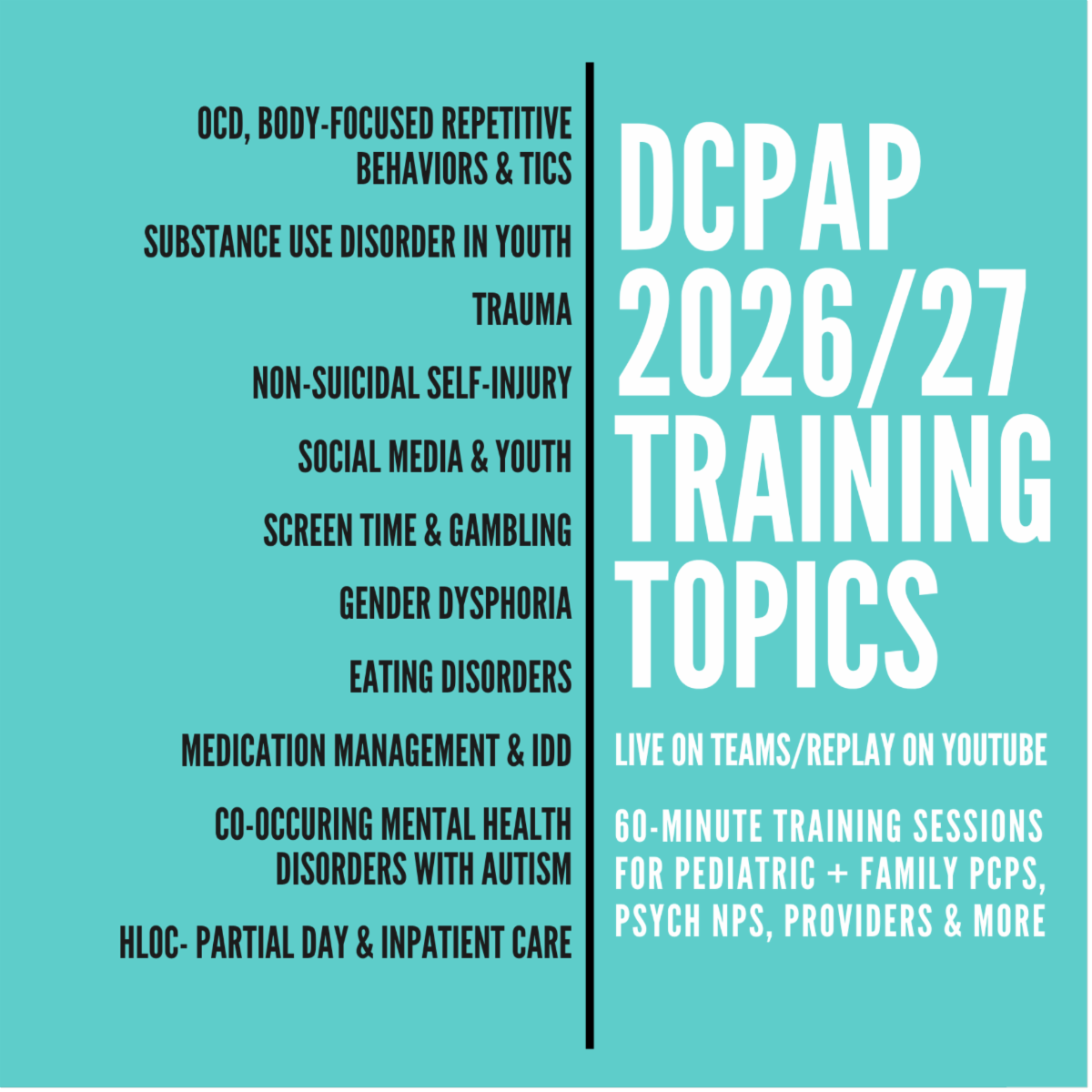
DCPAP 2026/2027 Upcoming Training

April is National Minority Health Month 

April is Autism Awareness Month

Science News: Link Between Autism & ADHD

Resource Spotlight: Autism Services & Supports

Community Resources & More!

DCPAP Welcomes Dr. Saurabh Gupta!

Dr. Saurabh Gupta has rejoined DCPAP as one of our

expert child and adolescent psychiatry consultants. 


Dr. Saurabh Gupta is a board-certified Child, Adolescent and Adult psychiatrist who has been in Wilmington, Delaware since 2006. He trained for his Child and Adolescent fellowship at Brown University in Rhode Island. He has been the Medical Director of Rockford Centre (an inpatient psychiatric hospital) since 2008. Past president of the Delaware chapter of American Academy of Child and adolescent Psychiatry (AACAP) and a current treasurer. He has a visiting Fellowship in Transcranial Magnetic Stimulation (TMS) therapy from Duke University and also has his own practice in Wilmington Delaware. Associated with the DCPAP program for the last four years remains active in providing consultation and giving lectures. His clinical interests are in psychopharmacological managements in children as well as giving second opinion consultations in his office. www.drguptamd.com 

Dr. Gupta returns to DCPAP on the heels of his recent adventure to Mt. Everest.


Dr. Gupta will be hosting Office Hours for PCPs

every Wednesday from 12 – 2 PM

allowing DCPAP to offer

live psychiatric consultation 4 days per week!


Need the link for Office Hours? 
Email
mindy.webb1@delaware.gov


DCPAP Medical Residency Training

DCPAP 2026/2027 Upcoming Training

Interested in these upcoming training sessions?

Email mindy.webb1@delaware.gov for info.


The DCPAP YouTube training channel has recorded 
training sessions
for enduring viewing. 

Can’t attend an upcoming session? 
We will post new trainings post live presentation. 

April is National Minorty Health Month

April is National Minority Health Month, led by the NIH’s National Institute on Minority Health and Health Disparities (NIMHD) and the HHS Office of Minority Health (OMH) to raise awareness about health disparities affecting racial and ethnic minority populations. The 2026 theme is “Be the Source for Better Health,” focusing on improving outcomes through culture, community, and social drivers.


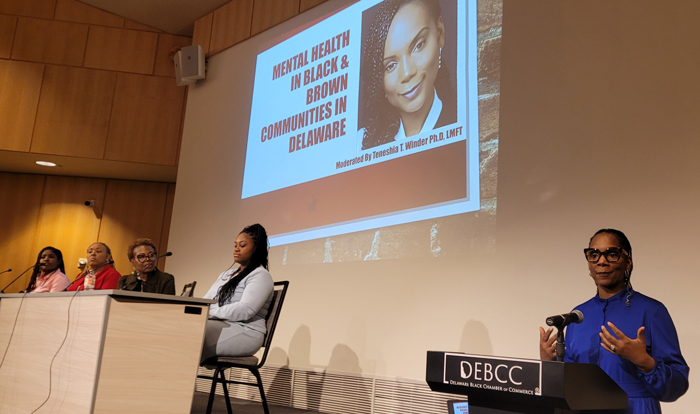
Mindy Webb, DCPAP Behavioral Health Care Coordinator, attended the Delaware Minority Health Summit at the Chase Center on the Riverfront, April 7, 2026, which brought health providers and community members together to learn more about the state of Delaware healthcare. The Mental Health panel moderated by Dr. Teneshia Winder, PhD, LMFT featured Satae'ya Broadnax, MSW, CADC, Lisa R. Savage, LCSW, Stacey Heath, LCSW, and Alchemy Green.

Panelists focused on a range of challenges within minority communities accessing services:


  • Stigma around mental health 
  • Generational trauma
  • Differing generational perspectives and the role social media plays in the vocalization of mental health among younger people
  • Focus on "village care" vs. seeking other professional care
  • Difficulty finding providers of color
  • Cultural and gender differences within/among minority populations


Panelists highlighted mental health needs among minority youth:


  • Behavior is often misinterpreted and punished, struggles are being missed, quiet children are overlooked*
  • Presentation of need often misdiagnosed; behavior, anxiety, ADHD, trauma vs. low iron, poor sleeping, hunger, stress, family/environmental issues
  • 22% of black/brown youth experiencing depression


Needs identified for minority communities considered:


  • Assess all children, not just those who are externalizing (employ the free assessment available per DE state law)*
  • Trauma-informed care for providers, teachers and school staff
  • Meet patients/clients where they are - educate without overstepping
  • Generate support, safety and coping skills within families via centralized community hubs - schools, places of worship, trusted allies, barber shops, laundromats, markets
  • Educate families around self-care, referral and resource options and expand to peer supports and activities (Big Brothers/Big Sisters, cheerleading, sports, dance and more)
  • Make mental health the norm


April is Autism Awareness Month

April 2026 is Autism Acceptance Month, focusing on promoting inclusion, understanding, and neurodiversity. This year’s campaign emphasizes moving beyond mere awareness to fostering acceptance and celebrating differences, featuring themes like "Autism and Humanity – Every Life Has Value".

Advocacy focuses on tackling the low employment rates (only 30% of autistic people in employment) and high mental health issues (8/10) to support, understand, and empower. 


See Autism related resources below.


Share questions or case vignettes with the DCPAP.


Psychopharmacology in Autism Spectrum Disorder (ASD) 

is available for enduring viewing on our YouTube channel.

Science News: Brain study reveals hidden link between Autism & ADHD

Autism and ADHD might be two sides of the same biological coin —

driven more by symptom intensity than diagnostic labels.


The Child Mind Institute

"Brain study reveals hidden link between Autism and ADHD" ScienceDaily. ScienceDaily, 9 April 2026.


Autism and ADHD may share more than just overlapping symptoms—they may be rooted in the same brain and genetic patterns. Credit: AI/ScienceDaily.com


Scientists are uncovering a surprising connection between Autism and ADHD that goes deeper than labels. Instead of diagnoses, it’s the severity of Autism-like traits that seems to shape how the brain is wired—even in children who don’t officially have Autism. The study found that certain brain networks tied to thinking and social behavior stay unusually connected in kids with stronger autism symptoms, hinting at a different developmental path.

Resource Spotlight:

Autism Services & Supports

American Academy of Pediatrics 

Autism initiatives that include updated policy statements, prevalence reports, and tools and resources for pediatricians. 


American Academy of Child and Adolescent Psychiatry (AACAP.org)

Autism Resource Center: Clinical Practice Parameters, guidelines, Facts for Families, Parents’ Medication Guide, videos.


Parent Information Center of Delaware

Provides information, training, technical assistance and support for parents of children with a disability from birth – 26yrs of age.


Birth to 3

Provides multidisciplinary assessment of developmental domains, determines eligibility for early intervention services, and can offer comprehensive autism evaluations


Check out Child Find through each local school district for ages 3+.


Autism Delaware

Family navigation, training, information dissemination, and more! Look here for information about Applied Behavioral Analysis (ABA) therapy options in Delaware. 


Delaware Network for Excellence in Autism

DNEA provides technical assistance, training, community education and family support information related to Autism.


Multidisciplinary Autism Program (MAP) at Christiana Care 

Diagnostic Evaluations, Developmental Psychotherapies, Psychiatry appointments and Case Management.


Swank Autism Center

Provides diagnostic evaluations and an array of psychological and behavioral programs.


Family SHADE

Connects families and providers to information, resources and services; advocates for solutions to recognize gaps in services; and supports its member organizations


Delaware Family Voices

Led by parents of children and young adults with physical, developmental and mental health challenges. Provides support in navigating the healthcare systems and access to resources and services.


Additional Links:


AFIRM Modules

May Institute

OCALI

Child Mind Institute


Note: Consider Applied Behavioral Analysis (ABA) Therapy 


PCPs can ask DCPAP for assessment, treatment and support resources for specific patients. 

Email mindy.webb1@delaware.gov


Check for additional resources below.

Resource Links

988 Suicide & Crisis Lifeline


Help is Here Delaware


Delaware HOPE Line 24 Hours/7 Days Week 

1-833-946-7333


Division of Public Health DE Thrives


Delaware 2-1-1 & 2-1-1/Help Me Grow


For consideration of higher level of care services

for children up to 18 years of age:


Division of Prevention and Behavioral Health Services

DPBHS Information and Referral Unit

weekdays from 8:00 a.m. to 4:30 p.m.

302-633-2571 or 1-800-722-7710 

or email at: DSCYF_Intake_General@delaware.gov 


Delaware Behavioral Health Resources

for Children Under 18 Experiencing a Crisis:


Mobile Response & Stabilization Services (MRSS)

1-800-969-HELP (4357)


To File a Report of Abuse or Neglect of a Child:

Child Abuse Report Line 

1-800-292-9582

Child Abuse and Neglect Reporting


Delaware Behavioral Health Resources

for Adults Experiencing a Crisis:


For Adult Psychiatric or Substance Abuse Crisis:

Mobile Crisis Intervention Services (MCIS)

Northern DE: 1-800-652-2929

Southern DE: 1-800-345-6785

Mobile Crisis Intervention Services

Crisis Hotline - Contact Lifeline

Dial 988 or 1-800-262-9800

contactlifeline.org


To File a Report of Harm or Ask for Help

for Abuse, Neglect or Exploitation of an Adult:

Adult Protective Services (APS)

1-888-277-4302 (1-888-APS-4302)

For Delaware Relay services, dial 711.

Adult Protective Services


Additional Local & National Resources:


Delaware Division of Substance Abuse and Mental Health


SAMHSA National Helpline 

Confidential free help, from public health agencies,            

to find substance use treatment and information.  

1-800-662-4357


First Community Directory


Division of Health & Social Services Bureau of Health Equity


Child Mind Institute


Mental Health Resources


Mental Health Association Delaware (MHA) 


National Alliance on Mental Illness (NAMI) Delaware 

NAMI Local Delaware Resources


National Institute of Mental Health (NIMH) 


Association of Child and Adolescent Mental Health


DCPAP Connections

DCPAP Hosts Office Hours 4 Days Per Week, Monday-Thursday

PCPs can Speak with Consulting Psychiatrists Live Online!

Join us Monday, Tuesday or Thursday between 12 – 2 PM!


DCPAP Consultation Line 302-513-0929

Monday - Friday 8 a.m. - 5 p.m.


Check Out Our Web Page on DE Thrives!

DCPAP on DE Thrives

Easy Access Through the QR Code Below. 
Make DCPAP a FAVORITE on your Computer.

Connecting with Child & Adolescent Psychiatrists made simple.

Register, Request & Review program information in one place.

About DCPAP

The Delaware Child Psychiatry Access Program is supported by the Health Resources and Services Administration (HRSA) of the U.S. Department of Health and Human Services (HHS), as part of a financial-assistance award totaling $2.09M, with an additional 20% funded by nongovernment source(s). The contents are those of the author(s) and do not necessarily represent the official views, nor are an endorsement, of HRSA/HHS or the U.S. government.

Connect with DCPAP

DCPAP Webpage:

https://dethrives.com/providers-and-community-partners/dcpap


QR Code:


DCPAP Phone:

Consultation Line 302-513-0929

Monday-Friday 8 a.m. - 5 p.m.


Joseph Hughes, MBA

Project Manager

joseph.hughes1@delaware.gov


Mindy Webb, LCSW

Behavioral Health Care Coordinator

mindy.webb1@delaware.gov


Madie Moses, MBA

Data Coordinator & Project Support Specialist

madison.moses@delaware.gov

DCPAP Disclaimer Details:

Requests to DCPAP result in the sharing of clinical concerns and considerations based on information presented during professional-to-professional psychiatric consultation. It does not infer a direct patient contact by the consulting psychiatrist nor a direct psychiatric evaluation of a specific patient. Clinical assessment may not be complete and may require further direct patient and record assessment by the treating clinician, or referral of the patient for direct assessment by a psychiatrist or appropriate mental health professional. 

Funding for DCPAP through a grant to DPH from

U.S. Department of Health and Human Services (HHS)

Health Resources and Services Administration (HRSA)