DCPAP Newsletter October 2024

Focus on Early Childhood Mental Health


DCPAP Consult Line 302-513-0929

Monday - Friday 8 a.m. - 5 p.m.

Email mindy.webb@delaware.gov


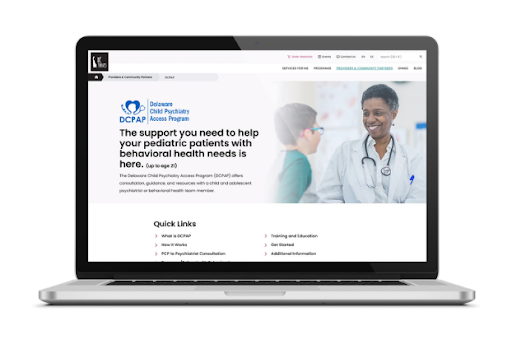
Check Out Our New Web Page on DE Thrives!

Online Link to DCPAP


Easy Access Through the QR Code Below.  Get Started, Request Services & Check Out Past Newsletters.

Make DCPAP a FAVORITE on your Computer.

UPDATE: Enduring Training with the DCPAP Learning Management System

is Back Online! Register at https://dcpap.talentlms.com/.

In This Issue | October 2024

Early Childhood Mental Health


Screening Tools for Young Children


In the News – Adverse Childhood Experiences (ACEs)

& Effects on Health Conditions/Risk Behaviors


Resource Spotlight on 2-1-1/Help Me Grow


Early Childhood Resources


Community Resources & More!

Early Childhood Mental Health

Mental health is lifelong. Early Childhood Mental health in infants and children is about how young children begin to organize their feelings and connect with other people. It includes their growing capacity to regulate and express their emotions and behavioral responses, to form secure relationships with others, and explore the environment in the context of their family, community,

and cultural expectations (Zero To Three).  


Attention to the needs of young children’s mental health is paramount for their development. Families work in partnership with their primary care providers (PCPs) to meet the health care of their child, support their overall healthy development and often seek guidance in their parenting. Addressing a child’s presentation of milestones/needs at early stages, responding to parents' questions/concerns, and regular screening can help to establish whole health care for the child. See screening tools for young children below. 


The AAP has created a series of references/resources around

Mental health in infants and children for PCPs. Read More


The AAP and the Pediatric Mental Health Care Access program (PMHCA) have created a series of videos to promote building healthy emotional regulation and relationships in young children. Click below to play. View Here

Screening Tools for Young Children

DCPAP Can Offer Guidance to PCPs

Around Screening Tools Via Consultation. 


Early and regular developmental, behavioral and mental health screening

can help to identify needs, inform treatment plans (including early intervention, psychotherapy, parent support and related resources)

that establish whole health care for children.


In the News – Adverse Childhood Experiences & Effects on Health Conditions/Risk Behaviors

Adverse Childhood Experiences and Health Conditions and Risk Behaviors Among High School Students —

Youth Risk Behavior Survey, United States, 2023

CDC Morbidity & Mortality Weekly Report

Supplements / October 10, 2024 / 73(4);39–49


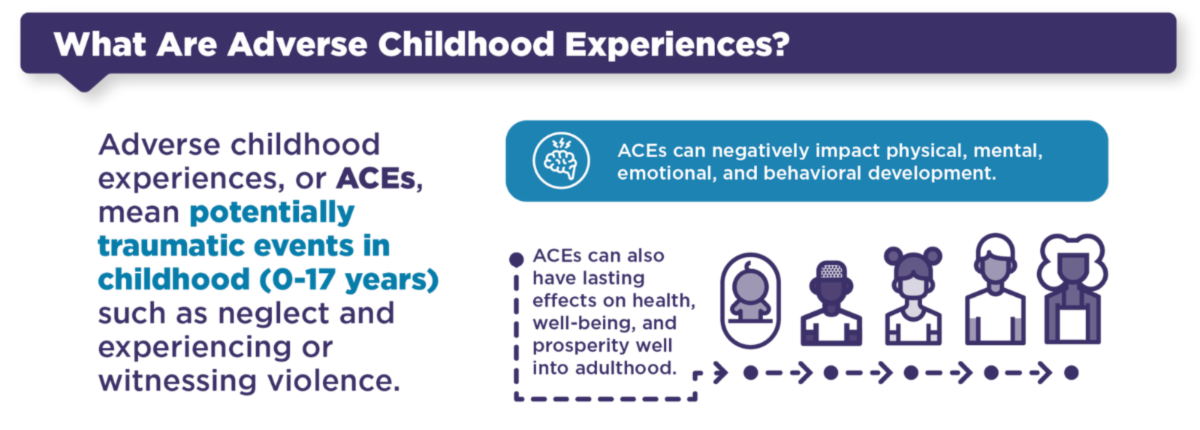
This report presents the first lifetime national prevalence of self-reported individual and cumulative ACEs among U.S. high school students aged <18 years, associations between cumulative ACE exposure and negative health conditions and risk behaviors in adolescence, and population-attributable fractions related to ACEs for each condition and behavior. Policymakers and public health professionals can use this information to understand current prevalence of ACEs among U.S. high school students, and the proportion of negative health conditions and risk behaviors that could potentially be reduced or eliminated by implementing evidence-based strategies and approaches to prevent ACEs and mitigate their consequences. See ACEs details below.


Read More

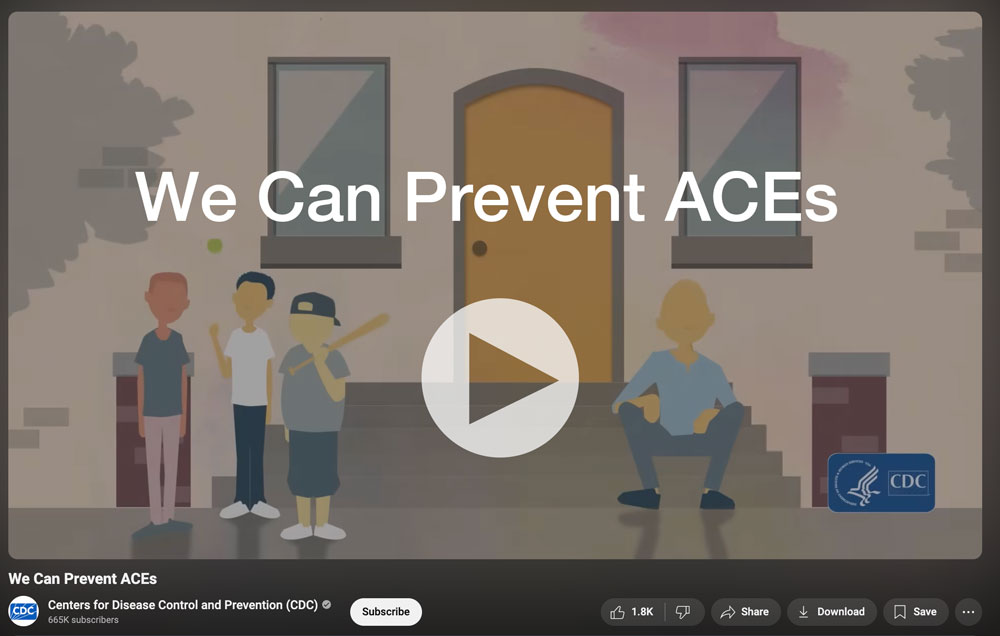
CDC: We Can Prevent Child Adversity


ACEs can include 1 or more experiences such as Abuse (Emotional, Physical or Sexual), Neglect (Emotional or Physical) and Household Challenges (Substance Misuse, Mental Illness including Maternal Mental Health and attempted Suicide, Divorce or Separation, Incarceration or Intimate Partner Violence or Domestic Violence). Other adversity that can contribute to this level of trauma includes Bullying, Community Violence, Natural Disasters, Refugee or Wartime Experiences and Witnessing or Experiencing Acts of Terrorism. Preventing ACEs and building resilience is key.

Take Away Message: The Power of Prevention & Early Intervention in preventing ACEs earlier in childhood helps to address negative impacts in adolescence and beyond. Intervening to lessen long-term harms of ACEs (at individual, family and community levels) is critical for improving public health.


DCPAP consultation can increase provider competence and support PCPs in delivering evidence-based interventions.

Resource Spotlight on

2-1-1/Help Me Grow (HMG)

The Help Me Grow (HMG) system is a framework that brings together child-serving partners to improve early childhood services. 2-1-1/Help Me Grow is a one-stop-shop that offers programs, services, and helpful information to parents-to-be and families. HMG focuses on supporting young children’s healthy development by connecting families with community resources.

Just dial 2-1-1 on any phone M-F 8 a.m. – 9 p.m.


Four Key Areas of Activity 


  • Centralized Access Point (CAP) through 2-1-1/HMG ensures everyone has help when they need it, with a simple number to dial.
  • Community Outreach means their specialists are out in the community to understand the people they serve.
  • Physician Outreach helps to inform health care providers about developmental screening as well as the helpline, so that caregivers and families will be better served.
  • Data collection and analysis to improve the system and create change to ensure health equity for all.


Note for PCPs: 2-1-1/HMG provides links to Maternal/Child Health Cheat Sheets for when to make a referral, as well as connecting to the Delaware American Academy of Pediatrics (AAP) for access to webinars and updates on early childhood efforts happening in the state. 


Learn More

Early Childhood Resources:

Division of Public Health DE Thrives

Services for teens and parents, programs like Home Visiting, resources & More! Look for DCPAP here.


Delaware 2-1-1 & 2-1-1/Help Me Grow

Birth to Three


Sesame Street 


Libraries

Books, Story Times, Resources, Engaging with other parents


Association of Child and Adolescent Mental Health

Additional Resource Links

For consideration of higher level of care services

for children up to 18 years of age:


Division of Prevention and Behavioral Health Services

DPBHS Information and Referral Unit

weekdays from 8:00 a.m. to 4:30 p.m.

302-633-2571 or 1-800-722-7710 

or email at: DSCYF_Intake_General@delaware.gov


Delaware Behavioral Health Resources

for Children Under 18 Experiencing a Crisis:


Mobile Response & Stabilization Services (MRSS)

1-800-969-HELP (4357)


To File a Report of Abuse or Neglect of a Child:

Child Abuse Report Line 

1-800-292-9582

Child Abuse and Neglect Reporting


Delaware Behavioral Health Resources

for Adults Experiencing a Crisis:


For Adult Psychiatric or Substance Abuse Crisis:

Mobile Crisis Intervention Services (MCIS)

Northern DE: 1-800-652-2929

Southern DE: 1-800-345-6785

Mobile Crisis Intervention Services

Crisis Hotline - Contact Lifeline

Dial 988 or 1-800-262-9800

contactlifeline.org


To File a Report of Harm or Ask for Help

for Abuse, Neglect or Exploitation of an Adult:

Adult Protective Services (APS)

1-888-277-4302 (1-888-APS-4302)

For Delaware Relay services, dial 711.

Adult Protective Services

Additional Local & National Resources:


Help is Here Delaware

Delaware HOPE Line 24 Hours/7 Days Week 1-833-946-7333


Delaware Division of Substance Abuse and Mental Health


SAMHSA National Helpline

Confidential free help, from public health agencies,

to find substance use treatment and information. 

1-800-662-4357


National Maternal Mental Health Hotline | MCHB (hrsa.gov) 

1-833-TLC- MAMA


First Community Directory


Division of Health & Social Services Bureau of Health Equity


Child Mind Institute


Mental Health Association Delaware (MHA)


National Alliance on Mental Illness (NAMI) Delaware


National Institute of Mental Health (NIMH)

Connect with DCPAP

DCPAP Phone:

Consult Line 302-513-0929

Monday-Friday 8 a.m. - 5 p.m.


DCPAP Webpage:

https://dethrives.com/providers-and-community-partners/dcpap

Email: DCPAP Team

mindy.webb@delaware.gov


Joseph Hughes, MBA

Project Manager

joseph.a.hughes@delaware.gov


Mindy Webb, LCSW

Behavioral Health Care Coordinator

mindy.webb@delaware.gov


Rosi Crosby

Outreach & Communications Specialist

rosaliacrosby@gmail.com


Madie Moses

Project Support Specialist

madie.beth29@gmail.com


DCPAP Disclaimer Details:

Requests to DCPAP result in the sharing of clinical concerns and considerations based on information presented during professional-to-professional psychiatric consultation. It does not infer a direct patient contact by the consulting psychiatrist nor a direct psychiatric evaluation of a specific patient. Clinical assessment may not be complete and may require further direct patient and record assessment by the treating clinician, or referral of the patient for direct assessment by a psychiatrist or appropriate mental health professional. 

Funding for DCPAP through a grant to DPH from

U.S. Department of Health and Human Services (HHS)

Health Resources and Services Administration (HRSA)