|
Dear Colleagues,
As we head into summer and finish the academic year, this edition of the research newsletter offers a moment to reflect on and celebrate the outstanding accomplishments of our community. These all occurred in a very challenging federal funding environment.
We extend heartfelt congratulations to all honorees and award recipients for their remarkable achievements and contributions to science and research. Please continue to send us your accomplishments so we may continue recognizing and celebrating them.
Please see below for upcoming events, including AI workshops in grant preparation and the Office of the Research Town Hall, as well as several funding opportunities.
Wishing you a wonderful summer.
All the best,
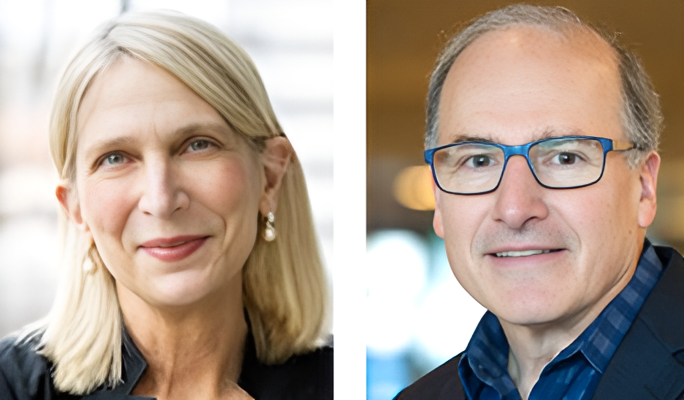
Diane and David
Diane Havlir, MD
Associate Chair for Clinical Research
David Erle, MD
Associate Chair for Biomedical Research
| | Election to the National Academy of Sciences | | |
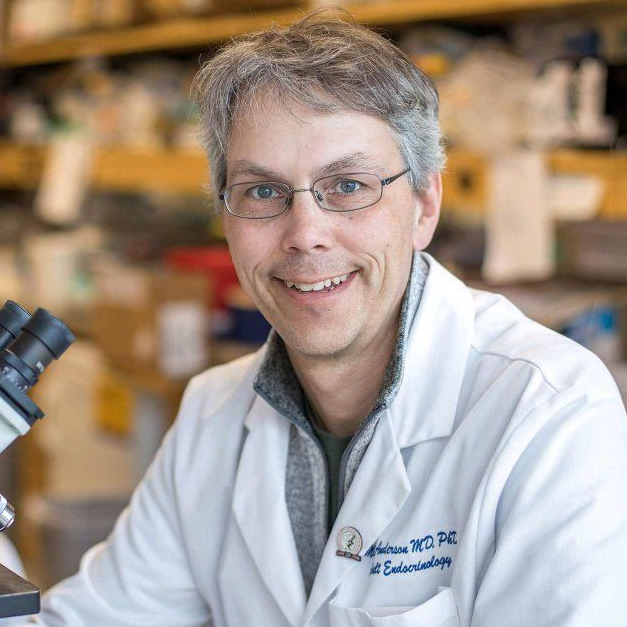
Mark Anderson, MD, PhD, professor of medicine, Division of Endocrinology and Metabolism, and director of the UCSF Diabetes Center, was elected to the National Academy of Sciences (NAS), one of the highest honors in American science.
Since 2022, Anderson has led UCSF’s Diabetes Center, which was recognized last year as one of the country’s premier institutions for diabetes-related research by the National Institute of Diabetes and Digestive and Kidney Diseases. His work focuses on examining the genetic control of autoimmune diseases to gain a better understanding of the mechanisms by which immune tolerance is broken.
| | |
We’re excited to celebrate the accomplishments of our faculty. If you know of recent awards, honors, or recognitions that we should highlight in future newsletters, please share them with Ilona Paredes—we’d love to spread the word!
| | |
AI in Grant Preparation: Aligning Proposals with Sponsor Priorities
Tuesday, July 14, at 3 PM via Zoom
This workshop will focus on practical approaches for using AI to identify and evaluate funding opportunities, assess alignment with sponsor priorities, and develop an overall proposal strategy before drafting begins.
AI in Grant Preparation: Reviewing and Refining Your Proposal
Wednesday, September 9, at 3 PM via Zoom
This workshop will focus on using AI to review draft applications, identify gaps and inconsistencies, evaluate alignment with review criteria, and strengthen proposals prior to submission.
| |
To help tailor these AI workshops and develop additional resources for the research community, we invite you to complete a brief survey. The survey should take less than five minutes to complete and will also provide an opportunity to register for one or both workshops. Even if you’re not available to attend the workshops, we would appreciate your feedback to inform future AI-related programming.
Please complete the survey with workshop interest by 7/2. For questions, please contact Danielle Mizuiri.
| |
Office of Research Town Hall
Join Vice Chancellor for Research Harold Collard at the next Office of Research Town Hall on Tuesday, July 21, at 1 PM for the latest updates on federal research policy and key operational priorities, including important updates and information from the Office of Sponsored Research.
| Research Support Programs | | |
Summer Writing Café
Join colleagues for dedicated writing and focused work time in a supportive community setting. Participants can use the session to work on manuscripts, draft grant sections, prepare presentations, catch up on reading, analyze data, or make progress on other professional projects.
The UCSF CAPS Developmental Core and Visiting Professor Program are teaming up to offer multiple writing events this summer! Writing Café is open to all researchers, regardless of their area of focus, and is not limited to those conducting AIDS-related research.
The summer writing Café will take place on Thursday, July 2, from 9 AM-12 PM. Bring a work-related project you need to complete, and RSVP to Mireya Avila if you would like to attend. A Zoom link will be provided to those who RSVP.
| |
PRE-Proposal Application REview (PREPARE) Program
Applications are accepted on a rolling basis
Get expert NIH-style feedback on your R, K, and U proposals with the PREPARE Program.
Check out what our faculty have to say about their experience with this program:
"This is my second time using the PREPARE program, and I found the review process to be very constructive. The reviewers were knowledgeable and supportive, and I appreciated their advice on both the content and framing of the proposal." Soumaya Zlitni, PhD, Division of Experimental Medicine at ZSFG.
For additional information, click here. To request a concept sheet, full proposal, or summary sheet review, click the button below.
| | |
Most Foreign Co-Authorship is a Foreign Component
NIH has clarified that most foreign co-authorship arrangements may be considered a foreign component and must be appropriately disclosed (NOT-OD-26-084). Investigators should ensure that foreign collaborations, activities conducted outside the U.S., author affiliations, and NIH funding acknowledgments are accurately reported in applications, progress reports, and publications to avoid potential compliance issues.
| |
NIH Seeks Input on Proposed Cap for Research Project Grants per Investigator
NIH is requesting feedback on a proposal to limit investigators to 2-4 simultaneous Research Project Grants (RPGs), with the goal of redistributing funding to support more researchers, institutions, and early-career investigators (NOT-OD-26-086). Comments are due Monday, August 3, 2026. This is a Request for Information (RFI) only and does not establish a new policy. Read more about the requested feedback and submit your comments to NIH. For questions, please contact OSR.
| |
Additional NIH Reminders
NIH limits Principal Investigators to six applications per council-round year and prohibits applications substantially generated by AI. PIs should monitor submission counts in eRA Commons. Read more here.
Review the updated NIH FAQs for Biosketches and Common Forms to ensure compliance with current NIH application and RPPR requirements. Read more here.
| |
Human Resource Protection Program (HRPP) Policy and Process Updates
The UCSF Human Research Protection Program (HRPP) is excited for the launch of Research Gateway IRB (ReGI).
In conjunction with this transition, the Office of Research and the Human Research Protection Program (HRPP) are implementing several policy and process updates. These changes will take effect on Wednesday, July 1, 2026.
Summary of Changes:
- Study Team Member Role Changes: Elimination of Co-PI role and new Not KSP (Admin only) role
-
New Research Intake Form: Must be completed before submitting to the IRB
- Changes to Letters of Support: Updated requirements for IRB submission
- IRB Approval Letters from Other Sites: Updated guidance on when these approval letters must be submitted
You can view all HRPP Bulletins at https://irb.ucsf.edu/news. For additional information, click the button below.
| | |
Conference Registration and Small Grants for Researchers
Applications are accepted on a rolling basis
The UCSF Academic Senate conference registration and small grants for researchers from the Chancellor's Fund are now being accepted through the Senate Service Portal. Grants of up to $1,000 per individual faculty will be awarded on a rolling basis to applications that meet the criteria.
The Chancellor's Fund Awards aim to benefit faculty within their academic life at the University. UCSF Faculty in any series (ladder rank, in residence, clinical, health sciences, and adjunct) at all ranks (assistant professors, associate professors, and full professors) are eligible to apply. Applicants may receive no more than one conference registration/travel grant within a 12-month period.
Click here to access the online application. For questions, please contact Liz Greenwood.
| |
Daniel Broadhurst Addiction Research Award
Applications are due by Tuesday, June 30
The UCSF Clinical and Translational Science Institute (CTSI) Pilot Awards program is announcing a new one-year funding opportunity. The Daniel Broadhurst Addiction Research Award was established to support innovative addiction research with projects focused on the treatment of adults addicted to illicit and/or prescription drugs.
This award aims to fuel transformative innovation and discoveries that expand our understanding and treatment of addiction among adults aged 18 and over. It will support a wide range of research approaches that address the complex challenges of addiction from basic cellular and molecular mechanisms through testing clinical therapeutic interventions and ensuring long-term effectiveness.
UCSF Faculty in any series (ladder rank, in residence, clinical, health sciences, and adjunct) at all ranks (assistant professors, associate professors, and full professors) are eligible to apply.
To apply, please complete a REDCap form, which includes submitting a grant application by 3 PM on Tuesday, June 30, 2026. CTSI anticipates awarding up to two proposals, each receiving $100,000 in direct funds for a one-year period.
| |
Nancy E. Adler Seed Grant Program
Applications are due by Wednesday, September 9
The Center for Health and Community in the Department of Psychiatry and Behavioral Sciences is pleased to share a request for pilot research proposals. The Nancy E. Adler Seed Grants Program (ASG) will support projects focused on social and behavioral determinants of health. Annual budgets should not exceed $25,000, and total budgets should not exceed $35,000. Proposals will be considered on a competitive basis through Wednesday, September 9, 2026.
UCSF-appointed assistant professors from any academic series and postdoctoral fellows with faculty mentorship are eligible to apply for internal funding.
Proposals should be submitted via email to Dina Dudum Freij by 5 PM on Wednesday, September 9, 2026. View the full call for proposals here.
| | If you'd like to contribute to future newsletters, please send your items to Ilona Paredes. | | Informational Resources for the Research Community | | |
Copyright © 2026, University of California, San Francisco, All rights reserved.
Please send comments, suggestions, and questions to:
diane.havlir@ucsf.edu and david.erle@ucsf.edu
| | | | |