|
THE BIWEEKLY
OCTOBER 15, 2026
Published every two weeks by
The Alberta Society of Professional Biologists
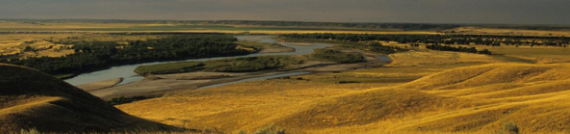
| | Pure Prairie (Lorne Fitch, from the ASPB Collection) | | |
ASPB MEMBERSHIP CLASSIFICATION CHANGES
Re-printed here from 2026 AGM Resolutions:
Item 6: Be it resolved to remove Bylaw 2.03.3.1 (Registered Biologist):
The Registrar may enroll as a Registered Biologist an applicant who fully meets the academic requirements in the Registration Policy and the experience requirements defined in the Regulation.
Rationale:
With the successful implementation of equivalency; using experience to make up a limited set of academic requirements, the category of Registered Biologist (R BIOL) is no longer a reasonable pathway to professional registration. Using an equivalency model has a more direct and timely pathway to full registration.
Item 7: Be it resolved to remove Bylaw 2.03.3.2 (Registered Biologist-in-Training):
The Registrar may enroll as a Registered Biologist-in-Training an applicant who has completed all of the academic requirements of a Registered Biologist as defined in the Registration Policy but is deficient in experience as determined by the Registration Committee.
Rationale:
With the successful implementation of equivalency; using experience to make up a limited set of academic requirements, the category of Registered Biologist-in-Training (RBIT) is no longer a reasonable pathway to professional registration. Using an equivalency model has a more direct and timely pathway to full registration.
* * *
There will be an appropriate administrative driven process to move current registrants in these two categories into appropriate registers. A current RBIT will be transitioned to BIT or P Biol (with appropriate evaluation of experience). A current R BIOL will on be moved to a P Biol (with appropriate evaluation of experience). The Registers will remain in place until the last registrant in the respective register is moved out of that category.
| | The complete agenda for Annual General Meeting #51 is now live on the ASPB homepage, conference page, and under Member Resources. Go here to the direct link. | | |
ASPB MEMBERS!
Sign up to help with our most important committees:
(Regulatory, Practice Review, and Disciplinary)
Be part of leading the growth of your professional organization!
More information is available HERE, and you can contact
Registrar Dean Falkenberg or Director of Operations Jessica Koehli for more information and to volunteer.
| | |
ASPB BROWN BAG LUNCHEON WEBINAR
ON NOVEMBER 20 !
Putting Wetland Data to Work
See details below, under the CALENDAR section
| | |
Live Staking Bioengineering Workshop
Delivered by Kristen Andersen, P. Biol.
The City of Spruce Grove presents a 1-day workshop on October 17, 2026, between 0930 and 1600, to learn about ecological restoration using soil bioengineering along stream banks. Read more, with sign-up information, under the CALENDAR section down the page.
| | |
Building what comes next:
A new strategic plan for APEGA
The Association of Professional Engineers and Geoscientists of Alberta (APEGA) has released its new strategic plan, guided by “a renewed vision of APEGA professionals driving a prosperous and resilient future.”
Approved by APEGA Council in June 2026, the plan positions APEGA to respond to Alberta’s ongoing needs and priorities, with a focus on responsive, risk-based regulation and upholding “the high standards Albertans expect”.
| | |
At the ASPB, we gather snippets of relevant biology information from a variety of sources such as The Conversation (Canada), Nature (UK) and Scholar Alerts (Google), which we select and share in the BIWEEKLY. Here is the latest batch (the links are HOT):
WETLANDS, WATERSHEDS & FISHERIES
Springbank Off-Stream Reservoir Project
Authorizations Concerning Fish and Fish Habitat Protection Regulations
Goldfish, gibel carp, or crucian carp? Testing public recognition of Carassius species
Temporal patterns in species richness and occupancy in mountain-prairie transitional watersheds
https://gazette.gc.ca/rp-pr/p1/2026/2026-10-10/html/reg1-eng.html SARA FISHERIES PART 1 Additions
Bioaccumulation, food web transfer, and tissue distribution of polonium-210 and lead-210 in Canadian freshwater ecosystems
BIODIVERSITY
Drivers of insect decline: direct, indirect, and combined pressures
Human–Wildlife Conflict Is Not a Myth
AVIAN WILDLIFE
A synthesis of bird biodiversity studies in geographically isolated wetlands reveals research synergies and opportunities
A Range-Wide Summary of Western Grebe and Clark's Grebe Breeding Lakes Across North America
Migratory, molting, and overwintering strategies of sagebrush-associated songbirds are diverse and flexible
Phenological Flexibility in Nesting Grassland Birds Over a Half Century Informs Timing of Management
Can we teach old songs to new birds?
NON-AVIAN WILDLIFE
Policy on Agreements and Permits under Sections 73 and 74 of the Species at Risk Act (SARA)
Illegal wildlife continues to slip through Canada's borders. Experts explain how
Memory on ice: spatial memory is retained over a 9-month hibernation period in Columbian ground squirrels
Private landowner preferences for CWD management and access in Alberta
Observations of Interactions between American Badgers (Taxidea taxus) and Coyotes (Canis latrans) in the Urban–Wildland Interface
European-wall-lizard-spreading on vancouver-island
Invasive or non-invasive trapping of otters and the use of scent lures and baits: a review
Environmental Flexibility of Canadian Bison: Insights From Gut Microbiome and Diet Dynamics
Heightened threats to small woodland caribou populations in Canada and key considerations for their persistence
Chronic Wasting Disease Exposure Risk to Male Cervids During the Mating Season in A Multi‐Host Community
INSECTS
Podcast: butterflies’ patterns trick the eye
Large Coccinellidae Collected in the Nebraska Panhandle Reveal High Diversity, Rare Species, and Undocumented Plant Associations
Evaluating Citizen Science and Habitat Management for Native Bee Conservation
https://www.theweathernetwork.com/en/news/nature/animals/invasive-spotted-lanternfly-patient-zero-has-first-live-canadian-detection
Detection of insect vectors of disease at high latitudes through community-based monitoring in the Arctic
Ant brain metabolomics reveals contrasting purine and amine dynamics in a reversible trematode-induced host manipulation
Video: how butterflies trick the eye
PROTECTED AREAS and MANAGEMENT
Parks Canada's Climate‐Smart Conservation Planning Workbook
GRASSLANDS
Canadian Forage and Grassland Association’s Annual Conference
Grassland Restoration Forum's Fall Information Session
Western Canada Conference on Soil Health & Grazing 2026
Effects of conservation grazing and burning on grassland vegetation in urban protected areas
FORESTRY
Playing with fire: Wolf response to active wildfires, fire fronts and smoke
Responses in forest structure to edge effects from seismic lines and well pads in western North American boreal forest
Detecting and Differentiating Extreme Wildfire Impacts: A Satellite-Derived Multi-ECV Case Study and Global Biome Analysis of Post-Fire Signals
Forest and fire drive moose (deníe) detections near their northern range limit
Cutting through the noise: What can habitat selection modeling teach us about caribou‐fire space use dynamics?
BOTANY
Story of the zigzag clover
Remodelling of cell wall components potentially contributes to host resistance to Plasmodiophora brassicae in Brassica napus
Polemonium villosum (Polemoniaceae) infraspecific taxa of northwest North America
From sunflower to salmonberry: investigating the genetic basis of trait variation in wild plants
Population structure, avirulence profiles and race diversity of Leptosphaeria maculans in western Canada, 2015–2017: implications for R-gene deployment
A-resource-guide-to-western-canadas-peatlands/
Genetics and germination of the endangered bog bird's-foot trefoil (Hosackia pinnata; Fabaceae) in Canada
Fossil flora and palaeoclimate of the Upper Cretaceous Horseshoe Canyon Formation, Horsethief Member, at Morrin Bridge, Alberta, Canada
MICROBIOLOGY / BIOTECHNOLOGY
Protein synthesis, no cell required
AGROLOGY AND SOILS
Edge effects on parasitoid hymenopteran biodiversity in canola fields
Urban Agriculture: Planning Productive, Equitable, and Resilient Food Systems in Cities
PRE-HISTORY
Fossil hints that flight wasn’t linear
Anthropocene or not-pocene?
Late Ordovician dalmanellidine brachiopods from the lower Whittaker Formation, Mackenzie Mountains, Northwest Territories, Canada
HUMAN COMMUNITY IMPACT
Ukraine (science) academy responds to deadly attack
INDIGENOUS KNOWLEDGE
Of Bison Bones and Fine China: An Indigenous Vegan Critique of Genocide on the Great Plains
THE PROFESSIONAL WORKPLACE
“I am much less likely to become leopard bait in the office.”
REGULATION & LEGISLATION
Regulatory-Evaluation-of-Albertas-Wetland-Policy-Implementation
ENGINEERING & DESIGN
Effects of road fencing systems on wildlife-vehicle collisions
ARTIFICIAL INTELLIGENCE
Inside OpenAI’s $25 billion research charity
Error Detection by Language Models Depends More Heavily on the Vendor than the Prompt
| | |
Recent amendments to SARA
On October 7, 2026, an order to amend Schedule 1 of the Species at Risk Act (SARA) was published in Part II of the Canada Gazette for the following wildlife species: Short-eared Owl, Ferruginous Hawk, Canada Warbler, Barn Swallow, Bobolink, and Eastern Whip-poor-will. The Great Blue Heron (BC Range) was removed from Schedule 1.
| |
|
CALENDAR
UPCOMING COURSES, WEBINARS, AND
LEARNING OPPORTUNITIES
| | |
Live Staking Bioengineering Workshop
Delivered by Kristen Andersen, P. Biol.
The City of Spruce Grove presents a 1-day workshop on October 17, 2026, between 0930 and 1600, to learn about ecological restoration using soil bioengineering along stream banks.
This free event is intended to support community watershed resiliency and to offer-hands-on training for those interested in learning about the field techniques for soil bioengineering, including all aspects of project planning and implementation such as design approaches, erosion processes, regulatory requirements and maintenance.
The workshop will begin with a brief introduction to ecological restoration in a stream environment, followed by hands-on training on willow harvesting and installation methods. Participants will gain practical experience in the application of bioengineering, and an understanding of how bioengineering may be used as an effective alternative to traditional engineering practices while building resiliency into the watershed.
Sign up HERE. Meeting point location map will be sent to all who RSVP. Please bring your own lunch, water, sturdy boots and work gloves.
Kristen Andersen is a certified professional in erosion and sediment control and restoration ecologist with 30 years of experience in stream and wetland restoration. She teaches wetland and restoration courses at the University of Alberta and designed several bioengineering systems in the North Saskatchewan River Valley System.
| | |
DFO announces recorded presentation
on regulatory and program changes
The attached presentation deck corresponds to the information available through the recording link below (and is) the same material that was delivered by the national Permitting Policies and Practices team on October 2 (English) and one on October 5 (French), to national partners and stakeholders. The recording (Regulatory and policy changes Oct 15 2026.mp4)
is available until November 08, 2026.
| | |
ASPB BROWN BAG LUNCH WEBINAR
AT NOON ON NOVEMBER 20 !
Putting Wetland Data to Work
The Bow River Regional Wetland Datasets project provides four spatial datasets (wetland inventory, restorable wetland inventory, historical wetland inventory, and land cover dataset), along with an interactive data viewer, and practical resources to support wetland planning, management, and conservation across the Bow River region.
This webinar will introduce the available datasets and highlight real-world applications, including their use in ecological connectivity and municipal planning, as well as identifying opportunities for wetland restoration and enhancement. It will also introduce a wetland condition index based on hydrological and ecological characteristics.
The webinar is intended for biologists and other practitioners working with wetlands in the Bow River region who are interested in incorporating regional wetland data into their work. TEAMs registration link
| | |
Hinton Training Centre
Forest Health Course
This course at the Hinton Training Centre, to be held on November 4-5, 2026, and led by Marc Mayhew, will lead natural resource managers and practitioners to a basic understanding of forest health issues and current best practices. For course registration information, please write an email to Marc Mayhew@gov.ab.ca
| | |
Webinar:
Alberta Watercourse
Crossing Collaborative
The Collaborative is proud to host our annual online webinar event on November 18th, 2026, from 9am – 2:30pm. This event will cover important watercourse crossing topics presented by some of the provinces best subject matter experts. The event is online and registration is open now, come and join us and share your knowledge. You can register for this event here:
AWC3 Fall 2026 Online Technical Seminar Registration
| | |
GRF Fall Information Session:
Restoration and Ranching Solutions
Grassland Restoration Forum’s annual event at the Community Hall in Claresholm Alberta will take place on November 19, 2026. Save the date... Registration will open soon!
https://grasslandrestorationforum.ca
| | |
The ASPB Mentorship Program Opens in December
Registration for the 2027 Mentorship Program opens December 1, 2026, as part of the annual membership renewal process.
See the webpage for more details.
| | |
From Seeds to Stewardship workshop
will be held Feb. 10 to 11 in Saskatoon
The 12th Native Prairie Restoration/Reclamation Workshop will be held from February 10 to 11, 2027 in Saskatoon. The event theme is “From Seeds to Stewardship” and the Call for Abstracts is now open. Detailed information about the event, presentation categories and the Call for Abstracts can be found here: https://saskpcap.org/native-prairie-restoration-reclamation-workshop/
| | |
BSc & MSc degrees in Ecological Restoration
at
THE BC INSTITUTE OF TECHNOLOGY
If you’re passionate about helping ecosystems recover and thrive, the BSc & MSc Programs in Ecological Restoration at BCIT are worth exploring. The programs blend scientific knowledge with practical, field-based experience and offer both part-time and full-time options. Learn more about how the programs can support your career goals:
https://www.bcit.ca/programs/ecological-restoration/
| | |
NATURAL RESOURCES
TRAINING GROUP
Fish Habitat Restoration — Stream Morphology Assessment - Online - October 16th, 2026
Foundations of Ecological Restoration - October 19th-21st & October 26th-27th, 2026 - Online
Erosion and Sediment Control on Construction Sites - Online - October 20, 2026
Understanding How Site Factors Shape Forests - Online - October 20th, 2026
Fish Habitat Restoration — Primer on Stream Hydrology - Online - October 22nd, 2026
Environmental Project Management - Online - October 23rd & 30th & November 6th, 2026
Heavy Metals in the Aquatic Environment — Sampling and Laboratory Techniques - Online - October 26th & 29th, 2026
Assessing Tree and Forest Health - Online - October 27th, 2026
Introduction to Marine Acoustics – Online – November 2nd & 3rd, 2026
Introduction to Fish Habitat Measurement and Assessment - Online - November 3rd, 2026
Spill Prevention and Response on Construction Sites – Online – November 3rd, 2026
Foundations of Aquatic Restoration – Online – November 4th, 2026
Native Prairie Restoration – Online – November 4th, 2026
Ichthyology – Online – November 5th – 6th, 2026
Water Quality Assessment on Construction Sites - Online - November 6th, 2026
Introduction to Environmental Work on Construction Sites – Online – November 6th, 2026
Wetland Assessment – Online – November 9th – 10th, 2026
Applied Marine Acoustics – Online – November 9th & 10th, 2026
Foundations of Terrestrial and Riparian Restoration – Online – November 10th, 2026
Introduction to Forest Composition and Structure – Online – November 10th, 2026
Fish Habitat Restoration — Groyne Design and Function in Rivers - Online - November 13th, 2026
Cultural Heritage Assessment and Monitoring - Online - November 16th - 19th, 2026
Fish Habitat Restoration — Instream Techniques - Online, November 16th-17th, 2026
Interpreting Fish Habitat Assessment Information - Online - November 17th, 2026
Sampling Fuel Spills in Water - Online - November 17th, 2026
Wildlife Mitigation on Construction Sites - Online - November 18th, 2026
Water Safety for Environmental Fieldwork - Online - November 20th, 2026
Organic Contaminants in the Aquatic Environment — Sampling and Laboratory Techniques - Online - November 23rd & 25th, 2026
Amphibian Survey and Collection Methods – Online – November 24th, 2026
Soil Fundamentals and Field Description – Online – November 25th & 26th, 2026
Understanding How Site Factors Shape Forests – Online – November 26th, 2026
Fish Habitat Restoration — Identification of Factors Limiting Fish Productivity - Online - November 27th, 2026
Climate Leadership and Sustainability Strategy - Online - November 30th, 2026
For the ongoing calendar of upcoming courses and details, follow this link:
https://nrtraininggroup.com/schedule/
| |
|
KCM ENVIRONMENTAL
online plant ID courses
These 3-day courses (approx. 11 hours total volume) provide excellent opportunities for those seeking to expand their understanding of Alberta plants as well as those pursuing continuing competency credits for their professional designations. Unless otherwise specified, the difficulty level of these courses is intended for those with at least a moderate level of experience with plant identification.
The default delivery of courses is via Zoom. In-person delivery and field exercises can be arranged. Registration is $75 + GST per person, per course. Course info, species lists, and registration are available through the company website: https://www.kcmenvironmental.ca/courses
Major Plant Families & Genera of Alberta
Description: this course explores the identification, taxonomy, biology, and habitats of the major vascular plant families and genera in Alberta. The full version of this course addresses the province’s largest ~40 families and 120+ genera, by number of species. There is an optional module that addresses the basics of key botanic terminology, as well as key Latin and Greek species epithets. This course addresses vascular plants and does NOT cover bryophytes, algae, or cyanobacteria.
October 26, 1-4:30PM, October 28, 1-4:30PM, October 30, 1-4:30PM
Weeds of Alberta
This course explores the identification, taxonomy, biology, and basics of control of non-native plant species in Alberta, with an emphasis on the 95 noxious and prohibited noxious weeds listed under the Weed Control Act, as well as the powers and functions of the WCA. Including unregulated species, up to 180 weedy species are covered. Differentiation from look-alike species is also addressed.
November 2, 1-4:30PM, November 4, 1-4:30PM, November 6, 1-4:30PM
Aquatic Plants of Alberta
This course explores the roles of aquatic and riparian vegetation in supporting aquatic wildlife; plants for erosion control and improving water quality; and identification of up to 100 species and genera of submerged, floating, and deeper-growing emergent aquatic plants. Also covered are aquatic invasive plants and laws, regulations, and approvals associated with aquatic and shoreline vegetation.
November 9, 1-4:30PM, November 10, 1-4:30PM, November 13, 1-4:30PM
KCM ENVIRONMENTAL
https://www.kcmenvironmental.ca/courses
| |
COLUMBIA MOUNTAINS INSTITUTE
Columbia Mountains Institute of Applied Ecology
Revelstoke BC
| |
QGIS Mapping. Online, flexible dates.
Annual Researchers Forum in Rossland BC. The event takes place Oct 22-23.
Data Manipulation and Visualization in R. Second-level R Software course delivered online over 3 mornings Oct 26-29.
Camera Trap Survey Design and Data Management. In-person course with Chris Beirne adapted with two registration options. Day 1 will focus on the basics behind camera trap survey design and data management, and an intro to a new no-code tool to explore camera data. Days 2 and 3 will introduce the use of the R statistical environment to explore and analyze camera trap data and implement common analyses (Nov 11-14).
|
SENS ADVANCE
School of Environment and Sustainability (UofS)
Two new courses from SENS Advance:
These professional development programs offer practical, industry-relevant training for environmental and sustainability professionals:
Building Skills in Environmental Data Analysis with Python,
developed by Dr. Andrew Ireson and delivered in partnership with ECO Canada, and
Project Management for Natural Resource Professionals,
developed by SENS graduate Palash Sanyal, provides project management training tailored to the realities of the natural resources sector.
For more information please go to the SENS Advance website
| | |
RECENT
EMPLOYMENT POSTINGS
Fisheries Biologist
Terrestrial Biologist
Environmental Scientist & Project Manager
Senior Environmental Water Scientist/Engineer
Genetics and Tree Improvement Technologist
Senior Environmental Professional
Intermediate Hydrologist
Genetics and Tree Improvement Technologist
Environmental Monitor
TO FIND INFORMATION
ON THESE AND OTHER POSITIONS, GO TO THE
JOB BOARD
| | |
BANNER PHOTO
Pure Prairie
(photo from the ASPB Collection)
In Alberta, Professional Biologists are registrants of the Alberta Society of Professional Biologists (ASPB), and are subject to a code of ethics, continuing competency requirements, and a disciplinary process. The ASPB is a self-regulated organization under legislation in the Province of Alberta, meaning its purpose is to protect the public of Alberta by ensuring biologists are qualified to practice biology in accordance with that legislation. The society is governed by a Board of Directors elected by its registrants.
PROFESSIONAL BIOLOGISTS PROTECT THE PUBLIC INTEREST
You are probably receiving this newsletter because you are an ASPB Registrant. This newsletter provides relevant information and professional development opportunities for our members, as well as essential member-related society business; if you are registered with the Alberta Society of Professional Biologists, please DO NOT unsubscribe.
For more information about the Society or to contact the administration, please visit the website: https://www.aspb.ab.ca
Opinions and general news published in this e-newsletter
do not necessarily reflect the opinions or policies of the Society or its Board of Directors.
ASPB may use AI-assisted tools in the development of communications, administrative correspondence, website content, and other documentation.
2026
| | | | |