DRUG & POISON INFORMATION CENTER | |
Quarterly Newsletter - Winter 2023 | |
Carbon Monoxide: The Silent Killer
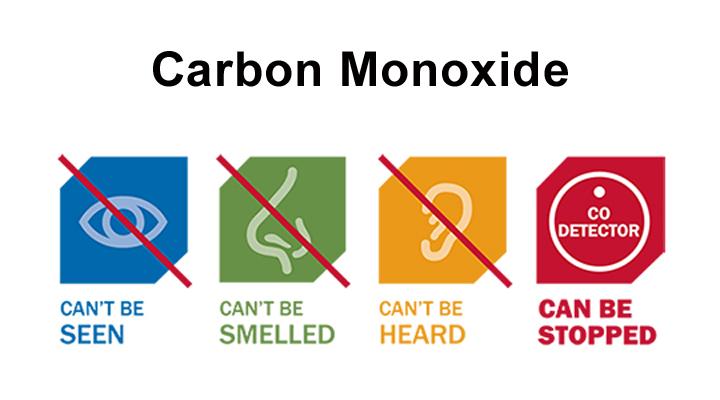
Carbon monoxide (CO) is an invisible, colorless, odorless gas. It is known as the "silent killer" because in high levels it can be deadly in a matter of minutes (CDC, 2022). CO is produced when any fuel such as gas, oil, kerosene, wood, or charcoal is burned. Any fuel-burning appliance in your home can be a source of CO. When temperatures drop during the winter months, CO can be particularly dangerous indoors because it can quickly build to a dangerous level. CO poisonings are more likely to occur during the winter when people are searching for alternative heat sources to stay warm.
According to the United States Centers for Disease Control and Prevention (CDC), more than 400 Americans die of unintentional CO poisoning each year, so it is important to get prompt attention. If you suspect CO poisoning: 1) Get fresh air immediately, 2) Call 1-800-222-1222, call 911 or go to your local emergency room, 3) Report anyone else in the household who is having similar symptoms.
Symptoms of CO poisoning include headache, fatigue, shortness of breath, nausea, and dizziness. This can be confusing because they are similar to symptoms of the flu, food poisoning, or other common illnesses so you may not realize that CO poisoning is the cause.
References:
Centers for Disease Control and Protection (CDC). (2022). Carbon monoxide poisoining fact sheet. Retrieved 1.25.23 from https://www.cdc.gov/co/copoisoningfactsheet.html
| |
|
Do’s and Dont's to prevent CO poisoning in your home:
Do install a battery-operated CO detector in your home. Change the battery each spring and fall when you change your clocks.
Do leave your home IMMEDIATELY and call 911 if your CO detector sounds.
Don’t use a generator, charcoal grill, generator, or other fuel-burning device in your home.
Don’t run a vehicle inside a garage that is attached to your house.
Don’t burn a fireplace, oven, or stove that is not properly vented.
Don’t use a generator, pressure washer, or any gasoline-powered engine less than 20 feet from any window, door, or vent.
| |
National Poison Prevention Week (NPPW) | |
|
Every year, the third full week of March is National Poison Prevention Week (NPPW). This is a time dedicated to raising awareness to poison safety and prevention and the toll-free national Poison Help line: 1-800-222-1222. NPPW 2023 is March 19-25, 2023.
When poison happens, we’re here for you. Save the Poison Help number in your contacts, and join us as we celebrate National Poison Prevention Week! Please visit National Poison Prevention Week 2023 for educational resources, events, and activities that you can participate in during NPPW! Stay tuned to social media for fun and interactive ways to test your knowledge on poison safety. #NPPW23
| |
Adolescent Drug Overdose Deaths: What You Need to Know |  | |
US data from the CDC’s State Unintentional Drug Overdose Reporting System (SUDORS) shows that teen deaths related to drug overdose have increased significantly since 2019 in adolescents aged 10 to 19 years. Although drug overdose deaths have risen, illicit drug use among adolescents has been decreasing. This indicates that the increase is due to more dangerous drugs rather than more teens using drugs. Common drugs involved in overdose deaths include opioids, counterfeit pills, and illicitly manufactured fentanyl’s (IMF’s).
Risk Factors for Adolescent Drug Abuse
- Adverse childhood experiences.
- Mental health conditions and illness.
- Parental approval of substance abuse.
- Lack of education regarding the dangers of drug misuse.
Trends of Drug Overdose Deaths in Adolescents
- In the U.S., monthly drug overdose deaths in teens rose 109% from 2019 to 2021 due to a higher drug potency.
- There was a 30% increase in overdose deaths from 2019 to 2020, and a 15% increase in 2021.
| |
|
Steps to Prevent Substance Misuse in Adolescents
- Collaborating with public safety to decrease the accessibility of illicit drugs.
- Educating adolescents on the dangers of IMF’s and counterfeit drugs.
- Ensuring treatment accessibility for teens with underlying mental health disorders and illness.
How Can Adolescent Drug Overdose Deaths be Prevented?
- Educating teens and parents on how to safely and effectively respond to a drug overdose.
- Promoting treatment of substance use disorders in adolescents who have an addiction.
- Increasing the accessibility of naloxone and teaching adolescents how to administer the drug during an overdose.
- Teaching teens to only take pills and medications that were prescribed to them by a healthcare professional.
- Providing education on the signs of substance abuse to parents and friends.
- Emphasizing to adolescents that they should never take drugs while they’re alone.
References:
Photo by Creativa Images/Adobestock
Tanz, L.J., Dinwiddie, A.T., Mattson, C.L., O’Donnell, J., Davis, N.L. (2022). Drug overdose deaths among persons aged 10-19 years: United States July 2019- December 2021. MMWR Weekly, 71(50), 1576-1582.
| | |
|
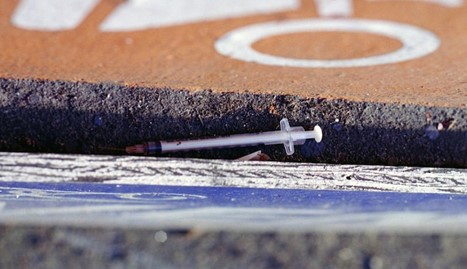
FDA Alert: Xylazine Found in Illicit Drugs
Xylazine, also known as Tranq and Anestesia de Caballo, is an animal sedative and pain reliever medication approved by the FDA for veterinary use. While the substance is safe for use in animals, it is toxic for human consumption. Recently, xylazine has been found in illicit drug supplies (such as in fentanyl, heroin, and benzos) and overdose deaths in Ohio, Maryland, Massachusetts, Texas, and Philadelphia have been linked to xylazine-contaminated drug supplies. The source of xylazine present in illicit drug supplies is unknown.
Potential symptoms of xylazine use includes sedation and slowed breathing and heart rate, blue or grey colored skin, and potentially skin ulcers (with prolonged use). In addition, those who consume xylazine regularly may experience withdrawal symptoms with discontinued use.
Importantly, xylazine is not reversed through administering naloxone, or Narcan®. If a patient’s symptoms do not improve after naloxone is administered, xylazine may be a contributing factor in the overdose.
References:
Photo by Randy Laybourne on Unsplash
City of Philadelphia. Know what’s in your drugs: Tranq / xylazine. Retrieved 1.20.23 from: https://www.substanceusephilly.com/tranq
US Food and Drug Administration. (2022). FDA alerts health care professionals of risks to patients exposed to xylazine in illicit drugs. Retrieved 1.20.23 from: https://www.fda.gov/drugs/drug-safety-and-availability/fda-alerts-health-care-professionals-risks-patients-exposed-xylazine-illicit-drugs
| |
|
E-Cigarette Use Among Middle and High School Students: 2022 National Youth Tobacco Survey
E-cigarette use, also known as “vaping,” has become a common practice in middle and high schools across the country. For almost a decade, e-cigarettes have overtaken cigarettes as the most used tobacco product among middle and high schoolers, and their use continues to increase over time. Data collected from the National Youth Tobacco Survey in the first half of 2022 shows the following trends in middle and high school students’ e-cigarette use:
- 14.1% of high school students and 3.3% of middle school students stated that they used e-cigarettes. Overall, the total number of middle and high school students estimated to be using e-cigarettes is 2.55 million.
- Of those that use e-cigarettes, 27.6% used them every day.
- The most commonly used e-cigarette devices were disposable devices; however, of those recorded, 11.2% of high school students and around 23% of middle school students were unaware of the type of device they used.
- The brand reported to be most used by all students was Puff Bar (14.5%); other brands that were reported to be high in regular use or in recent use (within the past 30 days) were Vuse, JUUL, SMOK, NJOY, Hyde, and blu.
- The vast majority of users (84.9%) reported using flavored products; among the flavors reported, the most commonly used products had fruit flavors (69.1% of flavored products).
For more information on e-cigarette use among students, please visit the CDC’s Electronic Cigarettes page.
References:
Photo by Bastien Hervé on Unsplash
Centers for Disease Control and Prevention. (2022). Notes from the field: E-cigarette use among middle and high school students. Morbidity and Mortality Weekly Report, 71 (40).
Retrieved from: https://stacks.cdc.gov/view/cdc/121630
| |
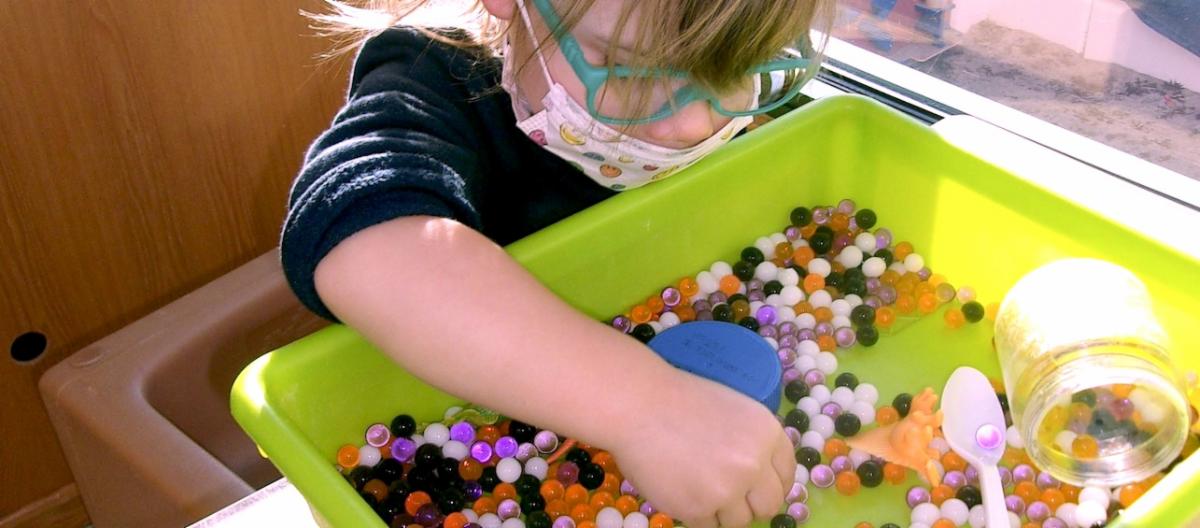
Parents, Know the Dangers of Water Beads
If you have a child under age 10, you're likely familiar with water beads. However, it is important for parents to know the potential risks.
Water beads have become a popular children’s toy in recent years. They are heavily marketed as nontoxic and environmentally safe products and are also now being used in sensory development activities in daycares, schools, and homes. These small, brightly colored, squishy balls start out as tiny beads that can look very much like candy. When placed in water, the beads grow and can expand up to 200 times their original size.
Over the past year, there has been an increase in reported incidents of children swallowing water beads. This can have devastating results. If ingested, the beads rapidly absorb water from the body and expand further, which can cause an intestinal blockage requiring surgery. As a result, the United States Consumer Product Safety Commission (CPSC) has recalled several brands of jumbo water beads. However, other brands are still available for purchase. More than half of the cases that the Cincinnati Drug and Poison Information Center (DPIC) has managed over the past five years have been ingestions in children ages 1-2.
It is important to be aware of the hazards of accidental water bead ingestion and to consider the potential risks before using water beads. Just because they are labeled as nontoxic does not automatically mean they are safe. Ingesting a single water bead poses several potential dangers including choking, airway blockage, intestinal blockage, or even neurological damage.
If you allow your children to use water beads, set up some ground rules to help keep the whole family safe. Talk to your child’s daycare or school and make sure they know these rules as well: 1) Use water beads only under appropriate adult supervision, 2) Only use water beads after fully expanded per product instructions, 3) Most brands of water beads are recommended for kids ages 5 and up.
If you suspect your child has swallowed a water bead, contact the Cincinnati Drug and Poison Information Center (DPIC) immediately at 1-800-222-1222. Our team of experts is trained to handle a variety of foreign body ingestions, and each case is handled uniquely depending on the specific situation. Call 911 immediately if your child cannot breathe, has blue lips, or is vomiting after ingesting water beads.
| | |
|
© 2023 By the Cincinnati Drug & Poison Information Center (DPIC)
Editors: Alysha Behrman RN, MSN, CSPI, OCPC, ICPS; Sheila Goertemoeller PharmD, DABAT, OCPC, ICPS ; Julia Conroy; Jewel Sisk; Jonathan Colvin, RN, MS; Shan Yin, MD, MPH
The opinions expressed herein are those of the contributing authors and do not necessarily reflect the views of the editor, publisher or supporting institutions. DPIC is a service of the Cincinnati Children’s Hospital Medical Center and Children’s Hospital Research Foundation. Services are also supported by: the US Department of Health and Human Services (HRSA), the Ohio Department of Health, Hamilton County Mental Health and Recovery Services Board, and the Ohio Department of Alcohol and Drug Addiction Services (ODADAS). Additional support for DPIC services is provided by Cuyahoga Department of Health and Human Services and additional member hospitals.
| | | | |