DPICtions

DRUG & POISON INFORMATION CENTER

Quarterly Newsletter

New Warning Issued by FDA: Counterfeit Ozempic (semaglutide)

Semaglutide was approved by the Food and Drug Administration (FDA) in 2017 for Type 2 Diabetes. In 2021, the FDA approved it for chronic weight management. Following the approval for chronic weight management, the popularity of semaglutide has increased, leading to an increase in demand for the product.  


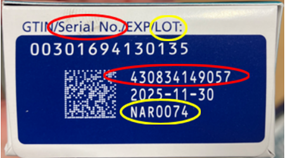
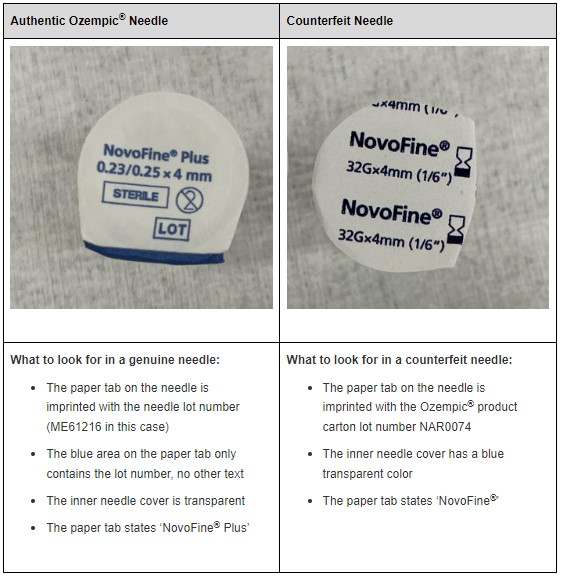
The FDA issued a warning on December 21, 2023, due to the discovery of counterfeit Ozempic (semaglutide) injection 1mg. The warning includes products labeled with lot number NAR0074 and serial number 430834149057.  


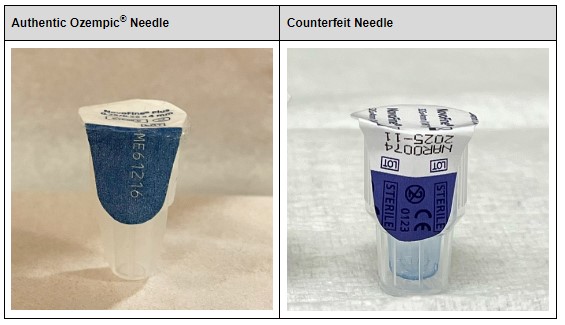
Semaglutide with this specific lot number and serial number are currently being tested to identify what is in the drug, the quality of the drug and the safety of the drug. The FDA warns, semaglutide with this lot number and serial number should not be used or distributed. In addition to the counterfeit drug, the needles from the drug samples are also counterfeit, raising concerns for potential infection risk. 

Suspected counterfeit products should be reported to the FDA by calling your local FDA consumer complaint coordinator (for Ohio 513-322-0546 or 1-800-437-2382). Questions may also be directed to Novo Nordisk customer care at 1-800-727-6500.

Reference: The Food and Drug Administration. (2024). FDA warns consumers not to use counterfeit Ozempic (semaglutide) found in U.S. drug supply chain. Retrieved 1.10.2024 from: https://www.fda.gov/drugs/drug-safety-and-availability/fda-warns-consumers-not-use-counterfeit-ozempic-semaglutide-found-us-drug-supply-chain?utm_medium=email&utm_source=govdelivery

Staying Safe While Staying Warm: Carbon Monoxide Reminders


WARNING SIGNS OF CARBON MONOXIDE POISONING

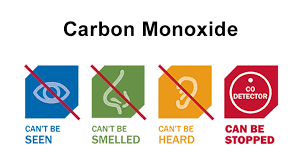
Carbon monoxide (CO) is appropriately dubbed the silent killer: It is invisible, odorless, tasteless, and non-irritating. Initial signs of CO poisoning include vomiting, dizziness, headache, and confusion, which can easily be mistaken for the flu. More serious complications are loss of consciousness, nerve damage, permanent disability or even death. Essentially CO blocks our body’s ability to absorb oxygen, and thus, has the same effect as suffocation.


SOURCES OF CARBON MONOXIDE

Potential sources of CO exposure include furnaces, water heaters, and gasoline-powered equipment like generators, snow blowers, water pumps. The inappropriate use of cooking equipment to heat the house can also cause carbon monoxide exposure. Examples include gas ranges, charcoal grills, and camping stoves inside the home. Fall is the time to be most concerned about CO, when families initially turn on their furnaces. The chimney flue should be cleared of obstructions so that CO has a clear exit from the house.


CARBON MONOXIDE SAFETY REMINDERS

Below are a few CO safety measures to keep in mind, especially during the fall and winter months when CO poisoning is more common:


1. BE CAUTIOUS OF SPACE HEATERS

Families might place space heaters in bedrooms for extra warmth at night. Keep in mind that some space heaters contain kerosene, butane or propane, which can emit carbon monoxide. These devices need to be properly maintained to ensure that only a safe amount of CO is emitted. If you have the option, an electric space heater is the safer choice.


2. CHECK YOUR CARBON MONOXIDE DETECTOR

To ensure the safety of those in your home, it is essential to have a carbon monoxide detector on every floor of your home and near all bedrooms. For the best prevention, place a detector at least 15 feet from each bedroom. The most effective CO detectors have battery backup in case of power outages and digital peak concentration readouts. Be sure to check your CO detector’s manufacturer information to see how often to replace the battery.


3. BE MINDFUL WHEN WARMING UP YOUR CAR

When it’s bitter cold, many people let their cars warm up before driving them. Take the extra step to pull your car out of the garage before letting it sit while running. Simply opening the garage door does not create enough ventilation to remove the carbon monoxide from the garage.


If you suspect that you or someone in your family is showing symptoms of carbon monoxide poisoning, get away from the source of the exposure and contact the Drug and Poison Information Center immediately at 1-800-222-1222.

Visit our Blog

Photo Reference: Substance Abuse Council (n.d.). Marijuana prevention. Retrieved 1.17.2024 from https://www.drugfreebc.org/marijuana/

The Impact of Marijuana on Pediatric and Teen Health


Our pediatric emergency physicians interact with families on their most stressful of days. Sometimes families come to us knowing the reason for their kids’ ER visit – like an injury – and sometimes they don’t know what ails them. With an accidental marijuana ingestion, parents may not see it happen, but they know their child is acting dazed, confused, and/or drowsy.


Typically, a drug screen will help determine if they have been exposed to something recently. It’s not a perfect test, and it doesn’t necessarily mean that their symptoms are being caused by a particular drug, but it can help us get a clearer picture of what’s going on. Once we rule out other medical causes of their symptoms, we can do supportive therapy until they get through the overdose, which is usually within 24 hours.

This is happening more frequently in our emergency department since medicinal marijuana has been legalized in Ohio. The impact of marijuana on pediatric and teen health is significant.


ACCIDENTAL MARIJUANA INGESTIONS ARE DIRECTLY RELATED TO LEGALIZATION


With the legalization of marijuana –whether it be medicinal or recreational – has come a marked uptick in kids accidentally ingesting it in those states. In fact, the number of accidental marijuana poisonings reported to Ohio Poison Centers has increased 20-fold since medical marijuana sales began in 2019.


The most common way children have accidentally ingested marijuana is with edibles, as THC (tetrahydrocannabinoid, the main psychoactive ingredient in marijuana) is placed in foods like gummy bears and brownies. And the amount of THC is often much higher in edibles than in inhaled forms. In Ohio, over half of the children younger than six who went to an emergency room for marijuana exposure between 2021-23 required hospitalization due to the severity of their symptoms. One in four required advanced care in an intensive care unit.


Usually when children present with symptoms similar to marijuana overdose, they ingested the drug because it was not stored properly. The safest way to prevent accidental ingestion is to lock it up. The symptoms of marijuana overdose are much worse in kids than adults, due to the difference in their weight. Symptoms include pronounced drowsiness, dizziness, difficulty walking, and in severe cases, central nervous system depression (coma and breathing difficulty).

If your child has these symptoms and you don’t know why, it is important to bring them in for an evaluation to make sure that there isn’t another medical reason they are feeling this way. If you suspect that they have ingested marijuana, call our Poison Center at 1-800-222-1222 so that they can learn how much THC they have consumed per body weight, and help you determine next steps.


MARIJUANA IS COMMONLY USED AMONG TEENS


It is clear that marijuana use among teens is increasing. In 2022, Oregon Health & Science University published a report that found adolescent cannabis use in the U.S. increased by about 245% since 2000. According to Ohio Poison Centers, 30.7% of 12th graders reported using marijuana in 2022 within the last year and 6.4% said they used it daily.


What’s not clear, according to the American Academy of Pediatrics, is whether or not this uptick is due to changing marijuana policies or not. Either way, it’s important for families to be aware that it is a real possibility, and to have conversations with their teens about the risks:


  • Acute side effects include altered mood, impaired coordination and judgement, and difficulty thinking and problem solving. In high doses it can cause hallucinations, delusions, and psychosis. Certainly, there are also clear risks for teens driving under the influence of marijuana. 
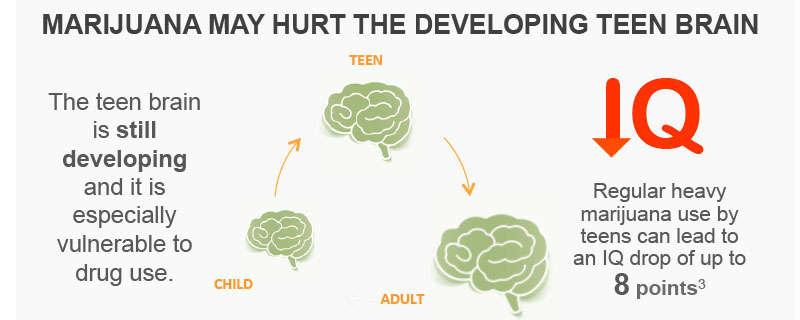
  • Long-term implications include a potential decrease in academic performance and an increase in absenteeism. Research suggests that using the drug long-term may affect brain development, including the areas for thinking, memory, and learning.
  • Long-term use may be associated with a higher likelihood of using other substances and illicit drugs.


THE IMPACT OF MARIJUANA IS SIGNIFICANT

The impact of marijuana on child and teen health is significant. In addition to the reasons discussed above, legalization may increase the perception that marijuana isn’t that bad. And with more use comes more accidental ingestions in young kids. Please see Dr. Yin’s original blog post below and help us spread awareness for this issue.


Please do not hesitate to call the Drug and Poison Information Center if you have any questions about marijuana or any other exposure. We are here to provide confidential assistance 24 hours a day at 1-800-222-1222.

Visit Our Blog

Planning a safety fair, outreach event, or presentation?


We have stickers, magnets, pamphlets, topic-specific handouts, and other materials available! Infographics included in this newsletter may also be used as handouts!


Contact us if you would be interested in a poison prevention specialist speaker, booth, or presentation for your

organization's event.


For questions or emergencies, call: 1-800-222-1222


For outreach materials and requests, email: DPICOutreach@cchmc.org

DRUG AND POISON INFORMATION CENTER


The Cincinnati Drug and Poison Information Center (DPIC) at Cincinnati Children’s Hospital Medical Center is a 24-hour emergency and information telephone service for anyone with concerns about poison or drugs.


The center’s specially trained staff of medical toxicologists, pharmacists, nurses and poison information providers answer questions about poisonings, drug abuse, product contents, substance identification, interactions and adverse reactions.


The Drug and Poison Information Center also works to provide you with important prevention information, educational materials, first-aid information, common household hazards and references to national helpline organizations and agencies.


The phone number for the Cincinnati Drug and Poison Information Center is 1-800-222-1222.

Sign Up for DPICtions Newsletter

© 2024 By the Cincinnati Drug & Poison Information Center (DPIC)


Editors: Alysha Behrman RN, MSN, CSPI, OCPC, ICPS; Sheila Goertemoeller PharmD, DABAT, OCPC, ICPS ; Julia Conroy; Jewel Sisk; Jonathan Colvin, RN, MS; Shan Yin, MD, MPH


The opinions expressed herein are those of the contributing authors and do not necessarily reflect the views of the editor, publisher or supporting institutions. DPIC is a service of the Cincinnati Children’s Hospital Medical Center and Children’s Hospital Research Foundation. Services are also supported by: the US Department of Health and Human Services (HRSA), the Ohio Department of Health, Hamilton County Mental Health and Recovery Services Board, and the Ohio Department of Alcohol and Drug Addiction Services (ODADAS). Additional support for DPIC services is provided by Cuyahoga Department of Health and Human Services and additional member hospitals.

Facebook  Twitter  Instagram