|
|
DPSAC News
A bi-weekly newsletter from the Division of Personnel Security and Access Control
|
Providing timely information to help keep NIH safe and secure
|
|
October 23, 2019 Issue of DPSAC News
In this issue:
- Remote Enrollment & Badging Services Suspended Except for PIN Resets, Certificate Renewals
- DPSAC Launches Call Center
- Installation of New PIV Card Readers Across NIH Campuses Nears Completion
- What to Expect When Your Badge is Due for Renewal
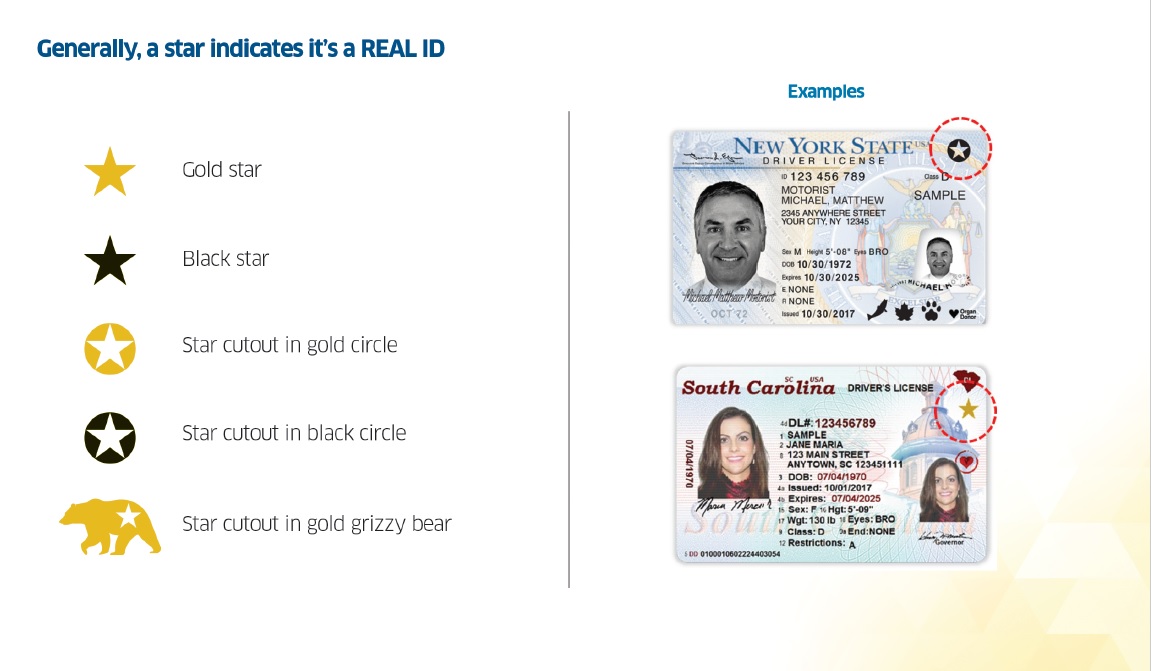
- News Brief - REAL ID One Year Away
|
|
Remote Enrollment & Badging Services Suspended Except for PIN Resets and Certificate Renewals
|
|
All remote enrollment and badging services are suspended except for PIN resets and certificate renewals until further notice.
If you have any questions, please contact DPSAC at 301-402-9755 or
ORSPersonnelSecurity@mail.nih.gov
.
Please note: For purposes of enrollment and badging services, the following NIH locations are considered NIH 'satellite' facilities and NOT ‘remote’ facilities:
- Frederick National Laboratory for Cancer Research (Ft. Detrick), MD (formerly NCI-Frederick)
- Bayview Biomedical Research Center (Baltimore)
- National Institute of Environmental Health Sciences, Research Triangle Park, NC
- Rocky Mountain Laboratories, NIAID, Hamilton, MT
|
|
DPSAC Launches High Tech Call Center to Advance Customer Service, Reduce Burden on Support Staff
|
|
In response to an ever-increasing call volume, DPSAC has implemented a Call Center system to improve customer service, reduce response times and help reduce the burden placed on DPSAC customer service staff who were expected
to handle close to 300 phone calls each day.
DPSAC’s new Call Center went op
erational October 8, 2019. Basic questions such as hours of operation can now be answered via prerecorded messages in the system. Individuals will also be directed to a live customer service agent when needed. The new voice-phone system works to triage extensive call volume, allowing DPSAC Customer Service staff to spend more time with customers who need live assistance.
With this new web-based system, customers who call the DPSAC helpdesk at 301-402-9755 will now get a recording instructing them to respond to one of the following prompts:
- For Customer service hours of operations and location information, Press 1;
- For assistance with e-QIP, press 2;
- For Certificate Renewals, PIV Card PIN resets and lost badges, press 3;
- For information on Enrollment and Issuance Appointments, press 4;
- For information on Badge Status, press 6;
- For all other inquiries, wait on the line for a service agent
In the short time that the Call Center has been in operation, the data show that the new system is working as designed, with DPSAC customers being able to get answers to their questions quickly, and DPSAC staff able to spend their time more efficiently helping in-person customers.
|
|
Installation of New PIV Card Readers Across NIH Campuses Nears Completion
|
|
The Division of Personnel Security and Access Control (DPSAC) anticipates that by the end of January it will have completed replacing the last of more than 5,000 PIV Card readers across NIH campuses. These upgraded devices will be capable of reading the new v.8 PIV cards that offer more secure and speedier access to NIH facilities.
The PIV card currently in use, referred to as the v.7 or ‘tri’ card, contains a contact chip and 2 contactless chips and antennae that operate at different frequencies: a low frequency antenna for proximity reading; a high frequency antenna capable of reading the Card Holder Unique Identifier (CHUID) contained in the card’s contactless chip.
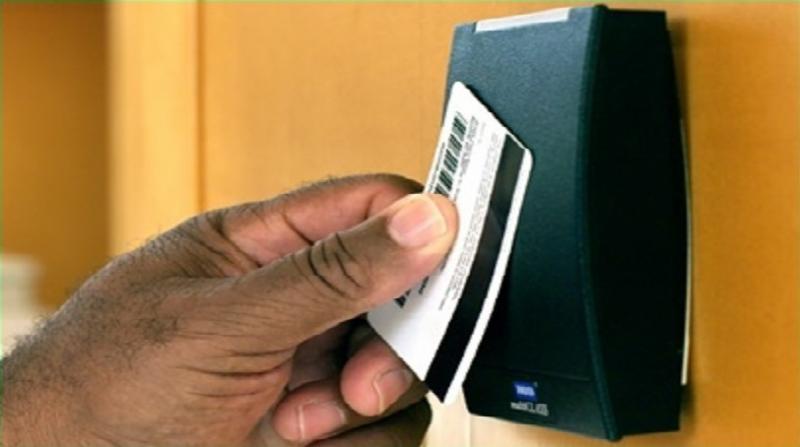
Whereas the old card readers could read only the proximity antenna, the new readers are capable of reading both the proximity and the CHUID (pronounced chew-id) antennae. DPSAC plans to disable the proximity antenna once the new readers are in place.*.
Wave goodbye to the old ‘prox’ reader
Once someone receive a v.8 card, he/she will no longer be able to just wave their badge NEAR (i.e., in proximity of) the new reader to unlock a door or open a gate. Instead, the individual will need to touch and hold the PIV card to the surface of the reader for a couple of seconds in order to unlock the door or gate. The use of proximity technology is no longer permitted under HSPD-12 requirements; using proximity technology to unlock doors is less secure as the signal can be intercepted and replicated.
To help familiarize the NIH workforce with this ‘new’ way of using the v.8 PIV cards with the CHUID readers, DPSAC produced a four-minute video that it has posted on its website at:
https://www.youtube.com/watch?v=nFt0hPnNv3I
Since the current v.7 cards contain both ‘prox’ and CHUID antennae, users can practice their touch and hold technique before the prox antenna is disabled and the v.8 card becomes the new standard.
DPSAC recommends all employees, contractors and affiliates view this short video to make sure they know the right way to use their cards with the new card readers.
* Note: the new PIV card readers have been in use at the NIH perimeter entrances for the last few years.
|
|
What to Expect When Your Badge is Due for Renewal
|
|
The badge renewal process for both HHS ID Badges and RLA badges automatically begins in the NIH Enterprise Directory (NED)
42 days before the existing badge expires
. If required, individuals may have their badges renewed up to 6 months prior to badge expiration, where the Administrative Officer (AO) can run a manual badge renewal task in NED.
Once the AO has sponsored the individual for the renewal, s/he will be sent an e-mail from NED 'PSAScheduler@mail.nih.gov' asking the applicant to log on to the appointment scheduling system via the provided link. The individual should do so as soon as possible to allow time to complete all the steps in the renewal process before the HHS ID Badge expires.
A brief history of the PIV Card (HHS ID Badge) and HSPD-12 at NIH
In August 2004, the President ordered all federal agencies to develop and carry out a government-wide identification standard and establish a uniform Personal Identity Verification (PIV) Card that will operate across federal agencies by the end of 2008. To carry out this mandate – known as Homeland Security Presidential Directive 12 (HSPD-12) -- the ORS Division of Personnel Security and Access Control (DPSAC), and the HSPD-12 Program Office were charged with the responsibility of developing and implementing the Directive at NIH.
On October 7, 2009, NIH began issuing the new credential, the HHS ID Badge (a.k.a, smart card or PIV Card) and by June 30, 2010, DPSAC met its goal of issuing the new Badges to its entire workforce - all of the approximately 34,000 federal NIH employees, contractors and affiliates. The new badges met strict technical standards and were issued based on careful vetting of its workforce.
Stricter compliance with HSPD-12 policies along with prescreening requirements at NIH will affect the badge renewal process for some
Recently, the standards for PIV card badge holders to be in compliance with HSPD-12 at NIH have become more stringent. At the same time NIH has begun its third round of re-issuances for badge holders. These stricter guidelines along with NIH’s prescreening requirements have prompted DPSAC to revalidate badge holders’ suitability. In some cases, the guidelines may require DPSAC to collect additional information for certain individuals, including some who have worked at NIH for several years.
What to expect
Individuals whose badges are coming up for renewal may be asked to make a fingerprint appointment and complete and submit a new OF 306 (Declaration of Federal Employment). Completing these two requirements will be necessary for DPSAC to authorize and issue the new badge. DPSAC is requiring these updated documents from individuals to ensure that all NIH employees, contractors and affiliates have current fingerprints and an OF 306 in their DPSAC record.
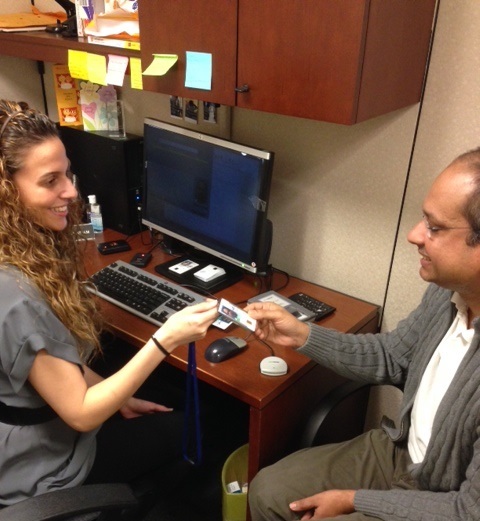
Once the OF 306 and fingerprints have been submitted, DPSAC will review the provided information and approve the person’s badge for renewal. The applicant will get an email instructing them to schedule a badge issuance appointment.
Between November 2019 and April 2020, there will be approximately 4200 badges coming due for expiration. Since April 2019, DPSAC has processed approximately 4900 renewals.
IMPORTANT:
If DPSAC does not receive the OF 306 and updated fingerprints prior to badge expiration, the badge will expire and DPSAC will not authorize a new badge until the material is submitted.
Applicants are urged to complete these tasks as soon as possible. Not completing these tasks before the badge expiration date could result in the individual not being able to conduct his or her work.
Helpful tip – please ensure that you keep an eye on your personal email account and your current NIH account to make sure you can receive important reminders.
|
|
News Brief: DHS Reminds Travelers that Deadline for REAL ID Compliance is (Less Than) One Year Away
|
|
Release Date:
October 1, 2019
Individuals who are unable to verify their identity will not be permitted to enter the Transportation Security Administration (TSA) checkpoint and will not be allowed to fly.
“This is an important step in enhancing commercial aviation security and we urge travelers to ensure they have compliant documents,” said Acting Secretary Kevin K. McAleenan. “DHS is committed to working with states as they continue their efforts to issue REAL IDs to Americans.”
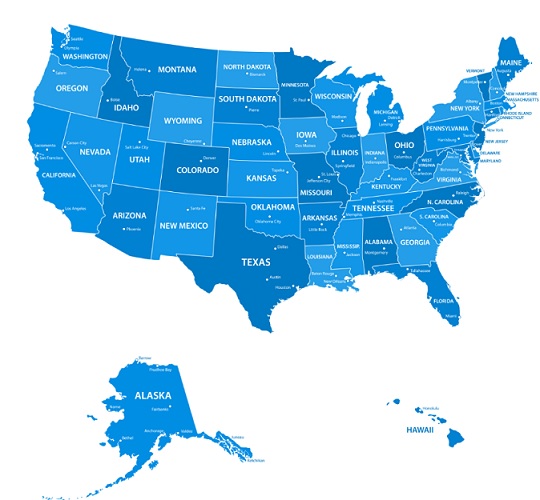
- Real progress has been made in less than two years. In January of 2017, only 26 states were REAL ID compliant.
- Through voluntary partnerships with state governments, associations, DMVs, and other stakeholders across all jurisdictions, DHS can proudly say that 47 out of 50 states are currently REAL ID compliant.
- There is still work to do. Only 27% of Americans have been issued a REAL ID at this time.
|
|
DHS has been working to increase public attention and focus on the upcoming deadline. Beginning in April, TSA has displayed
signs at airports
notifying the public of changing requirement. In August, TSA began verbally advising travelers who present non-compliant licenses of the upcoming REAL ID requirement and enforcement date. TSA has also co-hosted REAL ID events with motor vehicle administration officials in numerous locations around the country throughout the spring and summer, with more to come.
Please note: Each year NIH welcomes thousands of new employees, visitors and patients through its doors. Often NIH administrative staff have a role in helping these visitors plan their arrivals. With the October 1, 2020 deadline approaching, DPSAC News will continue to publish updates for its readers so that they can help their incoming staff and visitors avoid problems at the airport after October 1, 2020. "
|
|
Avoiding Additional Delays in Processing New Hires
__________________________________
Processing times are often delayed due to reasons outside of DPSAC control, which include, but are not limited to:
- Incomplete or not submitted OF-306
- Candidate response time
- Issues requiring clarification by the candidate
- Untimely submission of initial e-QIP or corrected e-QIP
How the AO and HR communities can assist:
- By ensuring all required documents have been uploaded into HR's 'Onboarding Manager' prior to establishing a NED account
- By entering candidates as early as possible but no later than 8 weeks prior to their Entry on Duty (EOD) date
- By working with DPSAC to ensure candidates respond in a timely manner to inquiries.
|
|
Administrative Officers (AOs) who wish to obtain sponsor authority
must complete the sponsor training. To access the training module, click on:
Sponsor
.
Upon completion, the AO should sign and e-mail a copy of the certificate found at the end of the training module to Alex Salah at:
salaha@ors.od.nih.gov
. Upon receipt of the certificate, Mr. Salah will authorize the AO as a Sponsor.
Note: ONLY individuals with an Administrative Officer role in NED are eligible to be HHS ID Badge/PIV Card Sponsors.
|
Return Your Badge When Leaving NIH
If you plan to leave the employ of NIH, whether you’re an employee, contractor or affiliate, you will need to turn in your PIV or RLA badge to your Administrative Officer (AO) so that s/he can deactivate your badge in NED.
The AO will turn over the deactivated badge to the badging office.
|
|
Are there topics you would like to read more about in future issues of DPSAC News?
Please send your suggestions to:
Lanny.Newman@nih.gov
. Your input is greatly appreciated.
|
|
A biweekly e-newsletter from the National Institutes of Health, Office of Research Services, Division of Personnel Security and Access Control (ORS/DPSAC) to keep its readers informed of personnel security and access control policies and practices designed to safeguard the NIH and its workforce. DPSAC is responsible for verifying personal identity, validating suitability, reviewing background checks, authorizing facility access and issuing ID badges for NIH personnel.
Department of Health and Human Services
National Institutes of Health
Office of Management
Office of Research Services
Division of Personnel Security and Access Control
|
|
Keep up with the latest NIH updates
|
|
|
|
|
|
|