DPSAC News
A bi-weekly newsletter from the Division of Personnel Security and Access Control
Providing timely information to help keep NIH safe and secure.

April 10, 2019 Issue of DPSAC News
 In this issue:
  • New Security Changes that Impact NIH Accounts and Access to NIH Resources
  • Summer Interns Arriving at NIH Soon
  • FAQs - Changes to the Summer Internship Program
  • Helpful Tips
New Security Changes that Impact NIH Accounts and Access to
NIH Resources
On Wednesday, April 17, 2019, NIH will make two security-related changes that may impact access to NIH IT systems for staff at your Institute or Center (IC). These changes are being made to ensure compliance with federal requirements and NIH policies for accessing NIH IT systems.
 
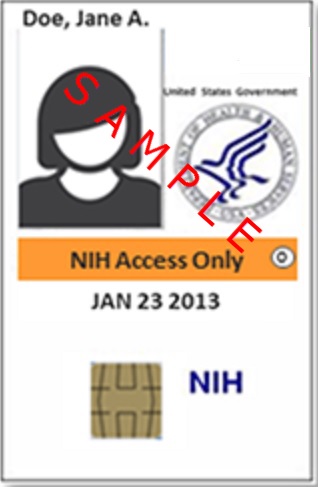
The first change requires new network accounts remain disabled until the NIH Office of Research Services (ORS) has authorized individuals to receive a PIV card (HHS ID Badge) or RLA badge.
 
The second change requires individuals who currently have an NIH network account but have not been issued a PIV or RLA badge will have their NIH network account disabled until they have been sponsored for a badge and completed the appropriate mandatory background investigation.
 
These two changes will further ensure that NIH is compliant with Homeland Security Presidential Directive 12 (HSPD-12), which requires that PIV credentials be used for gaining physical and logical (network) access to federal facilities and information systems.
 
These changes have been communicated to all IC Executive Officers (EO) from the NIH Information Security Program. To mitigate potential disruption of operations in the near term, your IC will be provided the means to temporarily exempt individuals from the fingerprint check. A separate waiver process is being established to exempt people from the PIV requirement. In both cases EO, approval is required. Waivers for the PIV card exemption must also be sent to the NIH Information Security Program for review and final approval.
 
Each IC EO office will develop additional internal procedures for both the temporary exemption and the PIV card waiver. For instance, if your organization has collaborators that face challenges obtaining an ID badge, staff are encouraged to evaluate alternative approaches for collaboration or access through the use of federated accounts such as those in 'InCommon' if applicable/available. For additional information on these alternatives, contact your local IT staff. 
 
Please know that people will be required to visit an NIH badging facility to complete the process for obtaining an ID badge. This may require two separate trips, one for fingerprints/photo and the other to pick up the badge. The badge cannot be issued until the person has completed both the fingerprint check and the required forms (including e-QIP) for their background investigation. To view a list of locations where NIH currently operates badging facilities, click here
 
You should be prepared for the badging process to take a minimum of six weeks. ICs are encouraged to begin on-boarding activities for new staff well before the person’s start date to minimize delays. Given these procedural changes, it is important to convey to the programs your ICs support that early on-boarding is essential to minimize prolonged delays in obtaining access to NIH IT systems.


Students Arriving Soon for NIH's
2019 Summer Internship Program

It’s that time of year again when NIH welcomes summer interns participating in the 2019 NIH Summer Student program.
 
This competitive program gives approximately 1,200 select students the opportunity to work side by side with some of the most talented researchers, administrative staff and health professionals in an environment devoted exclusively to biomedical research.
 
Incoming students will be issued NIH Restricted Local Access (RLA) ID badges for physical and logical access.
 
The RLA badge requires the normal two appointments. During the first appointment (15 minutes), students will be identity proofed, fingerprinted and photographed. At the second appointment (15 minutes), student will be issued their RLA Badge.
 
Issuance is subject to DPSAC's successful review of the students' fingerprint results. Any issues identified through the fingerprint results (i.e., issues that might impact the suitability of the Summer student to do the proposed work at NIH), will be determined by Personnel Security in DPSAC prior to issuance of an RLA Badge.
 
Helpful tip:   DPSAC encourages all Institutes and Centers (ICs) to advise their incoming students to make their enrollment and badging appointments  as soon as possible  to avoid any delays in the ID badging process.
 
Get fingerprinted early 
Processing badges for approximately 1,200 individuals over a six- to eight-week period can place a significant burden on the DPSAC staff. To avoid badging delays, DPSAC requests the ICs to have their summer students fingerprinted before their first day of work at any of  NIH's Enrollment location   s.
 
 Summer students who are fingerprinted by DPSAC at least one week prior to their first day and receive  favorable results may be issued a badge on their first day at NIH.
Q. I understand there will be significant changes to the NIH Summer Internship Program (SIP) for the summer 2019. Can you please summarize these changes?

A.  You are correct. These changes affect program eligibility, the intern selection process and the nature of the program itself for participating high school students.

Beginning in 2019, summer interns must be 17 by June 15 of the internship year. Individuals who are in high school must meet two additional criteria: they must be either juniors or seniors, and, if they will not be 18 by June 15 of the internship year, they must, at the time of application, reside within 40 miles of the NIH campus at which they hope to intern.
 
High school summer interns will be selected by an IC selection committee, rather than by individual principal investigators (PIs). Each IC will appoint a High School Summer Coordinator and devise a process for making summer intern selections. With limited exceptions, summer interns will not be appointed to ICs in which a parent or guardian works.​
Do NOT lend your ID badge to anyone! Lending your ID badge is prohibited. The issuance of ID badges is based on strict identity proofing and the determination of one's suitability for a specific position classification. To do so is a criminal offense!

Return Your Badge When Leaving NIH
If you plan to leave the employ of NIH, whether you’re an employee, contractor or affiliate, you will need to turn in your HHS ID Badge (or RLA Badge) to your Administrative Officer so that s/he can deactivate your badge in NED. The AO will turn over the deactivated badge to the badging office.


ALT cards -- should be returned to the  IC ALT card coordinator - NOT to DPSAC.
 Administrative Officers (AOs) who wish to obtain sponsor authority must complete the sponsor training. To access the training module, click on: Sponsor .

Upon completion, the AO should sign and e-mail a copy of the certificate found at the end of the training module to Alex Salah at: salaha@ors.od.nih.gov . Upon receipt of the certificate, Mr. Salah will authorize the AO as a Sponsor. 

Note: ONLY individuals with an Administrative Officer role in NED are eligible to be HHS ID Badge/PIV Card Sponsors.  
A biweekly e-newsletter from the National Institutes of Health, Office of Research Services, Division of Personnel Security and Access Control (ORS/DPSAC) to keep its readers informed of personnel security and access control policies and practices designed to safeguard the NIH and its workforce. DPSAC is responsible for verifying personal identity, validating suitability, reviewing background checks, authorizing facility access and issuing ID badges for NIH personnel. 

Department of Health and Human Services
National Institutes of Health
Office of Management
Office of Research Services
Division of Personnel Security and Access Control
Keep up with the latest NIH updates