|
BIO
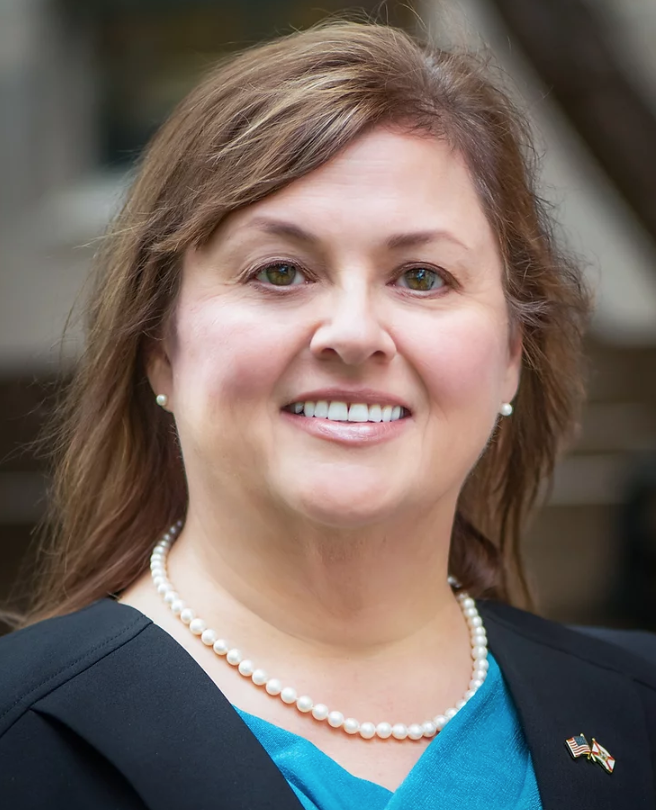
Leatha Dawn Mullins is a native of Logan, West Virginia. She is the daughter of a coal miner and of a paralegal who divorced when Leatha was five years old. Being raised by a single mother and being self-supporting and working a full-time job throughout college, taught Leatha responsibility, important life-skills and a strong work ethic.
Leatha began her legal career as a prosecutor in Ocala, Florida. After two years, she transferred to the Treasure Coast and worked an additional three years in the juvenile and felony divisions of the State Attorney’s Office.
In 2000, she opened her law firm in historic downtown Fort Pierce where she practiced defense and family law litigation.
In 2017, she was appointed by the Chief Judge of the Nineteenth Judicial Circuit as Child Support Enforcement Hearing Officer and, in 2020, she was appointed as General Magistrate.
Leatha has lived along and served the Treasure Coast community for more than 25 years.
What is your reason for running?
I have wanted to be a judge since I was in the fourth grade and watched court proceedings after school waiting for my mother to end her shift as a secretary/judicial assistant. For the last five years, I obtained firsthand experience while presiding over cases as Hearing Officer and as Magistrate in Circuit Court. I am running for Circuit Judge, Group 2 because it is an open seat due to the Honorable Gary Sweet retiring at the end of his term (I have never wanted to run against an incumbent/colleague). Upon qualifying to run for Circuit Judge, I was required to “resign-to-run” pursuant to court rules that do not allow a current sitting
Magistrate or Hearing Officer to run for office while still serving on the bench. I believe serving as the next Circuit Judge is worth the sacrifice of stepping down as Magistrate. I am ready to serve the citizens of the 19th Judicial Circuit in the role as Circuit Judge.
What makes you the best person for the position?
I have a wide array of experience and proven track record to become the next Circuit Judge. The range of my experience covers all aspects of a courtroom. I started my legal career prosecuting cases for over five years and then transitioned to private practice where I operated my firm for over 17 years. During private practice, I handled criminal defense and family law litigation and became certified as a Guardian ad Litem and Supreme Court Certified Family Law Mediator. In 2017,
I was appointed as Child Support Enforcement Hearing Officer, and in 2020, I was
appointed as General Magistrate. In these positions, I have presided over thousands of cases involving Family, Dependency, Truancy, and Mental Health.
In 2021, I was presented with a Leadership Award from the 19th Judicial Circuit for Exceptional Performance for my contributions to the Family Division as Hearing Officer and General Magistrate (including taking the child support division from a paper to paperless division in all four counties of the circuit, ultimately saving taxpayer money and expediting court filings).
Further, I have presented continuing legal education (i.e., CLE’s) topics for attorneys and paralegals throughout my legal career and I have been involved in the local bar associations in each county. Additionally, I was the founding President (in 2007) of the St. Lucie County Association of Criminal Defense Lawyers
(SLCACDL), the local chapter of FACDL (Florida Association of Criminal Defense Lawyers), of which I was a member but became inactive upon being appointed Hearing Officer.
Currently, I serve as President of the Justice Major B. Harding
American Inn of Court, which is a professional organization comprised of judges and lawyers that advance ethics, professionalism, and mentoring. I have been a member of the Inn (including serving on the board of directors) for more than 20
years.
In addition to my experience, proven track record, participation in continuing legal education and professional organizations, my judicial philosophy is that it is the role of the judiciary to follow the law as it is written (even if I personally disagree with it) and to not legislate from the bench. Enacting law is the role of the
legislature; interpreting the law is the role of the judiciary.
What would be your main priority and what do you see
as the biggest concern that needs to be addressed?
The priorities of the Circuit Judge position would first depend on the assignment
I receive, as the needs in one division may differ from those in another. For instance, during the last five years combined, I have served as a Child Support Enforcement Hearing Officer and General Magistrate in the Family Division of the 19th Judicial Circuit. It is a continued priority in the family division to address case management and to ensure all open cases in the family division are moving toward resolution (whether it be through mediation or setting the matter for hearing/trial) as quickly as possible. It is imperative the open cases be addressed, and any backlog of cases due to the pandemic be on top of the priority list. Further, I would continue to conduct court hearings via Zoom (i.e., video conferencing) as much as possible, and in accordance with revised court rules. This will ensure efficiency of resources, access to courts, and increased participation of parties in court proceedings, i.e., to prevent litigants from losing time from work to attend court hearings in person.
|