|
May years ago, my friend Phil Traff brought me a colorful catalog of daffodils from an Oregon specialist. Along with many known varieties, the listings featured eye-popping prices for introductions first offered three decades earlier. “Why are they so expensive?” I asked. Some of these were listed at a hundred dollars or more — for just one bulb! Phil explained that daffodils produced at most one or two offsets in a season, so having enough stock for sale took years of growing just that variety.
Not so for dahlias, I affirmed. A tuber clump in most cases delivers a half dozen or more tubers that can be replanted the very next season. This vegetative method celebrates the fecundity of dahlias, one that both home gardeners and the dahlia industry cherish. This attribute allowed introductions to be sold at reasonable prices within a couple of years, factors that the two dozen dahlia nurseries advertising in our dahlia publications considered as a standard. Yes, the originating raiser would be able to reap a financial reward for a couple of seasons, but then the distribution of such introductions could not be controlled.
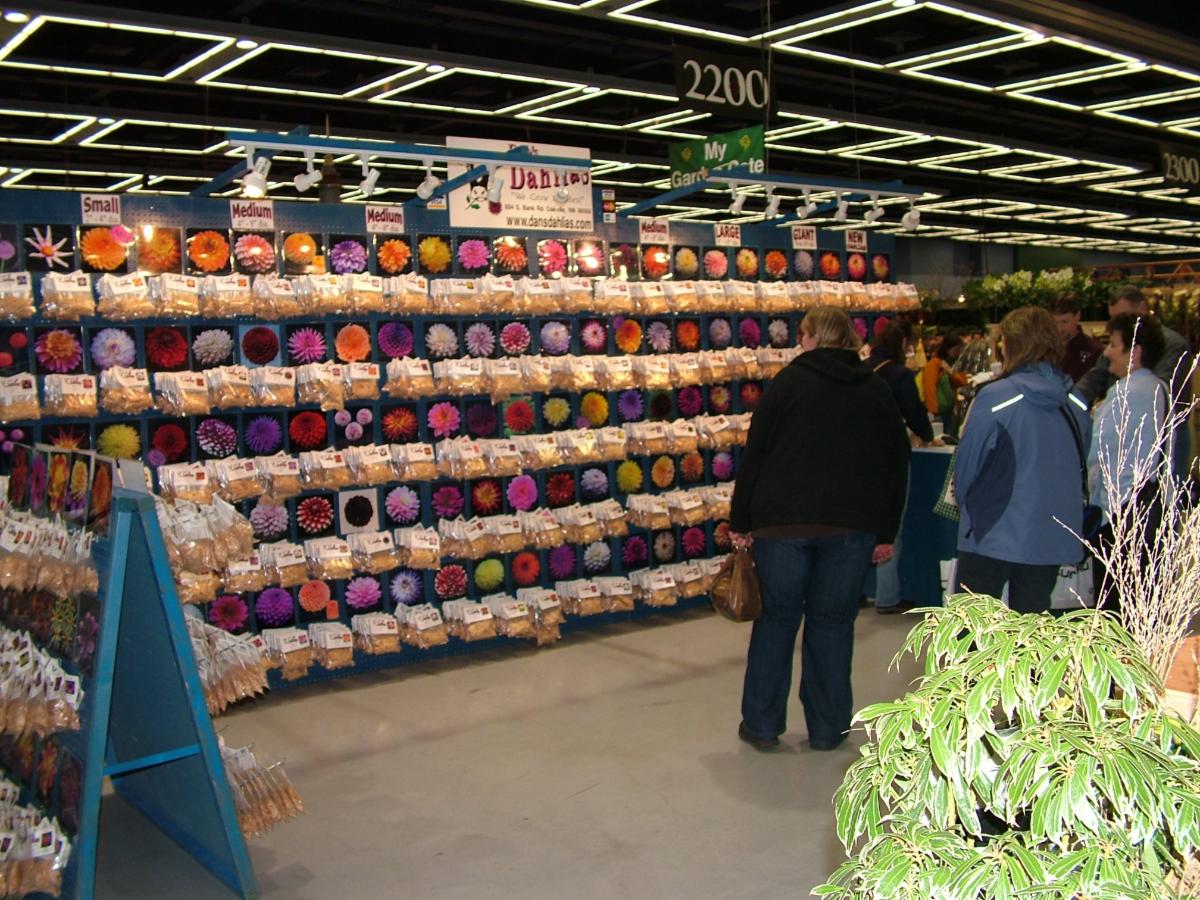
More recently, the dahlia world has been introduced to a more competitive marketplace that virtually ignores the conventions of the past. Not only are there now many more dahlia vendors — the www.dahliaaddict.com site lists more than 350 — but many of them describes themselves as flower farmers that follow commercial goals and maximize profits through pricing that far exceeds the traditionally modest valuations at club tuber sales. The floral industry trends focus is on “Dahliamania”, often encouraged by social media that emphasize uniqueness of form and bold colors while paying little attention to meeting standards, their show potential or successes.
Thus we face different goals — here a focus on commercial production, marketing, and sales as businesses do, as opposed to education, exhibition, and competition for objectives. Horticultural clubs have some significant challenges from the modern floral industry as a result. That branch of the economy is a multibillion dollar sector, whereas clubs and societies are hobbyist or community-driven pursuits that emphasize improvements in their chosen plant category and revel in the joy of gardening.
Many of these new dahlia suppliers derive their knowledge of cultivation and propagation of dahlias from online sources, pertinent literature, and advocates of flower farming, such as expensive courses on the Floret Flowers website. Owner Erin Benazkein’s quite authoritative book “Discovering Dahlias” was cited by several vendors as their primary inspiration to start growing dahlias as business, not just as hobby. Some now are offering their own originations, along with a mixture of commendable varieties and mass market sorts. They do not submit introductions to ADS trial gardens or enter them as seedlings for bench judging, largely because such growers do not belong to any dahlia society. Instead, they look to the Association of Specialty Cut Flower Growers and state floral industry groups for any membership.
|