|
The Queen of Fall, as the dahlia is known in Europe, signifies the end of its reign in several visible ways. Blooms become sparse, their color is drained from bright to brick red, with spindly stems that barely hold up in the wind, and powdery mildew infests foliage that only the month before was healthy and green. Experienced growers anticipate the demise of their dahlia plantings by getting ready for harvest — often as soon as the first days of October. After all, dahlia show season has ended, and who really wants to cut foliage and dig in inclement weather?
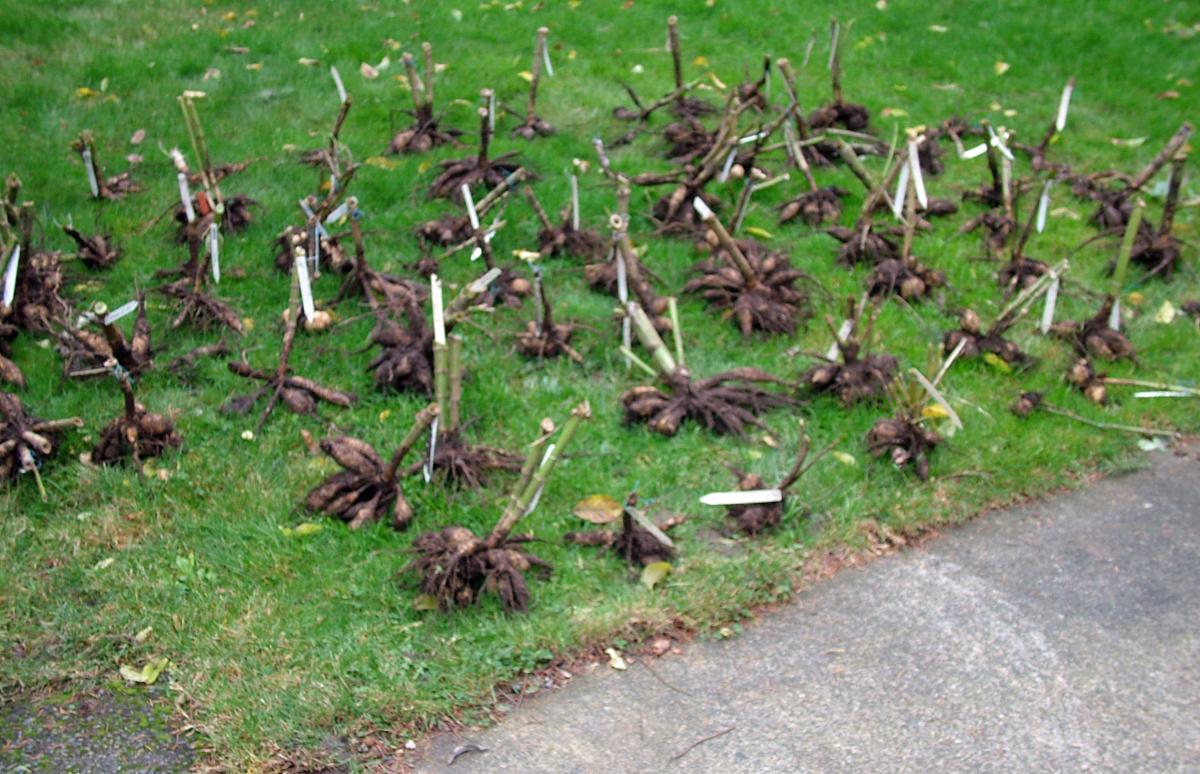
When and how to dig is a lively conversation among dahlia lovers. While some of us insist that dahlias require digging and dividing every year, others admit that once every other year is their preference. Successful cultivation and harvesting of tubers largely depends on soil conditions and local climate features. Dahlias thrive in evenly moist soil, but they detest soggy, cold earth. Here in the Great Northwet I normally wait for three days after rains — not an easy feat in our damp falls. In areas with sandy terrain, good drainage allows clumps to wick away moisture, but do watch out for low spots where water pools. Gardeners with loamy soil that holds moisture well all season feel rewarded for lifting clumps before a killer frost blackens their foliage.
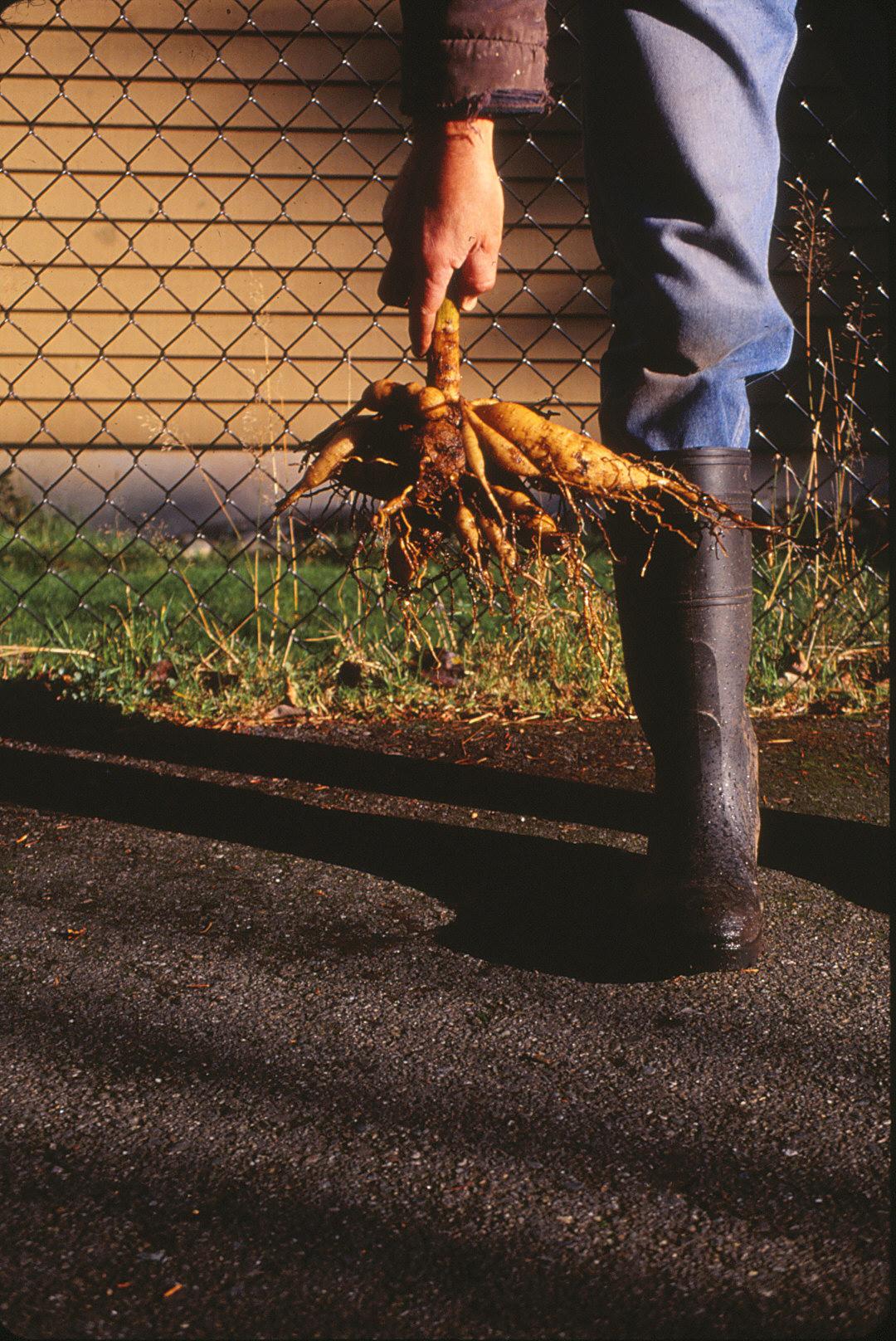
The advantages of annually digging those clumps are readily apparent when facing the chore of lifting a dahlia that has been left in the ground for several seasons. Not only are such root balls heavy and large, their many tubers intertwine in a convoluted mass of small roots that defy easy separation. Laggards among us growers often have to resort to hacking apart such clumps with little regard for surgical precision necessary for effective division. It is axiomatic that successful growers dig their precious dahlias every fall.
A Northeast grower explains.
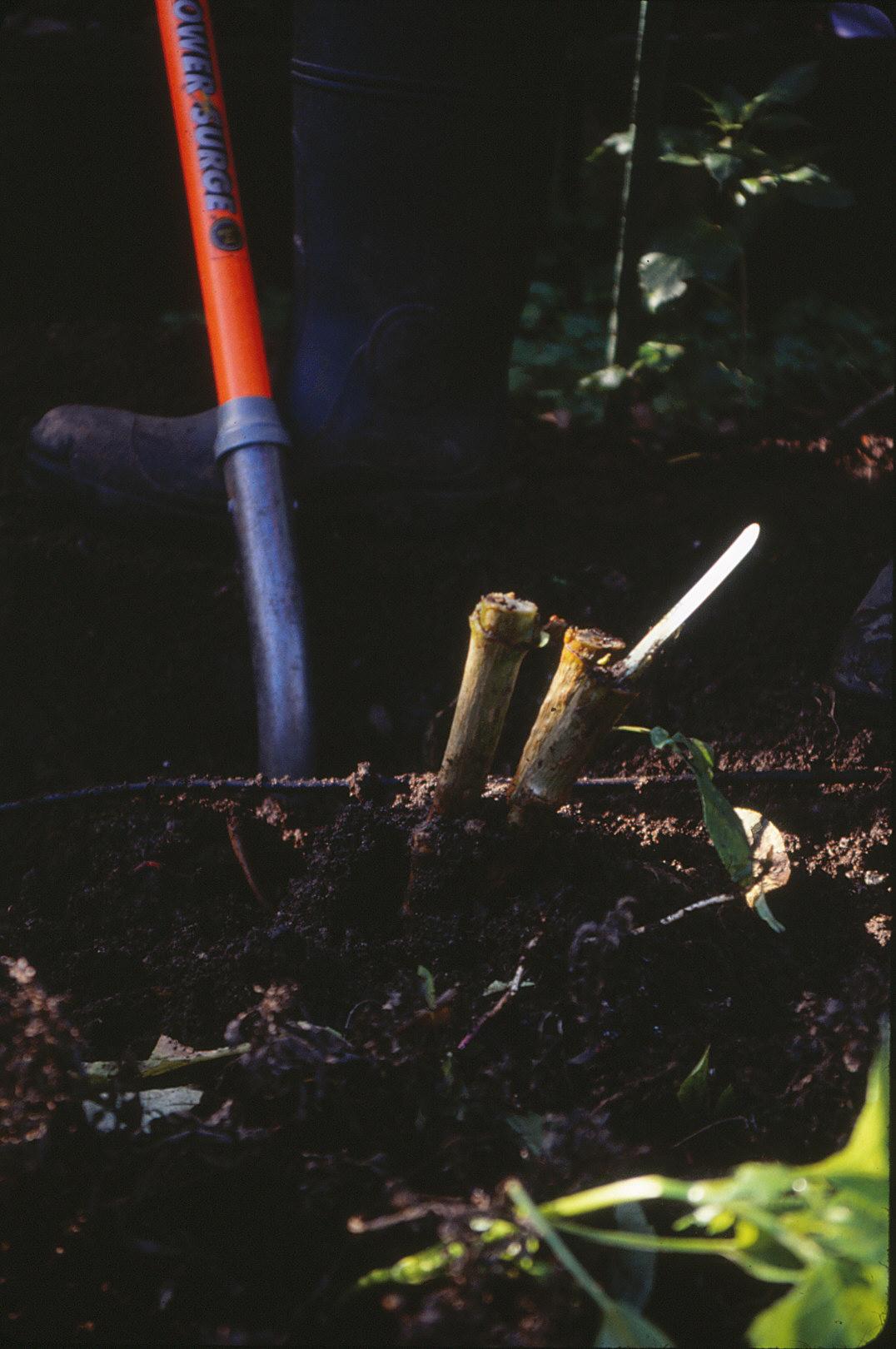
Another debate ensues when mentioning digging tools. While there are many videos showing gardeners wielding spading forks with fat tines or pitchforks, veteran growers swear by garden shovels with scooped blades ending in a tip. Why? After all, forks more easily lift root clumps from soil, you contend. Well, they also may pierce tubers, leaving a jagged hole that invites disease and harbors pests. To save such injured tubers, one must lop off that portion, often leaving only a stub of a tuber for propagation.
|