|
View in Browser
|

|
|
Daily Transportation News | November 13, 2026
|
|
Editorial and legal note: This briefing is provided for general information and professional awareness. It summarizes publicly available materials from government agencies, legislatures, transportation providers, companies and news organizations. Inclusion does not constitute IATR endorsement, legal advice, a finding of fact or a recommendation that any regulator adopt a particular policy. Readers should consult original sources and applicable law before relying on an item for regulatory, procurement, enforcement or operational decisions. “Why it matters” boxes are editorial analysis. Proposals, research findings and implementation updates are identified separately.
|
|
Top Highlight | D.C. Robotaxi Legislation
|
|
Washington, D.C. · AVs & Robotaxis · Licensing · Accessibility & Workforce
D.C. Robotaxi Proposal Does Not Advance After Committee Tie
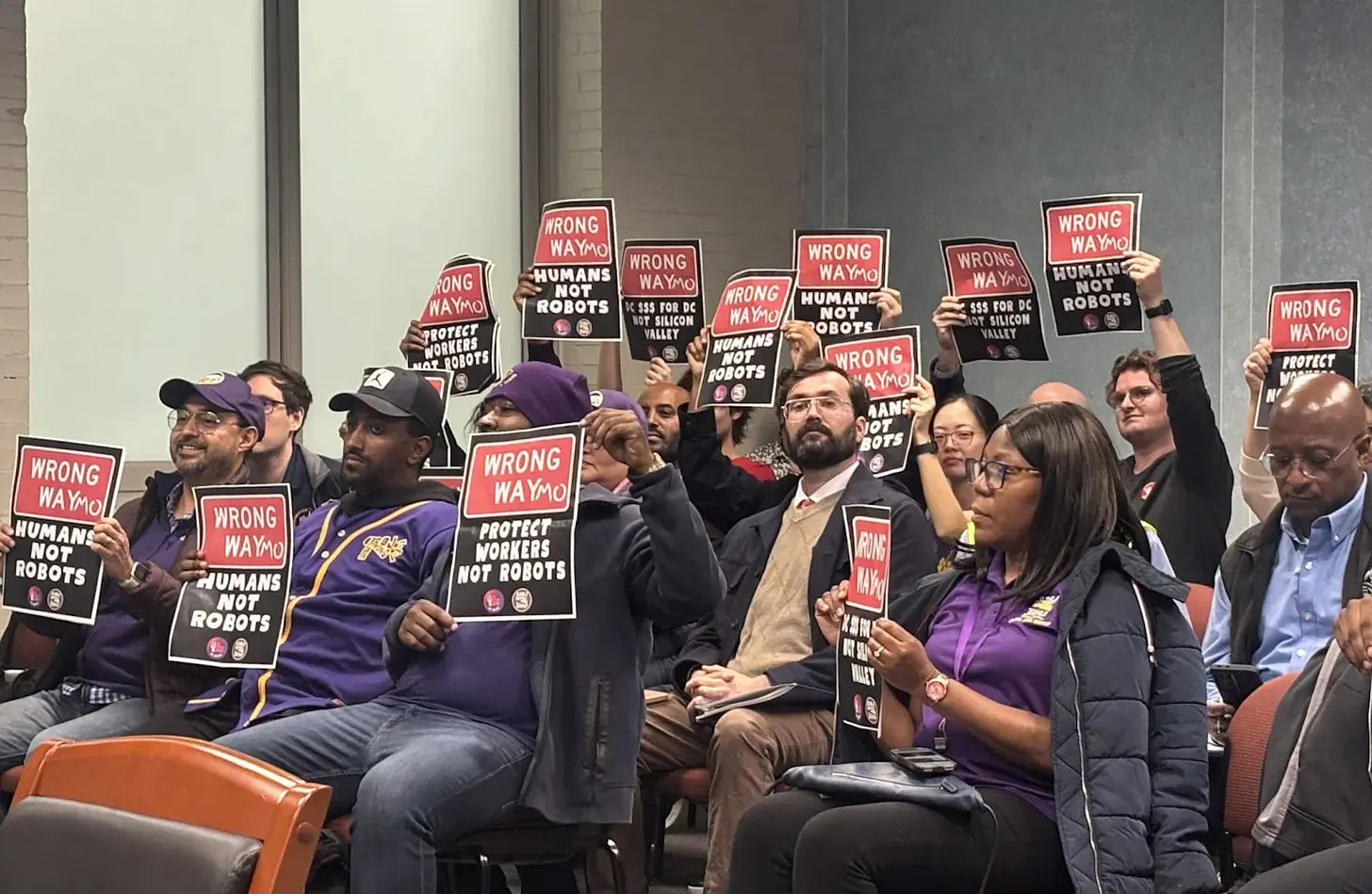
Image source: The Driverless Digest / Harry Campbell; image URL provided for this edition.
Status: November 12 committee vote; proposal did not advance, not an enacted framework
A proposal to establish a
commercial robotaxi
framework in Washington, D.C., did not advance after a
3–3 vote
in the Council’s Committee on Transportation and the Environment on November 12. Councilmember Charles Allen’s Autonomous Vehicle Deployment Authorization Amendment Act of 2026 would have created a pathway for driverless passenger service with
operating conditions
, reporting requirements and fees.
The revised proposal included
fleet limits
of 200 vehicles per operator and 800 citywide,
accessibility
provisions and workforce measures. It also proposed a 7.5-cent-per-mile charge and permitting fees of $15,000 plus $750 per vehicle. These provisions were proposed conditions, not requirements brought into force by the vote.
Council members opposing advancement cited passenger and street safety, emergency-response conditions,
workforce protections
and the need for further consideration. Supporters favored establishing a framework for deployment and associated investment. The vote concerns this proposed commercial-service framework; it should not be characterized as a nationwide robotaxi ban or an adjudicated finding about a company’s safety.
Why it matters to regulators:
AV oversight involves both vehicle capabilities and passenger-service conditions. This debate illustrates the need to address fleet scale,
accessibility
,
emergency response
, reporting, fees and workforce transition together. Agencies should distinguish testing activity, proposed commercial authorization and legally effective operating requirements when communicating with operators and the public.
Sources:
Harry Campbell / The Driverless Digest — November 13
·
Axios — November 12 committee outcome
·
FOX 5 via Yahoo — November 12
|
|
Event Highlight | Matt Daus at CoMotion LA
|
5 Days To Go: CoMotion LA ’26!

Image source: CoMotion promotional material.
There’s still time to join the milestone
10th edition
of
CoMotion LA
on
November 18–19
, featuring the
OMF Summit Track
, and
CoMotion NXT
on
November 17
in Long Beach.
CoMotion NXT
access is reserved for Mobility Leader Pass holders, with nonprofit and public-sector access available upon application.
IATR President to Lead Discussion on the Future of Urban Water Transit

Matthew W. Daus
,
IATR President
, is featured in “Ferries and the Future of Urban Water Transit” at
CoMotion LA
, which returns
November 18–19, 2026
. The session is scheduled for Wednesday, November 18, 11:00–11:35 a.m. PST / 2:00–2:35 p.m. EST on the
Spotlight Stage
.
The discussion will bring together operators and vessel builders to examine sustainable fleets, service improvements and the regulatory, funding and infrastructure hurdles facing urban water transit, including
electrification
,
hydrogen
and
hydrofoils
.
Featured speakers
Cameron Clark
— Founder & CEO, Land & Sea.
Ali Chaudhry
— Chief Infrastructure Development Officer, Hornblower Group.
Seamus Murphy
— Executive Director, San Francisco Bay Ferry.
James Wong
— Executive Vice President and Executive Director, NYC Ferry, New York City Economic Development Corporation (NYCEDC).
Discussion led by
Matthew W. Daus
,
IATR President
.
IATR registration benefit:
save 20%
with code
IATR-20
when registering for
CoMotion LA
. Check the organizer’s current program and registration terms before booking.
Source:
CoMotion LA — event and registration
|

|
|
United States · Sustainability & EVs · Fleet Affordability
Tesla Removes Entry-Level AWD Model Y From U.S. Lineup

Image source: Motor1 / InsideEVs. Model Y Standard shown; illustrative image.
Status: Reported product-line change; publication date unavailable in retrieved article
Tesla has removed the entry-level
all-wheel-drive
Model Y
from its U.S. online configurator, InsideEVs reports. The article puts the discontinued model at roughly $42,000 and the remaining
Premium AWD
version at a starting price of $51,630. Those figures are attributed to the article, not independently verified live quotations.
The base rear-wheel-drive
Model Y
remains available, according to the report. The change concerns a particular drivetrain and trim, not the withdrawal of the entire
Model Y
range or a change to taxi and TNC
vehicle-eligibility rules
.
Why it matters to regulators:
Fleet replacement
plans depend on the availability and cost of specific configurations, not simply whether an EV model remains on the market.
Electrification
planning can account for drivetrain needs,
operating conditions
and ownership costs while keeping those considerations separate from licensing eligibility.
Sources:
InsideEVs — requested article
|
|
United States · Accessibility · Rideshare & TNC Oversight
Federal Accessibility Case Highlights Rideshare Accommodation Procedures
Status: DOJ lawsuit filed November 9; allegations not adjudicated
The U.S. Justice Department has sued Lyft, alleging disability discrimination involving
service animals
and
mobility devices
such as stowable wheelchairs. The department seeks $53 million in compensation, a civil penalty and changes to policies and training under Title III of the
Americans with Disabilities Act
.
Lyft disputes the allegations and says its policies require accommodation of riders with
service animals
and
mobility devices
, with serious consequences for violations, including permanent deactivation. The allegations are not findings of liability.
Why it matters to regulators:
Effective
accessibility
oversight includes complaint handling, driver education and the application of accommodation policies during actual trips. Service-animal and stowable-device accommodation should not be confused with a separate requirement to provide
wheelchair-accessible
vehicles.
Sources:
U.S. Department of Justice — November 9
·
Reuters / Claims Journal — company response
|
|
Ohio · Micromobility · Safety & Licensing
Ohio Proposal Would Add E-Bike and Scooter Registration Requirements
Status: Proposed legislation; November 6 reporting, not an enacted requirement
An Ohio Senate proposal would introduce
registration requirements
and a $25 device fee for e-bikes and e-scooters, according to The Lantern. It would also require a driver’s licence or completion of a
safety course
and introduce age restrictions and speed limits for different riding environments.
The report says the proposal would preserve
local authority
to regulate or prohibit operation on streets, shared paths and sidewalks. These measures remain legislative proposals; the November 6 report does not establish that registration or training requirements are already in force.
Why it matters to regulators:
Device identification, rider education and the division of state and
local authority
are central implementation questions. Clear definitions and public guidance would be important to distinguish regulated devices and explain how adopted requirements apply to privately owned equipment and rental services.
Sources:
The Lantern — November 6
|

|
|
Canada · Safety & Vision Zero · AI-Assisted Research
CAA Study Documents School-Crossing Near Misses Across 11 Cities
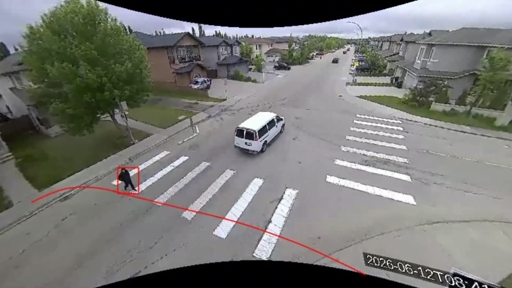
Image source: Canadian Automobile Association / PR Newswire.
Status: Research released November 12; observational study, not a new regulation
A Canadian Automobile Association study used video cameras and
AI analysis
to monitor 30 school crosswalks in 11 Canadian cities over approximately five school days. Researchers recorded
660
pedestrian–vehicle
near misses
; CAA reports an average of about
4.5
per monitored crossing per day and one near miss for every 84 pedestrian crossings observed.
Crossings with signals, stop signs or roundabouts had substantially lower near-miss rates than those without those controls. Locations without school-zone or reduced-speed signage recorded a 67 percent higher conflict rate. The highest single-hour incident count occurred between 5 and 6 p.m., beyond typical school dismissal hours.
The findings describe the monitored locations and observation period. They do not establish a representative national rate for every Canadian school crossing or prove that an individual intervention independently produced the observed difference.
Why it matters to regulators:
Near-miss analysis can help identify risk before a serious collision occurs. Agencies and passenger-service operators can examine crossing design, route selection and the hours covered by safety measures, while reviewing study methods before generalizing the results.
Sources:
CAA — November 12 release
·
CAA — study report
|
|
Canada · TNC Safety · Data & Privacy
Uber Canada Adds Driver Preferences and Teen Live-Video Features

Image source: Financial Post / Yahoo. Original photographer credit to be confirmed.
Status: Company-announced November rollout; availability and eligibility vary
Uber is introducing
Women Driver Preferences
in participating Canadian markets, alongside updates for senior and teen accounts. November 12 reporting says eligible riders will be able to reserve a ride with a woman driver, with on-demand preferences available in selected areas and matching dependent on driver availability.
The teen-account update allows linked parents or guardians to view an
encrypted live stream
through the driver’s smartphone camera on eligible trips when the driver has enabled the feature. Teens and drivers are notified when a guardian is watching. The feature supplements existing teen-trip tools; it is not a regulatory safety certification.
Why it matters to regulators:
Matching and video features raise questions about eligibility, availability,
informed notice
and access to passenger information. Oversight can distinguish optional company tools from legally required safeguards and assess whether explanations are clear to riders, drivers and guardians.
Sources:
Financial Post via Yahoo — November 12
·
iPhone in Canada — November 12
|
|
Canada · Insurance & Financial Responsibility · Vehicle Security
Canadian Insurance Reporting Highlights Theft-Related Vehicle Costs
Status: November 13 consumer-insurance reporting; not a commercial-policy rule change
Canadian Press reporting examines how theft exposure can affect
vehicle-insurance
availability, surcharges and
anti-theft
-device requirements. Brokers quoted in the report explain that insurers may classify the same model differently and may require a specific approved device to avoid a surcharge.
The article concerns consumer auto insurance rather than a new taxi or TNC insurance requirement. Its examples of device costs and potential savings should not be assumed to apply to commercial fleets. Passenger-service operators need to establish whether coverage is available and appropriate for the intended use before acquiring a vehicle.
Why it matters to regulators:
Vehicle acquisition prices can understate the cost of putting a vehicle into service. Financial-responsibility review can distinguish personal and
commercial coverage
, check applicable security conditions and avoid treating consumer advice as proof of for-hire insurability.
Sources:
The Canadian Press / CTV News — November 13
|

|
|
Reading, England · Vehicle Standards · Accessibility & Affordability
Reading Consults on Taxi Vehicle Transition Adjustments
Status: Six-week consultation approved November 5; reported November 10
Reading councillors have approved consultation on adjustments to taxi and private-hire vehicle licensing policy after concerns about replacement-vehicle supply. Local Democracy Reporting Service coverage says officers identified particular difficulties obtaining qualifying seven-passenger and
wheelchair-accessible
vehicles.
The proposal would pause emissions-policy requirements to allow currently licensed vehicles to remain in the fleet, with new vehicles meeting at least
Euro 5b
. The November 5 committee decision authorized a
six-week consultation
; it should not be described as final adoption of the proposed changes.
Why it matters to regulators:
Fleet transition schedules interact with the availability of accessible and larger vehicles. Consultation can help assess whether proposed changes protect service continuity while retaining appropriate safety,
accessibility
and environmental objectives.
Sources:
Local Democracy Reporting Service / Yahoo — November 10
|
|
Italy · Labor & Workforce · Algorithmic Management
Italy Approves Platform-Work Implementation Framework
Status: October 28 approval reported November 9; employment presumption scheduled for December 2
DLA Piper reports that Italy’s Council of Ministers gave final approval to a decree implementing the EU Platform Work Directive. The framework addresses people working through digital platforms and includes transparency requirements for
automated systems
affecting pay and the organization of work.
From December 2, a
rebuttable employment presumption
is to apply where facts indicate platform direction and control, including through automated monitoring or decision-making. Where it applies, platforms must demonstrate genuine self-employment. The analysis emphasizes that the presumption does not automatically reclassify every platform worker.
Why it matters to regulators:
Ride-hailing regulation increasingly intersects with
employment classification
and automated management. Transport agencies can coordinate with labor and privacy authorities while distinguishing platform-work obligations from passenger-service licensing. Application to an individual relationship depends on the legal framework and facts.
Sources:
DLA Piper — November 9 legal analysis
|
|
Cheltenham, England · Event Mobility · Licensing & Compliance
Cheltenham Coordinates Taxi Checks for November Race Meeting
Status: Compliance activity announced for November 13–15; no results asserted
Cheltenham Borough Council plans taxi and private-hire
compliance checks
during the November Meeting from November 13 to 15, supported by Tewkesbury and Stroud licensing officers, TaxiPoint reports. The measures form part of transport and safety planning for visitors and residents during the race meeting.
The council advises passengers to pre-book private-hire vehicles or use Cheltenham-licensed taxis at authorized ranks.
Taxi marshals
are also planned at Promenade ranks. The announcement does not specify an inspection total or establish that violations have been found.
Why it matters to regulators:
Major-event planning can combine passenger information,
rank management
and coordinated licensing checks. Clear roles help align service availability with lawful bookings, visible vehicle identification and practical passenger safeguards.
Sources:
TaxiPoint — November 10
|

|
|
South Korea · Taxi Fare Policy · Supply & Affordability
South Korea Reviews Day-of-the-Week Taxi Fare Adjustments
Status: Policy development reported November 10; local adoption and rates not established
South Korea is considering changes that would allow taxi
fare schedules
to include discounts and surcharges for particular days of the week, SBS reports. The approach would add a
day-based
element to the existing use of time-of-day surcharges, rather than establish a single nationwide weekend fare.
According to the report, local governments would decide whether to use the mechanism, which days it would cover and the applicable rates, taking regional taxi supply and demand into account. Higher fares on high-demand days are intended to encourage more drivers to operate; that is the stated policy rationale, not a demonstrated outcome.
The report does not establish a final implementation date or an adopted tariff for a particular city. A framework permitting
day-based
adjustments should therefore be distinguished from a local decision actually changing passenger fares.
Why it matters to regulators:
Fare modernization connects service availability, driver incentives and affordability. A
day-based
tariff also raises practical questions about meter configuration,
passenger notice
and interaction with existing nighttime charges. Local implementation would need clear rules so passengers can understand the fare before travelling.
Sources:
SBS — November 10
|
|
New South Wales, Australia · Safety & Compliance · Driver Fitness
NSW Reinforces Drug and Alcohol Compliance for Passenger Services
Status: Official weekly update published November 12, covering November 2–8
The NSW Point to Point Transport Commissioner’s weekly compliance update emphasizes
drug and alcohol
compliance in taxi, rideshare and hire-vehicle services. The regulator states that drivers must take care of their health and safety and avoid conduct that places passengers or other road users at risk.
The communication reinforces existing safety responsibilities across the passenger-service sector. It is not presented here as the introduction of a new legal limit, and no inspection totals, individual findings or penalties are inferred from the available official summary.
Why it matters to regulators:
Fitness to drive depends on practical guidance and provider
safety systems
as well as individual conduct. Consistent communication across taxi, rideshare and hire-vehicle services can help clarify shared obligations without conflating different licensing categories.
Sources:
NSW Point to Point Transport Commissioner — November 12
|
|
Russia · AVs & Robotaxis · Liability & Cybersecurity
Russia Advances Draft Automated-Vehicle Legislation
Status: Government approval of draft reported November 13; not an enacted law
Russia’s government approved the final version of a highly automated vehicles bill on November 12, Meduza reports, citing Kommersant’s review of the document. The reported framework would address operating requirements,
accident liability
and
software protection
, including for autonomous taxis.
The November 13 report says the bill had not yet been submitted to the State Duma. Government approval of a draft should not be confused with parliamentary passage, entry into force or authorization of a particular
commercial robotaxi
service.
Why it matters to regulators:
Automated passenger-service frameworks can connect operating duties, liability and
cybersecurity
. International comparisons should track the actual legal text and legislative stage rather than treat a reported draft as enforceable law or assume every jurisdiction allocates responsibility in the same way.
Sources:
Meduza, citing Kommersant — November 13
|
|
Regulatory Watch
|
|
Monitor any future action on D.C.’s commercial AV framework, Reading’s vehicle-policy consultation, Italy’s December 2 platform-work milestone and local tariff decisions following South Korea’s
day-based
fare discussion. Committee outcomes, consultations and implementation dates are distinct regulatory stages.
|
|
Funding Opportunity | USDOT Digital Corridors Funding
|
|
United States · Funding Opportunity · Data Sharing · Multi-State Partnerships
USDOT’s $20 Million Digital Corridors Funding Opportunity
Open funding competition; application deadline: December 28, 2026, at 11:59:59 p.m. EST
USDOT’s Federal Highway Administration is accepting applications under the FY 2026 Great American Digital Corridors Program. Up to $20 million is available for digital infrastructure supporting publicly available, interoperable transportation
data feeds
and operational exchange systems along continuous corridors connecting multiple states. Eligible projects must include work-zone or lane-closure information and primarily involve the Interstate Highway System.
Eligible organizations can consider submitting a qualifying proposal or joining a consortium.
Eligible applicants
include states, local and tribal governments, transit agencies, public toll authorities, metropolitan planning organizations and other political subdivisions of a state or local government. Private entities, nonprofits and academic institutions may apply and lead project administration only as part of a consortium with one or more other eligible entities.
Partnership opportunities:
Partnerships may connect infrastructure owners, transportation agencies, fleet and technology providers, academic researchers and emergency-response organizations. Organizations working on reliable operational data, work-zone information, cross-jurisdiction
interoperability
or post-crash response can review the program’s eligibility and merit criteria with potential partners. This is a competitive federal funding opportunity, not an IATR grant or endorsement of a particular application.
-
Funding opportunity number:
FHWA-GADC-27-001
.
-
Deadline:
December 28, 2026
, at
11:59:59 p.m. EST
.
-
Cost share:
no required nonfederal match
; the federal share may cover
100 percent
of eligible total project costs.
-
Submit electronically through
Grants.gov
. Applications must include the required forms and the program’s
Application Template
.
-
Applicants need an active
SAM.gov
registration and a valid
Unique Entity Identifier
; registration can take several weeks.
-
USDOT’s program webinar is scheduled for
November 23
,
noon–1 p.m. ET
. Award selections are anticipated in
early 2027
.
Review the complete funding notice, confirm your organization’s eligibility and partnership structure, and monitor
Grants.gov
for amendments before submitting. An award is not guaranteed, and a standalone taxi or TNC fleet project would still need to meet the program’s
multistate corridor
and data-exchange requirements.
Sources:
Official opportunity listing
·
FHWA Notice of Funding Opportunity
·
USDOT announcement and webinar details
. Questions:
digitalcorridors.program@dot.gov
.
|
A Message From the IATR President

At the
International Association of Transportation Regulators (IATR)
, our regulators are at the forefront of addressing both the challenges and opportunities facing the mobility paradigm. Our IATR members, partner organizations, and regulated industries will continue on our shared quest to fulfill the mission of our non-profit educational organization: to bring about
Multi-Modal Mobility Innovation for All!
This mission can best be accomplished through
information sharing
,
collaboration
, identifying and promoting
best practices
, and educating our membership. These educational updates and electronic media clips are affectionately known as “IATR snips” and endeavor to cover all aspects of mobility around the globe, especially news and developments involving
safety
, technology innovation, multi-modal integration, automation, sustainability,
electrification
,
accessibility
, regulatory modernization, and equity.
If you would like more information about the IATR, please visit
IATR.Global
. Current members can renew their memberships by logging in through the IATR portal at the top right-hand side of the website. If you forgot your membership password, please email
info@iatr.global
.
|
INTERNATIONAL ASSOCIATION OF
TRANSPORTATION REGULATORS
Advancing safe, equitable, innovative and effective transportation regulation worldwide.
Visit IATR.Global
|
Become a Member / Renew
|
Contact IATR
|
|
|
|