| View in Browser |

|
|
Daily Transportation News | November 6, 2026 |
| Editorial and legal note: This briefing is provided for general information and professional awareness. It summarizes publicly available materials from government agencies, legislatures, transportation providers, companies, and news organizations. Inclusion does not constitute IATR endorsement, legal advice, a finding of fact, or a recommendation that any regulator adopt a particular policy. Readers should consult the original source and applicable law before relying on any item for regulatory, procurement, enforcement, or operational decisions. “Why it matters” boxes are editorial analysis. Proposals, studies and implementation guidance are identified separately. |
| Top Highlight | NYC Micromobility Safety Enforcement |
Micromobility · Safety & Compliance NYC Strengthens Micromobility Safety Through Retailer InspectionsNew York City’s Department of Consumer and Worker Protection (DCWP) has announced 77 summonses covering 136 violations following inspections of more than 200 brick-and-mortar micromobility retailers across all five boroughs. The November 5 announcement reports results from a late-summer enforcement sweep, rather than 77 newly adopted rules or 77 violations of a single requirement. Inspectors found devices that did not meet the city’s requirements for lawful sale, including overpowered models capable of reaching up to 50 mph. The agency identified 46 violations of Local Law 39, 55 violations of Local Law 49 and 35 violations of motorized-scooter regulations. Those categories total 136 alleged violations; the 77 summonses are a separate enforcement count. DCWP said noncompliant businesses were found in every borough, with the majority in Brooklyn. The release does not report the final disposition of each summons or establish that every cited business had the same type of deficiency. Device classification is central to the enforcement effort. DCWP says motorized scooters, including e-scooters, are illegal to sell, lease, rent or operate in the city if they exceed a top speed of 20 mph or weigh more than 100 pounds. The release describes an e-bike as no more than 36 inches wide, with a motor of less than 750 watts and a maximum speed of 25 mph. These are the agency’s stated device criteria, not permission to travel at those speeds on every street, path or facility. A product’s advertised category alone does not establish that it meets the applicable requirements. The sweep also addressed battery safety and point-of-sale information. Under Local Law 39, battery-powered micromobility devices and their batteries must meet recognized Underwriters Laboratories (UL) safety certification standards. Local Law 49 requires sellers to display battery-safety information in stores and online, including certification information on online product pages. Certification and disclosure are distinct compliance duties: providing a safety notice does not substitute for a compliant product, and certification does not eliminate the information requirements. DCWP places the sweep within an enforcement program that began in 2023. Since then, the department says it has conducted nearly 1,000 inspections and issued more than 460 summonses to brick-and-mortar businesses under the relevant micromobility laws. It separately reports more than 85 cease-and-desist orders and 41 summonses to online sellers for Local Law 39 violations. Those cumulative figures are not additional results attributable solely to this sweep. The department also targeted eight locations for sealing: it sealed three and brought five into compliance before sealing. Those are agency-reported compliance outcomes, not evidence that all cited retailers were closed. Consumers who suspect a business is selling illegal or unsafe devices can report concerns through NYC DCWP. Why it matters to regulators: This is a practical example of retailer-level micromobility oversight connecting device classification, speed and weight criteria, battery certification, safety disclosures and online sales enforcement. Inspections can address noncompliant products before they enter service, complementing rather than replacing street-level enforcement. For other jurisdictions, the transferable lesson is to define lawful device categories clearly, distinguish product certification from sales disclosures, record summonses separately from individual violations, and track whether enforcement produces verified compliance. The announcement reports enforcement of existing rules—not a new universal ban on e-bikes or e-scooters. Source: NYC Department of Consumer and Worker Protection — official enforcement announcement |
| Event Highlight | Matt Daus at CoMotion LA |
IATR President to Lead Discussion on the Future of Urban Water Transit Matthew W. Daus, IATR President, is featured in “Ferries and the Future of Urban Water Transit” at CoMotion LA, which returns November 18–19, 2026. The session is scheduled for Wednesday, November 18, 11:00–11:35 a.m. PST / 2:00–2:35 p.m. EST on the Spotlight Stage. The discussion will bring together operators and vessel builders to examine sustainable fleets, service improvements and the regulatory, funding and infrastructure hurdles facing urban water transit, including electrification, hydrogen and hydrofoils. Featured speakers Cameron Clark — Founder & CEO, Land & Sea. Ali Chaudhry — Chief Infrastructure Development Officer, Hornblower Group. Seamus Murphy — Executive Director, San Francisco Bay Ferry. James Wong — Executive Vice President and Executive Director, NYC Ferry, New York City Economic Development Corporation (NYCEDC). Discussion led by Matthew W. Daus, IATR President. IATR registration benefit: save 20% with code IATR-20 when registering for CoMotion LA. Check the organizer’s current program and registration terms before booking. |

|
AVs & Robotaxis · Platform Oversight Uber CEO Outlines Expansion From Robotaxi Testing to Commercial Service Image source: Smart Cities Dive / Getty Images. Uber CEO Dara Khosrowshahi expects about 700 robotaxis on the platform by year-end and more than 2,000 in 2027, Smart Cities Dive reports from the company’s earnings call. He described a shift from partnerships and testing toward driverless commercial service, with a longer-term ambition of tens of thousands of vehicles in 2028 and beyond. The company outlined a planned Zoox launch in Las Vegas later this month, followed by Motional vehicles. It also expects fully driverless testing with Nuro and Lucid this quarter and commercial service in the San Francisco Bay Area early next year, followed by Houston and other cities. These are management plans and forecasts, not evidence that every proposed service has received the necessary approvals. Why it matters to regulators: As platforms aggregate multiple AV providers, agencies need to identify the responsible permit holder, fleet operator, insurer and incident-reporting entity for each service. Platform scale targets should not be mistaken for approved fleet limits or authorized operating areas. Sources: Smart Cities Dive · Smart Cities Dive syndicated publication |
Curb Access & Accessibility · Opinion Hyndman Calls for Changes to Downtown Jamaica Busway Enforcement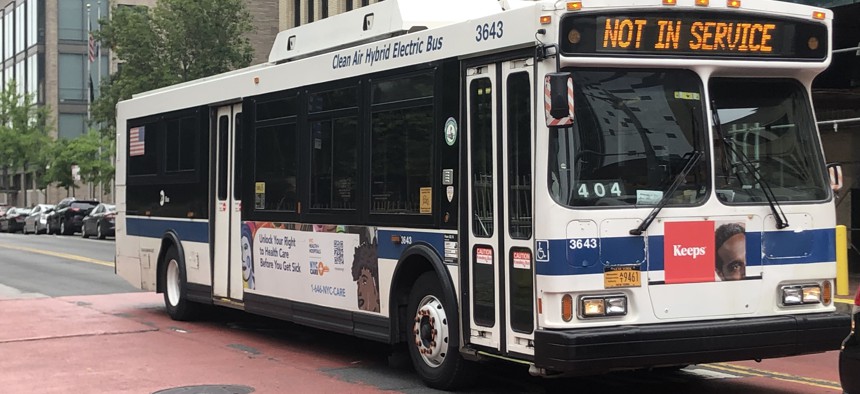 Image source: City & State New York. In a City & State opinion column, Assembly Member Alicia Hyndman argues that Downtown Jamaica’s busway enforcement is complicating access for businesses, places of worship and visitors. She cites complaints involving loading docks, older churchgoers and automated camera penalties, and proposes time-limited operation with peak/off-peak distinctions and no weekend busway restrictions. The column cites business-vacancy figures and reports of reduced revenues to support her position. These are claims presented in an elected official’s opinion piece, not an independent evaluation establishing that busways caused the economic changes. The article does not announce an adopted DOT change, an enforcement suspension or a legal finding that the program violates accessibility law. Why it matters to regulators: This debate highlights the need to reconcile bus reliability with accessible drop-offs, goods loading and understandable access rules. Agencies can evaluate location-specific complaints and enforcement data without treating either advocacy claims or a proposed compromise as settled policy. |
Rideshare & TNCs · Pricing & Consumer Protection Lyft and DoorDash Launch a Joint Membership With Cross-Platform Ride Credits Image source: Lyft. Lyft has introduced Lyft Go with DashPass across the United States at $9.99 per month or $96 annually. Eligible members earn 8% back in Lyft Credits on rides, redeemable on eligible Lyft rides or DoorDash orders, after linking accounts and activating the benefit. A separate Lyft Go Core tier costs $4.99 per month and offers 5% back in rideshare-only credits. DoorDash’s published partnership terms cap the 8% credit benefit at $40 per month and state that credits expire after 60 days. Existing DashPass users must activate Lyft Go even if their accounts are already linked. The program is a commercial subscription and loyalty offering, not a fare regulation or a public mobility subsidy. Why it matters to regulators: Bundled mobility products put pricing transparency, credit expiry, renewal and cancellation disclosures into focus. Comparisons should distinguish usable credits from immediate fare reductions and identify the conditions attached to advertised savings. Sources: Lyft announcement · DoorDash program terms |

|
Rideshare & TNCs · Market Development Lyft Reports More Than Doubling Canadian Rides as Toronto GrowsIn reporting on Lyft’s quarterly earnings call, GuruFocus says management described Canadian rides as more than doubling, with Toronto now among the company’s largest markets. Management cited record driver hours, improved pickup times and partnership activity as contributors to North American growth. The report does not supply a Canadian trip total, a city-by-city denominator or independently verified service-quality measures. The figures are company-reported operating claims, not a regulator’s finding that availability, affordability or accessibility improved for every passenger group. They are also distinct from Lyft’s U.S.-only membership launch. Why it matters to regulators: Rapid market growth increases the importance of comparable trip reporting, licensed-vehicle oversight and accessibility metrics. Agencies should assess geographic and time-of-day coverage rather than infer equitable service from an aggregate growth rate. |
Road Safety · Pedestrian Protection Richmond Hill Pedestrian Collision Reinforces Seasonal Road-Safety FocusYork Regional Police say four pedestrians, including a crossing guard and two children, were struck by an SUV in Richmond Hill. The Canadian Press reports that the crossing guard sustained life-threatening injuries. The driver remained at the scene and was cooperating; the investigation was ongoing and no charges had been laid at the time of reporting. The report also describes road-safety campaigns by Toronto and regional police following the seasonal clock change. Toronto says pedestrian collisions during the evening commute rise by more than 30% from November to March. That seasonal figure provides context; it does not establish the cause of this particular collision or the driver’s legal responsibility. Why it matters to regulators: Taxi, FHV and NEMT driver communications can reinforce pedestrian detection, school-area vigilance and low-light hazard awareness. Incident review should distinguish confirmed facts, seasonal risk indicators and findings still subject to investigation. Sources: The Canadian Press via CHCH |
Accessibility & Disability Mobility Rick Hansen Urges Faster Progress on Meaningful Accessibility Image source: insauga / The Canadian Press. At a Parliament Hill documentary screening, accessibility advocate Rick Hansen called for faster progress toward an inclusive Canada and identified the built environment as an urgent priority. The Canadian Press reports that he urged sustained programs and public spending that delivers meaningful accessibility rather than relying solely on minimum compliance. The article recalls the Accessible Canada Act’s barrier-free-by-2040 objective, but reports advocacy rather than a new statutory obligation, taxi mandate or transportation funding award. Its practical transportation connection is the interface between a passenger service and the places people need to reach. Why it matters to regulators: An accessible vehicle alone does not deliver an accessible journey. Licensing and procurement discussions can account for boarding areas, building entrances, pedestrian connections and the participation of people with disabilities, while keeping existing legal duties separate from broader advocacy goals. Sources: The Canadian Press via insauga |

|
Taxi & FHV Operations · Street Access City of London Officers Recommend Permanent Taxi Access Through Bank Junction Image source: TaxiPoint. City of London officers have recommended making experimental east-west black-taxi access through Bank Junction permanent, TaxiPoint reports. The Planning and Transportation Committee is scheduled to consider the recommendation on November 10, before the experimental order expires in January. Private-hire vehicles would remain excluded during the restricted weekday hours. The reporting describes increased available-for-hire taxi movements near Bank and mixed findings on other outcomes. The 88% consultation support figure came from 3,939 responses, almost 80% of them taxi drivers or taxi passengers. Recorded movements are not unique vehicles, and limited collision data do not establish that the trial caused a safety change. A final decision had not yet been taken. Why it matters to regulators: Street-access decisions need to balance taxi-dependent passengers, bus performance and pedestrian/cyclist experience. Consultation composition and vehicle-count definitions matter when translating a trial’s results into a permanent traffic order. Sources: TaxiPoint |
Traffic Enforcement · Accessibility Finland Proposes Stronger Cross-Border Traffic Enforcement and Disability Parking CardsFinland’s government has submitted legislation to implement revised EU provisions on cross-border enforcement of road traffic offences. The proposal would improve requests for vehicle and personal information, service of documents and mutual assistance in collecting administrative financial penalties involving vehicles or residents from other Member States. The package also would replace the existing reduced-mobility parking card with the new European Parking Card for persons with disabilities, supporting cross-border recognition and reducing forgery risks. Parliamentary consideration is the next step; the announcement is not confirmation that the national amendments have entered into force. Why it matters to regulators: Cross-border fleets and drivers need clear notice, data-handling safeguards and enforceable administrative processes. Harmonized parking credentials also require consistent recognition and practical guidance for disability-related journeys. Sources: Finnish Government |
Driver Licensing · Workforce & Training Great Britain Consults on Broader Work for 18- and 19-Year-Old Coach DriversThe Department for Transport is consulting on changing restrictions that generally confine 18- and 19-year-old bus and coach drivers to regular services no longer than 50 kilometres. The options would permit non-regular work, including private-hire coach trips, and longer regular services through additional training, mandatory driving-behaviour monitoring, guidance, or a combination. The department has no preferred option and says initial driver CPC requirements would remain. The proposals concern category D and D+E licences, not D1/D1E minibus entitlements. Changes in Great Britain would not automatically remove restrictions applicable when younger drivers operate in EU Member States. Why it matters to regulators: The proposal addresses workforce entry through licensing and safety safeguards rather than a service expansion. Agencies can examine supervision, telematics governance, training availability and insurer requirements before assuming that a lower practical entry barrier produces equivalent safety outcomes. Sources: UK DfT consultation |

|
Taxi Licensing · Cross-Border Mobility Singapore and Malaysia Raise Cross-Border Taxi Quotas and Add PlatformsSingapore and Malaysia announced that the quota for licensed cross-border taxis will rise from 300 to 500 per country on November 16. CDG Zig and Kumpool will join GrabCar as licensed platform operators under the enhanced Cross-Border Taxi Scheme from the same date. The joint ministry statement builds on arrangements introduced in May, including designated app-booking pickup points, more flexible drop-offs and measures against illegal domestic point-to-point trips. The quota increase is an announced future change; it does not mean all 1,000 potential taxi places have been filled or that cross-border permissions authorize unrestricted domestic work. Why it matters to regulators: The scheme combines reciprocal supply limits, platform licensing and geographic operating restrictions. It offers a concrete example of expanding cross-border access while retaining enforcement boundaries and coordination between jurisdictions. Sources: Singapore and Malaysia transport ministries — joint statement |
Rideshare & TNCs · Competition & Data Governance Thailand Consults on Ride-Hailing Pricing Transparency and Platform ConductThailand’s Trade Competition Commission is consulting on draft trade-practice guidelines for ride-hailing and on-demand delivery, according to Tilleke & Gibbins. The draft addresses fee disclosure, notice of changes, exclusivity, use of competing platforms, manipulative interfaces and algorithmic ranking policies. Comments are due December 3. The proposed ride-hailing instrument would guide interpretation of existing competition law rather than create a separate independently enforceable regime. A companion e-commerce instrument would be binding if adopted; its market-share thresholds and prior-approval rules should not be described as if they automatically apply to the ride-hailing guidelines. Neither draft has an announced effective date. Why it matters to regulators: Platform oversight increasingly includes commercial conduct and algorithmic transparency as well as driver and vehicle licensing. Regulators should identify the relevant instrument, regulated entity and legal basis before applying a fee-approval or disclosure obligation. Sources: Tilleke & Gibbins — legal analysis · MLex — guidelines status |
Rideshare & TNCs · Competition Oversight Sichuan Regulators Warn Ride-Hailing Association About Independent PricingMLex reports that Chengdu’s ride-hailing industry association pledged to prevent interference with members’ independent pricing after regulators in Sichuan summoned it for talks about antitrust risks. The account puts the conduct of industry associations—not only individual platforms—within the competition-oversight discussion. The accessible report does not identify a financial penalty, a final infringement finding or a new fare schedule. It should therefore be read as a reported regulatory warning and association response, not as proof that a court has found unlawful price coordination. Why it matters to regulators: Industry cooperation on safety, licensing or professional standards should remain distinct from coordination over independently determined commercial prices. Agencies should assess the applicable competition rules without equating a warning meeting with a completed enforcement adjudication. Sources: MLex |
| Research Spotlight | Fleet Safety and Telematics |
Research · Fleet Safety & Telematics New Coverage Examines How Fleets Use Telematics to Address Speeding Image source: Automotive Fleet / Bobit. Automotive Fleet’s new coverage examines findings from SambaSafety’s 2026 Telematics Report, which was released September 30. This is a research spotlight prompted by fresh reporting—not a claim that the underlying report was published within the last 72 hours. The analysis covered more than 95,000 drivers across 245 fleets, approximately 500 million miles and 135.1 million driver-behaviour events between January and July. The report defines severe speeding as at least 21 mph above the posted limit or more than 85 mph. Alongside the behaviour analysis, a survey found that nearly 90% of responding fleets used telematics, but 53% reported difficulty interpreting or acting on the data and only 26% used it to assign driver training. These are sample findings, not taxi- or TNC-specific population estimates. Among fleets combining telematics and training, 78% reported fewer crashes or claims. The outcomes were self-reported and do not establish causation. Operational exposure and industry differences also limit direct comparisons between fleets. Why it matters to regulators: Technology procurement should include alert review, proportionate coaching, data quality and outcome evaluation. Regulators and procuring agencies should not infer safety improvement from installation alone or apply cross-industry benchmarks without checking fleet composition and mileage exposure. Sources: Automotive Fleet — November 6 coverage · SambaSafety report · September 30 release |
A Message From the IATR President
At the International Association of Transportation Regulators (IATR), our regulators are at the forefront of addressing both the challenges and opportunities facing the mobility paradigm. Our IATR members, partner organizations, and regulated industries will continue on our shared quest to fulfill the mission of our non-profit educational organization: to bring about Multi-Modal Mobility Innovation for All! This mission can best be accomplished through information sharing, collaboration, identifying and promoting best practices, and educating our membership. These educational updates and electronic media clips are affectionately known as “IATR snips” and endeavor to cover all aspects of mobility around the globe, especially news and developments involving safety, technology innovation, multi-modal integration, automation, sustainability, electrification, accessibility, regulatory modernization, and equity. If you would like more information about the IATR, please visit IATR.Global . Current members can renew their memberships by logging in through the IATR portal at the top right-hand side of the website. If you forgot your membership password, please email info@iatr.global. |
INTERNATIONAL ASSOCIATION OF TRANSPORTATION REGULATORSAdvancing safe, equitable, innovative, and effective transportation regulation worldwide. |