| View as Webpage | ||||||

|
||||||
|
Daily Transportation News Tuesday, October 13, 2026 |
||||||
| Editorial and legal note: This briefing is provided for general information and professional awareness. It summarizes publicly available materials from government agencies, legislatures, transportation providers, companies, research organizations, and news organizations. Inclusion does not constitute IATR endorsement, legal advice, a finding of fact, or a recommendation that any regulator adopt a particular policy. Readers should consult the original source and applicable law before relying on any item for regulatory, procurement, enforcement, or operational decisions. Image credits identify sources and do not constitute permission to reproduce images. | ||||||
Top Highlight |
||||||
Post-Event Briefing
2026 American Association of Motor Vehicle Administrators (AAMVA) Annual International ConferenceSeptember 29–October 1, 2026 | Providence, Rhode Island IATR President Matthew W. Daus Participates in Advanced Driver Assistance Systems and Automated Vehicles Program
On Tuesday, September 29, Matthew W. Daus, founder and chair of the Windels Marx Transportation Practice Group and President of the International Association of Transportation Regulators (IATR), served as a featured panelist at the 2026 AAMVA Annual International Conference in Providence, Rhode Island. Matt participated in the two-part program, “Advanced Driver Assistance Systems (ADAS) and Automated Vehicles: ADAS Alteration and Stakeholder Impact as AV Adoption Expands.” The first discussion focused on the growing use of ADAS and safety issues associated with uncalibrated or unapproved aftermarket modifications. Panelists considered how vehicle modifications, windshield replacement, sensor-calibration oversights and unauthorized software changes can affect features including automatic emergency braking and lane-keeping assistance. Drawing on commercial-fleet oversight concepts, Matt emphasized the value of standardized inspection protocols, technician calibration qualifications and transparent vehicle-history disclosures. The second discussion addressed the regulatory and workforce considerations accompanying automated-vehicle deployment, including responsible public oversight, workforce-transition planning, retraining and clear labor standards within state AV permitting processes.
WHY IT MATTERS TO REGULATORS:
The program highlights two connected oversight priorities: maintaining the safety performance of ADAS-equipped vehicles already on the road, and preparing vehicle-administration, emergency-response and workforce systems for expanding AV services.
Sources: |
||||||
|
||||||
|
||||||

|
||||||
New York City | Street Design, Safety & Local Access
NYC DOT Opens Avenue B Street-Improvement ProjectStatus: Ribbon cutting scheduled for October 13; City street-improvement project.
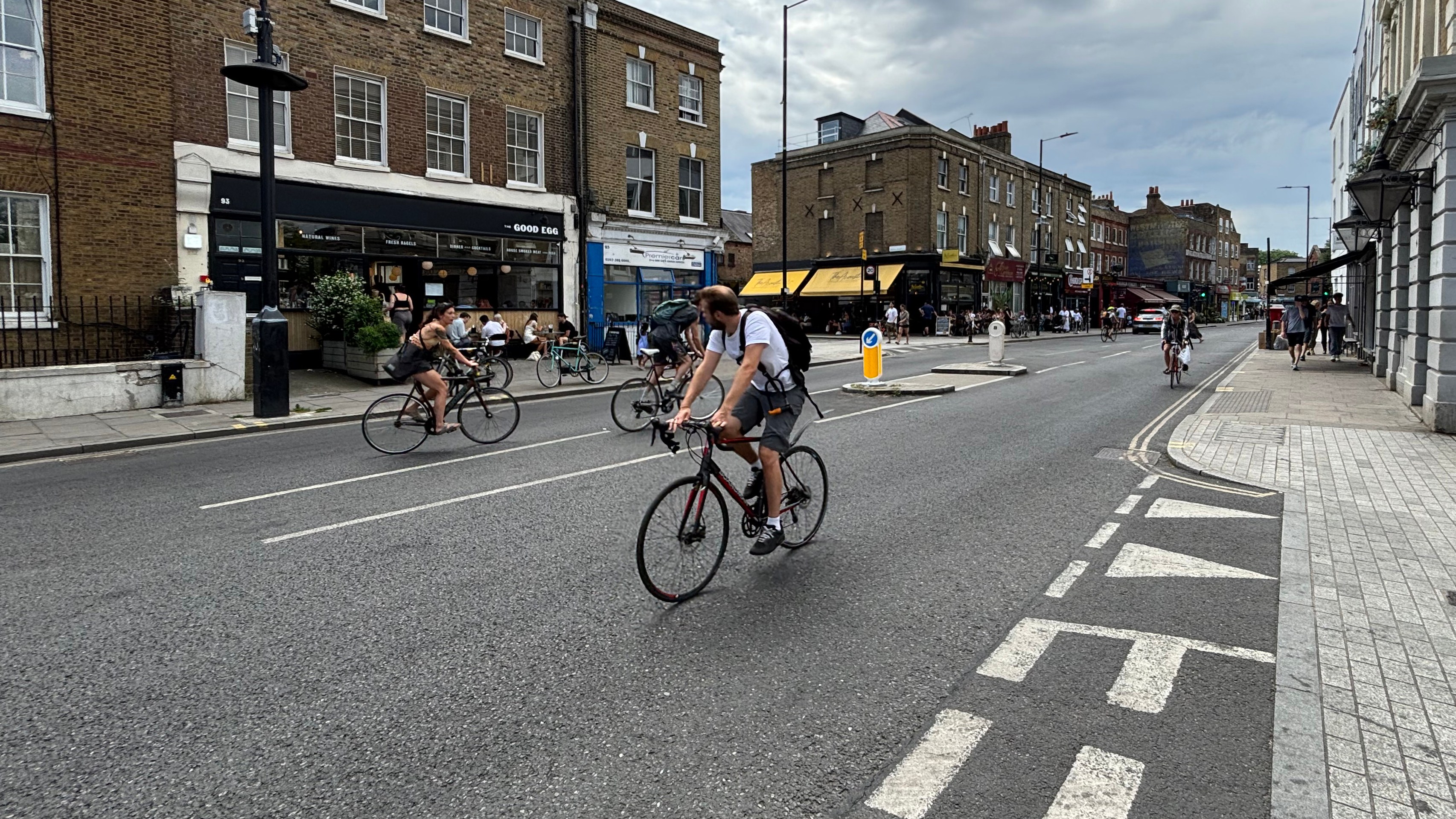
New York City’s Department of Transportation is joining neighborhood representatives and advocates for an October 13 ribbon cutting for the Avenue B street-improvement project. Streetsblog reports that the project converts Avenue B to one-way northbound operation between East Seventh and East Tenth Streets. The redesigned corridor is intended to change local traffic patterns and improve conditions for walking, cycling and access to neighborhood businesses. The project is being described as a street-improvement initiative rather than a formally designated low-traffic neighborhood.
WHY IT MATTERS TO REGULATORS:
Local street-design projects can affect passenger pick-up and drop-off activity, curb access, delivery operations, routing, accessibility and interactions among taxis, FHVs, micromobility users and pedestrians.
Source: |
||||||
Oregon | Autonomous Ride-Hailing & Local Permitting
Portland Considers Staged Robotaxi Permitting, Fleet Caps and Data RequirementsStatus: Proposed framework; October 13 committee discussion, not a final adoption. Portland’s Public Works Committee is scheduled to discuss a proposed robotaxi framework that would limit initial deployment to 75 vehicles per company and 225 citywide in the first year. Before offering paid rides, an operator would need to complete 50,000 miles of permitted local testing, split equally between operation with and without a human driver. The proposal also addresses safety and first-responder plans, crash and trip data, electric vehicles, approved service areas and a potential per-trip driver-support fee.
WHY IT MATTERS TO REGULATORS:
Portland’s proposal offers a municipal example of linking commercial AV entry to staged testing, deployment limits, operating data and emergency coordination.
|
||||||
Minnesota | AV Planning, Accessibility & Data
St. Paul Proposes AV Policy Study Before Commercial DeploymentStatus: Resolution scheduled for October 14 consideration; not yet adopted. St. Paul City Council President Rebecca Noecker has proposed a resolution directing the city to study autonomous vehicles and develop regulatory recommendations before commercial operations begin. The proposed review would examine workforce effects, public safety, accessibility, data storage and traffic impacts. If adopted, the study would be led by the city’s planning commission and incorporate input from labor organizations, disability advocates, public-safety representatives and other stakeholders.
WHY IT MATTERS TO REGULATORS:
The proposal illustrates a pre-deployment approach to AV governance, using a structured study and stakeholder participation to identify local operating expectations before commercial service begins.
|
||||||

|
||||||
Manitoba | Micromobility & Road Safety
Manitoba Advances Rules for E-Scooters and Personal Electric VehiclesStatus: Proposed legislation; requirements expected to take effect in 2027. Manitoba is advancing legislation that would bring e-scooters and certain other personal electric vehicles under The Highway Traffic Act. The proposed framework includes a 25 km/h speed limit, minimum rider age of 16, helmet requirements, sidewalk restrictions and prohibitions on operating while impaired. Riders would be directed to shared paths or roads with speed limits of 50 km/h or less, and would be required to use hand signals and obey traffic signs.
WHY IT MATTERS TO REGULATORS:
The proposal provides a current example of integrating personal mobility devices into a road-safety framework through rules addressing speed, age, helmets, sidewalks and impaired operation.
Source: |
||||||
Prince Edward Island | Accessible Taxi Service
Prince Edward Island Continues On-Demand Accessible Taxi PilotStatus: Two-year pilot announced October 2; recent regulatory-relevant carryover. Cudmore’s Accessible Cab is providing transportation for residents and visitors with disabilities in Charlottetown, Stratford and Cornwall. The two-year pilot is operated by Pat & the Elephant through a provincial-municipal partnership. The vehicle accommodates up to two wheelchairs, advance booking is not required, and the pilot also offers evening and overnight availability.
WHY IT MATTERS TO REGULATORS:
The service addresses the gap between scheduled accessible transportation and spontaneous taxi travel. Its on-demand model is a practical reference for availability, vehicle capacity and equitable passenger access.
Source: |
||||||
Canada | Rideshare Marketplace & In-Vehicle Media
GOOD TRAFFIC Announces Rideshare Advertising Platform Expansion Into CanadaStatus: Company announcement issued October 13; not a licensing or regulatory action.
GOOD TRAFFIC, formerly known as Mobilads, announced the expansion of its rideshare advertising platform into Canada. The company said the expansion follows earlier entries into Brazil and Australia and is intended to connect brands with in-vehicle advertising opportunities across rideshare networks. The announcement describes commercial marketplace expansion rather than a new transportation-safety or licensing requirement.
WHY IT MATTERS TO REGULATORS:
In-vehicle advertising can raise practical questions about passenger experience, driver compensation, data use, content standards and the relationship between transportation services and media platforms.
|
||||||

|
||||||
London, United Kingdom | AV Passenger Services
London Assembly Report Questions Readiness for Driverless Passenger ServicesStatus: Committee recommendations; not newly enacted operating requirements.
The London Assembly Transport Committee’s report, Who’s driving the future of autonomous transport in London?, sets out recommendations for stronger local oversight of autonomous passenger services. The report calls for Transport for London to have a more direct role in local permitting and operational oversight. Its 13 recommendations include a mechanism to request immediate permit suspension, reporting of crashes and near misses within 24 hours, monitoring empty-vehicle mileage, engagement with disabled passengers and a coordinated emergency-services framework.
WHY IT MATTERS TO REGULATORS:
The report provides a practical regulatory checklist for AV passenger services, covering permitting, accessibility, emergency coordination, congestion and workforce transition.
Sources: |
||||||
United Kingdom | Taxi & Private-Hire Compliance
New UK Right-to-Work Rules Expand Operator Responsibilities for Taxi and Private-Hire DriversStatus: Updated guidance applies to checks carried out from October 1, 2026. Updated Home Office guidance addresses right-to-work checks in the taxi and private-hire sector. The rules may place additional responsibilities on certain operators, including businesses engaging self-employed drivers and subcontractors. The change reinforces the importance of clear documentation and defined compliance roles among licensing authorities, operators, fleet providers and drivers.
WHY IT MATTERS TO REGULATORS:
The guidance provides a current reference for driver-screening practices, operator recordkeeping and coordinated compliance oversight in a sector with multiple licensing and contracting arrangements.
Source: |
||||||
West Northamptonshire, United Kingdom | Taxi & Private-Hire Licensing
West Northamptonshire Opens Consultation on Taxi and Private-Hire Licensing Policy UpdatesStatus: Public consultation opened October 12; comments accepted through December 6, 2026. West Northamptonshire Council has opened a public consultation on proposed changes to its hackney carriage and private-hire licensing policy. The review covers driver licensing, vehicle standards, safeguarding, environmental requirements and executive and chauffeur-driven services. Reported proposals include a process for considering certain repaired Category N vehicles, additional inspection requirements, clarification of medical and driving-licence checks, English-language proficiency, safeguarding incident reporting and Disclosure and Barring Service requirements. The draft would retain the Euro 6 standard for new and replacement vehicles.
WHY IT MATTERS TO REGULATORS:
The consultation provides a current local-government example of modernizing taxi and private-hire standards across vehicle condition, safeguarding, executive-service exemptions, driver checks and environmental requirements.
Source: |
||||||

|
||||||
Singapore | AV Licensing & Safety Framework
Singapore Develops Licensing Rules for Autonomous Ride-HailingStatus: Official policy reply; legislation anticipated in the second half of 2027. Singapore’s Ministry of Transport says it is developing a more holistic autonomous-vehicle legislative framework addressing licensing and safety. A bill and related amendments are expected to be tabled in the second half of 2027, ahead of planned autonomous ride-hailing deployment from 2028. Current revenue passenger deployments require Land Transport Authority approval following safety and operational assessments. The ministry also identifies incident-reporting requirements for events involving third parties or property damage.
WHY IT MATTERS TO REGULATORS:
Singapore distinguishes current operational approvals from its future legislative framework. Its approach offers useful comparisons for AV licensing, safety assessment, incident reporting and potential data publication.
Source: |
||||||
China | Accessible Taxi Service Standards
China Approves National Standard for Accessible Taxi ServicesStatus: National standard reported as approved and released October 9; implementation details should be confirmed against the official text. China’s State Administration for Market Regulation approved and released the national standard Specifications for Accessible Taxi Operation Services (GB/T 48311-2026), according to reporting on the announcement. The standard is intended to guide accessible taxi operations and service delivery. The development is a standards action rather than a new operating authorization or enforcement measure.
WHY IT MATTERS TO REGULATORS:
A national accessible-taxi standard can support more consistent expectations for passengers with disabilities, including vehicle features, booking processes, driver training and service-quality measures.
Source: |
||||||
United Arab Emirates | Autonomous Mobility Deployment
UAE Officials Project Expansion of Autonomous Taxis and Delivery VehiclesStatus: Official projection reported October 6; deployment plans, not a blanket operating authorization.
Officials in the United Arab Emirates said more than 10,000 autonomous taxis and delivery vans are expected to operate across the country next year, with vehicle orders already placed as driverless services scale. The projection describes anticipated deployment activity rather than a single new regulatory approval. Operators remain subject to applicable safety, licensing and operational requirements in the jurisdictions where they operate.
WHY IT MATTERS TO REGULATORS:
The UAE example illustrates how governments are preparing for multi-use autonomous fleets spanning passenger transportation and delivery. Planned vehicle counts should remain separate from authorized fleets and actual passenger-service availability.
|
||||||
Featured Research / Study |
||||||
Research | Automation, Intersection Operations & Network Performance
Research Examines How Connectivity and Automation Can Affect Signalized-Intersection CapacityStatus: Peer-reviewed transportation research; applicability depends on local traffic conditions, technology configuration and deployment mix. Research published in Transportation Research Part C examines the effects of connectivity and automation on saturation headway and capacity at signalized intersections. The analysis finds that deployment outcomes depend on the share of connected and automated vehicles, their operating behavior and the surrounding traffic environment. The study underscores that automation does not inherently produce a single, universal traffic-capacity outcome. Operational design, vehicle behavior, road geometry and interaction with human drivers remain significant variables.
WHY IT MATTERS TO REGULATORS:
As jurisdictions assess automated passenger-service expansion, traffic-management and curb-management planning should account for real-world operational conditions rather than assume that AVs will automatically reduce congestion or increase road capacity.
Source: |
||||||
A Message From the IATR President
At the International Association of Transportation Regulators (IATR), our regulators are at the forefront of addressing both the challenges and opportunities facing the mobility paradigm. Our IATR members, partner organizations, and regulated industries will continue on our shared quest to fulfill the mission of our non-profit educational organization—to bring about Multi-Modal Mobility Innovation for All! This mission can best be accomplished through information sharing, collaboration, identifying and promoting best practices, and educating our membership. These educational updates and electronic media clips are affectionately known as “IATR snips” and endeavor to cover all aspects of mobility around the globe—especially news and developments involving safety, technology innovation, multi-modal integration, automation, sustainability, electrification, accessibility, regulatory modernization, and equity. If you would like more information about the IATR, please visit www.iatr.global. Current members can renew their memberships by logging in through the IATR portal at the top right-hand side of the website. If you forgot your membership password, please email info@iatr.global. |
||||||
International Association of Transportation RegulatorsAdvancing safe, equitable, innovative, and effective transportation regulation worldwide. |
||||||
|
International Association of Transportation Regulators |