| View as Webpage | ||||||||||

| ||||||||||
|
Daily Transportation News Wednesday, October 21, 2026 | ||||||||||
| Editorial and legal note: This briefing is provided for general information and professional awareness. It summarizes publicly available materials from government agencies, legislatures, transportation providers, companies, research organizations, and news organizations. Inclusion does not constitute IATR endorsement, legal advice, a finding of fact, or a recommendation that any regulator adopt a particular policy. Readers should consult the original source and applicable law before relying on any item for regulatory, procurement, enforcement, or operational decisions. Image credits identify sources and do not constitute permission to reproduce images. | ||||||||||
| Top Highlight | ||||||||||
New York City | Accessible Taxi Service
NYC TLC Reports More Than Half of Active Yellow-Taxi Fleet Is Now Wheelchair AccessibleStatus: TLC fiscal-year performance update; reported through October 2026. The New York City Taxi and Limousine Commission reports that, for the first time, more than half of the active medallion taxi fleet is wheelchair accessible. The agency lists 5,911 accessible yellow taxis on the road through October 2026 and says licensed e-hail applications must provide a customer call-center option for customers requesting a wheelchair-accessible vehicle. The figures mark a significant milestone in the city’s accessible-taxi program, but vehicle counts alone do not show whether riders experience timely pickups or consistent service availability across the five boroughs. Service quality questions remain distinct from fleet-composition progress. WHY IT MATTERS TO REGULATORS: Fleet conversion is only one part of accessible service delivery. Regulators should pair accessible-vehicle counts with wait-time standards, trip-completion rates, geographic coverage, booking access and complaint data to judge whether service is actually meeting rider needs.
Read more → |
||||||||||
| ||||||||||
 | ||||||||||
|
Ontario | Regional Transit Governance
The Town of St. Marys, Ontario Plans to Leave PC Connect as Local Funding Pressure GrowsStatus: Withdrawal plan announced; local service set to end December 31, 2026. 
Image: StratfordToday. The town of St. Marys officials have announced plans to withdraw from the PC Connect regional transportation partnership at the end of 2026. Reporting said the municipality cited the loss of earlier provincial support, relatively limited local ridership and growing local cost pressures as reasons for winding down participation. The case highlights the financial fragility of smaller regional transit models once time-limited funding expires. It also raises an important governance question about how partner municipalities should handle service continuity for riders who still depend on these trips for essential destinations. WHY IT MATTERS TO REGULATORS: Rural and regional partnerships can improve access but may be difficult to sustain when funding and demand are uneven. Regulators and local governments should review governance terms, exit conditions and protections for mobility-dependent riders.
Read more → | ||||||||||
|
Ontario | Transit Fare Enforcement
Ottawa Moves Ahead With Special Constables for Fare Enforcement on O-Train Line 2 and Bus NetworkStatus: Municipal plan moving forward; enforcement role under development. Ottawa is moving ahead with a plan to use special constables for transit fare enforcement as part of a broader effort tied to O-Train Line 2 and bus operations. Reporting indicates the proposal is intended to strengthen fare compliance and improve enforcement capacity without relying solely on existing policing structures. The move is notable because transit-fare enforcement carries operational, legal and equity implications, especially when agencies are trying to improve revenue recovery while maintaining public confidence. The details of training, discretion, data reporting and complaint handling will be important. WHY IT MATTERS TO REGULATORS: Special-constable models can change how agencies balance fare compliance, rider treatment and accountability. Regulators should focus on enforcement powers, reporting obligations, appeals, use-of-force limits and equity impacts.
Read more → | ||||||||||
 | ||||||||||
|
Czech Republic | Taxi Fare Regulation
Prague Restores Metered-Taxi Fare Caps After Complaints About High PricesStatus: Reported in effect October 21. 
Image: Expats.cz. Prague has restored fare ceilings for taxicabs using taximeters, returning the maximum rate to CZK 42 per kilometer and CZK 7 per minute of waiting time. Current reporting said the city acted after evaluating the earlier removal of price regulation and receiving complaints that fares had become unreasonably high. The reported decision does not restore price caps for app-based ride services, which operate under a different regulatory path. That distinction makes the Prague action especially relevant for regulators examining how traditional metered-taxi controls can diverge from rules governing app-booked services. WHY IT MATTERS TO REGULATORS: This is a live example of a jurisdiction reversing a deregulatory change when complaint experience suggested consumer protection had weakened. It highlights the value of complaint tracking, legal clarity and carefully distinguishing between metered and app-based transport markets.
Read more → | ||||||||||
|
Germany | Taxi Pricing Reform
Hamburg Evaluation Keeps Flexible Taxi Pricing in FocusStatus: Evaluation findings reported October 21; official taxi fare framework already allows fixed fares for qualifying bookings. Hamburg remains an important case study for flexible taxi pricing after reporting on an evaluation of fixed prices and pricing corridors for app-booked trips. Current reporting says the October 2025 to June 2026 pilot of flexible corridors produced findings that supporters consider positive for riders and operators. At the same time, the interpretation of those findings requires caution because reported revenue gains do not automatically establish broad sector benefit or improved driver economics. The more durable regulatory question is whether limited fare flexibility can coexist with transparency, enforceability and public confidence in a licensed taxi system. WHY IT MATTERS TO REGULATORS: Hamburg offers a concrete model for experimenting inside a formal tariff regime rather than abandoning fare oversight entirely. Agencies considering similar approaches should focus on consumer disclosure, auditing, dispatch-platform equity and how flexibility affects smaller operators as well as larger fleets.
Read more → | ||||||||||
|
United Kingdom | Bus Conduct Enforcement
England Updates Guidance on Bus-Byelaw Enforcement Against Antisocial BehaviourStatus: Government measures announced October 19; local implementation depends on byelaw adoption and enforcement arrangements. 
Image: UK Department for Transport. The U.K. government announced measures aimed at disruptive behaviour on buses and trains, including new support for local transport authorities in England to use byelaws addressing conduct such as vaping and littering on buses. The announcement also emphasized that enforcement should fall to authorized officers rather than bus drivers themselves. This is not a blanket nationwide ban automatically applied in all local systems. Instead, it is a regulatory and operational framework that local authorities may use, making implementation details central to how the policy works in practice. WHY IT MATTERS TO REGULATORS: Passenger-conduct rules often fail when responsibility is unclear or pushed onto frontline operators. This model is relevant because it separates behavioral rules, local byelaw authority and designated enforcement responsibility.
Read more → | ||||||||||
 | ||||||||||
|
Mexico | Passenger Safety & Verification
Michoacán Expands “Taxi Seguro” With QR and Hologram VerificationStatus: Government-reported program update highlighted October 21. Michoacán officials said the Taxi Seguro program is using holograms and QR codes so passengers can identify participating taxis and verify information about drivers and vehicles. State reporting also said the program includes checks on operator documentation, current licensing and insurance, and is operating in Morelia, Uruapan and Pátzcuaro. Officials added that participating drivers receive training that includes gender perspective and first aid, and that the program is linked to alert mechanisms through C5 Michoacán. The initiative is being presented as a confidence-building and safety measure, particularly for women using public transport. WHY IT MATTERS TO REGULATORS: Taxi Seguro is a practical model for combining passenger-facing verification, operator compliance checks and safety-response tools in one program. Regulators considering similar systems should examine privacy, verification upkeep, complaint pathways and whether visible certification changes rider confidence or incident reporting.
Read more → | ||||||||||
|
Philippines | Airport Taxi Enforcement
NAIA Enforcement Operation Targets Taxi Meter Refusal and OverchargingStatus: Enforcement operation conducted October 20; reported October 20. The Land Transportation Office said it apprehended 11 taxis during an enforcement operation at the Ninoy Aquino International Airport complex. Reported violations related to franchise compliance and included allegations that some drivers refused to use the meter, negotiated fares instead of following metered pricing, or overcharged passengers. Authorities said enforcement documents were issued and that monitoring would continue against both colorum vehicles and taxi drivers accused of abusive pricing practices. Because the reported conduct remains allegation-based at this stage, the item should be treated as an enforcement action rather than a final adjudication. WHY IT MATTERS TO REGULATORS: Airports remain one of the most sensitive environments for fare enforcement because arriving passengers are often unfamiliar with local rules and more exposed to coercive practices. The case is a reminder that visible inspection, meter enforcement and operator accountability remain essential even as digital booking options expand.
Read more → | ||||||||||
|
South Africa | Minibus Taxi Enforcement
Gauteng Continues Enforcement Against Unlicensed and Unroadworthy Minibus TaxisStatus: Ongoing enforcement campaign reported October 20. 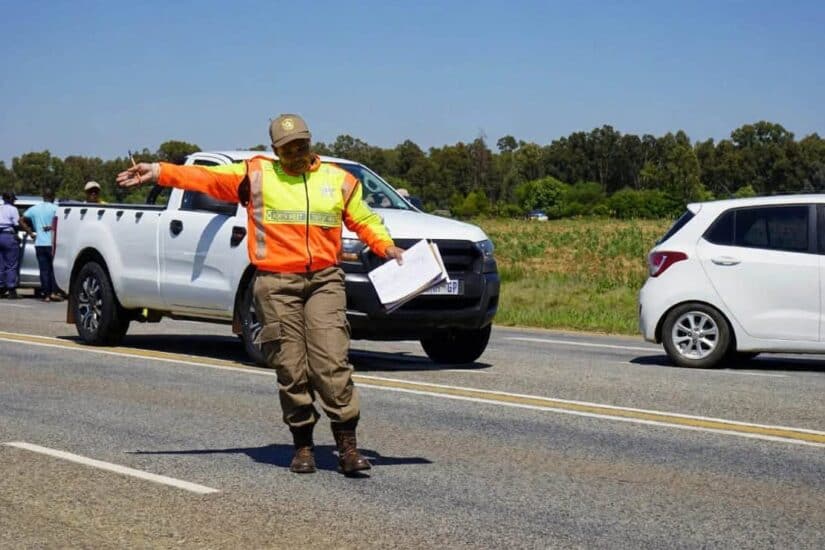
Image: The Citizen. Gauteng officials reported continued traffic and safety operations targeting unlicensed, overloaded and unroadworthy minibus taxis, with authorities issuing discontinuation notices and impounding vehicles during joint enforcement activity. The campaign is part of a broader road-safety and compliance effort involving multiple enforcement bodies. Minibus-taxi enforcement remains a recurring challenge because regulators must balance immediate roadside safety with the reality that the sector provides essential mobility for many riders. This makes the quality of inspection procedures and return-to-service decisions especially important. WHY IT MATTERS TO REGULATORS: High-volume paratransit sectors often require intensive field enforcement, but credibility depends on consistency, documentation and follow-up. Regulators should watch how defect notices, impoundment practices and licensing checks are applied in practice.
Read more → | ||||||||||
A Message From the IATR President
At the International Association of Transportation Regulators (IATR), our regulators are at the forefront of addressing both the challenges and opportunities facing the mobility paradigm. Our IATR members, partner organizations, and regulated industries will continue on our shared quest to fulfill the mission of our non-profit educational organization—to bring about Multi-Modal Mobility Innovation for All! This mission can best be accomplished through information sharing, collaboration, identifying and promoting best practices, and educating our membership. These educational updates and electronic media clips are affectionately known as “IATR snips” and endeavor to cover all aspects of mobility around the globe—especially news and developments involving safety, technology innovation, multi-modal integration, automation, sustainability, electrification, accessibility, regulatory modernization, and equity. If you would like more information about the IATR, please visit www.iatr.global. Current members can renew their memberships by logging in through the IATR portal at the top right-hand side of the website. If you forgot your membership password, please email info@iatr.global. | ||||||||||
International Association of Transportation RegulatorsAdvancing safe, equitable, innovative, and effective transportation regulation worldwide. |