| View in Browser | ||
 | ||
Daily Transportation News Wednesday, October 28, 2026 | ||
| Editorial and legal note: This briefing is provided for general information and professional awareness. It summarizes publicly available materials from government agencies, legislatures, transportation providers, companies, and news organizations. Inclusion does not constitute IATR endorsement, legal advice, a finding of fact, or a recommendation that any regulator adopt a particular policy. Readers should consult the original source and applicable law before relying on any item for regulatory, procurement, enforcement, or operational decisions. “Why it matters” boxes are editorial analysis. Earlier-source context and company plans are labeled separately. | ||
| Event Highlight | ||
IATR PRESIDENT SPEAKING EVENT · THIS FRIDAY 2026 Transportation in NY Summit Friday, October 30, 2026 · 9:00 AM–3:45 PM EDT Matt Daus, IATR President and Transportation Technology Chair for the University Transportation Research Center, Region 2 (NY/NJ), at the City University of New York, is scheduled to moderate Next-Generation Transportation in New York from 2:50–3:45 PM EDT. The panel will examine connected and automated systems, artificial intelligence, data analytics, digital project delivery and sustainable mobility, with attention to transportation performance, customer experience and resilient infrastructure. Panelists: Demetrius Crichlow, New York City Transit; Seth Wainer, Port Authority of NY & NJ; Keith Todd Kerman, NYC Department of Citywide Administrative Services; Dani Simons, Alstom; Christine Weydig, Schneider Electric; and Nate Bazydlo, NUAIR. Source: City & State event agenda. Schedule subject to change. Event artwork: organizer-hosted image supplied for this edition; reuse permission not independently verified. | ||
| Top Highlight | ||
FEATURING IATR PRESIDENT MATT DAUS Addressing the NYC E-Bike and E-Scooter Safety Crisis: What Should the Council and Mayor Do Now? Image: amNewYork · Photo by Ben Brachfeld.
Below is an excerpt from an amNewYork op-ed written by Matthew W. Daus. In the first 10 months of this year, at least 28 people were killed while riding electric bicycles, electric scooters, and illegal “e-motos.” Almost all these crashes involve collisions with cars or trucks. The NYC Department of Transportation, to its credit, has brought fatal crashes between vehicles and pedestrians to historic lows, a staggering achievement. We must do the same for micromobility users and pedestrians. Last month, the City Council convened a marathon oversight hearing on two dozen micromobility bills and resolutions. The proposals include banning the sale of Class 3 e-bikes, which have a top speed of 25 mph, making delivery app companies more responsible for the conduct of delivery workers, and calling on the NY State Legislature to pass “Priscilla’s Law,” which would require licensing and registration for all e-bikes and e-scooters. Although the Council’s hearing ran all day and dozens of people testified, it is unclear what the next steps will be for the City to make micromobility safer. The Council faces a difficult job because it must solve several complex policy problems at once. The first is the proliferation of illegal high-speed e-motos that resemble e-bikes but operate more like motorcycles. These heavier, faster devices account for more than one-half of micromobility fatalities. Street enforcement is difficult because police officers cannot readily distinguish illegal e-motos from lawful e-bikes. The most effective response therefore begins at the point of sale. The Mamdani Administration has cracked down on retail storefronts that sell e-motos and issued cease-and-desist letters to 42 online retailers. If sustained, these efforts will pay off over time. The Council could go a step further and prohibit the sale of Class 3 e-bikes. Although state law currently authorizes these throttle bikes that have a top speed of 25 mph, their motors let riders substantially exceed the City’s 15-mph e-bike speed limit, and they are poorly suited for our crowded bicycle lanes. The Council must also address the safety of delivery workers. We all depend on tens of thousands of delivery cyclists to bring us our takeout fast, while it is still hot. These incentives pressure many delivery cyclists to cut corners, run red lights, and ride on sidewalks. One bill the Council is considering would require delivery app companies to confirm that delivery workers are riding legal e-bikes, not illegal e-motos. The Council is also considering a proposal that would require delivery companies to use technology and trip data to monitor delivery workers’ behavior and intervene if they ride recklessly. However, there are legitimate implementation concerns being raised by delivery app companies policing independent contractor delivery workers themselves, and in turning over data to the government in terms of privacy violations and the disclosure of trade secrets. Even delivery workers are concerned about due process in terms of being thrown off delivery platforms; similar to what has happened in the ride-hail industry, where drivers are disconnected from Uber and Lyft platforms resulting from passenger complaints. Source: amNewYork Why it matters to regulators: The op-ed connects device classification, point-of-sale enforcement, delivery-platform accountability and rider safety with implementation questions about privacy, trade secrets and due process. The recommendations represent the author’s views; proposals described in the excerpt should not be read as adopted requirements. | ||
 | ||
United States | Service expansion | Company announcement · October 27 Waymo Plans Nearly 250 Square Miles of Additional Coverage Across Five Markets Image source: Waymo. Waymo says it will expand coverage over the next week in Los Angeles, Nashville, Orlando, San Diego and the San Francisco Bay Area. The announced additions total nearly 250 square miles and include a new connection to BART’s Berryessa Station. This is an announced rollout schedule, not confirmation that every added area is already available. In Los Angeles, the expansion extends down the coast to the South Bay, including Torrance. Nashville coverage moves farther south to destinations such as the zoo, while Orlando’s eastern coverage area will nearly double, with enhanced service downtown. San Diego service is extending north to La Jolla. In the Bay Area, the additions extend service farther south and add the Berryessa transit connection. Waymo directs riders to its app and updated service-area maps to check the locations available during the rollout. Why it matters to regulators: Expanded boundaries put curb access, first- and last-mile connections, emergency coordination and service availability in focus. Transit connectivity should be evaluated alongside accessibility and passenger-assistance arrangements. | ||
Tampa, Florida | Accessibility | Reported development · October 28 Tampa Robotaxi Coverage Raises Practical Accessibility QuestionsWUSF reports that Waymo opened its Tampa service to the public on October 14, following a limited launch in September. Its coverage spans about 50 square miles. Passengers request rides and unlock vehicles through an app, and there is no onboard driver to provide assistance. The reporting examines potential benefits for people unable to drive, alongside practical limitations. The current Tampa coverage includes Hyde Park, Westshore, Water Street and Ybor City. WUSF accompanied vision rehabilitation therapist Chelsea Bridges, who described difficulty identifying her vehicle and entering its higher cabin, while welcoming the audible notification before arrival. Her experience illustrates both the appeal of independent travel and the practical obstacles some riders still encounter. AARP Florida has used a buddy system to help older adults learn the service. Waymo also works with disability organizations through its Waymo Accessibility Network. These initiatives accompany the app-based booking and vehicle-unlocking process; they do not mean that an onboard attendant is available. Why it matters to regulators: Independent travel and accessible service are not identical. Oversight should distinguish the needs of passengers who can transfer independently from those requiring wheelchair access, boarding assistance or help at the destination. | ||
Fort Bragg, North Carolina | Microtransit | Reported forthcoming service · October 28 Free On-Demand Transportation Planned for Fort BraggABC11 reports that service members and their families at Fort Bragg will soon have a free, on-demand transportation option intended to reduce dependence on personal vehicles. The report describes a forthcoming service; this item does not establish that passenger operations have begun or confirm detailed operating conditions. The announcement identifies service members and their families as the intended users and describes the program as an alternative to relying on a personal vehicle. ABC11 characterizes it as an on-demand public transportation option, rather than reporting a fare reduction on an existing fixed-route service. The brief notice does not supply a confirmed launch date, operating hours, booking instructions or accessible-vehicle specifications. Those details remain unconfirmed in this item; the report establishes a forthcoming service announcement, not a verified account of current passenger operations. Why it matters to regulators: On-demand partnerships require clarity on eligibility, booking access, accessible vehicles, service boundaries and passenger complaints. Free fares do not by themselves establish service reliability or equitable access. | ||
 | ||
British Columbia | Electrification policy | Campaign commitment, not enacted repeal · October 27 Incoming B.C. Government’s ZEV Pledge Creates Fleet-Planning UncertaintyElectric Autonomy reports that premier-designate Lorne Doerkson has pledged to end British Columbia’s zero-emission vehicle sales quota and repeal the CleanBC climate plan. Other reporting confirms the Conservatives’ election victory. The EV-policy article says the implementation timetable and mechanism remain unclear. A campaign commitment should not be presented as an enacted repeal or a change already effective. The province enacted its Zero-Emission Vehicle Act in 2019 and subsequently revised its sales targets. Electric Autonomy reports that the 2035 target had already been reduced to 75% earlier this year, before the incoming government’s pledge to eliminate the quota. The article says the new government’s cabinet, portfolio assignments and initial agenda will help clarify how quickly policy changes may proceed. It reported an expected swearing-in around mid-November. The platform also addresses natural-gas development, critical minerals and conditions for supporting renewable technologies, but the report does not identify a completed repeal of the ZEV framework. Why it matters to regulators: For taxi, TNC, municipal and other passenger fleets, the relevant watchpoints are the scope and effective dates of any legislation or regulations, vehicle supply and associated incentives. Provincial sales requirements and local fleet conditions should not be treated as interchangeable. | ||
Toronto, Ontario | AV approval and workforce | Reported development · October 28 Ontario Seeks Credible Jobs Plan as Toronto Reviews AV Licensing Implications Image source: CBC News. CBC reports that Ontario expects Waymo to meet safety and operational requirements and provide a credible jobs plan before progressing beyond its initial phase. Toronto staff are reviewing how the Vehicle-for-Hire Bylaw would apply to automated vehicles and what changes might be needed. Waymo targets riders in 2028 and says it expects local operations jobs if approved; these are company plans, not guaranteed employment or operating permission. Waymo told CBC that an approved rollout could create hundreds of local jobs in areas such as fleet management and customer service, and that current taxi and ride-hailing drivers often fill such roles in its other markets. Driver representatives and Beck Taxi expressed concerns about additional competition; those concerns and the company’s employment projections are attributed positions, not established measurements of future job losses or gains. The provincial transportation ministry says a credible jobs plan must identify projected positions, hiring timelines and opportunities for Ontario workers and businesses. Toronto has not implemented a new automated-vehicle licensing regime; staff are reviewing how its existing bylaw would apply while provincial approval remains outstanding. Why it matters to regulators: A staged review can distinguish testing approval, passenger-service licensing and workforce commitments. Job projections need defined positions and hiring timelines; driver concerns should remain distinct from established findings about future employment effects. | ||
Canada–United States | Competition | Official review finding · October 28 Competition Bureau Flags Air Canada–United Coordination on 10 RoutesThe Competition Bureau says a proposed Air Canada–United Airlines arrangement would likely harm competition on 10 cross-border routes. Its report informs the Minister of Transport’s public-interest review. The airlines account for all nonstop passenger traffic on five affected routes, according to the Bureau. Existing restrictions under a 2012 consent agreement remain in force; the Minister has not been described here as approving the proposal. The proposal would expand coordination, including pricing, on routes where that activity is currently restricted. The Bureau says the change would eliminate an important source of competition and likely increase prices on most affected routes, with millions of dollars in consumer harm annually. It also found that barriers to entry and expansion would make competitive responses from other airlines unlikely to offset those effects. The routes connect Toronto, Montreal, Ottawa and Vancouver with U.S. cities including Chicago, Cleveland, Denver, Houston, New York, San Francisco and Washington. Under the Canada Transportation Act, the Minister will consider the Bureau’s report as part of the public-interest review and ultimately decide whether to authorize the arrangement. Why it matters to regulators: Although an aviation case, the review offers a useful comparison for transportation platform partnerships: route-level concentration, entry barriers and claimed coordination benefits warrant separate examination. This is not a new rule for ground transportation. | ||
 | ||
Germany | Taxi–AV partnership | Letter of intent · October 28 Tensor and Münchner Taxi Zentrum Outline Up to 500 Autonomous Taxis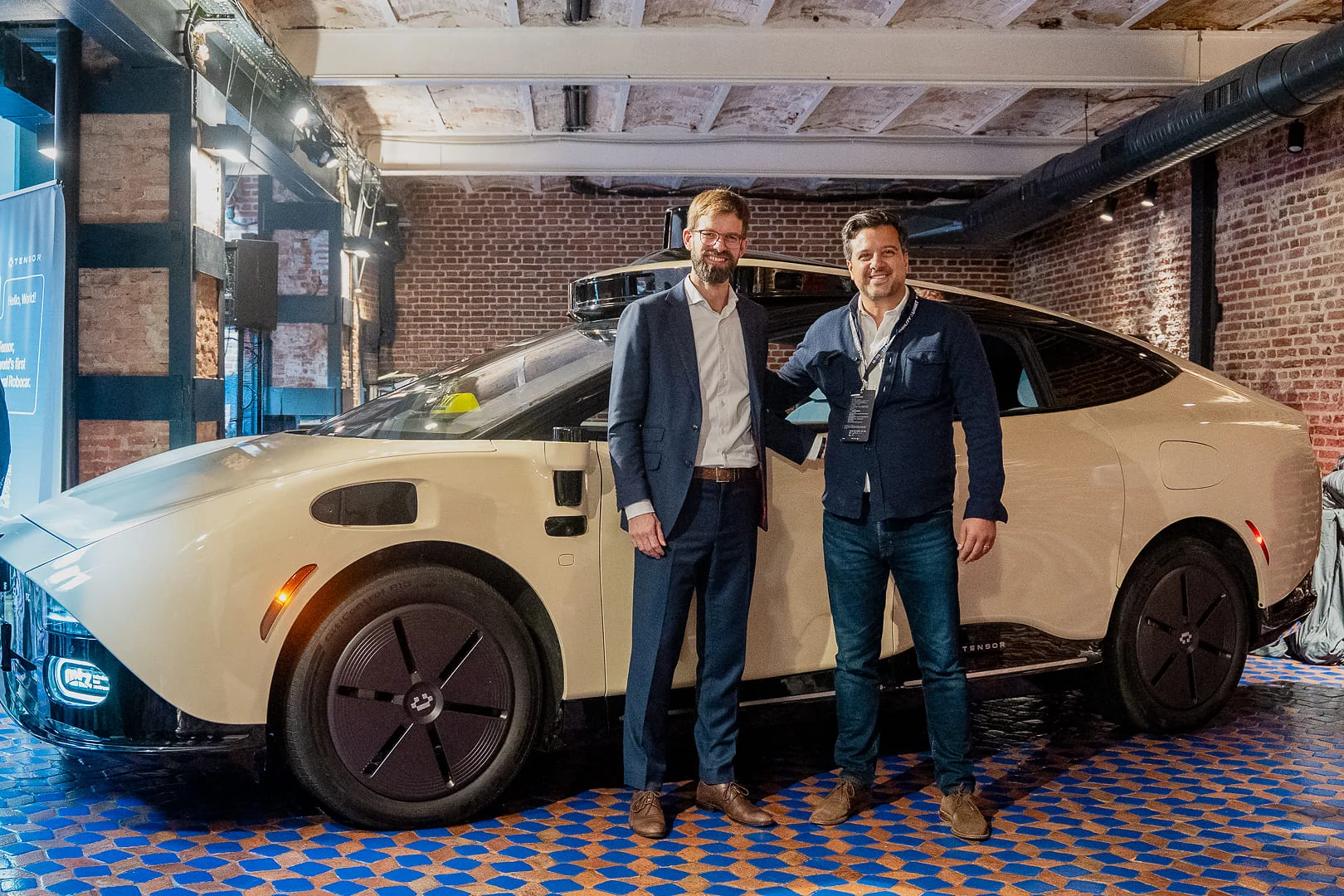 Image source: Tensor, via AI Insider. Tensor Auto and Münchner Taxi Zentrum (MTZ) have signed a letter of intent for up to 500 Robocars in German cities, according to AI Insider. MTZ would operate the vehicles under its own brand and dispatch system, while Tensor would supply vehicles and subscription-based technology and support. Deployment depends on definitive agreements and Level 4 approvals; no first-service timetable was provided. The proposed structure would leave fleet operations, customer relationships and ride data with MTZ. The operator would determine deployment locations and times in coordination with local authorities, and customers would book through its existing dispatch service. Tensor’s subscription would include autonomous-driving software, fleet-management tools, service and training. The companies also described a target of up to 10,000 additional Robocars with European fleet operators within 24 months of European availability, and plans to explore private sales in Germany. That broader target is not a firm order. MTZ’s CEO emphasized that professional drivers would remain important where passengers need personal service or assistance. Why it matters to regulators: An operator-led model raises questions about licence-holder responsibility, software support, ride-data control and passenger assistance. A proposed fleet ceiling is neither a firm order nor authorization to deploy that many vehicles. | ||
London, United Kingdom | Robotaxi deployment | Reported company target · October 27 Baidu and Freenow Continue Toward a Conditional 2027 London LaunchAutomotive World reports that Baidu’s Apollo Go and Lyft-owned Freenow have presented the RT6 in London and are targeting fully driverless testing and commercial service in 2027. The timing remains dependent on regulatory permissions. This is a follow-up on a previously covered project, not a newly authorized passenger service. The partners have been conducting safety-driver testing in the borough of Brent since July. Freenow’s UK general manager, Danny O’Gorman, told Automotive World that the company expects tens of vehicles over the next year or two and is working with Transport for London. He pointed to narrow streets, speed bumps and widespread 20-mph limits as demanding local conditions. The RT6 is purpose-built for ride-hailing and has a detachable steering wheel. Freenow says the proposed service would operate alongside human taxi and private-hire drivers rather than replace London’s black-cab service. Those statements describe the intended business model; they do not establish approval for unsupervised passenger operations. Why it matters to regulators: Regulators need a clear separation between supervised road testing, unsupervised vehicle operation and commercial passenger carriage. Operator accountability, insurance and disrupted-trip assistance remain central as projects move between stages. | ||
Madrid, Spain | Testing and launch readiness | Earlier announcement / regulatory watch Madrid Robotaxi Plans Illustrate the Gap Between Testing and Commercial ServiceIn its September 10 announcement, WeRide said it, Uber and AVOMO had received a DGT permit for deployment preparations, including mapping, route validation and operational-readiness testing. The initial phase envisages 20 vehicles with an onboard specialist. Commercial service was targeted for the end of 2026, subject to operational and regulatory milestones. This is earlier-source context, not an October 28 permit announcement. The announcement assigns separate roles to the partners: WeRide supplies autonomous-driving technology, Uber provides the passenger platform and AVOMO contributes fleet-operations expertise. Preparations cover high-demand areas in Greater Madrid under the DGT’s ES-AV framework. WeRide describes the permit as its first national approval for the GXR vehicle in the European Union. The initial vehicles would operate under the supervision of an in-car vehicle specialist. The release describes Madrid as the fourth city in the WeRide–Uber partnership’s planned 15-city program, with the remaining expansion targeted through 2030. These are company plans, and the announcement makes commercial commencement conditional on further operational and regulatory milestones. Why it matters to regulators: Communications should explain precisely what a permit permits. Road testing, fleet preparation and bookable fare-paying service are different milestones, even when a company describes the same project as a Level 4 deployment. | ||
 | ||
Vietnam | EV market entry | Reported recruitment development · October 28 Tesla Recruitment Signals Vietnam Entry; Launch Details Remain Unannounced Image source: Electrek. Electrek reports that a Tesla recruiter says the company is “officially coming” to Vietnam, alongside five openings covering sales, service, HR, purchasing and charging-project development. The article says pricing, models and store locations have not been announced. It places the move in a market where VinFast has a substantial presence, including sales linked to the GSM / Xanh SM taxi and ride-hailing business. Recruitment does not establish a retail or taxi-service launch. Electrek reports that Tesla Motors Vietnam LLC was registered in Ho Chi Minh City on September 11, with a business scope covering vehicle imports, wholesale and retail. The recruitment announcement therefore follows a corporate-registration step rather than standing alone as the first sign of preparations. The article reports that VinFast delivered 177,697 vehicles in Vietnam during the first nine months of 2026, approximately 36% of the national new-car market. It also identifies VinFast-affiliated V-Green as the dominant charging-network operator. Neither the charging-development vacancy nor Tesla’s company registration establishes that Tesla has opened vehicle orders or commissioned local chargers. Why it matters to regulators: Potential implications for fleet procurement, charging access, servicing and market competition depend on actual products and infrastructure commitments. A charging-related vacancy is not proof of an operating public charging network or a confirmed deployment schedule. | ||
Dubai, United Arab Emirates | AV testing infrastructure | Earlier announcement · September 27 Dubai Mobility Labs Provides a Testing and Certification Case StudyEmirates News Agency (WAM) reports that the RTA and Dubai Integrated Economic Zones Authority inaugurated Dubai Mobility Labs at Dubai Silicon Oasis on September 27. The facility provides 248 testing scenarios across controlled environments and public roads. DEKRA was appointed to operate it for its first three years. This item is an earlier-announcement regulatory spotlight, not a new October 28 opening. The facility includes operational facilities and EV charging infrastructure, with public-road testing extending to Al Qudra. WAM says it has already hosted trials involving autonomous technologies and vehicles from WeRide, Pony.ai and Tesla. DEKRA’s role covers testing and facilities management alongside compliance with international safety standards and operating practices. RTA links the project to Dubai’s strategy of making 25% of all mobility journeys autonomous by 2030. Officials also describe the labs as infrastructure for attracting investment, specialist talent and technology developers. That strategic target is separate from any individual operator’s testing permission or authorization to carry passengers. Why it matters to regulators: Shared test facilities can help structure repeatable safety assessment and evidence collection. Testing infrastructure should remain distinct from the approvals, operating limits and service conditions applied to individual passenger-transport operators. | ||
China / UAE / Europe | Autonomous mobility expansion | Earlier reporting · September 30 Momenta’s Expansion Targets Highlight the Need for Market-Specific ApprovalsReuters reported on September 30 that Momenta aimed to have thousands of robotaxis on the road the following year and was targeting Dubai and additional European cities. The report described testing in five Chinese cities, Munich and Abu Dhabi, with Japan also identified as a priority. These are company expansion ambitions, not proof that each proposed market has authorized commercial operations. At the time of the report, Momenta’s early-stage robotaxi business had more than 100 vehicles deployed across three countries. Robotaxi business head Shuo Xie projected a fleet in the hundreds by the end of 2026 and several thousand by the end of 2027. The report also described talks with additional European cities and a proposed Dubai deployment in 2027. Momenta’s other main business is advanced driver-assistance software sold to automakers, distinct from its robotaxi operations. Reuters identifies Mercedes-Benz as a backer and Toyota and BYD among its partners. The company’s projected growth should not be read as confirmation that all of the vehicles or markets described have reached commercial driverless service. Why it matters to regulators: Cross-border scale claims should be broken down by jurisdiction, operating mode, supervision and passenger access. Driver-assistance software and driverless passenger services require distinct descriptions and evidence. | ||
A Message From the IATR President At the International Association of Transportation Regulators (IATR), our regulators are at the forefront of addressing both the challenges and opportunities facing the mobility paradigm. Our IATR members, partner organizations, and regulated industries will continue on our shared quest to fulfill the mission of our non-profit educational organization: to bring about Multi-Modal Mobility Innovation for All! This mission can best be accomplished through information sharing, collaboration, identifying and promoting best practices, and educating our membership. These educational updates and electronic media clips are affectionately known as “IATR snips” and endeavor to cover all aspects of mobility around the globe, especially news and developments involving safety, technology innovation, multi-modal integration, automation, sustainability, electrification, accessibility, regulatory modernization, and equity. If you would like more information about the IATR, please visit IATR.Global. Current members can renew their memberships by logging in through the IATR portal at the top right-hand side of the website. If you forgot your membership password, please email info@iatr.global. | ||
INTERNATIONAL ASSOCIATION OF TRANSPORTATION REGULATORSAdvancing safe, equitable, innovative, and effective transportation regulation worldwide. Visit IATR.Global |
