|
Daily Transportation News
Wednesday, September 16, 2026
|
|
Editorial and legal note: This briefing is provided for general information and professional awareness. It summarizes publicly available materials from government agencies, legislatures, transportation providers, companies, and news organizations. Inclusion does not constitute IATR endorsement, legal advice, a finding of fact, or a recommendation that any regulator adopt a particular policy. Readers should consult the original source and applicable law before relying on any item for regulatory, procurement, enforcement, or operational decisions. Image credits and source links are provided where photographs are embedded; confirm image-use rights before publication.
|
|
IATR 2026 CONFERENCE & AUTONOMOUS MOBILITY GOVERNANCE
IATR 2026 Keynote: Mark J.F. Schroeder Calls for Safety-Focused Transportation Modernization
|
|
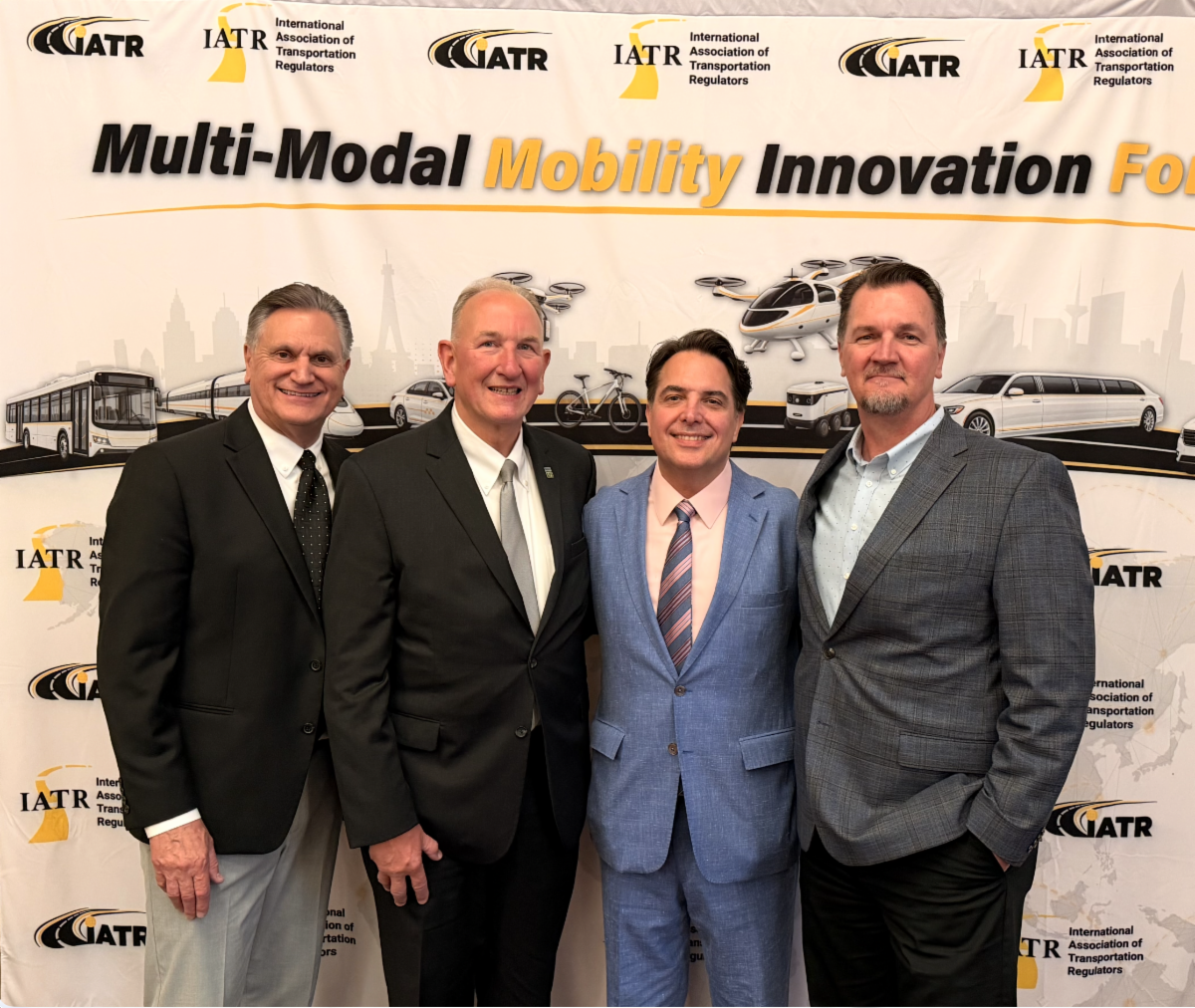
From left to right: Vaughn Hartung, Chairman, Nevada Transportation Authority; Mark J.F. Schroeder, former New York State DMV Commissioner; Matthew W. Daus, IATR President; and Curti Mell, Deputy Administrator, Las Vegas Taxicab Authority.
|
At the IATR 39th Annual Conference in Las Vegas on Tuesday, September 15, Mark J.F. Schroeder, former Commissioner of the New York State Department of Motor Vehicles, delivered the Boot Camp keynote on modernizing transportation regulation while preserving roadway safety and public trust. Drawing on his leadership at the New York State DMV and the Governor’s Traffic Safety Committee, Schroeder addressed technology modernization, automated safety enforcement, and Vision Zero-oriented roadway-safety strategies.
Under the conference theme, “AV City: Autonomous Mobility,” Hon. Mark Schroeder discussed New York’s measured, safety-focused approach to autonomous-vehicle testing and the importance of sustained public oversight as new mobility technologies advance. He emphasized the need for reliable data, agency coordination, accessibility, operational accountability, and public confidence when integrating automated passenger transportation.
WHY IT MATTERS TO REGULATORS: Robotaxi and AV policy involves more than an initial operating approval. Regulators need durable oversight systems for safety assurance, incident reporting, operational design domains, data access, accessibility, passenger protection, insurance and liability, emergency response, enforcement, and public communication. Schroeder’s keynote reinforces IATR’s guiding principles that innovation and automation should proceed within accountable, safety-centered, and equitable regulatory frameworks.
Source:
IATR 39th Annual Conference — “AV City: Autonomous Mobility”
|
NEW YORK AV ADVOCACY & PUBLIC ENGAGEMENT
A Better Road Forward Campaign Launches; Schroeder Named to New York AV Advisory Board

|
|
Image: Streetsblog NYC, as supplied. Confirm copyright holder, license, and required credit before external republication; substitute an original IATR or properly licensed image if necessary.
|
The connection between Schroeder’s keynote and New York’s evolving autonomous-mobility discussion became particularly timely on September 16. A Better Road Forward, a new 501(c)(4) advocacy coalition, announced a statewide campaign intended to build public engagement and support for the responsible introduction of fully autonomous passenger vehicles in New York.
The coalition’s advisory board includes Mark J.F. Schroeder, former New York State DMV Commissioner and IATR’s September 15 Boot Camp keynote speaker. The organization also lists former New York State Department of Environmental Conservation Commissioner Basil Seggos, Christine Quinn, Rev. Mark E. Blue, former Assembly Member Kenny Burgos, and Tech:NYC Executive Director Julie Samuels among its advisory-board members.
According to the coalition’s release, fully autonomous passenger vehicles are not currently authorized to operate on New York streets. The release notes that the New York State DMV has administered an AV testing program since 2017 and that testing permits have been awarded to operators that successfully tested in communities including Buffalo and New York City.
WHY IT MATTERS TO REGULATORS: This is an advocacy and public-engagement development, not a government authorization, final rule, or change in New York law. However, it signals renewed organized interest in creating a statewide pathway for autonomous passenger transportation. Regulators should watch for proposals addressing safety requirements, testing and commercial deployment authority, insurance and financial responsibility, accessibility, data access, local-government coordination, passenger protections, workforce impacts, curb management, and enforcement authority.
Source:
PR Newswire — A Better Road Forward campaign launch announcement
Editorial note: This item summarizes claims and statements attributed to A Better Road Forward’s press release. Inclusion does not constitute IATR endorsement of the coalition, its policy positions, or its stated claims regarding autonomous-vehicle benefits.
|
|

|
|
FEDERAL VEHICLE SAFETY & ROBOTAXI COMPLIANCE
NHTSA Seeks Answers From Tesla on Cybercab Self-Certification
The National Highway Traffic Safety Administration has directed Tesla to answer questions by September 30 concerning the basis for its self-certification of the autonomous Cybercab robotaxi. Reuters reports that NHTSA requested information concerning the vehicle’s human-drive capability, occupant controls, operating limits, and other compliance-related issues under existing federal motor-vehicle safety requirements.
The inquiry is significant because the Cybercab has been presented as a purpose-built autonomous vehicle without conventional human driving controls. Federal safety standards, manufacturer self-certification requirements, exemption pathways, and state or local authority over passenger-service operations remain separate but interconnected policy issues.
WHY IT MATTERS TO REGULATORS: The inquiry highlights the distinction between federal vehicle compliance, a manufacturer’s self-certification, potential federal exemptions, and separate state or local authority to authorize commercial passenger service. Regulators should define what documentation, safety reporting, operating conditions, remote-support information, passenger safeguards, and emergency-response protocols an AV operator must provide before and during service.
Source:
Reuters — U.S. agency orders Tesla to answer questions on Cybercab certification
|
|
LOCAL AV OVERSIGHT, LICENSING & WORKFORCE POLICY
Minneapolis Proposal Would Require Paid Human Safety Monitors in AV Rideshare Vehicles
Four Minneapolis City Council members have proposed an ordinance that would require autonomous rideshare vehicles to carry a licensed, paid safety monitor with immediate access to steering, braking, and acceleration controls. Reporting also indicates that the proposal would require an operating license for AV companies, with a public hearing scheduled for September 22.
The proposal would represent a local approach that differs from jurisdictions where state-level law creates broader pathways for driverless operations. It addresses both safety oversight and the workforce implications of automated passenger transportation.
WHY IT MATTERS TO REGULATORS: The proposal raises core questions about local authority, state preemption, AV operating licenses, safety-monitor requirements, labor policy, and the line between testing and commercial driverless passenger service. The September 22 hearing may provide a useful indication of how local governments are framing AV oversight.
Sources:
Fortune — Minneapolis AV safety-monitor proposal
|
NewsNation — Minneapolis autonomous-vehicle proposal
|
|
CURB MANAGEMENT & INTERCITY BUS PASSENGER ACCESS
Opinion: NYC’s Curbside Bus Stops Treat Passengers Like Dirt
|
|
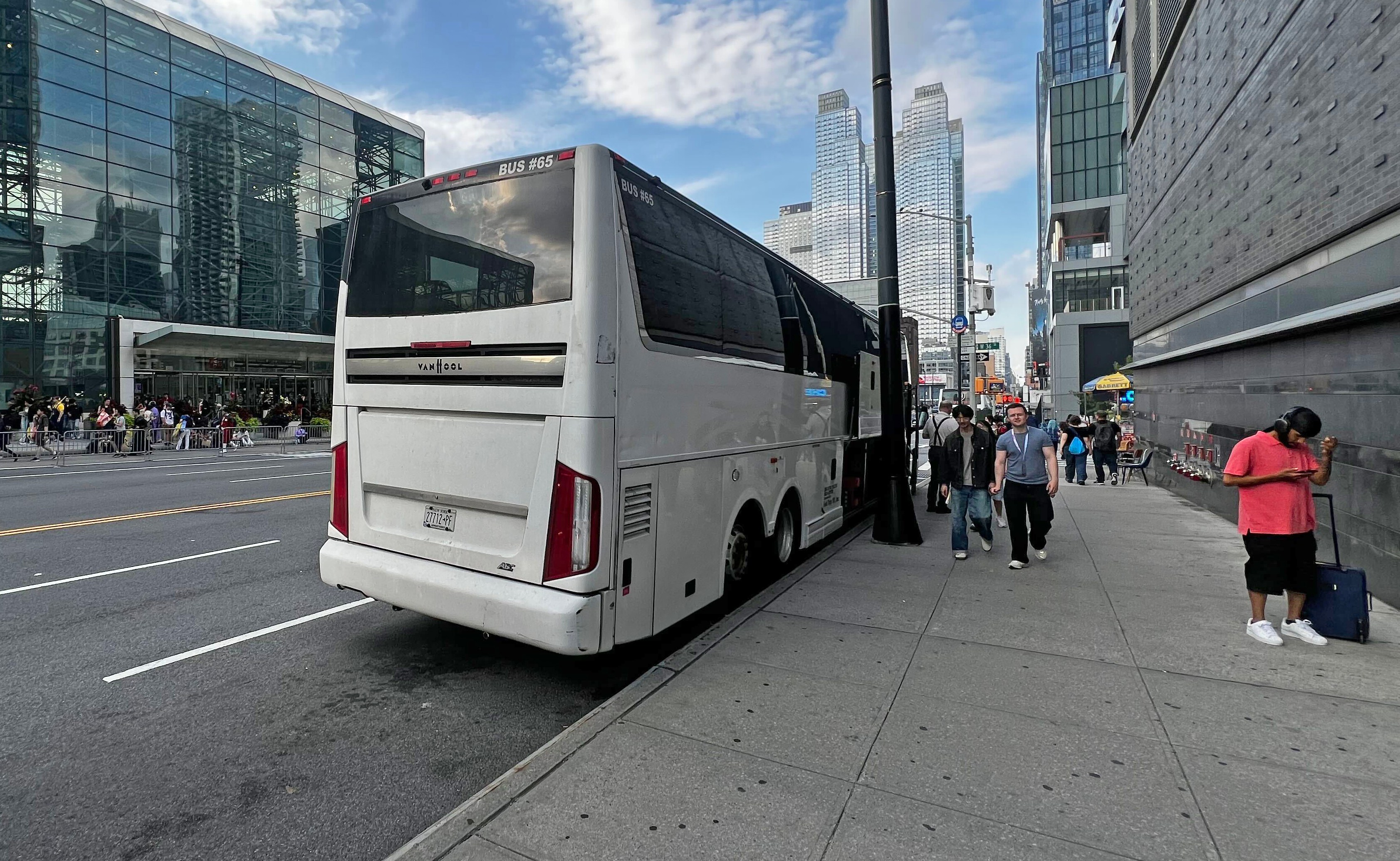
Image supplied from Streetsblog NYC. Confirm copyright holder, license, and required credit before external republication; substitute an original IATR curb-management image or a properly licensed public-agency image if necessary.
|
A Streetsblog NYC opinion article argues that many Manhattan curbside stops used by intercity-bus passengers lack basic amenities, including seating, shelters, trash receptacles, lighting, and clear waiting areas. The article suggests that New York City could use permit revenue or higher fees at high-volume locations to help provide proportionate facilities, while recognizing that operators cannot independently install infrastructure on public sidewalks.
The opinion frames the issue as a curb-management and passenger-access question while longer-term terminal planning continues. It proposes basic, well-managed accommodations rather than treating street-based stops as permanent substitutes for full intercity terminals.
WHY IT MATTERS TO REGULATORS: Curbside intercity service creates shared responsibilities for operators, transportation agencies, and local governments. Permitting, curb allocation, accessibility standards, passenger wayfinding, loading-zone enforcement, fee structures, and operator coordination can improve safety and passenger conditions while preserving affordable intercity transportation choices.
Source:
Streetsblog NYC — Opinion: NYC’s Curbside Bus Stops Treat Passengers Like Dirt
|

|
|
MICROMOBILITY & MUNICIPAL PILOT GOVERNANCE
British Columbia Updates Electric Kick-Scooter Pilot Rules and Participating Communities
British Columbia updated its electric kick-scooter pilot guidance on September 15. The province’s four-year pilot allows participating municipalities to establish local operating rules within provincial safety parameters, including a minimum rider age of 16, lighting requirements after sunset, cycle-lane use where available, and restrictions on certain higher-speed roads.
WHY IT MATTERS TO REGULATORS: The B.C. model combines provincial baseline safety requirements with municipal discretion over participation and local operating conditions. It offers a useful reference for agencies reviewing e-scooter permitting, road-access rules, equipment standards, enforcement, data collection, and pilot evaluation.
Source:
Government of British Columbia — Electric kick scooter rules and safety
|
|
VEHICLE-FOR-HIRE LICENSING & PASSENGER PROTECTION
Hamilton Moves Local Vehicle-for-Hire Bylaw Toward Modernized Oversight
Hamilton City Council has given first reading to a proposed Local Vehicles for Hire Bylaw intended to update oversight of taxis, rideshare services, and shuttle operators. Reported elements include vehicle safety measures, exterior signage, vehicle identification numbers, transparent fare structures, and standardized safety inspections.
Because the measure has received first reading, it should be understood as a proposed municipal framework progressing through the legislative process rather than a final, enacted regulatory regime.
WHY IT MATTERS TO REGULATORS: The proposal is relevant to agencies modernizing legacy taxi codes for app-based and other private-hire services while preserving vehicle identification, fare transparency, inspection consistency, consumer confidence, and enforceable accountability across service models.
Source:
The Hamilton Spectator — City council gives first reading to vehicle-for-hire bylaw
|
|
TRANSIT SAFETY & RAIL INFRASTRUCTURE OVERSIGHT
Metrolinx Actions Follow Union Station Derailment Review
A Metrolinx “Deep Dive” review of a derailment at Toronto’s Union Station has reportedly identified follow-up actions including biannual inspections of the Union Station Rail Corridor, autonomous track-geometry testing planned for January 2027, a $15 million track-surface and localized-repair program, and additional track inspectors.
WHY IT MATTERS TO REGULATORS: Safety investigations are most useful when they lead to visible and auditable corrective measures. Inspection schedules, infrastructure-repair programs, staffing, technology deployment, implementation dates, and public reporting provide important indicators of accountability and service-resilience progress.
Source:
Steve Munro — Reporting on Metrolinx Union Station derailment review
|

|
|
AUTONOMOUS VEHICLE TESTING & PERMIT GOVERNANCE
Spain Authorizes Supervised Level 4 Robotaxi Testing in Madrid
Spain’s Directorate-General for Traffic has authorized WeRide, Uber, and Avomo to conduct testing involving an initial fleet of 20 Level 4 automated vehicles in Madrid. The authorization permits testing and pre-deployment activity under Spain’s automated-vehicle testing framework; initial operations are expected to include an onboard specialist or safety operator.
The testing authorization should not be interpreted as a general approval for fully driverless commercial robotaxi service. Spain’s broader framework for driverless circulation remains under development.
WHY IT MATTERS TO REGULATORS: Spain’s staged approach distinguishes a controlled test permit from broader commercial authorization. Defined operating conditions, supervisory requirements, documentation, and incremental progression offer useful reference points for agencies evaluating AV testing and pre-deployment frameworks.
Sources:
Reuters
|
Demócrata — Spain AV testing framework
|
|
AUTOMATED FREIGHT & ELECTRIC COMMERCIAL VEHICLES
Germany Tests an Autonomous Electric Truck on Public Roads
Lidl has begun testing an autonomous electric truck on public roads in Hesse in partnership with Swedish technology company Einride. Reporting indicates that the project required a special authorization from Germany’s Federal Motor Transport Authority, illustrating the regulatory approvals that continue to shape automated-freight deployment.
WHY IT MATTERS TO REGULATORS: Automated freight presents many oversight questions shared with robotaxi operations, including vehicle authorization, operating design domains, remote supervision, incident response, data access, insurance, cybersecurity, and roadside enforcement. Freight applications add further considerations related to vehicle mass, loading operations, freight corridors, and vulnerable road users.
Sources:
Euronews — Lidl tests autonomous electric lorry
|
IGD — European autonomous-transit roundup
|
|
ROBOTAXI PASSENGER TESTING & LOCAL OVERSIGHT
Croatia Begins Driverless Robotaxi Passenger Tests in Zagreb
Pony.ai and Verne have launched fully driverless robotaxi test rides carrying passengers on public roads in Zagreb, according to industry reporting. The tests are described as operating subject to local regulatory requirements.
WHY IT MATTERS TO REGULATORS: Passenger-facing tests on public roads require more than technical validation. Regulators should consider service-area boundaries, remote-assistance procedures, incident and disengagement reporting, first-responder protocols, passenger communications, accessibility, cybersecurity, data access, and clear authority to modify or suspend operations.
Source:
Traffic Technology Today — Pony.ai and Verne launch driverless robotaxi tests in Zagreb
|

|
|
ROBOTAXIS & TAXI-INDUSTRY PARTNERSHIPS
Waymo, GO and Nihon Kotsu Target Tokyo Driverless Taxi Service for 2027
Waymo, Japanese ride-hailing operator GO, and taxi company Nihon Kotsu have announced a goal of launching a fully autonomous commercial taxi service in Tokyo in 2027, subject to regulatory approvals and continued validation. The companies expect to begin with a small fleet and scale toward approximately 100 vehicles in key Tokyo neighborhoods.
WHY IT MATTERS TO REGULATORS: The partnership model combines AV technology with established local taxi and platform operators. It raises practical regulatory questions about operating responsibility, taxi and AV licensing, consumer protection, service quality, accessibility, data-sharing, and whether autonomous and conventional taxi trips can be offered through a common customer platform.
Source:
Reuters — Waymo and Japanese partners target driverless taxi service in Tokyo
|
|
AUTONOMOUS SHUTTLES & STAGED DEPLOYMENT
Singapore: Grab Plans Fivefold Expansion of Autonomous-Vehicle Fleet
Grab announced plans to expand its autonomous-vehicle fleet in Singapore from 10 to 50 vehicles over the next six months. The company stated that the Land Transport Authority approved Grab and WeRide for AV Community Rides in Punggol in January 2026, followed by Public Rides service in April; expansion beyond the existing area remains subject to regulatory approval.
WHY IT MATTERS TO REGULATORS: Singapore’s phased model uses geographically bounded deployment, staged passenger-service permissions, and separate approval gates for further expansion. This structure gives agencies an opportunity to assess safety, service performance, accessibility, passenger response, and transit integration before permitting broader operation.
Sources:
Grab — Autonomous fleet expansion announcement
|
VnExpress International
|
|
TAXI ENFORCEMENT, LICENSING & VEHICLE SAFETY
Gauteng Enforcement Focuses on Unlicensed and Unsafe Minibus Taxis
Gauteng transport authorities reported enforcement activity targeting unsafe and noncompliant minibus-taxi operations. Coverage of the operation stated that inspectors found 78 drivers operating without valid licenses and discontinued 25 minibus taxis considered unroadworthy, citing defects involving braking, tires, lighting, and signaling equipment.
Gauteng transport leadership has also publicly condemned intimidation, threats, and extortion in the taxi industry, framing safe and lawful operations as a public-interest and passenger-protection priority.
WHY IT MATTERS TO REGULATORS: Licensing verification, vehicle-roadworthiness inspections, defect enforcement, transparent penalties, and coordinated action against intimidation and extortion are core tools for passenger safety. These issues are particularly important in high-volume informal and semi-formal transportation markets where regulatory capacity and visible enforcement directly affect public confidence.
Sources:
The Citizen — Gauteng public transport enforcement
|
eNCA — Gauteng Transport MEC condemns intimidation
|
|
New York Autonomous Mobility: A Better Road Forward’s September 16 launch is an advocacy initiative, not a regulatory authorization. Monitor whether the campaign produces proposed legislation, formal rulemaking, testing changes, commercial-service standards, insurance requirements, accessibility provisions, data-reporting obligations, or clearer city–state arrangements for autonomous passenger vehicles.
Tesla Cybercab Compliance: Watch Tesla’s September 30 response to NHTSA and any resulting clarification of federal safety expectations for purpose-built autonomous vehicles without conventional human driving controls.
Minneapolis AV Proposal: Follow the September 22 public hearing and any action regarding local operating licenses, human safety-monitor requirements, state-preemption questions, and workforce considerations.
Curbside Intercity Bus Operations: Review whether high-volume curbside stops have appropriate permit structures, passenger amenities, accessibility features, wayfinding, curb allocation, loading-zone enforcement, and operator coordination.
Spain AV Testing: Follow the development of Spain’s broader automated-driving framework and whether supervised testing in Madrid develops into a clearly regulated commercial passenger-service pathway.
Tokyo Robotaxi Partnership: Track how Japan allocates operating responsibility among Waymo, GO, Nihon Kotsu, and public authorities, including taxi licensing, accessibility, data, insurance, and consumer-protection obligations.
Singapore AV Expansion: Watch for approval of service-area expansion beyond Punggol, performance data from public rides, and changes to passenger-service, accessibility, or remote-operations requirements.
|
Message from IATR President

At the International Association of Transportation Regulators (IATR), our regulators are at the forefront of addressing both the challenges and opportunities facing the mobility paradigm. Our IATR members, partner organizations, and regulated industries will continue on our shared quest to fulfill the mission of our non-profit educational organization—to bring about Multi-Modal Mobility Innovation for All! This mission can best be accomplished through information sharing, collaboration, identifying and promoting best practices, and educating our membership. These educational updates and electronic media clips are affectionately known as “IATR snips” and endeavor to cover all aspects of mobility around the globe—especially news and developments involving safety, technology innovation, multi-modal integration, automation, sustainability, electrification, accessibility, regulatory modernization, and equity.
If you would like more information about IATR, visit www.iatr.global. Current members can renew their memberships through the IATR website, or contact info@iatr.global for assistance.
|
Renew Your Membership for 2026
Weekly news snippets • Membership database access • Conference videos and files • Discounted conference rates
Renew your membership or email info@iatr.global.
|
|
INTERNATIONAL ASSOCIATION OF TRANSPORTATION REGULATORS
Dedicated to promoting positive regulatory outcomes through education and collaboration.
Website: www.iatr.global
|
Contact: info@iatr.global
© 2026 International Association of Transportation Regulators. All rights reserved.
Unsubscribe
|
Privacy Policy
|
|
|
