Daily Transportation News Tuesday, September 22, 2026 |
| Editorial and legal note: Source links were checked against the linked publication, agency, or organization before this version was prepared. This briefing is provided for general information and professional awareness. It summarizes publicly available materials from government agencies, legislatures, transportation providers, companies, research organizations, and news organizations. Inclusion does not constitute IATR endorsement, legal advice, a finding of fact, or a recommendation that any regulator adopt a particular policy. Readers should consult the original source and applicable law before relying on any item for regulatory, procurement, enforcement, or operational decisions. Confirm image-use rights before publication. |
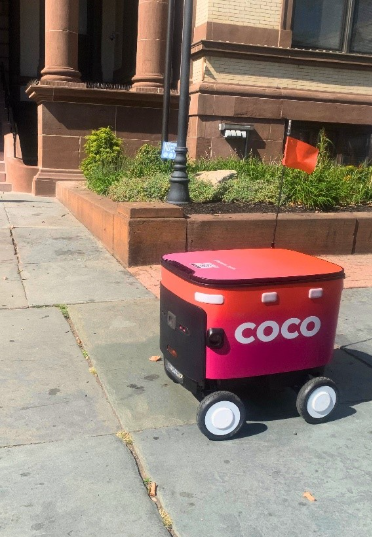
AUTONOMOUS DELIVERY, SIDEWALK SAFETY & LOCAL GOVERNANCE Delivery Robots Offer Peek Into the Future of Autonomous CoverageAutonomous delivery robots are advancing from limited demonstrations toward regulated operations on sidewalks, curb-adjacent spaces, campuses, and other shared public environments. The technology creates a distinct category of autonomous mobility: small, low-speed devices that interact directly with pedestrians, wheelchair users, cyclists, storefronts, delivery workers, and municipal street-management systems. Hoboken recently announced a 12-month pilot with Coco Robotics and Avride. The City said the pilot initially authorizes 20 robots and that expansion requires City approval, creating an opportunity to evaluate safety, delivery efficiency, congestion, double-parking, and neighborhood impacts before broader deployment. “I’m optimistic that as time goes on, there’s going to be more scaling of this, and people are going to get used to it. It’s just going to become a way of life in the U.S.”
— Matthew W. Daus, IATR President |
WHY IT MATTERS TO REGULATORS: Delivery robots raise immediate questions about public-sidewalk use, pedestrian priority, accessible-path-of-travel protections, speed and weight limits, geofencing, remote assistance, incident reporting, insurance, enforcement, curb management, and responsibility for a fleet operating in public space. A time-limited, locally approved pilot can help agencies establish evidence-based rules before allowing expansion. Sources: Delivery Robots Offer Peek into Future of Autonomous Coverage | City of Hoboken delivery robot pilot announcement |
 |
DELIVERY-PLATFORM ENFORCEMENT DoorDash to Pay $131.5 Million to Resolve New York City Delivery-Worker Pay InvestigationDoorDash agreed to pay $131.5 million to resolve a New York City investigation into compliance with the City’s delivery-worker minimum-pay law. The company said certain Dashers were underpaid or paid late; approximately 264,000 workers are expected to receive payments. The settlement includes $83 million to resolve disputes concerning required payments for on-call waiting time. WHY IT MATTERS TO REGULATORS: The matter demonstrates the operational importance of transparent pay calculations, auditable platform data, payment timeliness, definitions of compensable time, and enforceable remedies in app-based delivery and mobility markets. Sources: DoorDash | Reuters |
TRANSIT TECHNOLOGY & ACCESSIBILITY MTA Plans Upgrade of Aging Subway Announcement SystemsThe Metropolitan Transportation Authority is seeking proposals to modernize subway public-information systems, including announcements, digital displays, and help-point kiosks. Gothamist reports that 76 of 472 subway stations retain audio systems that have not been substantially updated in decades and are not connected to centralized real-time service information. The proposed work includes improved audio intelligibility, multilingual and automated announcements, dynamic wayfinding, and potential AI-assisted tools designed to improve passenger information during service changes and disruptions. WHY IT MATTERS TO REGULATORS: Passenger information is an accessibility, safety, and customer-service function. The procurement raises transferable questions about accessible alerts, audio-visual message consistency, real-time-data governance, AI oversight, and cybersecurity. Source: Gothamist |
AUTONOMOUS MOBILITY & TRANSIT INTEGRATION Waymo Revives Bay Area Transit-Robotaxi Discount ProgramWaymo has announced a Bay Area promotion intended to connect autonomous ride-hailing with public transit. Eligible riders using a Visa card for both a Waymo trip and transit within a two-hour period can receive a $2.85 credit toward a future Waymo ride. The program also includes staging areas at Caltrain stations. WHY IT MATTERS TO REGULATORS: The program provides a case study in first- and last-mile coordination, but it should be distinguished from public fare integration. Regulators and transit agencies may consider equity, data-sharing, access, curb use, and whether private autonomous services complement or compete with public transit. Source: The Verge |
 |
COMMERCIAL DRIVER SAFETY Ontario Developing Standardized Training Requirements for Truck DriversOntario is developing a standardized entry-level truck-driver training curriculum as part of broader changes to commercial-driver training and eligibility requirements. The province says the work is intended to establish more consistent training and ensure that drivers acquire the skills needed to operate commercial vehicles safely. WHY IT MATTERS TO REGULATORS: Standardized entry-level training is a direct policy tool for licensing, competency verification, carrier safety, and consistent enforcement of commercial-driver requirements. Source: Government of Ontario |
INTEGRATED MOBILITY & MaaS TransLink Links Compass Card With Shared Cars and Bikes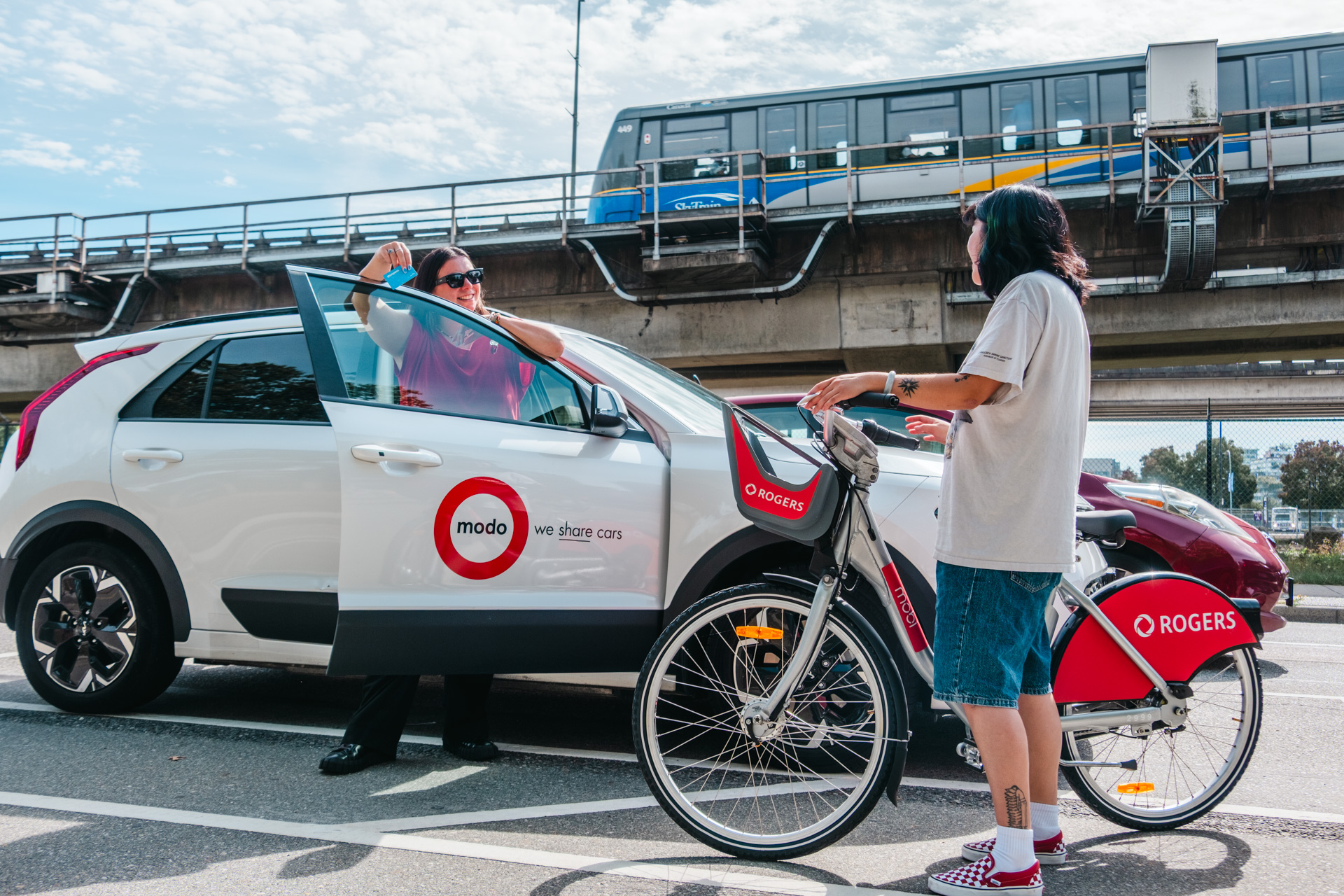 TransLink, Modo, and Mobi by Rogers have launched an integration that lets customers link their Compass Card with participating car-sharing and bike-sharing accounts. Once registered, the card can serve as an access credential for shared cars and bikes, though stored transit value and passes cannot be used to pay for those trips. WHY IT MATTERS TO REGULATORS: This is a practical Mobility-as-a-Service integration model. It brings account management, data-sharing, payment separation, user consent, and transit-agency coordination with private shared-mobility providers into view. Source: TransLink |
TRANSIT RIDERSHIP & FINANCE Canadian Urban Transit Ridership Declined 1.6% in JulyStatistics Canada reported approximately 122.5 million urban transit passenger trips in July 2026, a 1.6% decline from July 2025. Operating revenue rose 1.3% year over year to approximately $329.7 million. WHY IT MATTERS TO REGULATORS: The figures provide another reference point for assessing post-pandemic travel patterns, service demand, affordability, and the relationship between ridership and transit financial sustainability. Source: Statistics Canada |
 |
TAXI & PRIVATE-HIRE ENFORCEMENT England Introduces Cross-Border Temporary Suspension Powers for Taxi and PHV LicencesThe U.K. government has set out how local authorities and enforcement officers in England can apply temporary suspension powers to taxi, private-hire, and related licences when immediate action is considered necessary for public safety, including cases where the licence was issued elsewhere in England. A temporary suspension ordinarily lasts up to 48 hours, after which the issuing authority may take further action. WHY IT MATTERS TO REGULATORS: The framework addresses a central challenge in taxi and PHV enforcement: responding quickly to a safety risk when drivers and vehicles work across licensing boundaries. Source: U.K. Government |
TAXI ACCESSIBILITY & ACCOUNTABILITY Liverpool Considers QR-Code Feedback Requirement for Licensed Taxis and PHVsLiverpool City Council’s General Purposes Licensing Committee is scheduled to consider an Inclusive Service Plan that includes mandatory QR codes in licensed taxis and private-hire vehicles. The proposed tool would allow passengers to submit comments, complaints, or compliments through the Council’s existing feedback system. WHY IT MATTERS TO REGULATORS: If adopted, the proposal could create a simple link between passengers and their licensing authority, supporting complaint reporting, service monitoring, and accessibility feedback. It remains a proposal, not an adopted requirement. Source: DMNews, citing Liverpool City Council committee papers |
BUS RELIABILITY & OPEN DATA Great Britain Consults on Local Bus Service Performance StandardsGreat Britain’s Senior Traffic Commissioner has opened a consultation on proposed updates to local-bus punctuality, reliability, performance-data, and compliance standards. The consultation considers flexible service, frequent-service headways, open-data obligations, passenger information, and the relationship between operators and local traffic authorities. WHY IT MATTERS TO REGULATORS: The review shows how established service standards can be updated to reflect real-time information, flexible bus models, modern data obligations, and proportionate enforcement. Source: Route One |
 |
TRANSPORT CYBERSECURITY & DIGITAL SERVICES Philippines Transport Regulator Suspends Online System After Reported Security BreachThe Philippine Land Transportation Franchising and Regulatory Board temporarily suspended its electronic support system while it investigates a reported security breach. The system supports online applications and transactions, and the agency is coordinating with national cybersecurity and privacy authorities to determine what information may have been affected. WHY IT MATTERS TO REGULATORS: As licensing, permitting, and operator transactions move online, business continuity, incident response, data protection, vendor governance, and transparent public communication become core transportation-administration responsibilities. Source: GMA News |
PUBLIC-TRANSPORT CONDUCT & ENFORCEMENT Singapore Implements New Bus and Interchange Conduct RegulationsSingapore’s Land Transport Authority will implement new regulations September 23 addressing nuisance and disruptive behavior on public buses and at bus interchanges and terminals. The rules align bus conduct with existing rapid-transit regulations and provide a graduated enforcement structure, including offences for specified disruptive conduct and higher penalties for serious behavior that creates obstruction, danger, or soiling. WHY IT MATTERS TO REGULATORS: The framework offers a model for defining passenger conduct expectations, differentiating serious misconduct, clarifying operator and government roles, and using proportionate enforcement while protecting safe bus operations. Source: Singapore Land Transport Authority |
RAIL ACCESS & NETWORK GOVERNANCE South Africa Gazettes Updated Rail Network Statement South Africa has gazetted an updated rail network statement governing access to the national rail system for the 2026/27 and 2027/28 financial years. The document followed public comment and engagement with train operating companies, freight owners, customers, regulators, financiers, industry associations, and government. WHY IT MATTERS TO REGULATORS: Transparent network-access terms can clarify capacity allocation, technical requirements, operating rules, accountability, and investment expectations as rail systems move toward more open-access or multi-operator models. Source: Mining Weekly |
SUSTAINABILITY & ELECTRIFICATION Sustainable Energy Catalyst: The Master Minds Roundtables Wednesday, September 23, 2026 | 1:30–7:00 p.m. | Columbia Engineering Innovation Hub, New York City. Matthew W. Daus, President of IATR, will participate in the opening keynote panel during Climate Week NYC. The program brings together leaders working on clean energy, decarbonization, grid efficiency, transition finance, and transportation/building electrification. Register: Eventbrite | Opening session livestream INTERMODAL TERMINALS & BUS OPERATIONS NYMTC Brown Bag: Port Authority Bus Terminal Replacement Tuesday, September 29, 2026 | 12:00–1:00 p.m. EDT | Virtual. Kirsten Jones, General Manager of the Port Authority Bus Terminal, will discuss the history and evolution of the existing terminal and how lessons from its operations are informing the future facility’s design. The event is free, open to the public, includes a Q&A, and offers one APA Certification Maintenance credit. Register: NYMTC Brown Bag Series |
AUTONOMOUS VEHICLES & ROBOTAXIS The Road to Driverless Robotaxis with Nuro Co-CEO Dave FergusonNuro Co-Founder and Co-CEO Dave Ferguson joins The Driverless Digest to discuss a decade of autonomy, the Nuro–Lucid–Uber robotaxi, and why AV companies may be moving toward specialization. The episode is relevant to regulators following the evolving division of responsibility among AV developers, vehicle manufacturers, fleet operators, and ride-hailing platforms. Listen / read: The Driverless Digest |
Featured Research / Study |
ROBOTAXIS, ENERGY & URBAN MOBILITY New Study Examines Urban Energy and Transportation Impacts of Robotaxi DeploymentA study published in Nature Sustainability examines potential urban energy and transportation effects of autonomous robotaxi deployment. The research adds to evidence that robotaxi policy can affect more than vehicle safety, with potential implications for vehicle travel, energy consumption, congestion, fleet utilization, and public-transit interactions. REGULATOR USE: System-level evaluation can help agencies assess deployment not only as an AV safety issue, but also in relation to citywide mobility, emissions, energy demand, street capacity, and equity goals. Source: Nature Sustainability TRANSIT AUTOMATION & WORKFORCE READINESS University of Texas Project Examines Automation, Transit Operations, and Workforce ReadinessA new University of Texas at Austin Transportation Research Center project will examine how automation could affect public-transit service delivery, operating costs, service quality, and workforce needs. Its scope includes potential fully automated vehicles as well as nearer-term uses in scheduling, dispatch, maintenance, customer information, and operations management. REGULATOR USE: The work frames automation as an operations and workforce-governance issue, emphasizing training, job redesign, performance assurance, procurement, accountability, and service quality—not only vehicle technology. Source: University of Texas at Austin, TBD National Center |
Delivery robots: Monitor local pilot rules, accessibility safeguards, incident-reporting requirements, fleet caps, operator responsibility, and conditions for expansion. New York delivery platforms: Watch implementation of the DoorDash settlement, calculation rules for on-call time, and any related reporting or audit expectations. MTA communications procurement: Follow bids and specifications concerning real-time data, accessibility, multilingual communications, AI assistance, and cybersecurity. Cross-border taxi enforcement: Watch implementation guidance for England’s temporary suspension powers and implications for inter-authority information sharing. Digital regulatory services: The reported LTFRB cyber incident underscores the need for tested business-continuity, privacy, and public-notification procedures when licensing systems go offline. |
 Message from IATR President Message from IATR President
At the International Association of Transportation Regulators (IATR), our regulators are at the forefront of addressing both the challenges and opportunities facing the mobility paradigm. Our IATR members, partner organizations, and regulated industries will continue on our shared quest to fulfill the mission of our non-profit educational organization—to bring about Multi-Modal Mobility Innovation for All! This mission can best be accomplished through information sharing, collaboration, identifying and promoting best practices, and educating our membership. These educational updates and electronic media clips are affectionately known as “IATR snips” and endeavor to cover all aspects of mobility around the globe—especially news and developments involving safety, technology innovation, multi-modal integration, automation, sustainability, electrification, accessibility, regulatory modernization, and equity. If you would like more information about IATR, visit www.iatr.global. Current members can renew their memberships through the IATR website, or contact info@iatr.global for assistance. |
Renew Your Membership for 2026Weekly news snippets • Membership database access • Conference videos and files • Discounted conference rates
Renew your membership or email info@iatr.global. |
INTERNATIONAL ASSOCIATION OF TRANSPORTATION REGULATORS Dedicated to promoting positive regulatory outcomes through education and collaboration.
Website: www.iatr.global |
|
|