|
Daily Transportation News
Wednesday, September 23, 2026
|
|
Editorial and legal note: Source links were checked against the linked publication, agency, or organization before this version was prepared. This briefing is provided for general information and professional awareness. It summarizes publicly available materials from government agencies, legislatures, transportation providers, companies, research organizations, and news organizations. Inclusion does not constitute IATR endorsement, legal advice, a finding of fact, or a recommendation that any regulator adopt a particular policy. Readers should consult the original source and applicable law before relying on any item for regulatory, procurement, enforcement, or operational decisions. Confirm image-use rights before publication.
|
|
AUTONOMOUS DELIVERY, SIDEWALK SAFETY & INSURANCE
Hoboken Launches Delivery-Robot Pilot With Coco Robotics and Avride
The City of Hoboken has announced a 12-month pilot program with Coco Robotics and Avride to test low-speed electric delivery robots, also known as Personal Delivery Devices, for local food and goods delivery. Approved by the Hoboken City Council, the pilot begins with 20 robots—10 from each company—operating initially within a designated First Ward service area. Any increase in fleet size requires City approval.
The City will use the pilot to assess deliveries, vehicle miles traveled, avoided emissions, pedestrian access, safety performance, neighborhood effects, and community feedback. The robots are limited to pedestrian-oriented conditions, with a maximum speed of 6 mph and an expected average operating speed of approximately 2 mph. They must yield to pedestrians, comply with designated no-go areas, and be moved off-street overnight.
The program brings municipal sidewalk regulation, autonomous technology, delivery-platform operations, accessibility, privacy, insurance, and enforcement into one local policy test. Customers ordering through participating businesses on DoorDash, Uber Eats, Grubhub, or Wonder may be offered robotic delivery, while businesses and customers may decline the option.

|
“We’ve seen across the cities where we operate, including right next door in Jersey City, how autonomous delivery can help local businesses get orders to customers more efficiently and reliably. We’re excited to bring Coco to Hoboken and expand access to a new way of delivering food and goods throughout the community.”
— Carl Hansen
VP, Head of Government Relations, Coco Robotics
|
Matthew W. Daus, President of the International Association of Transportation Regulators, is developing model regulation for delivery robots intended to create more consistent state-to-state rules governing where the devices may operate, their size, weight, speed, and minimum insurance requirements. He expects clearer regulatory frameworks to help guide broader deployment as the technology matures.

|
“It’s low risk, it’s safer than delivery bikes and delivery scooters and automobiles. Compared to the insurance—or no insurance—that those modes carry, it’s completely over insured.”
— Matthew W. Daus
President, International Association of Transportation Regulators
|
The insurance implications are also beginning to emerge. Auto Insurance Report reports that insurers are underwriting portions of the physical-AI market, including sidewalk delivery robots. That makes financial responsibility, claims handling, incident reporting, coverage verification, and operator accountability increasingly relevant questions for transportation regulators and policymakers.
WHY IT MATTERS TO REGULATORS: Hoboken offers a practical model for staged delivery-robot governance: a limited fleet, defined operating restrictions, City approval for expansion, measurable performance data, and community feedback before wider deployment. Regulators should monitor how the pilot addresses sidewalk access, pedestrian priority, accessibility, speed and weight limits, geofencing, remote intervention, insurance, privacy, data reporting, enforcement, and responsibility for devices operating in public space.
Source: City of Hoboken: Delivery Robot Pilot Program
|

|
|
BUS PRIORITY, STREET DESIGN & EQUITY
New York City Completes Bronx’s First Busway on Tremont Avenue
Mayor Zohran Kwame Mamdani and the New York City Department of Transportation announced completion of the Tremont Avenue busway in the Bronx, intended to improve speed, reliability, and safety on the Bx36 corridor. The busway operates seven days a week from 6 a.m. to 8 p.m. and serves approximately 39,000 daily Bx36 riders.
The City says the corridor has experienced chronic congestion and slow bus operations, while connecting riders with subway and Metro-North services in an area where many households do not own a private vehicle. The busway permits buses, Access-A-Ride vehicles, emergency vehicles, and trucks with six or more wheels along the full corridor.
WHY IT MATTERS TO REGULATORS: The project is a current example of using roadway allocation, operating restrictions, and street design to improve bus performance in a transit-dependent community. It also highlights the tradeoffs regulators must manage among transit priority, deliveries, general traffic, emergency access, paratransit, pedestrians, and curb use.
Source: NYC Mayor’s Office / NYC DOT
|
|
AUTONOMOUS VEHICLE SAFETY & FEDERAL OVERSIGHT
NHTSA Seeks Answers on Tesla Cybercab Self-Certification
The National Highway Traffic Safety Administration is examining Tesla’s self-certification that its Cybercab complies with applicable Federal Motor Vehicle Safety Standards. NHTSA opened an Audit Query on September 4 to assess the technical data and processes Tesla relied upon for a vehicle that does not have conventional steering-wheel or pedal controls.
Reuters reported that NHTSA subsequently ordered Tesla to answer detailed questions by September 30, including questions about temporary human-driving controls, human operation, occupant controls, and the company’s certification basis.
WHY IT MATTERS TO REGULATORS: The inquiry distinguishes federal vehicle-safety compliance from the separate operating, passenger-protection, insurance, emergency-response, and commercial-service requirements that states and municipalities may apply to autonomous fleets. It also underscores the importance of transparent safety documentation and clearly assigned responsibility among vehicle manufacturers, AV developers, fleet operators, and ride-hailing platforms.
Sources: NHTSA |
Reuters
|
|
TRANSIT FARES, OMNY & EQUITY
MTA Begins Reviewing Future Fare Structure Ahead of 2027 Increase
Will Janno Lieber finally support wider fare capping with OMNY? The Streetsblog Photoshop Desk
MTA Chair and CEO Janno Lieber said the Authority has begun reviewing possible fare-structure changes ahead of the planned 2027 fare increase. The discussion could include approaches building upon OMNY’s existing seven-day fare cap, under which riders receive free subway and local-bus trips after 12 paid taps during a seven-day period.
The review has renewed discussion about fare affordability, transfer policy, and how account-based payment systems can better serve riders with varied travel patterns and incomes.
WHY IT MATTERS TO REGULATORS: This is a fare-policy and payment-governance issue, not simply a fare-increase story. Any future changes will raise questions about affordability, cash and unbanked access, reduced-fare programs, transfer rules, customer communication, privacy, and the role of payment data in public transit policy.
Source: Streetsblog NYC
|

|
|
TAXI LICENSING & MUNICIPAL GOVERNANCE
Kingston Prepares to Assume Taxi Licensing and Regulation
The City of Kingston, Ontario, will assume responsibility for regulating and licensing local taxicab services beginning October 1, replacing the Kingston Area Taxi Commission. The City will take responsibility for driver, plateholder, and broker licensing; compliance monitoring; complaint management; inspections; and enforcement.
Kingston says taxi services will continue operating during the transition. The City is preparing a municipal passenger-transportation framework and will also regulate transportation network companies under a separate by-law.
WHY IT MATTERS TO REGULATORS: Kingston provides a useful municipal case study in transferring taxi authority from a specialized commission to city government. The transition raises practical questions about licensing continuity, records transfer, complaint handling, inspections, broker accountability, local rulemaking, and uninterrupted passenger service.
Source: City of Kingston
|
|
AUTOMATED VEHICLES & NATIONAL POLICY
Transport Canada Outlines Path Toward Coordinated Automated-Vehicle Framework
Transport Canada’s progress report on its Red Tape Review outlines continued work toward a coordinated national framework for automated driving systems and software updates. The federal government says it plans to update interim safety guidance supporting automated-driving-system testing and commercial deployment, while continuing work with international partners on a Global Technical Regulation for ADS safety.
The report anticipates pre-regulatory consultations by June 2027 concerning adoption of the global technical regulation and potential updates to Canadian vehicle standards.
WHY IT MATTERS TO REGULATORS: Canada’s work illustrates the challenge of coordinating federal vehicle-safety authority with provincial and territorial responsibility for road use, licensing, and operations. The approach is relevant to jurisdictions seeking national baseline AV requirements while retaining local authority over deployment conditions and commercial service.
Source: Transport Canada
|
|
TRANSIT OPERATIONS, RESILIENCE & CYBERSECURITY
TransLink Prepares New Operations Control Centre for SkyTrain Expansion
TransLink is developing a new Operations Control Centre near SkyTrain’s primary Operations and Maintenance Centre in Burnaby. The facility is intended to support the expanding Millennium and Expo Line networks, including the Broadway Subway and Surrey–Langley SkyTrain extensions, with completion expected in 2027.
The agency describes the facility as a major technology upgrade designed to support centralized network operations, resilience, security, communications, and future capacity needs as the automated rapid-transit system grows.
WHY IT MATTERS TO REGULATORS: Modern transit control centres are both operational and data-governance infrastructure. The project highlights the importance of system integration, redundancy, emergency response, cybersecurity, workforce readiness, real-time monitoring, and resilient design as connected and automated transit systems expand.
Sources: TransLink |
SkyTrain Facilities
|

|
|
ROBOTAXIS, RIDESHARE & FLEET GOVERNANCE
Bolt and Lucid Announce Plan for European Robotaxi Fleet
Bolt and Lucid have announced a plan to develop and deploy at least 25,000 fully autonomous vehicles across European cities, with Bolt targeting up to 100,000 autonomous vehicles on its platform by 2035. The companies have not identified launch cities or a deployment timeline, and the proposal remains subject to future vehicle, operating, and local regulatory approvals.
The announcement illustrates how ride-hailing platforms and vehicle manufacturers are beginning to frame autonomous service at fleet scale rather than as limited pilot activity.
WHY IT MATTERS TO REGULATORS: Regulators should distinguish this announced corporate plan from an approved service. If projects move forward, authorities will need to assess vehicle approval, operating domains, fleet supervision, incident reporting, data access, insurance, curb use, passenger protections, accessibility, and the relationship between city-level operating conditions and national rules.
Source: Reuters
|
|
TAXI LICENSING, TRAINING & ENFORCEMENT
Finland Begins Phased Taxi-Regulation Reforms
Finland’s revised taxi legislation began taking effect September 1, introducing phased changes to taxi licensing, driver qualifications, fare information, vehicle identification, and supervision. The reform expands the range of criminal convictions considered in licensing decisions and strengthens the Finnish Transport and Communications Agency Traficom’s role in taxi-driver and entrepreneur examinations.
The reforms include mandatory training for new drivers beginning November 1, 2026; vehicle linkage to a valid transport licence; distinctive taxi registration plates beginning July 1, 2027; and mandatory taximeters in all taxis from February 1, 2027.
WHY IT MATTERS TO REGULATORS: Finland provides a current example of phased taxi-sector modernization combining driver competency, licensing fitness, fare transparency, vehicle identification, and enforceable supervision. The staged timetable gives regulators a model for introducing substantial reforms while allowing operators time to comply.
Sources: Traficom |
Vehicle Licence Requirements
|
|
BUS DATA, PASSENGER INFORMATION & SERVICE QUALITY
U.K. Opens Consultation on Better Information for Local Bus Services
The U.K. Department for Transport opened a September 23 consultation on improving information about local bus services under the Bus Services Act 2025. The consultation is relevant to local authorities, bus operators, and regulatory bodies responsible for passenger information, service transparency, and digital access.
WHY IT MATTERS TO REGULATORS: Reliable passenger information is a service-quality, safety, and accessibility function. The consultation provides a current opportunity to examine data standards, real-time updates, disruption communications, accessible formats, digital inclusion, and operator accountability for passenger-facing service information.
Source: U.K. Department for Transport
|

|
|
TAXI MODERNIZATION, ACCESS & MUNICIPAL RULEMAKING
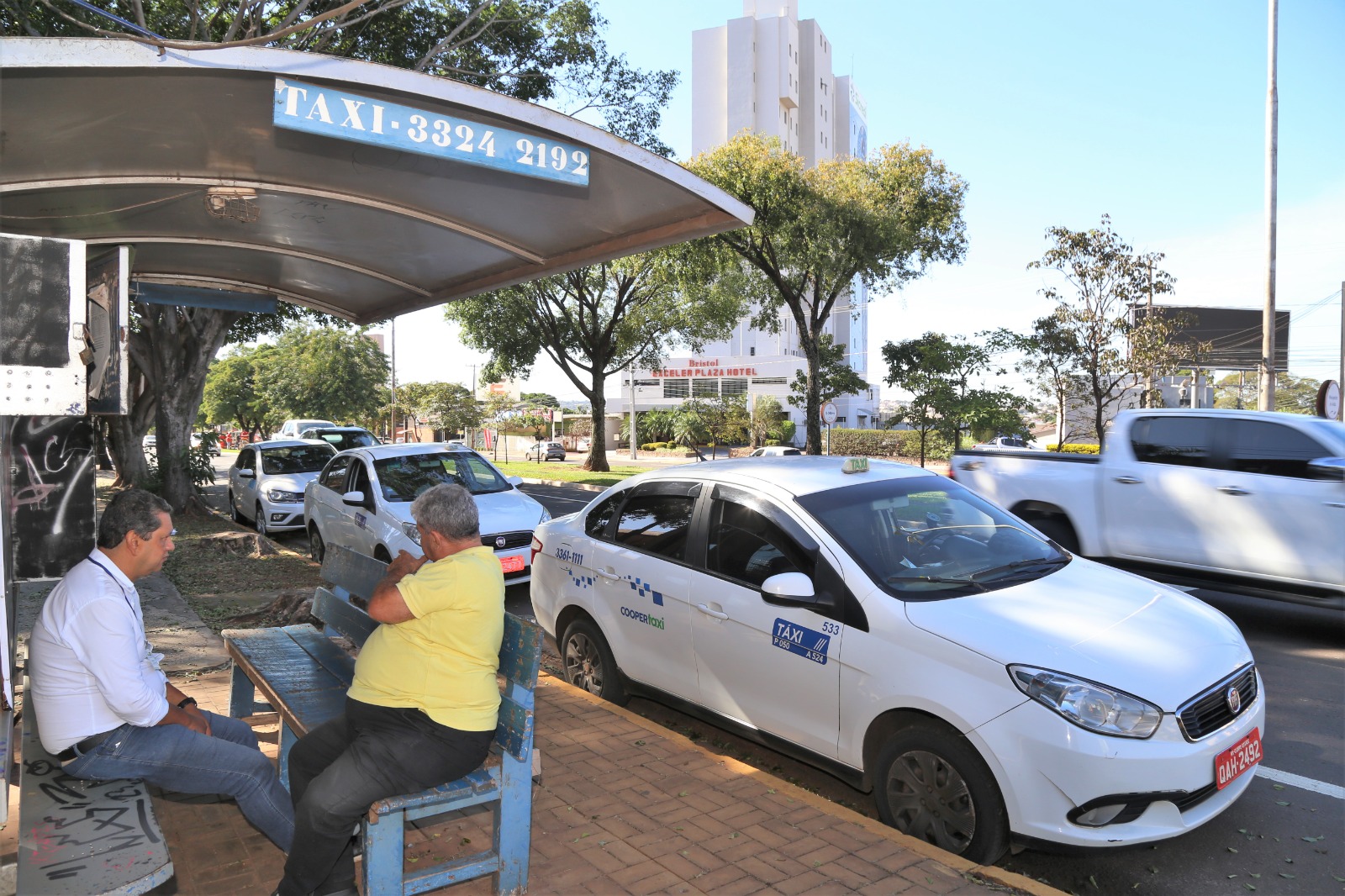
Brazil’s Campo Grande Updates Taxi Rules for Executive Service, Fleet Flexibility, and Bus-Corridor Access
Photo credit: Roberto Ajala
Campo Grande’s municipal transport and traffic agency, Agetran, has issued new rules updating local taxi regulation. The measures establish rules for executive or “Taxi Black” service, allow pickups to join the taxi fleet under specified criteria, and permit taxis to use public-transport corridors without treating that use as a traffic violation.
The new framework also allows, in specified cases, a taxi permit holder to work temporarily as an auxiliary driver when the permitted vehicle is unavailable for maintenance or repair. That permission is conditioned on notice to Agetran and agency verification. The City also extended by six months the vehicle-replacement deadline for taxis reaching the maximum fleet age in 2026.
WHY IT MATTERS TO REGULATORS: The package shows how a city can modernize taxi rules through targeted changes rather than wholesale deregulation. It combines service differentiation, fleet rules, continuity of driver income, agency verification, enforcement conditions, and transit-priority access—issues that frequently arise in taxi and for-hire regulation.
Source: Agência Municipal de Transporte e Trânsito, Campo Grande
|
|
POINT-TO-POINT ENFORCEMENT & REGULATORY SANDBOXES
Singapore Proposes Stronger Enforcement Against Illegal Point-to-Point Services
Singapore’s Ministry of Transport introduced proposed legislation that would strengthen enforcement against illegal point-to-point transportation services, including unlicensed ride-hailing and taxi operations. The proposal also would extend the existing regulatory sandbox for autonomous-vehicle deployments on roads through December 31, 2028.
The Bill remains proposed legislation. It would create additional enforcement tools while maintaining controlled pathways for testing and deployment of emerging mobility technologies.
WHY IT MATTERS TO REGULATORS: The proposal illustrates how a regulator can address unlicensed traditional passenger services while preserving a controlled, time-limited pathway for emerging autonomous technologies. The combination of enforcement authority and regulatory sandboxes may be relevant to jurisdictions managing both legacy and new mobility markets.
Source: Singapore Ministry of Transport
|
|
DRONE GOVERNANCE & URBAN AIR MOBILITY
European Commission Publishes EU Drone Summit 2026 Program
The European Commission has published the program for the EU Drone Summit 2026, scheduled for November, with registration opening September 24. The summit is positioned as a forum for discussion of unmanned-aircraft integration, innovation, safety, and the broader regulatory framework for drone operations in Europe.
WHY IT MATTERS TO REGULATORS: Although the summit is not itself a regulatory action, it provides an early signal of issues likely to remain central to drone and advanced-air-mobility oversight: airspace integration, certification, operations, local coordination, privacy, cybersecurity, security, and public acceptance.
Source: European Commission
|
Featured Research / Study
|
|
RIDE-HAILING SAFETY & DATA-DRIVEN OVERSIGHT
Ride-Hailing Safety Study Explores Real-Time Risk Management
A September 2026 study in Transportation Research Part A proposes an integrated safety-management framework for ride-hailing services that links explanatory analysis of risky driving, real-time risk prediction, and behavioral-intervention assessment. The research uses a multi-source approach, including vehicle trajectories, road-network and environmental data, and driver-survey responses.
The work is intended to identify factors associated with unsafe driving behavior and potential points for targeted intervention. It does not establish a regulatory standard or independently prove that a particular platform intervention will reduce crashes.
REGULATOR USE: The study offers a practical conceptual reference for agencies considering platform safety reporting, data governance, driver-safety programs, targeted enforcement, and earlier identification of higher-risk operating conditions. It also reinforces the need for transparent and privacy-conscious rules before regulators or platforms rely on large-scale mobility data for safety action.
Sources: Transportation Research Part A |
TRID
|
|
Delivery robots: Monitor Hoboken’s pilot rules, accessibility safeguards, incident-reporting processes, fleet caps, insurance requirements, operator responsibility, and conditions for expansion.
New York bus priority: Track Bx36 operating results, bus-speed outcomes, safety effects, freight and delivery impacts, enforcement needs, and community response to the Tremont Avenue busway.
OMNY fare policy: Watch whether MTA staff develop proposals on wider fare capping, transfer policy, cash access, reduced fares, customer communications, and affordability outcomes before the planned 2027 fare increase.
Taxi modernization: Follow Kingston’s licensing transition, Finland’s phased requirements, and Campo Grande’s targeted taxi reforms for lessons on licensing administration, driver fitness, fleet rules, transit-priority access, and compliance enforcement.
Autonomous and connected mobility: Monitor NHTSA’s Cybercab inquiry, Singapore’s proposed point-to-point enforcement changes, and emerging fleet-scale robotaxi proposals for evolving approaches to safety, deployment, insurance, and accountability.
|
Message from IATR President
At the International Association of Transportation Regulators (IATR), our regulators are at the forefront of addressing both the challenges and opportunities facing the mobility paradigm. Our IATR members, partner organizations, and regulated industries will continue on our shared quest to fulfill the mission of our non-profit educational organization—to bring about Multi-Modal Mobility Innovation for All! This mission can best be accomplished through information sharing, collaboration, identifying and promoting best practices, and educating our membership. These educational updates and electronic media clips are affectionately known as “IATR snips” and endeavor to cover all aspects of mobility around the globe—especially news and developments involving safety, technology innovation, multi-modal integration, automation, sustainability, electrification, accessibility, regulatory modernization, and equity.
If you would like more information about IATR, visit www.iatr.global. Current members can renew their memberships through the IATR website, or contact info@iatr.global for assistance.
|
Renew Your Membership for 2026
Weekly news snippets • Membership database access • Conference videos and files • Discounted conference rates
Renew your membership or email info@iatr.global.
|
|
INTERNATIONAL ASSOCIATION OF TRANSPORTATION REGULATORS
Dedicated to promoting positive regulatory outcomes through education and collaboration.
Website: www.iatr.global
|
|
|