|
Daily Transportation News
Thursday, September 24, 2026
|
|
Editorial and legal note: Source links were checked against the linked publication, agency, organization, or research source before this version was prepared. This briefing is provided for general information and professional awareness. It summarizes publicly available materials from government agencies, legislatures, transportation providers, companies, research organizations, and news organizations. Inclusion does not constitute IATR endorsement, legal advice, a finding of fact, or a recommendation that any regulator adopt a particular policy. Readers should consult the original source and applicable law before relying on any item for regulatory, procurement, enforcement, or operational decisions. Confirm image-use rights before publication.
|
|
Featured Video / Emergency Mobility History
Remembering 9/11 and Operation Free Transportation
Click the image to watch Remembering 9/11 and Operation Free Transportation.
“Remembering 9/11 and Operation Free Transportation” is a reporting piece for WRHU-FM and Hofstra Today examining the legacy of Operation Free Transportation, an initiative organized by the New York City Taxi & Limousine Commission in the immediate aftermath of the September 11, 2001 attacks.
The piece includes the perspective of Matthew W. Daus, now President of the International Association of Transportation Regulators, who was the New York City Taxi & Limousine Commission Chair and Commissioner during and after 9/11. Daus led the agency from 2001 through 2010, including during the period when TLC staff, officers, and the city’s licensed taxi and for-hire vehicle community mobilized to support New Yorkers.
In the days after the attacks, more than 1,000 volunteer drivers provided thousands of free trips for victims’ families, emergency responders, blood donors, and other New Yorkers in need. The response demonstrated how a local transportation regulator and its licensed industries can become an immediate and organized part of a citywide emergency response.
The video provides an important account of a lesser-known chapter of New York City transportation history. It recognizes the professional drivers, many from immigrant communities, who provided their time, vehicles, and services at a moment of profound crisis.
Video by Camryn Bowden
WHY IT MATTERS TO REGULATORS: Operation Free Transportation shows that regulated taxi, for-hire, paratransit, and community transportation networks can be critical emergency-response assets. Regulators should consider whether they have effective mechanisms for driver communications, emergency dispatch and staging, credentialing, insurance, curb access, interagency coordination, and rapid deployment of transportation resources during major disruptions.
Featured Video: Remembering 9/11 and Operation Free Transportation
|
|
Taxi & FHV History / Emergency Response
TLC Debuts “Operation Free Transportation” Documentary About Drivers and Officers Who Helped During and After 9/11
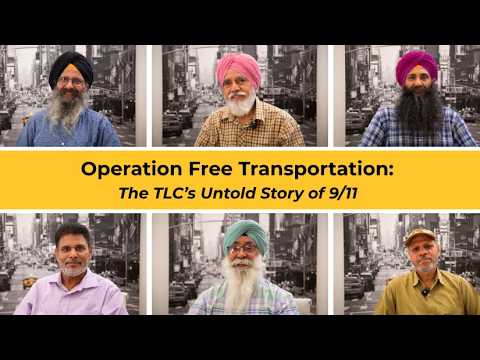
Click the image to watch NYC TLC’s Operation Free Transportation: The TLC’s Untold Story of 9/11.
The NYC Taxi & Limousine Commission has released its own documentary, “Operation Free Transportation: The TLC’s Untold Story of 9/11,” marking the 25th anniversary of September 11. The documentary features TLC staff and drivers recalling how the agency organized emergency taxi stands and coordinated volunteer transportation after the attacks.
According to TLC, more than 1,000 drivers, including six members of the Sikh community featured in the documentary, provided thousands of free trips. TLC officers initially responded toward the World Trade Center and later helped control traffic and assist people fleeing the area.
WHY IT MATTERS TO REGULATORS: The story is a useful reminder that transportation regulators can become critical emergency-response partners during major disruptions. It also illustrates the importance of maintaining relationships with regulated transportation providers, rapidly organizing transportation resources, and preserving institutional knowledge from past emergencies.
Related TLC Documentary: Operation Free Transportation: The TLC’s Untold Story of 9/11
Source: NYC Taxi & Limousine Commission
|

|
|
Transit Worker Safety / Federal Oversight
FTA Orders Immediate Action to Protect New York City Transit Rail Workers
The Federal Transit Administration has issued an Immediate Action Required directive concerning the safety of rail transit workers at New York City Transit. FTA said NYCT continues to expose rail personnel to unsafe conditions or practices that create a substantial risk of death or personal injury despite previous interventions and formal directives.
The action underscores FTA’s authority to exercise federal safety oversight over public transportation systems and transit workers under 49 U.S.C. § 5329. FTA’s Special Directives 24-6 and 24-7 address an escalating pattern of safety incidents and worker-safety concerns at NYCT.
WHY IT MATTERS TO REGULATORS: The action demonstrates the federal oversight tools available when a transit agency does not adequately address identified worker-safety risks. It also provides a current example of how federal, state, and local safety responsibilities interact in a major urban transit system.
Source: Federal Transit Administration
|
|
Highway Safety / Performance Management
NHTSA Modifies State Highway Safety Grant Performance Requirements for FY 2027
The National Highway Traffic Safety Administration has issued a final rule modifying procedures for the State Highway Safety Grant Program. For fiscal year 2027, states will not be required to make certain common performance targets identical to targets reported to the Federal Highway Administration under the Highway Safety Improvement Program.
The change gives states additional flexibility as they prepare their FY 2027 highway safety plans while maintaining the broader performance-based framework for federal highway safety grants.
WHY IT MATTERS TO REGULATORS: State and local transportation agencies increasingly rely on measurable safety targets to guide investments and enforcement strategies. Changes to federal performance requirements can affect how jurisdictions establish, report, and coordinate roadway-safety goals.
Sources: Federal Register | National Highway Traffic Safety Administration
|
|
Advanced Air Mobility / Pilot Governance
North Carolina Launches Federal eVTOL Pilot Project as USDOT Expands Advanced Air Mobility Testing
North Carolina has launched its first demonstration flight under the U.S. Department of Transportation’s Advanced Air Mobility Integration Pilot Program. The program is testing electric vertical takeoff and landing aircraft, autonomous aircraft, and drone technologies in real-world operating environments.
The North Carolina project includes regional-flight and medical-transport demonstrations involving Joby Aviation, BETA Technologies, and the North Carolina Department of Transportation. USDOT said that pilot-project data will help inform FAA regulations for the emerging technology.
WHY IT MATTERS TO REGULATORS: Advanced air mobility will require coordination among aviation authorities, state and local governments, airports, emergency services, and transportation agencies. The pilot program gives regulators an opportunity to observe how emerging aircraft technologies operate outside controlled demonstration environments before broader deployment.
Source: U.S. Department of Transportation / FAA
|

|
|
Transit Data / Open Standards
MobilityData Takes Ownership of GTFS, Making the Global Transit Standard Canadian-Owned
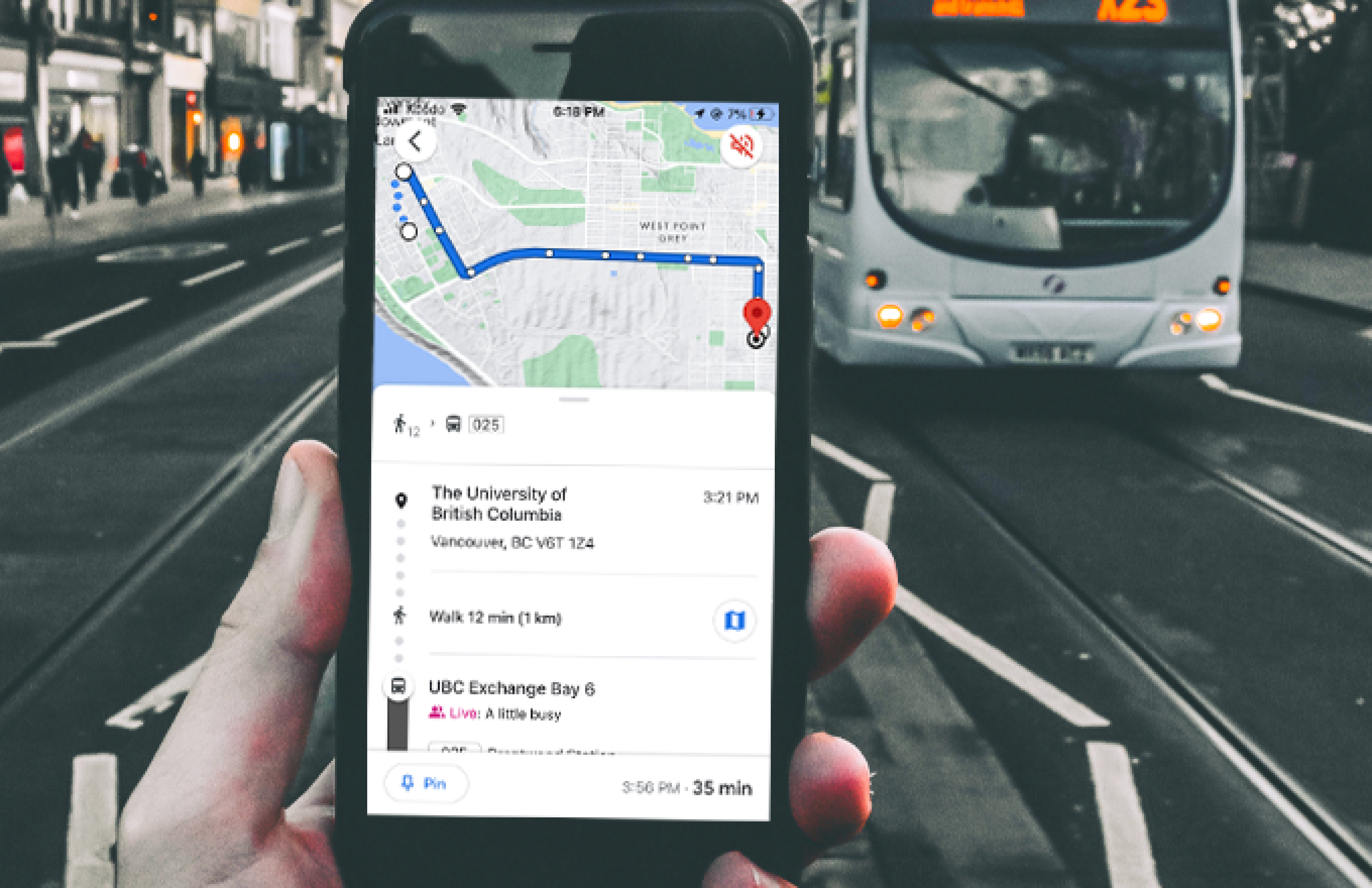
Google has transferred ownership of the General Transit Feed Specification, or GTFS, to MobilityData, the Montreal-based nonprofit that has developed and maintained the open transit-data standard since 2019. GTFS is used by transit agencies around the world to publish schedules, routes, fares, and other information that supports passenger-information systems and trip-planning applications.
WHY IT MATTERS TO REGULATORS: Transit data standards are increasingly important to integrated mobility, real-time passenger information, accessibility, and multimodal planning. The transfer also highlights the importance of independent stewardship and transparent governance of transportation-data standards used across public and private mobility services.
Source: MobilityData
|
|
Rideshare / Provincial-Municipal Governance
Ontario Rideshare Pilot Creates Regulatory Framework for Northlander Corridor Services
Doug Ford steps off the Northlander passenger rail car in North Bay. Chris Dawson/BayToday.
Ontario’s rideshare pilot for the Northlander Corridor establishes a specific provincial framework for designated rideshare services operating between Gravenhurst and Cochrane. The one-year pilot applies provincial passenger-transportation legislation with modifications and establishes requirements for approved operators, drivers, and vehicles serving communities connected to Northlander passenger-train stops.
The regulation also preserves municipal authority over taxi and limousine licensing, parking, stopping, traffic control, and the use of municipal property.
WHY IT MATTERS TO REGULATORS: The pilot offers an example of how a provincial government can create a targeted intercity or first- and last-mile rideshare framework while retaining municipal authority over traditional taxi licensing and curb-management functions.
Sources: Government of Ontario Regulation 136/26 | Northern Ontario Business
|
|
On-Demand Transit / Local Oversight
On-Demand Transit in Bradford West Gwillimbury Reports Major Ridership Growth
Argo Corporation reports that its on-demand public-transit service in Bradford West Gwillimbury, Ontario, has increased average daily ridership to more than three times the level of the town’s previous fixed-route system. The company says the town replaced its former privately operated fixed-route service with an on-demand model in 2025 and has since renewed and expanded its agreement with Argo.
WHY IT MATTERS TO REGULATORS: The development provides a current case study for agencies considering demand-responsive transit in smaller communities. Regulators should examine independently verifiable performance measures, including cost per trip, wait times, coverage, service equity, accessibility, workforce impacts, and connections with regional transit.
Source: Argo Corporation
|

|
|
Taxi Licensing / Training / Enforcement
Finland Begins Phased Taxi-Regulation Reforms
Finland’s revised taxi legislation began taking effect September 1, introducing phased changes to taxi licensing, driver qualifications, fare information, vehicle identification, and supervision. The reform expands the range of criminal convictions considered in licensing decisions and strengthens the Finnish Transport and Communications Agency Traficom’s role in taxi-driver and entrepreneur examinations.
The reforms include mandatory training for new drivers beginning November 1, 2026; vehicle linkage to a valid transport licence; distinctive taxi registration plates beginning July 1, 2027; and mandatory taximeters in all taxis from February 1, 2027.
WHY IT MATTERS TO REGULATORS: Finland provides a current example of phased taxi-sector modernization combining driver competency, licensing fitness, fare transparency, vehicle identification, and enforceable supervision.
Source: Traficom, Finnish Transport and Communications Agency
|
|
Bus Reliability / Open Data / Enforcement
Great Britain Consults on Local Bus Service Performance Standards
Great Britain’s Senior Traffic Commissioner has opened a consultation on proposed updates to local-bus punctuality, reliability, performance-data, and compliance standards. The review asks whether the longstanding expectation that 95% of local bus services run within one minute early to five minutes late remains appropriate, and how standards should reflect changes in the industry, legislation, technology, and passenger expectations.
The consultation also considers flexible services, frequent-service headways, data practices, passenger information, and the relationship between operators and local traffic authorities. Responses are due by December 11, 2026.
WHY IT MATTERS TO REGULATORS: The consultation shows how established service standards can be updated to reflect real-time information, flexible service models, data obligations, passenger expectations, and proportionate enforcement.
Source: Traffic Commissioners for Great Britain
|
|
Cross-Border Travel / Digital Booking / Passenger Rights
European Commission Proposes Simpler Planning and Booking for Regional and Cross-Border Travel
The European Commission has announced three new proposals intended to simplify the planning and booking of regional, long-distance, and cross-border travel while improving passenger protection for rail journeys. The initiative aims to make travel information and booking more accessible across transport networks while strengthening protections for passengers undertaking multi-stage rail travel.
The proposals remain subject to the EU legislative process. Their eventual form could affect the responsibilities of carriers, ticket sellers, digital intermediaries, and public authorities involved in multimodal passenger information and booking.
WHY IT MATTERS TO REGULATORS: Integrated planning and booking can blur boundaries among rail, public transit, taxis, private-hire vehicles, and mobility platforms. Regulators should watch for implications involving data access, fare transparency, liability, refunds, accessible information, service disruption, and passenger rights.
Source: European Commission Mobility and Transport
|

|
|
Digital Transport / Autonomous Mobility / Cybersecurity
APEC Transport Ministers Advance Digital Innovation, Autonomous Transport, and Cybersecurity
Transportation ministers from Asia-Pacific Economic Cooperation economies met in Beijing for the 12th APEC Transportation Ministers’ Meeting, focusing on digital transformation, autonomous transportation, intelligent traffic systems, predictive maintenance, and resilient transportation networks.
Ministers also emphasized interoperability, mutual recognition of technical standards, data rules, and cybersecurity as transportation systems become increasingly connected. APEC said innovation must be secure and inclusive as member economies explore AI, autonomous vehicles, and digital logistics platforms.
WHY IT MATTERS TO REGULATORS: The APEC discussions highlight the growing need for transportation regulators to address technology, data, algorithmic governance, and cybersecurity as part of the same regulatory framework.
Source: Asia-Pacific Economic Cooperation
|
|
Connected Vehicles / Cybersecurity
China Opens Comment Period on Vehicle Intrusion-Detection Standard
China has opened a public-comment period on a draft recommended national standard covering vehicle intrusion-detection systems. The draft addresses monitoring across vehicle operating systems, external interfaces, CAN and Ethernet networks, and off-vehicle connections. It also calls for security logs to be retained for at least six months.
WHY IT MATTERS TO REGULATORS: As vehicles become increasingly software-defined and connected, cybersecurity is becoming a vehicle-safety and regulatory issue rather than solely an information-technology concern.
Source: SDV Sector, reporting on China’s draft standard
|
|
Autonomous Driving / International Policy Learning
South Korea Looks to Beijing’s Driverless Zone as It Develops Automated-Driving Policy
South Korea’s Ministry of Land, Infrastructure and Transport examined Beijing’s Yizhuang autonomous-driving demonstration zone during the APEC Transportation Ministers’ Meeting. A Korean delegation observed fully driverless robotaxis and self-driving buses operating on public roads and said the zone’s operating framework and safety-management practices could inform South Korea’s domestic automated-driving policy.
WHY IT MATTERS TO REGULATORS: The development illustrates how regulators are increasingly studying operational models in other jurisdictions rather than developing automated-mobility rules in isolation. It also highlights the importance of safety management, data protection, cybersecurity, insurance, and technical standards in cross-border AV policy development.
Source: Herald Business, reporting on South Korea’s Ministry of Land, Infrastructure and Transport
|
Featured Research / Study
|
|
Robotaxis / Taxi Markets / Transit Integration
New Nature Study Examines How Robotaxis Interact With Taxis and Public Transit
Apollo Go robotaxi in Wuhan, China. Image source: Wikimedia Commons.
A study published in Nature Sustainability examines the urban-energy and transportation effects of autonomous robotaxi deployment using more than 4 million trip records from human-driven taxis and robotaxis in Wuhan, China. The researchers found that robotaxi activity overlaps spatially with conventional taxi demand, indicating competition within on-demand mobility markets, while some robotaxi trips appear complementary to public transit.
Under an upper-bound dispatch and ride-sharing optimization scenario, the study estimates that fleet requirements could be reduced by 62.5% and daily energy consumption by 44.8%.
WHY IT MATTERS TO REGULATORS: The study provides empirical evidence for considering how robotaxis could interact with existing taxi services, transit networks, street infrastructure, and energy demand. It reinforces the need to evaluate automated mobility at the system level rather than treating robotaxis solely as a replacement for human-driven vehicles.
Research Source: Nature Sustainability — “Urban energy and transport impacts of autonomous robotaxi deployment”
|
|
Emergency mobility planning: Consider whether regulated taxi, FHV, paratransit, and community-transportation providers are incorporated into disaster-response plans; review emergency driver communications, credentialing, staging, insurance, curb access, and interagency coordination.
NYCT worker safety: Monitor FTA’s immediate-action requirements, NYCT’s response, and the New York State safety oversight role. Agencies should assess whether their own worker-safety reporting, hazard-response, and corrective-action procedures are sufficiently independent and enforceable.
Advanced air mobility: Follow the North Carolina pilot’s operational results, including safety protocols, medical and emergency-service applications, airspace coordination, ground access, vertiport planning, data reporting, and local government participation.
Taxi and rideshare modernization: Track Finland’s phased taxi requirements and Ontario’s Northlander Corridor pilot for lessons involving licensing, driver qualifications, fare transparency, local authority, first- and last-mile service, and enforcement.
Transit and mobility data: Monitor GTFS governance under MobilityData and assess whether agency data standards, accessibility requirements, procurement terms, and privacy practices support reliable passenger information and multimodal integration.
Connected and automated vehicles: Watch the China intrusion-detection standard, APEC technology discussions, and robotaxi research for evolving expectations around cybersecurity, data retention, safety monitoring, insurance, service oversight, and interactions with existing taxi and transit networks.
|
 Message from IATR President
At the International Association of Transportation Regulators (IATR), our regulators are at the forefront of addressing both the challenges and opportunities facing the mobility paradigm. Our IATR members, partner organizations, and regulated industries will continue on our shared quest to fulfill the mission of our non-profit educational organization—to bring about Multi-Modal Mobility Innovation for All! This mission can best be accomplished through information sharing, collaboration, identifying and promoting best practices, and educating our membership. These educational updates and electronic media clips are affectionately known as “IATR snips” and endeavor to cover all aspects of mobility around the globe—especially news and developments involving safety, technology innovation, multi-modal integration, automation, sustainability, electrification, accessibility, regulatory modernization, and equity.
If you would like more information about IATR, visit www.iatr.global. Current members can renew their memberships through the IATR website, or contact info@iatr.global for assistance.
|
Renew Your Membership for 2026
Weekly news snippets • Membership database access • Conference videos and files • Discounted conference rates
Renew your membership or email info@iatr.global.
|
|
INTERNATIONAL ASSOCIATION OF TRANSPORTATION REGULATORS
Dedicated to promoting positive regulatory outcomes through education and collaboration.
Website: www.iatr.global
|
|
|