|
|
Provided by the American Dairy Science Association® (ADSA®)
in cooperation with Feedstuffs / Feedstuffs FoodLink
If you received this issue of ADSA Dair-e-news from a friend and would like to receive
your personal copy in the future, please visit
Opinion and editorial content included in the
Dair-e-news
represent the views of the authors.
Publication does not represent endorsement of any position by the ADSA. Depending on your email preview settings, all text may not be visible. If you find that to be the case, simply click to open the email or use the link at the top to open the web version.
Ken Olson, Ph: 630-237-4961, keolson@prodigy.net |
Two million genotypes in U.S. dairy database
A new milestone in dairy genetics was achieved on July 10, when the two millionth individual animal genotype was recorded in the U.S. dairy database. Use of an animal's genotype - or genetic makeup - to predict future performance started in 2008, when the first U.S. Holstein sires were genotyped. Since 2008, the U.S. genotype database has grown tremendously and is the largest in the world, including genotypes for 278,984 males and 1,662,922 females from the five largest dairy breeds, as of July 10. In 2016 alone, nearly half a million genotypes were submitted to the Council on Dairy Cattle Breeding (CDCB).
This milestone was achieved through a collaborative effort that includes dairy producers, genotyping labs, nominating organizations, international partners, CDCB and the Animal Genomics and Improvement Laboratory (AGIL). CDCB and AGIL work closely together to ensure that cutting-edge research is used to produce quality genetic evaluations for dairy producers and CDCB's many customers. As the foundation for genetic progress for more than 100 years, this partnership between the federal government, the dairy industry and producers has built a dairy information and genetic system regarded as the gold standard worldwide.
|
FDA approves pain control medication for food-producing animals
The U.S. Food & Drug Administration announced July 25 the approval of Banamine Transdermal (flunixin transdermal solution), an animal drug approved for the control of pain associated with foot rot and the control of pyrexia (fever) associated with bovine respiratory disease (BRD).
Banamine Transdermal is the first new animal drug approved in the U.S. for controlling pain in a food-producing animal (i.e., cattle). Foot rot is a painful disease of the foot in which the interdigital surface (the skin in between the two toes) becomes irritated, inflamed and starts to decay, FDA said. Affected cattle can become severely lame, and the disease can affect deeper structures of the foot and leg if not treated. Although other therapies are available for treating foot rot, there was no approved drug to control the pain associated with this disease until now, FDA said.
|
Cows yield important clues for human vaccine research
Cows are leaving the pasture and contributing to the field of HIV vaccine research.
As outlined in a recent study published in Nature, lead author Devin Sok, director of antibody discovery and development at the International AIDS Vaccine Initiative (IAVI), reported the elicitation of powerful, HIV-blocking antibodies in cows in a matter of weeks - a process that usually takes years in humans.
The animal model is providing clues for answering important questions at a moment when new energy has been infused into HIV vaccine research.
|
|
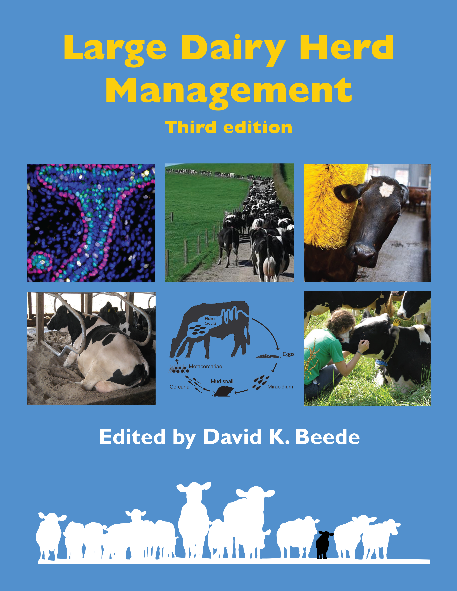
Large Dairy Herd Management (3rd ed.): Get your copy now
Large Dairy Herd Management
(3rd ed., e-book) is now available for purchase exclusively from the American Dairy Science Association® (ADSA®) at student and professional (member and nonmember) rates. Past editions have been among the most widely used dairy information resources in the world. This edition was developed to help meet the growing information needs of dairy farmers, service professionals, and students from around the world. It brings peer-reviewed dairy science and management information to users in a readily accessible, easy-to-use format. The e-book includes 97 chapters in 15 sections. Detailed information about the sections, section editors, book sponsors and other information on the e-book is available at
http://ldhm.adsa.org/ .
This new edition is fully updated and includes numerous color figures, videos, and separate metric and imperial versions. The book is available in both PDF and fixed-layout ePub formats. With purchase of the e-book, both metric and imperial versions in both file formats may be downloaded. To purchase the book now visit:
https://secure.fass.org/prod_ADSA_LDHM_eBook.asp
For more information, contact
Ken Olson, PhD, PAS
American Dairy Science Association
Phone: +1-630-237-4961
ADSA DISCOVER Conference on Food Animal Agriculture:
ADSA Discover Conference Series presents the 33rd Conference: Integrated Solutions to Fiber Challenges. This conference will explore fiber from diverse perspectives. Members of the dairy science community who are interested in the effect of nutrition, physiology, and/or management of fiber on animal performance should plan to attend.
33rd ADSA Discover Conference on Food Animal Agriculture:
Integrated Solutions to Fiber Challenges
September 19-22, 2017
Westin Chicago Northwest in Itasca, IL
(near Chicago's O'Hare International Airport)
Hosted by the American Dairy Science Association®
Researchers, extension specialists, and consultants from academia, government agencies, and allied industries encompassing feed and seed companies will all find information of great value. Personnel from analytical laboratories as well as graduate students are also encouraged to attend.
Early Registration Deadline: August 18, 2017
Note: registration is limited to the first 150 registrants.
Registration fees increase by $100 after August 18.
For additional program details:
ARPAS has assigned 17 ARPAS CEU's for ARPAS members
participating in the 33rd Discover Conference
Click
here to view the Conference Program.
Cooler Cows Have Healthier Calves
Calves born to cows experiencing heat stress during early pregnancy experience related effects that continue throughout their lives, according to a new study from the
Journal of Dairy Science®, "Season of conception is associated with future survival, fertility, and milk yield of Holstein cows," (
https://doi.org/10.3168/jds.2017-12662
).
Environmental influences affecting cows during pregnancy have been shown to induce life-long physical and metabolic changes in the offspring. To learn more about the effects of heat stress on calves conceived during the summer, Pablo Pinedo, from Colorado State University, and Albert De Vries, from the University of Florida, examined data from more than 150 herds of dairy cattle in Florida, where cows experience hot summers and mild winters.
Previous studies have shown many different effects related to environmental or dietary stressors during pregnancy on the resulting offspring, both as calves and as adult cows, and summer heat is a significant environmental stressor in many areas of the United States. The researchers assessed seasonal effects on pregnancy by examining more than 667,000 records from Holstein cows calving in Florida between 2000 and 2012. Using environmental data from the National Oceanic and Atmospheric Administration, the researchers estimated the resulting heat stress on each of the 152 herds by comparing milk yield during summer and winter months to identify which herds were most likely to suffer from heat stress during the summer.
The researchers found that milk production was greater for cows born to a mother that conceived in the winter compared with cows born to a mother that conceived in the summer, with greater milk fat and protein yield. The odds of survival to a second calving were 1.15 to 1.21 times greater for cows arising from a winter-time conception compared with a summer-time conception.
"Our results showed that cows that arose from a pregnancy conceived in winter had, on average, better survival, better reproduction, and greater milk production than cows arising from a summertime pregnancy," lead author Pablo J. Pinedo said. "These effects were more pronounced among first-parity cows compared with older cows."
Although previous studies reported the effects of heat stress during late pregnancy, results from this study suggest that heat stress at the time of conception may permanently program the genetics of the adult animal by affecting epigenetic processes within the early embryo. For some of the analyzed variables, the differences were moderate, and the variation among individuals and operations is highly dependent on management practices.
"This report adds to a growing body of literature that supports careful management of the mother at all stages of the pregnancy to ensure the highest level of productivity in the offspring," commented Matt Lucy, Editor-in-Chief of the Journal of Dairy Science. The researchers anticipate further research into the potential mechanisms associated with the reported effects.
For our International Readers:
Have you considered e-Membership?
ADSA e-Membership is available through ADSA Global Partner organizations and to individuals who reside outside of the US and Canada. This electronic membership was designed for those who have an interest in dairy science, but may not have the time or budget to attend ADSA's meetings, or cost-justify full membership in ADSA due to a different area of specialization. The ADSA e-Membership rate is USD 55 (a 50% discount from ADSA professional membership dues), and runs for 365 days from date of sign-up. With their membership an ADSA e-Member receives:
- Electronic access to the Journal of Dairy Science®, (and a paper copy, if desired, for an additional fee);
- Access to a treasure trove of Joint Annual Meeting symposia (synchronized recordings from 2003-2015, with more added each year);
- Access to searchable Joint Annual Meeting abstracts for 1998-2015, with more added each year, plus ADSA annual meeting abstracts from 1935-1997, as well as ADSA divisional meeting abstracts;
- The opportunity to purchase the Large Dairy Herd Management (3rd ed., e-book) at the ADSA member rate.
- The opportunity to subscribe to S-PAC® (Searchable Proceedings of Animal Conferences) at the ADSA member rate. See more about S-PAC below.
S-PAC (Searchable Proceedings of Animal Conferences),
is the most comprehensive animal production and management conference proceedings database in the world. This unique collection of conference proceedings and presentations is a must-have resource for animal scientists, veterinarians, academicians, consultants and members of industry around the world. As of July 2017, 61 conferences have contributed 608 sets of proceedings, with new conferences and proceedings added every month. The value of S-PAC increases every time a conference and a set of proceedings is added. If one can't attend the multitude of conferences that S-PAC covers, S-PAC is the next best thing!
http://spac.adsa.org/
ADSA® on Linked In continues to Grow - Are you included?
Our ADSA Linked In group continues to grow. We now include 1,616 members from around the world, are you one of them? It's a great place to get information about ADSA and industry activities as well as to network with other dairy professionals from around the world. Check it out here.
|
|
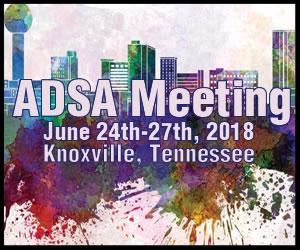
Join us for the 2018 ADSA Annual Meeting
|
August 1-2, 2017 Milk Pasteurization Short Course, UW-Madison, Babcock Hall, Room 205, Madison, WI, For more information
click here
Aug 08-09, 2017 Dairy Science and Sanitation, Cornell University, For more information contact Louise M. Felker, Ph: 607.255.7098 lmf226@cornell.edu
Aug 15-17, 2017 Preventive Controls for Human Food, Cornell Dairy Foods Extension and the Cornell Institute for Food Safety, Jamaica, NY. For more information contact lmg226@cornell.edu or
click here
Aug 21-22, 2017 HACCP/Food Safety Plans, Cornell University, For more information contact Louise M. Felker, Ph: 607.255.7098
lmf226@cornell.edu
or
click here
Aug 22-24, 2017 Preventive Controls for Human Food, Cornell Dairy Foods Extension and the Cornell Institute for Food Safety, Jamaica, NY. For more information contact img226@cornell.edu or click here
Aug 23-24, 2017 Implementing SQF Systems, Cornell University. For more information contact Louise M. Felker, Ph: 607.255.7098 lmf226@cornell.edu or click here
Aug 29 - Sept 1, 2017 68th Annual Meeting of the European Federation of Animal Science (EAAP), Tallinn, Estonia, For more information visit https://eaap2017.org/
Sept 5-7, 2017 Preventive Controls for Human Food, Cornell Dairy Foods Extension and the Cornell Institute for Food Safety, Jamaica, NY. For more information contact img226@cornell.edu or click here
Sept 6-7, 2017 Cultured Dairy Products Short Course, UW-Madison, Babcock Hall, Room 205, Madison, WI, For more information click here
Sept 14-16, 2017 50th Annual Conference of the American Association of Bovine Practitioners, Omaha, Nebraska CenturyLink Center. For more information visit http://www.aabp.org/
Sept 18-21, 2017 Cultured Dairy Products Short Course, Erickson Food Science Building, Penn State University, For more information click here
Sept 19-22, 2017 33rd ADSA Discover Conference
Integrated Solutions to Fiber Challenges, Westin Chicago Northwest, Itasca, IL, For more information click here
Oct 3-7, 2017 World Dairy Expo, Alliant Energy Center, Madison, WI. For more information
click here
Oct 9-13, 2017 Cheese Tech Short Course, UW-Madison, Babcock Hall, Room 205, Madison, WI, For more information click here
Oct 12-18, 2017 121st USAHA/AAVLD Annual Meeting, San Diego, CA, For more information click here
Oct 17-18, 2017 The Dairy Ingredient Applications Short Course, UW-Madison, Babcock Hall, Room 205, Madison, WI, For more information click here
Oct 18, 2017 Southwest Dairy Day, Wildcat Dairy, Comanche Co. TX, For more information contact Dr. Ellen Jordan, Ellen.Jordan@ag.tamu.edu
Oct 24 - 26, 2017 Pasteurizer Operators Workshop, Erickson Food Science Building, Penn State University, For more information click here
Oct 24 - 29, 2017 2017 ADGA Annual Meeting & Convention,
Hilton Airport Convention Center, Atlanta GA,
For details visit http://adga.org/
Oct 29 - Nov 3, 2017 IDF World Dairy Summit, Belfast, Northern Ireland. For more information, click here.
Nov 2 - 5, 2017 International Conference on Communications in Veterinary Medicine 2017: Innovating in Clinical Communications, Hockley Valley Resort - Orangeville, Ontario, Canada, for more information
click here
Nov 8-10, 2017 The Wisconsin Cheese Grading Short Course UW-Madison, Babcock Hall, Room 205, Madison, WI, For more information
click here
Nov 13-15, 2017 Symposium on Gut Health in Production of Food Animals, St. Louis, Mo., For more information
click here
Nov 13 - 16, 2017 The Science and Art of Cheese Making Short Course, Rodney A. Erickson Food Science Building, Penn State University, For more information click here
Nov 15-16, 2017 Pennsylvania Dairy Cattle Nutrition Workshop, For more information
click here
Nov 29-Dec 1, 2017 The Ice Cream Makers Short Course, UW-Madison, Babcock Hall, Room 205, Madison, WI, For more information
click here
Jan 17-18, 2018 Pacific Northwest Animal Nutrition Conference, Grove Hotel, Boise, ID. For more information, click here.
Jan. 31 - Feb 2, 2018 The National Mastitis Council 57th Annual Meeting, Hilton El Conquistador Golf & Tennis Resort, Tucson, AZ. For more information click here
Feb. 7-9, 2018 Southwest Nutrition Conference*, Crowne Plaza Resort Phoenix-Chandler Golf Resort. For more information,
https://sw-nc.com/
Mar 6-7, 2018 High Plains Dairy Conference*, Embassy Suites-Amarillo, TX. For more information, contact Ellen Jordan,
e-jordan2@tamu.edu
May 29-June 1, 2018 34th ADSA Discover Conference* on Food Animal Agriculture - Reexamining Amino Acid & Energy Interactions in the Dairy Cow*, Eaglewood Resort & Spa, Itasca, IL. For more information, click here.
June 24-27, 2018
ADSA Annual Conference and Tradeshow, Knoxville, TN, For more information
click here
Sept 3 - 6, 2019 ISRP 2019 - International Symposium on Ruminant Physiology, KONGRESSHALLE am Zoo Leipzig, Germany, For more information click here
*An S-PAC Partner Conference
If your organization's conference isn't among the ever growing list that contribute proceedings and presentations to S-PAC®, ask your conference organizer to contact Ken Olson for more information about the benefits of participation.
If you would like to have an event included in the "Dates to Note," please contact Ken Olson.
|
|
Thanks to our Corporate Sustaining Members
We appreciate your ongoing support of ADSA and the
Journal of Dairy Science
®.
Ag Processing Inc.
Arm & Hammer Animal Nutrition
Dairy Nutrition Plus
Darling International Research
Diamond V
DuPont Pioneer
Elanco Animal Health
Grande Cheese Company
JH Biotech, Inc.
Lallemand Animal Nutrition
Nutriad, Inc.
Papillon Agricultural Company
Quali Tech, Inc.
Renaissance Nutrition Inc.
Zinpro
Zoetis
Zook Nutrition & Management Inc.
|
|
ADSA Membership Benefits
Did you know that your ADSA Professional Membership provides you with:
* Electronic access to the Journal of Dairy Science®
* Joint Annual Meeting at member rates
* Discover Conferences at member rates
* S-PAC: Free access to JAM and ADSA divisional abstracts
* S-PAC subscription at member rates
* Access to recorded symposia library
* ADSA News (association newsletter)
* ADSA Dair e-news (ADSA industry newsletter)
* Access to member directory
* Peer recognition through ADSA and Foundation Award Program
* Discounted page charges in Journal of Dairy Science®
* A strong voice of advocacy for the animal sciences, animal agriculture and agriculture research
* Broad author recognition through ADSA/Elsevier press release program
* Linked In and You Tube sites for ADSA
* Quality networking with academic and industry professionals
* Travel awards for all graduate students attending Discover Conferences
* Opportunity to serve peers via committee and officer positions
|
|
|
American Dairy Science Association
1800 South Oak St., Suite 100, Champaign, IL 61820
Email:
ADSA@assochg.org
|
|
|
|
|
|